
For roof routes exposed to sunlight, heat cycling and cable tray or conduit installation, UV resistance and flame performance should be checked together with conductor size.
Solar / Renewable Energy
Solar PV Cable Solution
A practical PV cable selection page for EPC teams, solar installers and procurement buyers selecting PV1-F, H1Z2Z2-K and UL 4703 solar cables for rooftop PV, ground-mounted solar farms, combiner boxes and inverter-side DC wiring.
Answer First
Project fit: how to specify solar PV cable
Solar PV cable selection should start from the project standard, DC voltage, current, route length, outdoor exposure, conductor size and voltage-drop target. The purchasing specification should also confirm color, marking, reel length, packing and connector compatibility.
Application fitRooftop PV systems, ground-mounted solar farms, combiner boxes, inverter-side DC wiring and PV string routes.
Product directionReview PV1-F, H1Z2Z2-K or UL 4703 solar cable according to tender, market, system voltage and project documentation requirements.
RFQ dataSend project standard, voltage, conductor size, color, single or twin format, route length, drum length, marking, packing and sample needs.
Answer First
How should solar PV cable be selected?
Solar PV cable should be selected by project standard, DC voltage, current, route length, outdoor exposure, conductor size and voltage-drop target. The right choice is not only a cable type, but a complete purchasing specification that includes color, marking, reel length, packing and connector compatibility.
For longer outdoor DC runs, voltage drop, drum length, installation efficiency and project labeling become key purchasing points.
For combiner box and inverter-side sections, confirm current rating, route grouping, termination method and connector compatibility before ordering.
Engineering Selection
Which solar cable standard should be specified?
For B2B procurement, the standard should follow the project country, tender document, inverter/system requirement and local acceptance practice. ZION can support sample confirmation and project specification discussion before bulk order.
| Selection Item | Typical Direction | Procurement Checkpoint |
|---|---|---|
| EN 50618 / H1Z2Z2-K | Commonly used for PV projects requiring European-style PV cable specifications. | Confirm voltage rating, sheath marking, conductor class, color and project documentation requirements. |
| PV1-F | Often found in solar project documents and legacy PV cable specifications. | Useful when the tender or BOM already lists PV1-F as the accepted cable type. |
| UL 4703 | Relevant when North American style PV wire or solar cable documentation is required. | Confirm whether the project requires UL direction before comparing price and construction. |
| 4 / 6 / 10 mm² | Common project sizes for PV string wiring and DC routing. | Final size should be checked by current, route length, grouping, temperature and voltage-drop target. |
| Single-core or twin-core | Single-core cable is flexible for separate polarity routing. Twin-core cable can help paired polarity management where accepted. | Confirm installation rules, polarity color, cable outer diameter and connector or termination method. |
Recommended Products
Recommended ZION solar PV products
Use these product families to prepare a practical solar PV cable BOM for string wiring, combiner box connection and inverter-side DC routing.
01 PV Cable 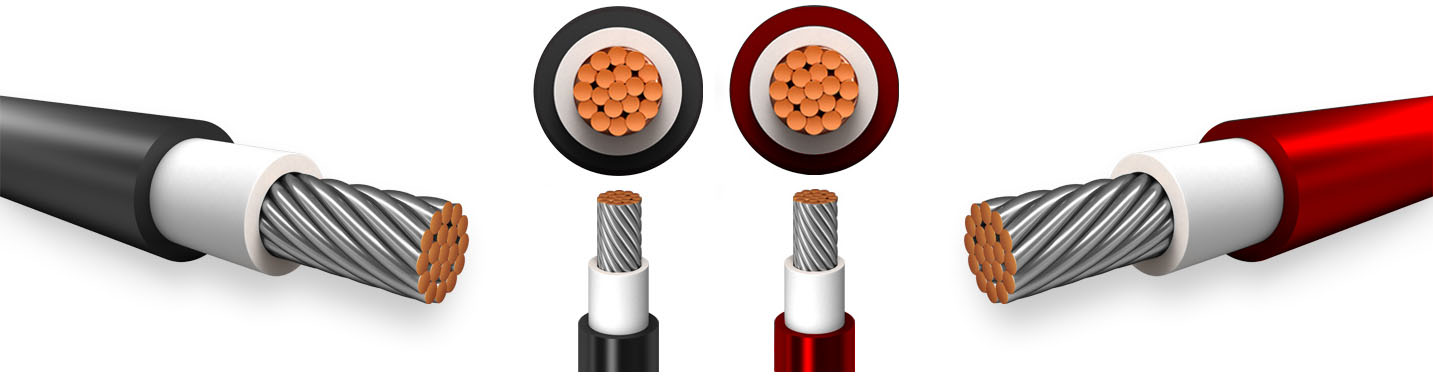
Solar Cable Family
Solar Cable
PV cable family for outdoor photovoltaic interconnection, combiner boxes and inverter-side DC cable routes.
PV cable Outdoor UV
View Product → 02 Single Core 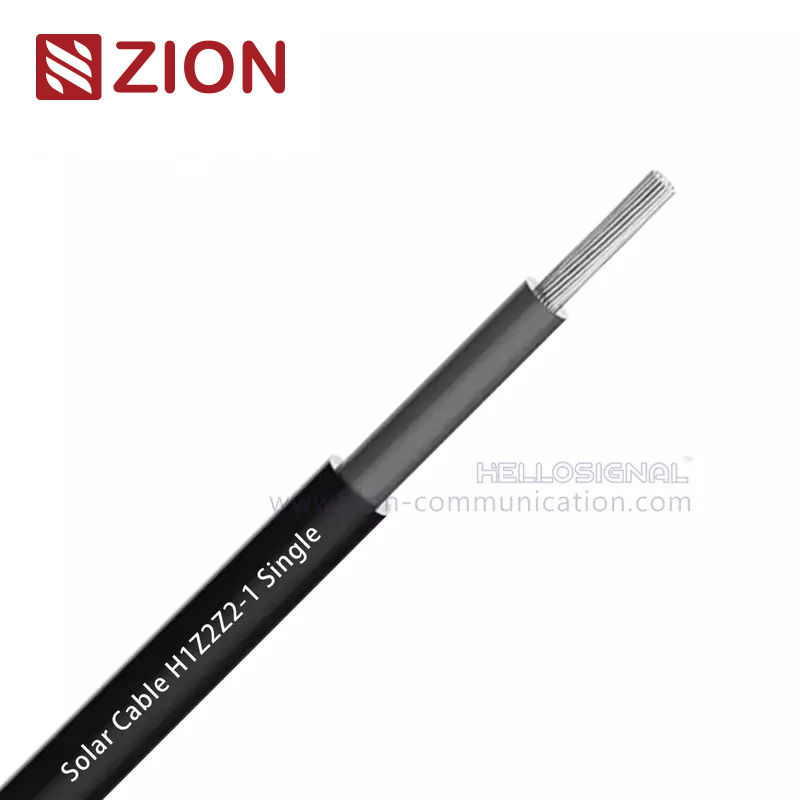
PV1-F / H1Z2Z2-K
Single Core Solar Cable
Single-core solar cable option for PV string wiring where flexible routing and positive / negative polarity color control are required.
Single core PV string 4–10 mm²
View Product → 03 Twin Option 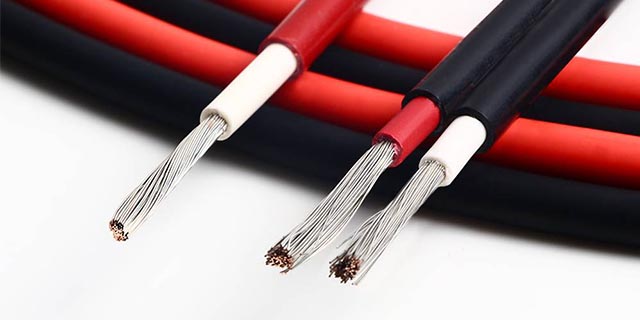
Polarity Management
Single & Twin Solar Cable
Solar cable format for paired positive and negative DC routing where the project design supports twin cable management.
Twin cable Polarity Installation
View Product → 04 Project Supply
EPC Project BOM
Customized PV Cable Supply
Support for project-specific color, marking, reel length, label language, packing and sample confirmation before bulk shipment.
OEM Marking Reel packing
View Product → Risk Control
What project risks should be controlled?
PV cable is often installed outdoors for long-term operation. Before final purchase, align the cable with route, environment, termination and project documentation requirements.
Use PV-rated cable for exposed string routes and avoid substituting ordinary indoor or non-PV cable.
Check route length, current, grouping and temperature before finalizing 4 mm², 6 mm², 10 mm² or larger conductor sizes.
Confirm cable outer diameter, conductor size, insulation system and termination method before connector assembly.
Define drum length, color, cable marking, label language and pallet packing before mass shipment.
Why ZION
Solar cable support for specification and procurement
ZION helps buyers turn project requirements into a clear cable inquiry, reducing repeated communication and specification mismatch before ordering.
Match PV1-F, H1Z2Z2-K or UL 4703 direction according to project documents and target market.
Review conductor size, current, route length and voltage-drop concern before quotation.
Support cable sample, marking review, color confirmation and packaging discussion.
Prepare reel length, labels, carton or pallet packing according to EPC and distributor requirements.
Buyer FAQ
Common procurement questions
These answers are prepared for engineers, contractors, distributors and procurement teams preparing a ZION solar cable inquiry.
Should I choose PV1-F, H1Z2Z2-K or UL 4703 solar cable?
Choose the cable type required by the project standard, local market, tender document or inverter/system documentation. If the documents are unclear, share the project country and voltage so ZION can recommend a suitable direction.
Are 4 mm², 6 mm² and 10 mm² enough for every PV project?
No. They are common PV cable sizes, but final conductor size should follow current, route length, grouping, ambient temperature and voltage-drop calculation.
When is twin-core solar cable useful?
Twin-core solar cable can simplify paired polarity routing where the installation design and applicable rules accept it. Single-core cable remains common where separate positive and negative routing is preferred.
What information should be sent for a solar cable quote?
Send standard, voltage, conductor size, color, single-core or twin-core format, approximate route length, drum length, cable marking and packaging requirements.
Send your solar PV cable parameters for recommendation.
Share application, project country, voltage, current, conductor size, cable color, route length, standard, marking, reel length and packaging requirements. ZION can help organize a practical cable BOM for your solar project.