
Product overview
The undersea submarine fiber network solution is built around a high-speed optical fiber release device, underwater optical transceiver equipment and water-tight connectors. The optical fiber tube works as the core transmission medium, helping form a complete underwater communication link for stable and reliable data transmission in marine environments.
The system is positioned for underwater communication and control, not as a generic marketing page. Project teams should confirm cable length, connector interface, waterproof connection requirements, wavelength, terminal equipment interface and mechanical design before quotation or deployment.
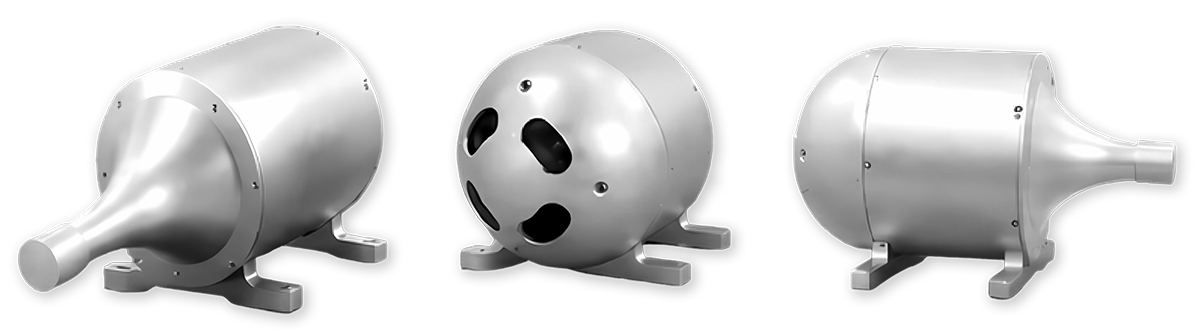
System composition
Ready-to-use fiber drum configuration for 1 km to 30 km underwater communication links.
Transmitting and receiving optical terminals with optical, network and serial port interfaces.
Water-tight wired connection structure for underwater link integration and field assembly.
Aramid + PVC sheath with G.657.A2 fiber is used as the core optical transmission medium, providing a stable data channel with tensile strength and environmental resilience for underwater communication links.
Application scenarios
The system is suitable for short-to-medium-range undersea optical fiber communication where anti-interference performance, reliable link quality and field-ready underwater connection are required.
Communication and control for underwater robots, ROVs and AUV platforms.
Data transmission for underwater observation networks and monitoring points.
Underwater construction, engineering communication and marine resource development.
Monitoring support for ports, coastlines and nearshore underwater infrastructure.
Underwater scientific research, exploration and test communication links.
Fiber-based data links for marine industrial scenarios requiring stable anti-interference transmission.
High-speed optical fiber release device specifications
| Parameter | Specification |
|---|---|
| Product Name | High-speed optical fiber release device |
| Length Options | 1 km - 30 km |
| Sheath Material | Aramid + PVC |
| Fiber Type | G.657.A2 |
| Optical Cable Diameter | 0.5 mm / 0.65 mm |
| Unit Weight | 248 g/km / 430 g/km |
| Tensile Strength | >150 N / >200 N |
| Operating Temperature | -40°C to +60°C |
| Optical Interface | FC/UPC or LC/UPC |
| Attenuation Coefficient | ≤0.35 dB/km @ 1310 nm ≤0.25 dB/km @ 1550 nm |
| Can Material | Resin & metallic aluminum |
| Standard Dimensions | 237×180×152 mm (10 km) 300×277×248 mm (20 km) |
| Cable Density | 1.25 g/cm³ / 1.3 g/cm³ |
| Color | Yellowish |
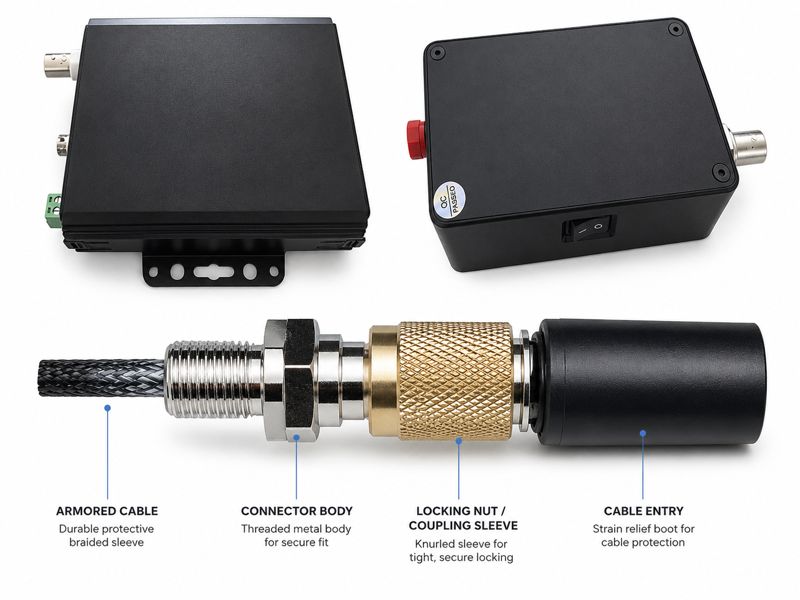
Optical transceiver equipment specifications
| Item | Transmitting Unit | Receiving Unit |
|---|---|---|
| Product Name | Transmitting Optical Terminal | Receiving Optical Terminal |
| Wavelength | 1310 nm / 1550 nm | 1310 nm / 1550 nm |
| Interfaces | Optical port (FC), network port, serial port | Optical port (FC), network port, serial port |
| Connection Type | Water-tight wired connection | Water-tight wired connection |
| Customization | Supported for wavelength, interface type and mechanical design | |
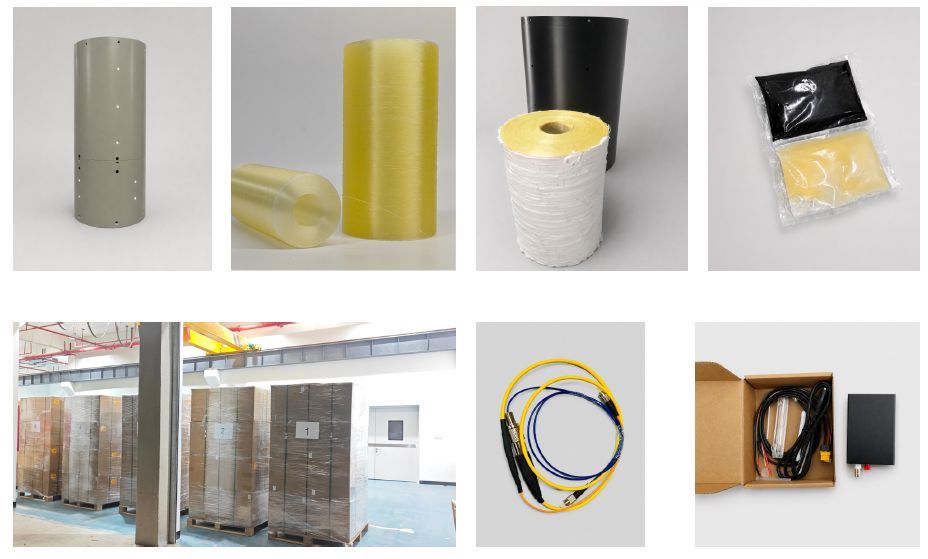
Housing, fiber drum and packing reference
The product datasheet also shows housing components, aramid/PVC fiber material, fiber drum packing, connection cable assemblies, terminal kit packaging and palletized shipping reference. These images are useful for product page visual placement, factory communication and RFQ document preparation.
Engineering selection notes
Before quotation, confirm whether the application is ROV/AUV control, observation network, marine engineering communication, port monitoring or research testing. Then confirm transmission distance, optical interface, connector waterproof requirement, terminal port type, wavelength and mechanical design requirements.
The listed values come from the provided product datasheet. If the project has a local marine standard, special pressure depth, connector rating, jacket requirement or deployment method, confirm the requirement with ZION before final selection.
RFQ checklist
For accurate specification matching and quotation, prepare the following information before sending an RFQ for this undersea submarine fiber network solution.
FAQ
What is this submarine optical fiber solution used for?
It is used for underwater anti-interference optical fiber communication links, including ROV/AUV communication and control, underwater observation networks, marine engineering communication, port and coastline monitoring, and underwater scientific research.
What fiber type does the system use?
The fiber release device uses G.657.A2 fiber with aramid + PVC sheath as the core transmission medium.
What length options are available?
The provided datasheet lists 1 km to 30 km length options for the high-speed optical fiber release device.
Which optical interfaces are supported?
The high-speed optical fiber release device supports FC/UPC or LC/UPC optical interfaces. The optical transceiver equipment includes optical port (FC), network port and serial port interfaces.
Can the optical transceiver equipment be customized?
According to the provided datasheet, customization is supported for wavelength, interface type and mechanical design. Final customization should be confirmed according to project drawings and RFQ requirements.