Building Management System (BMS) Cabling Guide for Smart Buildings (2026)
A procurement-friendly, engineer-approved blueprint to select RS-485, KNX/EIB, control, Ethernet, coax, and fiber cabling for HVAC, lighting, access control, fire & safety, and building networks—optimized for reliability, maintainability, and lifecycle cost.
- Choose by subsystem + risk: RS-485/KNX for field bus, Cat6/Cat6A for IP links, fire-rated for life safety, fiber for backbone/EMI immunity.
- Engineer’s shortcut: Standardize cable families per floor/zone to reduce commissioning time and spares complexity.
- Procurement rule: Optimize lifecycle cost (failure risk + downtime + rework), not only meter price.
■ 1) What is a BMS and why cabling matters
A Building Management System (BMS), also known as a Building Automation System (BAS), is a centralized control platform that monitors and coordinates HVAC, lighting, fire & safety, security/access control, and energy/parking systems. Cabling is the “nervous system” that connects sensors, controllers, gateways, and software—so system reliability is ultimately limited by the wiring layer.
■ 2) Subsystems & typical cable types
Use this quick mapping to build a clean bill-of-materials (BOM) and avoid “last-minute substitutions” that trigger rework.
| BMS Subsystem | Typical Devices | Recommended Cable Families | Procurement Notes |
|---|---|---|---|
| HVAC | Thermostats, actuators, VAV, DDC/PLC, sensors | Control cables, RS-485 bus, Ethernet (where IP gateways exist) | Prioritize shielding when near VFD/motors; standardize labeling by zone. |
| Lighting Control | Controllers, gateways, occupancy sensors, drivers | Bus/control cables, Cat6/Cat6A (IP lighting) | Future-proof key risers with Cat6A when bandwidth/PoE growth is expected. |
| Security & Access Control | Readers, door contacts, REX, lock power, control panels | Security/alarm cables, control cables, RS-485, Cat6/Cat6A | Separate lock power from signal where required; keep consistent core colors. |
| Fire & Life Safety | Fire alarm loops, voice evacuation (PAGA), emergency control | Fire-resistant cables for critical links | Specify fire performance (project requirement) and document routing/segregation. |
| CCTV / CATV | Cameras, encoders, splitters, RF devices | Coax (RG6/RG59+Power), Cat6/Cat6A for IP cameras | Pick coax by environment & compliance; keep bend radius & connector quality consistent. |

■ 3) Access control wiring map (practical)
A conventional access control system includes readers, control panels, software, and peripheral devices. In most projects, wiring complexity is underestimated—especially the mix of reader signals, door contacts, exit signals, lock power, and control-panel communications.
Typical cable groups in access control
- Reader cables (depends on reader type: barcode, biometric, smart chip, etc.)
- Door contact cables (status feedback)
- Request-to-exit (REX) cables
- Lock power cables (power delivery)
- RS-485 cables for low data-rate communication to control panels
- LAN/Ethernet for low/medium/high data-rate transfer to servers and switches
| Signal / Function | Recommended Cable Type | Common Mistake | Prevention |
|---|---|---|---|
| Door contact | Security/alarm cable (screened if EMI risk) | Mixing power and signal cores in the same bundle | Segregate routing; label at both ends; test continuity before commissioning. |
| Reader | Control cable / screened multi-core (depends on reader) | Wrong conductor size causes voltage drop or unstable signals | Size by run length + current; keep spare pairs for future upgrades. |
| Lock power | Dedicated power cable (or multi-core with separated pairs) | Undersized cable leads to intermittent unlocking | Calculate voltage drop; avoid shared grounds with noisy loads where possible. |
| Controller communication | RS-485 (bus) or Ethernet (IP) | No shielding or poor grounding in noisy shafts | Use shielded bus cable; ensure correct termination practices per system design. |
■ 4) Decision Rules / Engineer’s Shortcut
This is the fastest way to choose the correct cable family without over-specifying (wasting budget) or under-specifying (causing failures and rework).
| Decision Trigger | Choose | Why it works | Typical Subsystems | Procurement Note |
|---|---|---|---|---|
| Multi-drop field bus for low-speed device networking | RS-485 cable (typically 120Ω characteristic impedance) | Stable signaling on long runs; widely used in building automation | HVAC controls, meters, access controller networks | Select shielding where EMI is present; document grounding approach. |
| KNX/EIB decentralized control system | KNX / EIB BUS cable | Designed for serial bus communication in smart building controls | Lighting, HVAC, shading, room automation | Standardize jacket & color for field recognition and maintenance. |
| IP devices or higher data rate links | Cat6 (baseline) or Cat6A (future headroom / 10G) | Ethernet ecosystem for cameras, controllers, servers & switches | CCTV (IP), building network, BMS servers | Choose Cat6A where PoE density, EMI, or upgrade risk is high. |
| RF/video 75Ω distribution | Coax (e.g., RG6, RG59+Power) | Optimized for RF/video impedance matching | CATV, legacy CCTV, satellite/VSAT | Match connectors & shield coverage to noise environment. |
| Backbone / long run / EMI immunity | Indoor fiber optic + patching (panel/cord/pigtail) | High capacity, low loss, strong immunity to electrical interference | Floor backbone, data room interconnects | Plan splice/patch strategy early; standardize connector types per site. |

■ 5) ZION product coverage for BMS projects
HANGZHOU ZION supports a one-stop smart building cabling package—from life safety to field bus to structured cabling and fiber backbones.
■ 6) Cost & risk: what drives failures and rework
For smart buildings, “cheap by meter” is often expensive after commissioning. The real cost drivers are fault isolation time, downtime risk, and rework labor.
| Risk / Cost Driver | Typical Root Cause | Impact | Mitigation |
|---|---|---|---|
| Commissioning delays | Wrong cable family, inconsistent labeling, poor terminations | Extra labor, schedule risk, failed acceptance tests | Standardize families by protocol; enforce QC checklist and end-to-end testing. |
| Unstable RS-485 links | EMI exposure, inconsistent grounding, poor routing | Intermittent faults, hard-to-trace alarms, service calls | Use shielded bus cable where needed; document segregation near VFDs. |
| IP network upgrades | Under-spec cabling for future bandwidth/PoE needs | Re-cabling cost, disruption to tenants/operations | Use Cat6A on risers/high-density areas; keep spare pathways. |
| Life-safety compliance gaps | Incorrect fire performance spec or poor documentation | Non-compliance risk, rework, delayed approvals | Lock requirements early; keep product docs and routing records for inspection. |
■ 7) Installation & QC checklist
Engineer-friendly checklist (scan and execute)
- Mixed cable substitutions during installation create “unknowns” that block commissioning.
- Labeling inconsistency turns a 5-minute fix into hours of tracing.
- Poor terminations are the most common failure point.
- Document by zone: cable family + routing + termination point list.
- Segregate by noise: keep bus/signals away from high-power/VFD routes.
- Test early: continuity + polarity + link tests before ceiling closure.
- RS-485: Keep consistent cable type per segment; follow system termination practices; avoid “star” routing unless the system is designed for it.
- Ethernet: Match connectors and patching components; keep bend radius and pair integrity during pulls.
- Fire-rated circuits: lock the compliance requirement early; keep installation records for inspection.
- Fiber: standardize connector types; plan patching/splicing strategy and labeling from day one.
■ 8) FAQ
Is RS-485 still relevant in modern smart buildings?
Yes. RS-485 remains a common field-bus layer for building automation because it is robust for long runs and multi-drop networks. Many modern controllers still use RS-485 alongside IP uplinks.
When should I specify Cat6A instead of Cat6?
Choose Cat6A when the project has higher upgrade risk (future bandwidth/PoE growth), higher EMI exposure, or high-density IP endpoints in risers and IDF/MDF areas.
Do I need fiber in a BMS project?
Fiber is recommended for backbones, long runs, or environments with heavy electrical interference. It improves reliability and future capacity without increasing pathway congestion.
■ 9) Conclusion
A smart building is only as reliable as its cabling layer. The fastest path to stable commissioning and low lifecycle cost is to select cables by protocol (RS-485 / KNX / IP / RF / fiber) and environment (EMI, fire-safety, indoor/outdoor), then standardize labeling and QC across floors and zones. If you share your subsystem list, distances, and fire requirements, ZION can help you build a clean BOM and recommend matching cable families for a faster, safer handover.


 Fiber Optic Tools
Products 6 families
Solutions 6 markets
Resources Tools & docs
Certificate
Certification and compliance references for project review, qualification and purchasing documentation.
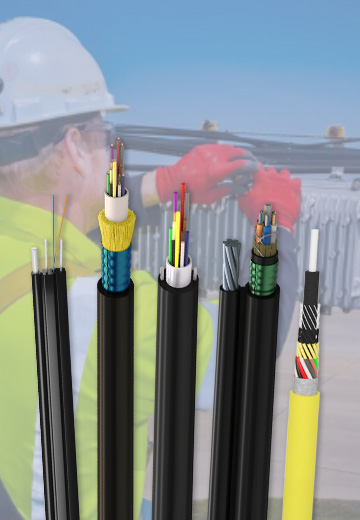 Fiber Optic CableAccess and backbone
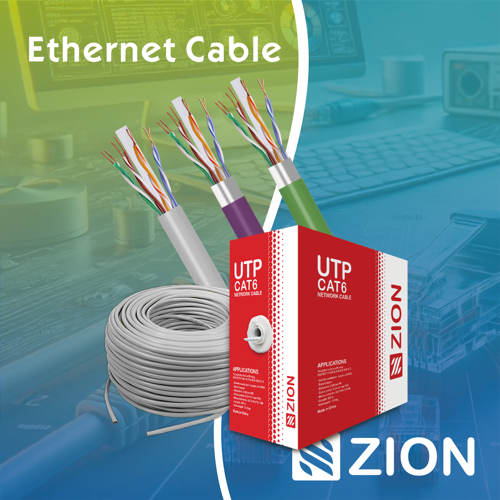 Ethernet CableCat5e to Cat8
 Coaxial CableRF and video signal
 Fire, Security & AlarmSafety systems
 Voice, Audio & VideoSignal cabling
 Power & Control CableEnergy and control
Fiber optic cable systems
Outdoor, indoor, FTTH and distribution cable lines for access networks, backbone routes and campus deployments.
 Telecom & ISP NetworksFTTH, PON, ODN
  Data Center InfrastructureServer room cabling
  Building Low-Voltage SystemsBMS, AV, weak current
 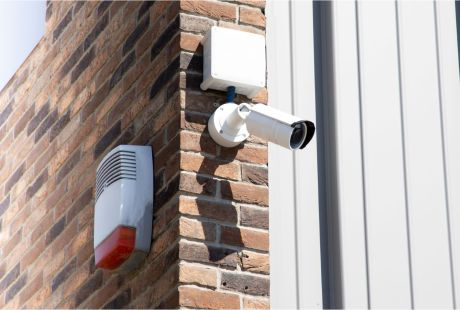 Security & Fire ProtectionAlarm, CCTV, access
  Industrial Automation CablePLC, RS485, fieldbus
 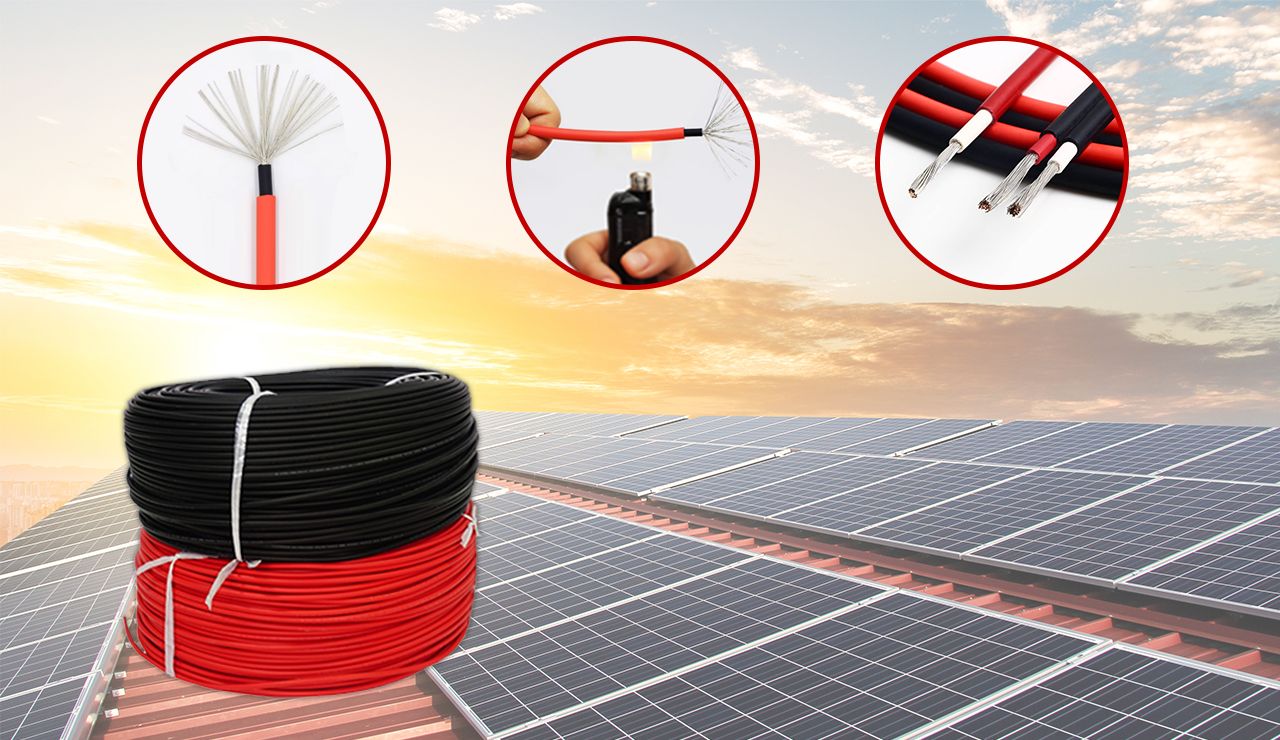 Energy & Power InfrastructureSolar, battery, power
 Telecom & ISP Networks
For FTTH / PON access, outdoor fiber deployment, aerial routes, duct routes, direct burial routes, rural broadband and ODN planning.
Tools
Use calculators and planning tools for conduit capacity, PoE voltage drop and fiber optic link loss budget work.