What cables are needed for one access-controlled door?
A typical door needs an electric lock cable, card reader cable, door contact cable and request to exit cable. A common starting schedule is 18/2 or 18/4 for lock power, 22/4 or 22/6 for the reader, 22/2 for the contact and 22/2 or 22/4 for REX. Final sizes and conductor counts must follow each device and controller.
What conductor size is required for an electric lock?
Many access-control projects start with stranded 18AWG copper for electric lock power, but the correct size depends on voltage, continuous and inrush current, one-way route length and permitted voltage drop. Long or high-current circuits may require a larger conductor.
What cable should connect a card reader?
The card reader cable must match the reader protocol and wiring diagram. Common starting points include 22/4, 22/6 or 3-pair 22AWG. Specify access control cable shielding and a drain wire when the manufacturer or electromagnetic environment requires them.
What cable should connect a door contact?
A 22/2 stranded copper door contact cable is a common starting point for a simple dry-contact circuit. Confirm whether the system uses supervised loops, end-of-line resistors, tamper monitoring or extra conductors.
What cable is required for a request-to-exit device?
A simple push button may use 22/2, while a powered PIR or multifunction request-to-exit device commonly needs 22/4 or more conductors. Check power, relay, input and supervision requirements before finalizing the REX cable.
Can reader, lock and contact cables be combined?
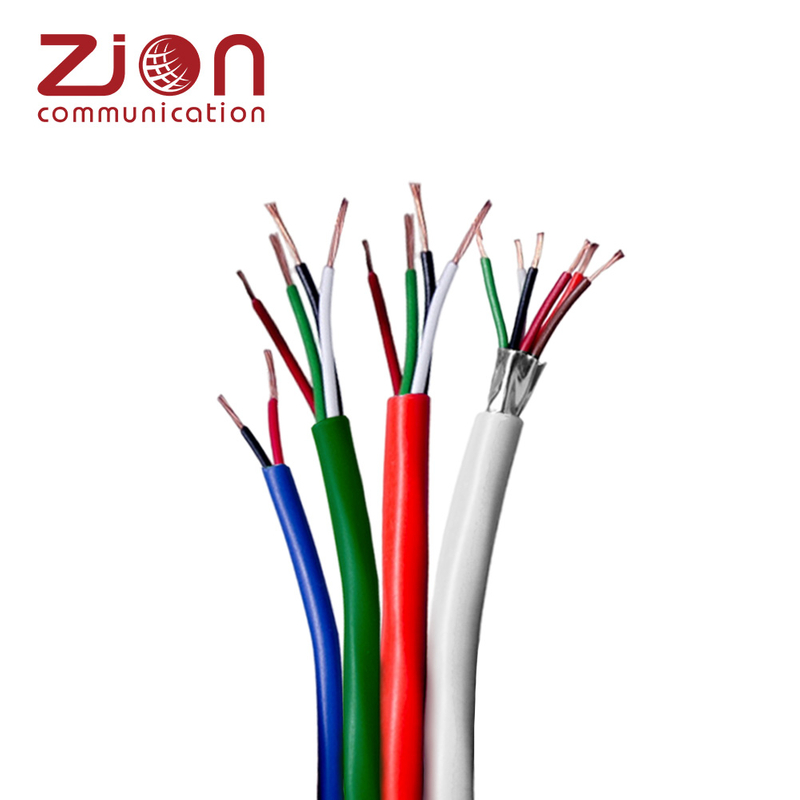
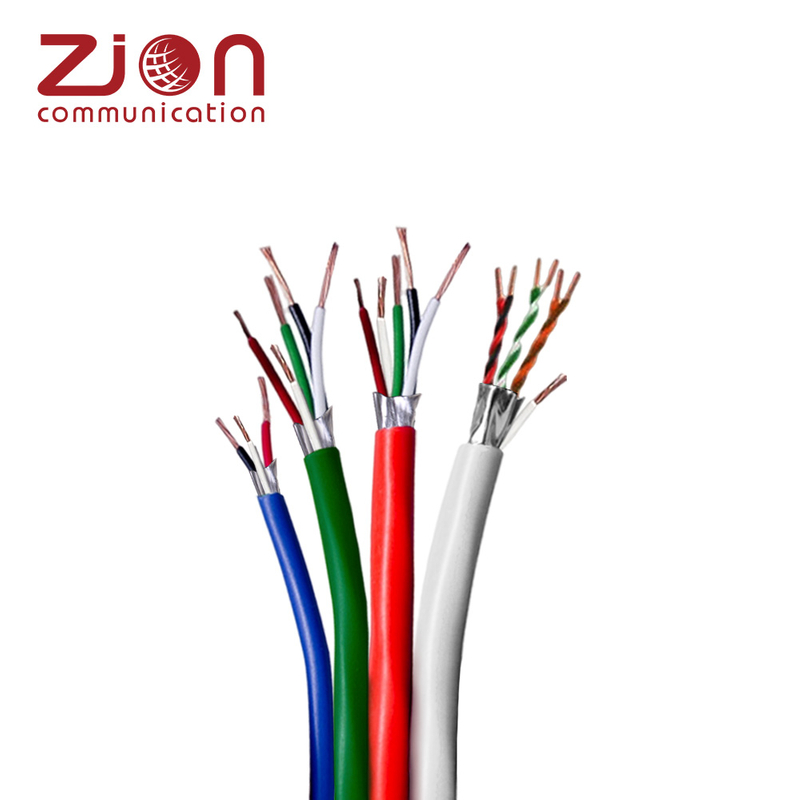
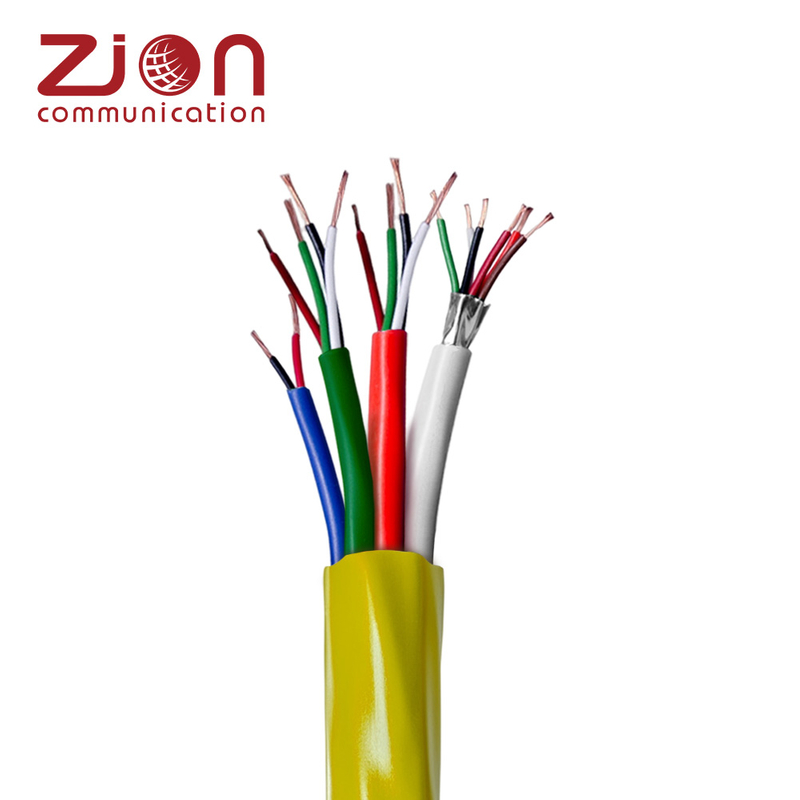
Yes. A composite access control cable can group reader, lock, door contact and REX subcables into one pull. Each subcable should remain correctly sized and identifiable, and power/signal grouping must comply with device instructions and applicable codes.
What is an all-in-one access-control composite cable?
An all in one access control cable combines several function-specific subcables—often 18AWG lock conductors plus 22AWG reader, contact and REX conductors—in a coordinated jacketed or unjacketed construction for one-door installation.
Does access-control cable need shielding?
Not every circuit needs shielding. Consider shielded reader or control pairs when required by the equipment manufacturer or when routes are exposed to motors, mains power, variable-frequency drives or other interference. Follow the specified drain-wire termination and grounding method.
When is plenum-rated access-control cable required?
Plenum access control cable is required when the approved route passes through an environmental-air space and the governing specification or local code calls for a plenum rating. Confirm the pathway and authority requirements before ordering; a plenum jacket is not a substitute for checking local compliance.
Should access-control conductors be solid or stranded?
Stranded copper is commonly preferred for door hardware because it tolerates bending, pulling and repeated movement better. Solid conductors may suit some fixed terminations, but the device terminal, connector and project specification must explicitly support the chosen conductor.
How does voltage drop affect an electric lock?
Access control voltage drop reduces the voltage available at the lock. Excessive drop can cause weak holding force, unreliable release, chatter or intermittent operation. Calculate the complete circuit using conductor resistance, route length and operating/inrush current, then compare the result with the lock's permitted voltage range.
What cable is suitable for maglocks?
A maglock cable commonly uses 18/2 or 18/4 stranded copper, depending on current, monitoring and control functions. Because magnetic locks may draw continuous current, verify voltage drop, power-supply capacity, fire-alarm release interfaces and fail-safe requirements.
What cable is suitable for electric strikes?
An electric strike cable commonly starts with 18/2 or 18/4 stranded copper. Check operating voltage, inrush current, route length, fail-safe or fail-secure mode and any latch-status conductors before selecting the final construction.
How do I prepare a multi-door access-control cable BOM?
Create one row per door with door ID, lock type, reader type, contact, REX device, controller location, pathway rating and measured route length. Multiply each cable construction by its route length, add an approved service and waste allowance, then consolidate totals by cable model, reel length, jacket, color and documentation need.
How do I reduce installation labor in access-control projects?
Reduce access control installation labor with a validated composite cable, function-specific color coding, door-by-door cut schedules, sequential reel labels and coordinated pull planning. Compare the reduced number of pulls and terminations with the breakout, pathway-fill and material-cost requirements.