When copper prices and freight costs are changing, a cable RFQ should not only ask for “price per meter.” A useful RFQ should clearly define conductor material, cable length, jacket material, fire rating, shielding, packing, delivery term, quotation validity, sample requirements, certificates and whether alternative specifications are acceptable. These details help suppliers quote the correct cable instead of making assumptions that may cause later requotation, different packing costs, unsuitable certificates or delivery delays. Before sending an inquiry, buyers should confirm the project application, required standards, installation environment, quantity, destination and comparison criteria.
Why a complete cable RFQ matters during cost changes
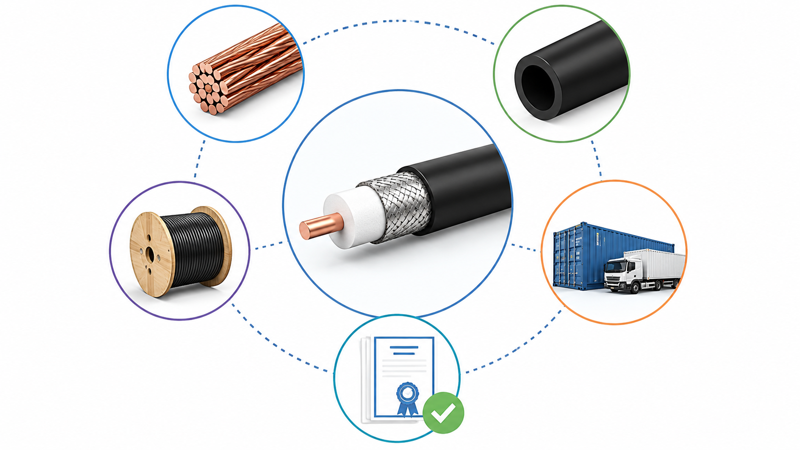
Cable pricing can be affected by conductor material, cable construction, packing volume, shipping method and delivery term. When buyers send an incomplete RFQ, suppliers may quote based on assumptions. One supplier may quote pure copper while another quotes a different conductor material. One may include wooden drum packing, while another assumes coil packing. One may quote FOB, while another includes freight to destination.
A complete RFQ does not make the market stable, but it helps make quotations more comparable. It also reduces the risk of price revision after technical confirmation, sample review or shipping calculation.
What should be included in a cable RFQ?
| RFQ Item | What the Buyer Should Specify | Why It Affects Quotation | Risk If Missing |
|---|---|---|---|
| Cable type | Product name, application or reference standard | Defines basic construction and usage | Supplier may quote a similar but unsuitable cable |
| Conductor material | Bare copper, tinned copper, copper-clad option or other accepted material | Strong impact on cost and performance | Quotations may not be technically comparable |
| Cable size / core count | AWG, mm², pair count, fiber count or core structure | Defines material consumption and design | Wrong price basis or wrong product selected |
| Cable length | Total quantity, length per roll/drum, tolerance if any | Affects production, packing and freight | Packing cost and delivery volume may change |
| Jacket material | PVC, LSZH, PE or other required jacket | Affects application and compliance | Cable may not suit indoor, outdoor or fire-rated use |
| Fire rating | CPR, UL, IEC, LSZH or project-required rating if applicable | May require specific material and documents | Compliance risk during project acceptance |
| Shielding | UTP, FTP, STP, braid, foil or other shielding design | Affects material, diameter and installation | EMI protection may not match project conditions |
| Packing | Coil, reel, carton, wooden drum, pallet, label requirement | Affects handling and freight cost | Freight quotation may be inaccurate |
| Delivery term | EXW, FOB, CFR, CIF, DDP or buyer-required term | Determines what cost is included | Supplier prices may not be comparable |
| Quotation validity | Required validity period or decision deadline | Important when material costs fluctuate | Price may expire before buyer approval |
| Sample | Required sample length, specification and purpose | Supports technical approval | Sample may not match final purchase requirement |
| Certificates | Required test report, compliance document or declaration | Important for project approval | Missing documents may delay procurement |
| Alternative spec | Whether supplier can suggest equivalent or optimized options | Helps cost control and availability | Uncontrolled alternatives may change performance |
How should conductor material be described?
For many cable types, conductor material is one of the most important cost factors. A buyer should avoid sending an RFQ that only says “control cable,” “LAN cable,” “power cable” or “communication cable” without specifying the conductor requirement.
If the project requires copper conductor, the RFQ should state whether bare copper or tinned copper is required. If alternatives are acceptable, the buyer should clearly say which alternatives can be reviewed and which cannot be used. This is especially important when several suppliers are compared side by side.
A clear conductor description helps prevent a low quotation from being based on a different material than the project actually requires.
| Buyer Requirement | Recommended RFQ Wording | Supplier Should Confirm | Procurement Value |
|---|---|---|---|
| Strict copper requirement | Please quote according to copper conductor requirement. Alternative conductor materials are not accepted unless separately approved. | Conductor type, size and structure | Keeps quotations technically aligned |
| Tinned copper needed | Please quote tinned copper conductor according to the attached specification. | Tinning requirement and applicable cable type | Reduces corrosion or application mismatch risk |
| Alternative acceptable | Please quote the requested specification and provide an alternative option separately, if available. | Difference in conductor, jacket, standard or packing | Allows cost comparison without mixing specs |
| Existing sample matching | Please match the attached sample and confirm any difference before quotation. | Construction, marking, color, size and packing | Helps replacement or repeat purchasing |
| Project standard required | Please quote only if the cable can meet the required project standard and provide available documents. | Applicable standard and document availability | Supports project approval process |
How do length, quantity and packing length affect the quote?
Cable length should be described in a way that suppliers can produce and pack correctly. “10,000 meters” may not be enough. Buyers should also clarify whether they need 100 m rolls, 305 m boxes, 500 m drums, 1,000 m drums or another packing length.
Length per packing unit affects production planning, labeling, storage, loading volume and shipping cost. If length tolerance is important, it should also be stated before quotation. For distributors and OEM buyers, packing length may directly affect resale, warehouse handling and customer acceptance.
What should buyers confirm about jacket and fire rating?
Jacket material should match the installation environment. Indoor, outdoor, duct, tray, conduit, riser, plenum, direct burial and industrial environments may require different jacket materials or cable structures. A buyer should not rely only on a generic product name.
Fire rating should be stated when it is required by the project, local regulation or customer specification. If the buyer does not know the exact fire rating, the RFQ should at least describe the installation location and approval requirement so the supplier can advise what information is needed.
| Installation Situation | RFQ Should Mention | Why It Matters | What Not to Assume |
|---|---|---|---|
| Indoor building cabling | Jacket type, flame requirement, color, packing | May affect fire performance and acceptance | Do not assume all indoor cables have the same fire rating |
| Outdoor installation | UV exposure, water risk, temperature range if known | Jacket and water resistance may change | Do not use indoor jacket assumptions |
| Industrial area | Oil, abrasion, movement, EMI or mechanical stress | May require stronger jacket or shielding | Do not select by cable size only |
| Public or commercial project | Required standard or certificate | Documents may be needed for approval | Do not assume certificates are available for every model |
| Export or resale | Market, destination country and customer requirement | Labeling and documents may differ | Do not quote without checking destination needs |
When should shielding and compatibility be specified?
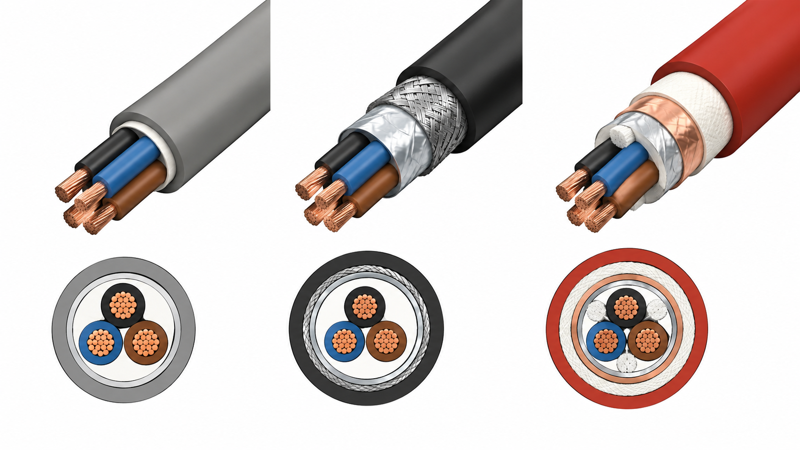
Shielding should be specified when the cable will be installed near power lines, motors, drives, machinery, control cabinets or other potential interference sources. For communication and control cables, shielding is not only a cost item; it can affect signal stability, installation method and grounding requirements.
A good RFQ should state whether the buyer requires unshielded, foil shielded, braid shielded or another structure. If the buyer is replacing an existing cable, photos, markings or a datasheet can help the supplier confirm compatibility.
How do packing, labeling and delivery terms change comparison?

Freight cost can change significantly depending on packing method, gross weight, volume, palletization and delivery term. Buyers should not compare two quotations unless they know what each price includes.
For project delivery, the RFQ should specify packing length, label language, carton or drum requirement, pallet requirement and destination port or delivery address. For OEM or distributor orders, private labeling, neutral packing or barcode requirements should be stated early because they may affect production and lead time.
Delivery term should be clear. A quotation based on EXW is not comparable with one based on CIF or DDP unless freight, duty and local delivery are separated for review.
| RFQ Field | Recommended Detail | Why It Matters |
|---|---|---|
| Packing unit | Length per roll, box, reel or drum | Affects handling, loading and resale |
| Outer packing | Carton, pallet, wooden drum or customized packing | Affects volume, protection and freight |
| Labeling | Product label, customer label, barcode, language | Important for warehouse and distribution |
| Shipping destination | Port, airport, warehouse or full address | Required for freight calculation |
| Delivery term | EXW, FOB, CFR, CIF, DDP or requested term | Defines cost responsibility |
| Shipping method | Sea, air, express, truck or buyer forwarder | Impacts cost and delivery timing |
| Split shipment | Whether partial delivery is acceptable | Helps when schedule is urgent |
| Document requirement | Packing list, invoice, certificate, test report if available | Supports customs and project acceptance |
How should quotation validity, samples and certificates be handled?
When material and freight costs are changing, quotation validity should be discussed clearly. Buyers should ask suppliers to state the validity period, but they should also avoid assuming that a quotation can stay unchanged for a long time without confirmation.
Samples should be requested with purpose. A sample for color and construction review may be different from a sample for formal project testing. If certificates or test reports are required, they should be requested before order confirmation, not after shipment.
For certificates, buyers should name the exact standard or approval requirement whenever possible. If the requirement is unclear, the supplier can only confirm what documents are available, not guarantee acceptance by the final project authority.
Procurement note: Certificate-related wording should always be checked against the specific cable model, document availability and project approval requirement. Do not assume the same document set applies to every cable family.
When is an alternative specification useful?
Alternative specifications can be useful when the original requirement is costly, unavailable, over-specified or unclear. However, alternatives should be quoted separately and clearly labeled. A buyer should not mix the base quotation and alternative quotation without understanding the difference.
For example, a supplier may suggest a different jacket, packing length, shielding structure or cable category. These alternatives can reduce cost or improve delivery, but they may also affect installation, approval or compatibility. The safest approach is to request both the original specification and the proposed alternative with clear differences listed.
| Alternative Type | When It May Help | What Buyer Must Check | Risk If Not Checked |
|---|---|---|---|
| Different conductor option | Cost control or availability | Material, resistance, application acceptance | Performance or compliance mismatch |
| Different jacket material | Indoor/outdoor or fire requirement adjustment | Fire rating, UV, water and temperature suitability | Installation failure or rejection |
| Different shielding structure | EMI environment changes | Grounding method and equipment compatibility | Signal instability |
| Different packing length | Freight and warehouse optimization | Customer acceptance and installation convenience | More joints or handling issues |
| Equivalent product model | Replacement or urgent sourcing | Datasheet comparison and sample review | Wrong construction or standard |
| Certificate-supported option | Project approval requirement | Actual document availability | Approval delay |
Buyer checklist before sending a cable RFQ
Before sending the RFQ, buyers should prepare the following information. A complete RFQ helps suppliers quote faster and helps buyers compare offers more fairly.
Related ZION product and support paths
ZION Communication
Use the main website to review ZION product scope before narrowing the RFQ to a specific cable family or solution.
RFQ and Specification Support
Send cable specifications, BOM details, packing requirements or sample questions for quotation and review support.
What ZION can support before quotation
FAQ
What information should I include in a cable RFQ?
A cable RFQ should include cable type, conductor material, size, length, jacket, fire rating, shielding, packing, delivery term, quotation validity, sample requirement and certificate requirement. If the project has a datasheet or standard, attach it to the inquiry. This helps suppliers quote the correct cable instead of guessing.
Why does conductor material matter so much in a cable quotation?
Conductor material can strongly affect cable cost, electrical performance and project acceptance. If one supplier quotes copper and another quotes an alternative material, the prices are not directly comparable. Buyers should clearly state the required conductor material or ask suppliers to list alternatives separately.
Should I ask for price per meter or total project price?
For early comparison, price per meter is useful. For real procurement, buyers should also ask for packing cost, freight basis, delivery term and total order value. Cable length per roll or drum can change packing volume and shipping cost.
How should I handle quotation validity when costs are changing?
Ask the supplier to state the quotation validity clearly. If the project decision may take time, tell the supplier your expected approval schedule. Buyers should avoid assuming that a quotation remains valid after material or freight conditions change.
Can I ask the supplier to provide an alternative specification?
Yes, but the alternative should be quoted separately from the original specification. The supplier should explain what changed, such as conductor, jacket, shielding, packing or standard. Buyers should review whether the alternative is acceptable for installation, compliance and customer approval.
What certificate information should be included in the RFQ?
The RFQ should state the required standard, certificate, test report or project document if known. If the buyer is not sure, they should explain the application market and approval requirement. Suppliers can then confirm what documents are available for the specific cable type.
Why should packing be discussed before quotation?
Packing affects freight cost, loading volume, cable protection and installation handling. A cable quoted in coils may not have the same freight cost as the same cable quoted on wooden drums or pallets. For distributors, packing also affects warehouse storage and resale.
What should I send if I do not have a complete cable specification?
Send the application, installation environment, photos, cable marking, required quantity, destination and any available sample information. The supplier may still need to ask follow-up questions, but these details can help narrow the correct product direction. Do not approve an order until the final specification is confirmed.
Sources and evidence notes
This article is written as a procurement guide and does not publish product-specific performance values. If the final page later includes claims about cable size, conductor, jacket, shielding, fire rating, electrical performance, certificates, samples, MOQ, stock, lead time, packing or quotation validity, those claims should be supported by ZION product datasheets, confirmed product pages, certificate files, relevant industry standards or ZION-confirmed sales information.