Armored outdoor fiber optic cable should be selected when the route has mechanical risk that a normal outdoor cable may not handle, such as direct burial, rodent exposure, rough pulling, soil pressure or higher crush risk. GYTS, GYTA53 and GYTY53 are common outdoor cable directions, but the correct choice depends on cable structure, armor layer, sheath design, installation method and project environment.
What armored outdoor fiber cable solves
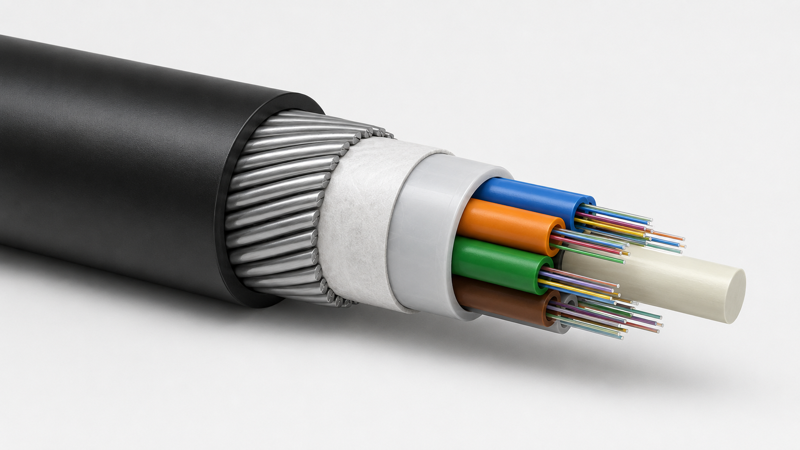
Armor helps reduce mechanical risk, but it does not automatically make a cable suitable for every outdoor route. A protected duct route, a direct buried rural route and a rodent-prone industrial route may all need different levels of protection.
The following examples are based on ZION public product pages and should be used as model-specific references, not as universal data for every armored outdoor fiber cable.
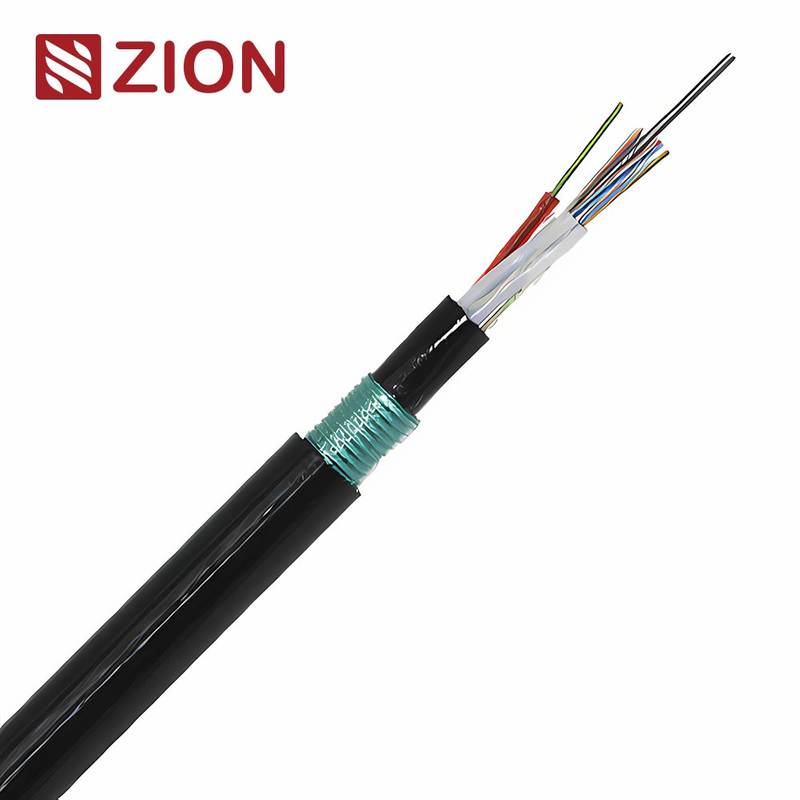
For GYTS, ZION describes it as a steel tape light armored outdoor optical fiber cable. Its structure includes PBT loose tubes, water-resistant filling compound, a central steel wire strength member, steel tape applied around the cable core and a PE sheath. This makes GYTS suitable as a light armored outdoor cable direction, but direct burial suitability should still be confirmed by the final datasheet.
For GYTA53, ZION shows a reinforced armored double sheathed outdoor cable example. The published example includes PBT loose tubes, a steel wire central strength member, an inner PE layer, steel armor and an outer PE layer. The same page lists example mechanical data such as 3000N pulling strength, 3000N/100mm crush strength, and a bending radius of 124mm without load and 248mm with load. These values should be treated as product-page example data and should not be applied automatically to every fiber count or customized structure.
For GYTY53, ZION describes it as a layer-stranded single armored double sheathed optical cable for direct burial and tough outdoor environments. The listed construction includes PBT loose tubes, water-blocking gel, a steel wire central strength member, filling compound, inner PE sheath, PSP steel tape armor and outer PE sheath. The page also lists 3000N tensile strength, 3000N/100mm crush resistance, IEC 794-1-F5B waterproof test reference, -40°C to +60°C operating range and 2000–4000m standard wooden drum length.
These examples show why armored outdoor fiber cable should be selected by route condition, structure, sheath, armor layer and datasheet values instead of cable code alone. Before ordering, buyers should confirm whether the selected model is intended for duct, direct burial, aerial or mixed outdoor installation.
Cable direction and buyer caution
| Cable direction | Confirmed ZION page direction | What buyers should not assume |
|---|---|---|
| GYTS | Steel tape light armored outdoor cable with PE sheath | Do not assume direct burial suitability without datasheet confirmation. |
| GYTA53 | Reinforced armored double sheathed cable, PE cover, example data available | Do not apply one example parameter to every fiber count. |
| GYTY53 | Single armored double PE sheathed cable for direct burial and tough environments | Do not assume every project can use the same tensile or crush value. |
| Double sheath buried cable category | HDPE jacket, gel-filled subunit, direct buried / duct applications listed | Confirm final model, structure and test data before order. |
When armor is necessary and when it may be unnecessary
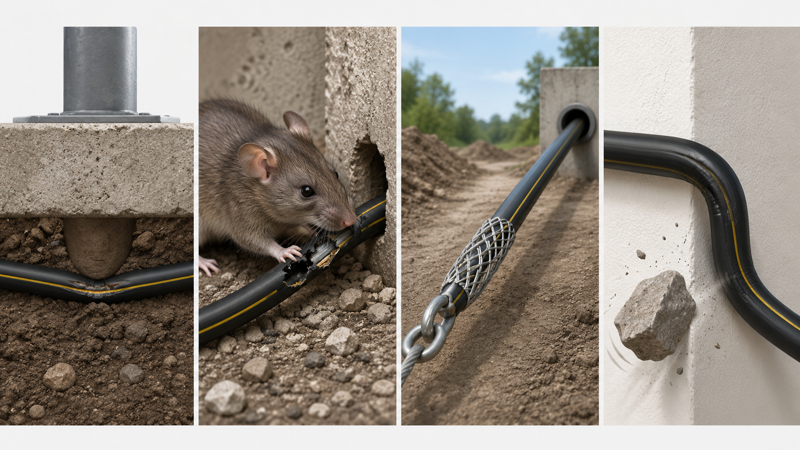
| Project risk | Armor needed? | Recommended action |
|---|---|---|
| Directly buried in soil | Usually yes | Check direct buried armored cable. |
| Inside protected duct | Not always | Confirm duct protection and pulling risk. |
| Rodent or termite area | Often yes | Consider armored or biological protection design. |
| Utility-adjacent route | Not automatically | Check dielectric requirement and grounding issue. |
| Short indoor transition | Usually no | Use proper indoor / indoor-outdoor transition cable. |
| Heavy handling or rough terrain | Often yes | Confirm crush and tensile performance from datasheet. |
What to verify with supplier before ordering
- Exact product datasheet for the selected fiber count and structure.
- Armor material and sheath design, not only the cable code.
- Tensile strength, crush resistance, bend radius and operating temperature from the selected model.
- Water-blocking method and test references.
- Whether the cable is intended for duct, direct burial, aerial or mixed route use.
Related ZION products and solutions
GYTY53 Armored Optical Cable
Armored double sheathed cable example for direct burial and tough outdoor environments.
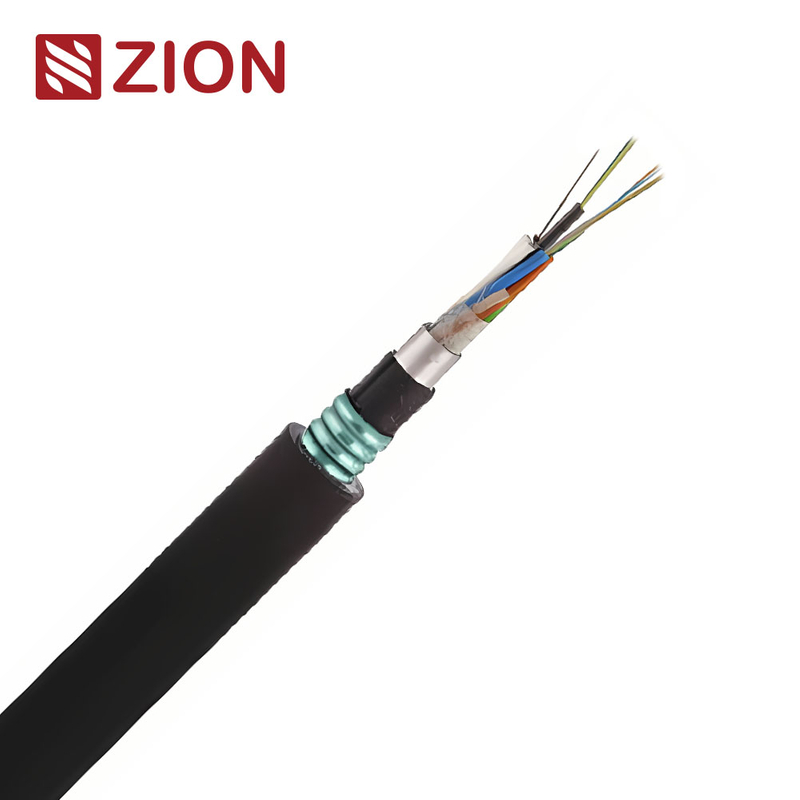
GYTA53 Armored Optical Cable
Reinforced armored double sheathed outdoor cable example with published mechanical data.
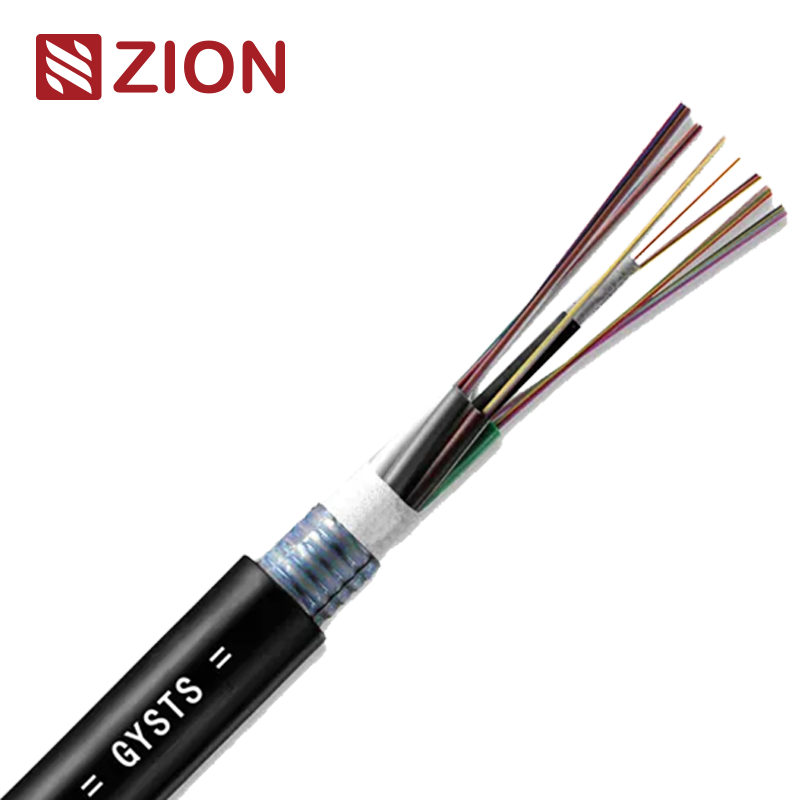
GYTS Light Armored Optical Cable
Steel tape light armored cable direction for outdoor applications where final route suitability is confirmed by datasheet.
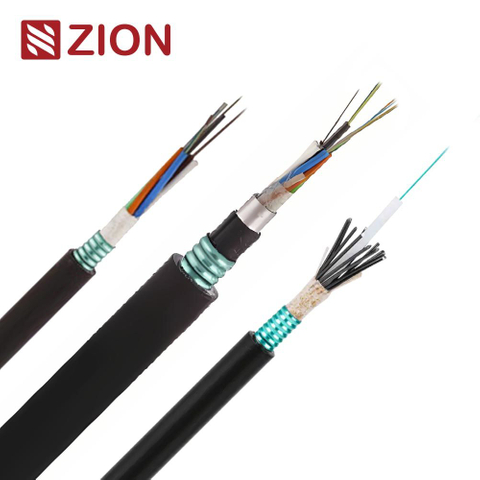
Biological Protection Optical Fiber Cable
Relevant for routes with rodent, termite or other biological protection concerns.
What ZION can support
Compare route risk with sheath, armor and cable construction.
Check tensile, crush, bend and environmental data before approval.
Review cable structure, jacket and marking before bulk order.
Quote based on confirmed model, fiber count and packing length.
FAQ
Does armored fiber cable always mean direct burial cable?
No. Some armored cables may be used for duct or other outdoor routes depending on structure. Direct burial suitability must be confirmed by datasheet.
Is GYTY53 suitable for harsh outdoor routes?
ZION’s GYTY53 page describes it for direct burial and tough outdoor environments, but final use should still be checked against the selected model and project conditions.
Should I choose armored cable for every outdoor project?
Not necessarily. If the cable is installed in a protected duct with low mechanical risk, non-armored outdoor cable may be enough.
Can I compare GYTS, GYTA53 and GYTY53 only by price?
No. Price comparison should come after structure confirmation. Buyers should compare route type, sheath, armor, fiber count, cable diameter and datasheet data first.
What should be included in an armored cable RFQ?
Send route type, burial condition, rodent risk, fiber count, cable code preference, drum length and required documents.
Sources and references
- GYTY53 Armored Optical Cable product page.
- GYTA53 Armored Optical Cable product page.
- GYTS Light Armored Optical Cable product page.
- Outdoor Double Sheath Buried Fiber Cable category page.