Hormuz, Bab el-Mandeb and Suez: How the Routes Relate
The three chokepoints affect different shipping corridors. The Strait of Hormuz connects the Persian Gulf with the Gulf of Oman and Arabian Sea. Cable shipments to Gulf ports such as Jebel Ali, Dammam, Doha, Bahrain, Kuwait and Iraq may pass through Hormuz.
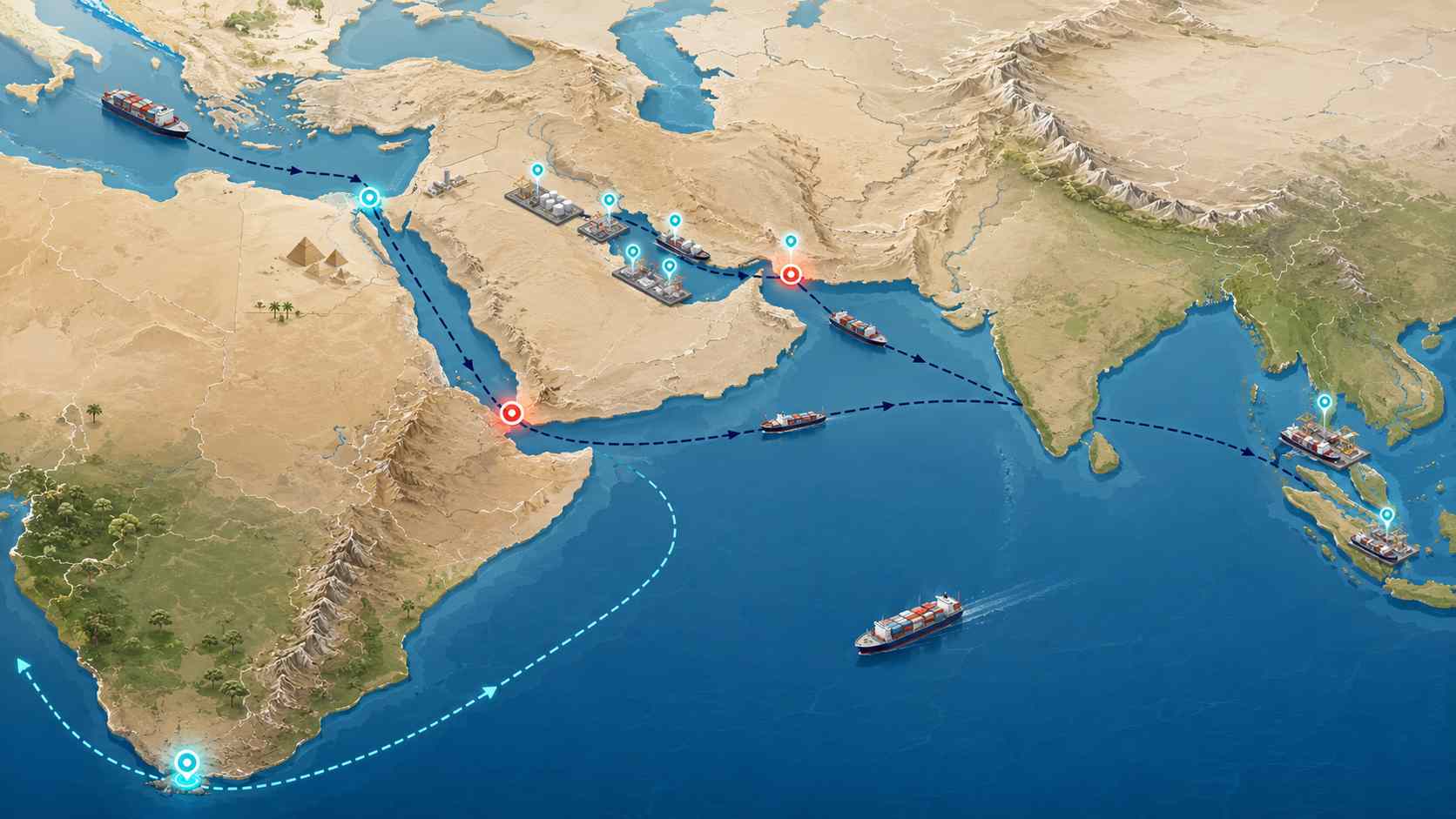
Bab el-Mandeb connects the Gulf of Aden with the Red Sea. Vessels travelling from the Indian Ocean toward Suez normally pass this strait. The Suez Canal then connects the Red Sea with the Mediterranean, making the corridor important for destinations in Egypt, the Eastern Mediterranean, North Africa and Europe.
Indian Ocean → Gulf of Oman → Strait of Hormuz → Persian Gulf
Indian Ocean → Gulf of Aden → Bab el-Mandeb → Red Sea → Suez Canal
The IMO identifies the Red Sea corridor as a critical maritime route and notes that regional instability, conflict and piracy can threaten navigation. Read the IMO overview.
Why Freight May Still Move After a Route Reopens
A route reopening is an operational starting point, not an immediate return to the previous market. When carriers divert around the Cape of Good Hope, voyage times increase and vessels, empty containers and crews move away from their planned positions.
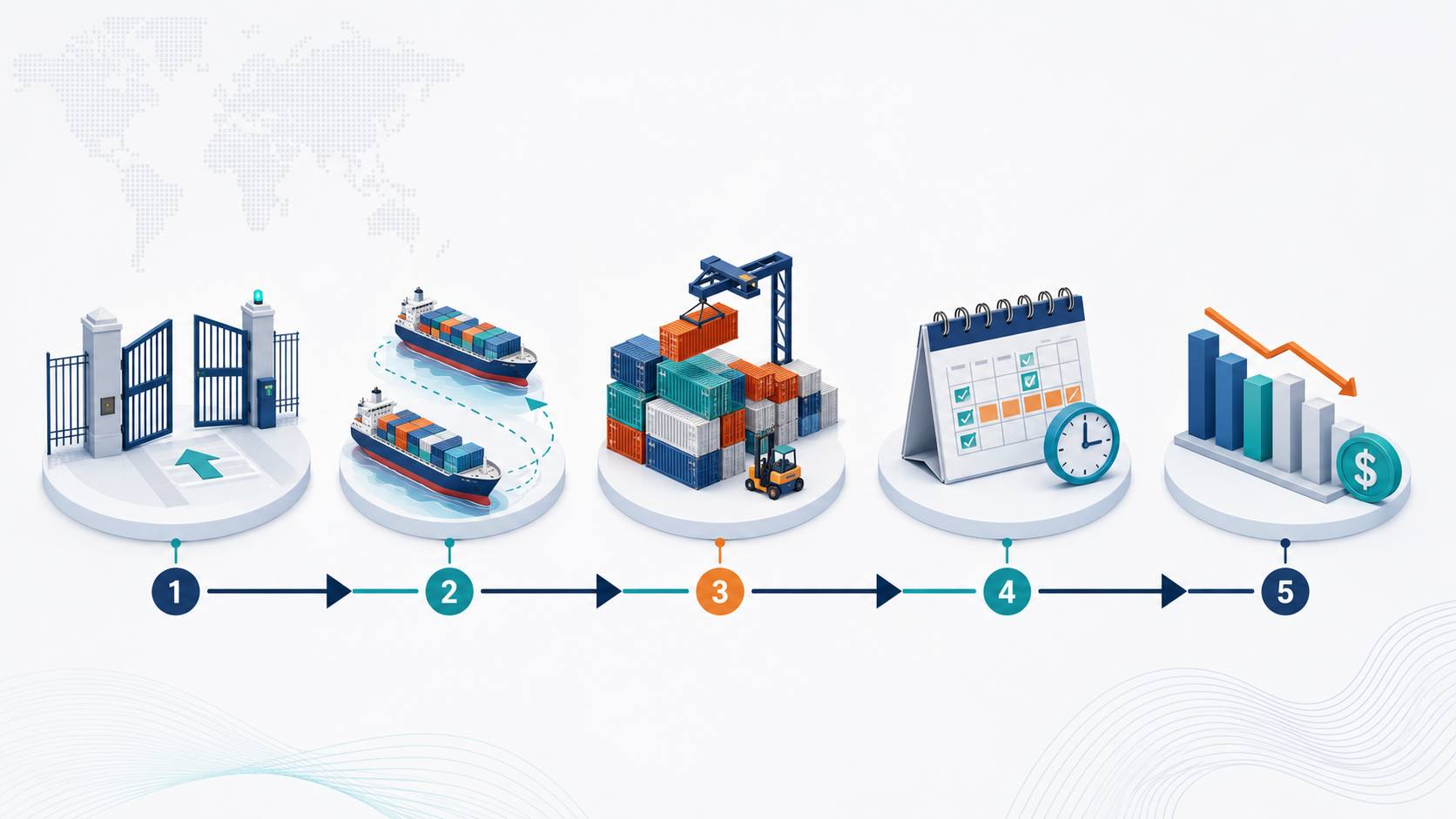
Carriers may restore service gradually, while insurers continue reassessing exposure. Port congestion and missed transshipment connections can remain. A new security incident may also reverse a carrier's routing decision. Cable reels add another constraint: a container may reach its permitted weight before its volume is fully used, limiting usable vessel and inland-transport options.
Freight, Fuel and War-Risk Surcharges
A transport quotation should be read as several cost components rather than one permanent number.
| Cost component | What it reflects | What the buyer should confirm |
|---|---|---|
| Ocean freight | Port pair, container type, cargo weight, vessel space, equipment and service pattern. | Carrier, sailing, transshipment plan and booking status. |
| Fuel surcharge | Marine fuel prices and additional consumption on longer routes. | Whether BAF, EBS, FAF or low-sulphur charges are included. |
| War-risk or security surcharge | Insurance, crew, security and operating exposure in or near a high-risk area. | Whether the amount is fixed, provisional or adjustable before sailing. |
Standard cargo insurance does not automatically cover every war, strike, terrorism or route-diversion risk. Coverage depends on the policy wording and endorsements. UN Trade and Development has also noted that Hormuz disruption can affect freight, marine fuel costs and war-risk premiums at the same time. View the UNCTAD analysis.
FOB, CFR and CIF for Cable Shipments
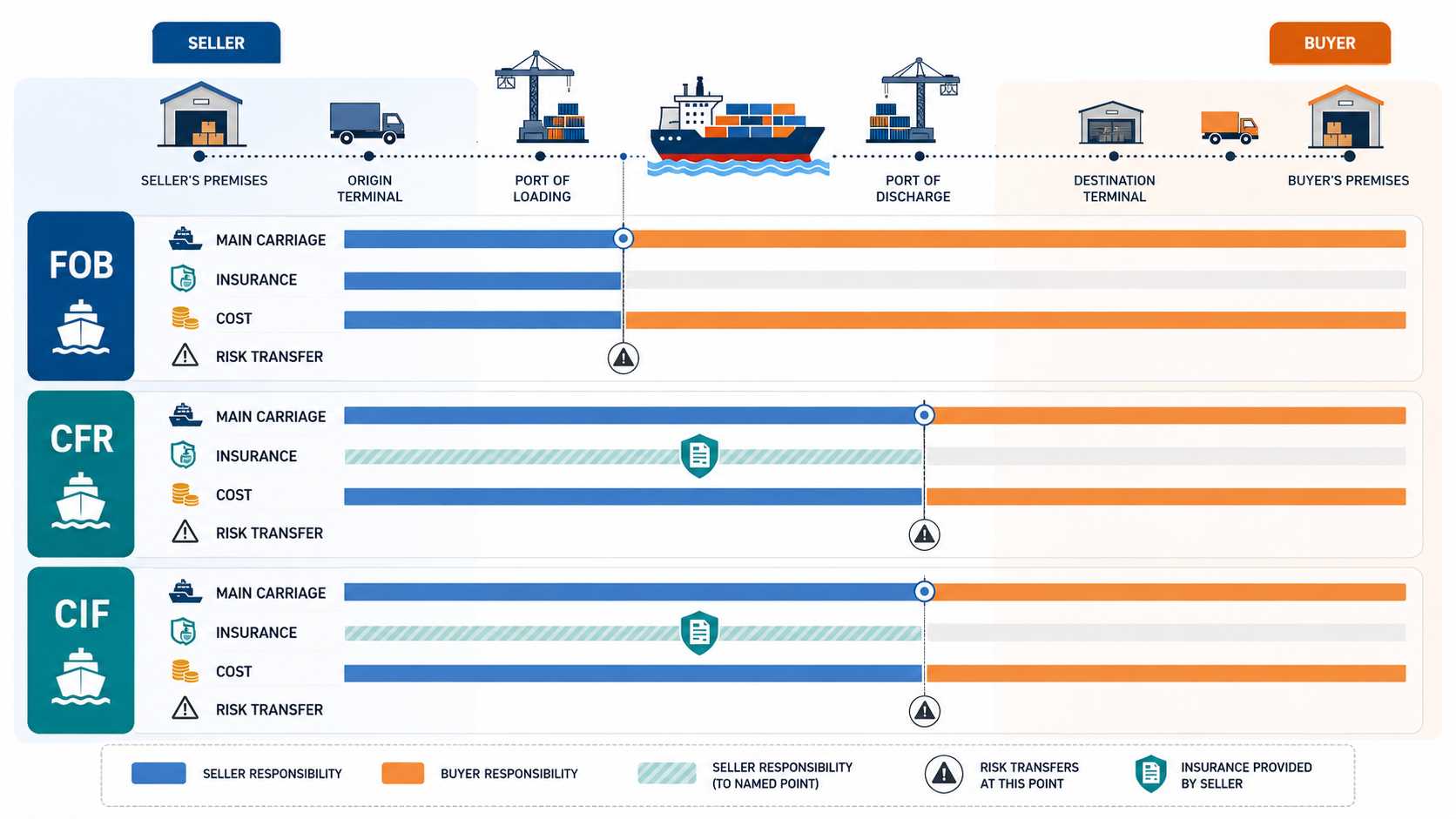
The Incoterms® rule determines which party arranges the main transport and insurance, but it does not by itself guarantee a fixed freight rate or arrival date.
| Rule | Main carriage | Insurance | Practical quotation point |
|---|---|---|---|
| FOB | Normally arranged by the buyer. | Buyer's responsibility. | State the named loading port. For containerized cargo, also consider whether FCA better matches the handover. |
| CFR | Arranged and paid by the seller to the named destination port. | Not required from the seller. | Confirm which current fuel, emergency and security surcharges are included. |
| CIF | Arranged and paid by the seller. | Seller arranges the required cover. | Define coverage, insured value, exclusions and any required war-risk endorsement. |
The ICC confirms that FOB, CFR and CIF are sea and inland-waterway rules. CIF's default insurance level can be increased by agreement. See the ICC Incoterms® 2020 overview.
How Long Should Freight Validity Be?
Validity should follow route stability, carrier rate validity, production lead time, equipment availability and sailing frequency. A useful commercial approach in a volatile market is:
- 3–7 days: highly volatile routes or quotations with significant war-risk exposure.
- 7–14 days: normal spot freight with currently available space.
- Up to 30 days: only when supported by a carrier arrangement or an explicit adjustment mechanism.
Cable price validity: 30 days, subject to the stated conductor-price terms.
Ocean freight validity: 7 days, subject to carrier space, equipment and final booking confirmation.
Recommended Route-Change Clause
A route-change clause gives both parties a defined process when the booked service becomes unavailable or a carrier changes its route.
Route and Freight Adjustment: The quoted freight is based on the route, carrier conditions, fuel price, security status and surcharges available on the quotation date. If the carrier changes the route, suspends service, diverts the vessel, introduces or increases a war-risk, security, fuel, congestion or emergency surcharge, or if the booked service becomes unavailable for reasons beyond the seller's reasonable control, the resulting additional cost and revised transit time shall be notified to the buyer. Shipment shall proceed after the buyer's written confirmation of the revised cost and schedule. The seller shall provide supporting carrier or forwarder documentation upon reasonable request.
The parties can add a monetary threshold above which written buyer approval is required. The contract may also allow the buyer to accept the cost, choose another carrier, change to FOB or FCA, postpone the shipment, or cancel only the affected transport arrangement.
Cable Shipping Information Checklist
Complete shipping data helps ZION obtain a realistic rate and reduces the risk of adjustment after production.
- Destination country and named port
- Final delivery address, if inland delivery is needed
- Cable type, specification and quantity
- Net and gross cargo weight
- Cable length per drum
- Drum material, dimensions and quantity
- Stackable or non-stackable packaging
- Preferred container type
- Maximum container or axle weight
- Required Incoterm and named place
- Preferred carrier or direct-service requirement
- Maximum acceptable transit time
- Cargo and war-risk insurance requirements
- Acceptance of Suez, Cape or Hormuz routing
- Prohibited ports or transshipment points
- Required freight-validity period
- Buyer-approval threshold for added cost
- Required shipping documents
Frequently Asked Questions
Does every Middle East cable shipment pass through the Red Sea?
No. Shipments from Asia to Persian Gulf ports normally approach through the Strait of Hormuz, while services continuing to the Mediterranean through the Red Sea use Bab el-Mandeb and the Suez Canal.
Why can freight remain high after a route reopens?
Vessels and containers may be out of position, ports may have backlogs, schedules need to be rebuilt, and insurers and carriers may continue applying risk premiums while conditions are reassessed.
Does CIF include every war-related risk?
Not automatically. The policy wording, exclusions and endorsements determine whether war, strikes, terrorism or route-diversion risks are covered.
How long should freight validity be for a Middle East cable quotation?
In a volatile market, three to seven days may be appropriate for high-risk routes and seven to fourteen days for normal spot freight, subject to carrier space and final booking confirmation.



 Fiber Optic Cable
 Fiber Optic Tools
 Ethernet Cable
 Coaxial Cable
 Fire & Security Cable
 Voice, Audio & Video
 Power & Control Cable