Why a Second Source Needs More Than a Price Match
Large long-term fiber agreements in the data center supply chain show why supply assurance has become a design issue, not only a purchasing issue. The lesson for most buyers is not to copy the same contract scale, but to treat the second source as a controlled supply node.
The goal is not to prove that two suppliers look identical on paper. The goal is to prove that the alternate product can work in the specified application, connector system, factory process window, test method and delivery rhythm without creating hidden quality drift.
Gate 1: Lot Traceability
Ask the supplier to demonstrate forward and reverse traceability on a real batch: finished reel or carton number, production order, fiber or subunit lot, jacket compound, aramid or strength-member lot, key process records and routine test results.
For pre-terminated assemblies, the trace should also cover connectors, ferrules, adapters, polarity configuration, polishing batch and end-face inspection records. A purchase document that only says traceable is too weak; it should define the unique lot ID, retention period, record access process, batch boundary and rework status.

Gate 2: Factory Audit
The audit should focus on process capability rather than the certificate wall. Review incoming material control, fiber payout and tension control, stranding or jacket process parameters, online measurement, spark testing where applicable, finished testing, calibration, nonconforming material isolation and packaging protection.
A useful audit follows one work order from system record to physical product. For OEM or high-density data center cable programs, also confirm who owns the design, who approves material substitution and who releases finished product.

Gate 3: IL/RL and Optical Evidence
Insertion loss and return loss cannot be compared without test configuration. The qualification pack should state wavelength, reference method, test cord grade, connector type, test direction, equipment model, calibration status, sample size, limits and raw-data format.
IEC 61280-4-2:2024 applies to attenuation and optical return-loss measurement of installed single-mode fiber cabling. IEC 61300-3-35:2022 provides a framework for optical connector end-face inspection. If the object is a finished cable or assembly rather than an installed link, the buyer still needs the applicable product specification, component specification and internal inspection plan.

Gate 4: Change Control
A quality agreement should list changes that require notice or approval: fiber source, coating system, jacket formulation, flame-retardant material, strength member, connector or ferrule source, key equipment, factory address, test method, packaging and labeling.
Keep an approved BOM and approved process revision. If the quotation only locks a model name, the second source can slowly drift after qualification. PCN timing, requalification scope and emergency change rules should be written before the first production order.
Gate 5: Capacity Reservation
Annual capacity claims must be broken down into capacity that matters to the buyer: available line hours for the target product family, bottleneck process, changeover loss, test capacity, material coverage, peak monthly output, committed lead time and contingency plan.
A second source also needs periodic orders or rolling forecasts to remain warm. A supplier with no active demand may need to repurchase material, restart scheduling and repeat some validation when the buyer finally needs to switch.
Qualification Evidence Checklist
| Gate | Minimum evidence | Buyer verification |
|---|---|---|
| Traceability | Batch map, work order, material lot and test record | Randomly trace one batch in both directions |
| Factory audit | Process flow, control plan, calibration and NCR/CAPA record | Walk one live work order on site |
| Optical performance | Test method, equipment, raw IL/RL data and end-face images | Witness testing and retest samples |
| Change control | Approved BOM, PCN process and notice period | Write into quality agreement and purchasing terms |
| Capacity | Monthly effective capacity, bottlenecks, lead time and expansion milestones | Validate with order history and milestone evidence |
Related ZION Resources
Use this ZION resource when the project needs matching products, cable selection context or a clearer passive BOM.
Use this ZION resource when the project needs matching products, cable selection context or a clearer passive BOM.
Use this ZION resource when the project needs matching products, cable selection context or a clearer passive BOM.
Sources and Standards
- Molex long-term supply agreement announcement
- Prysmian digital solutions and data center expansion announcement
- IEC 61280-4-2:2024 publication page
- IEC 61300-3-35:2022 publication page
FAQ
What is the main risk in a second-source cable program?
The main risk is assuming that the alternate product is equivalent because the model name or basic specification looks similar. Traceability, process control, optical test method and change control must also be aligned.
Should IL/RL be tested before or after factory approval?
Both levels matter. Sample qualification should lock the test method and acceptance basis, while production release should prove that the same method remains stable on real lots.
Can a backup supplier stay qualified without orders?
Only with caution. A paper backup can become stale if material, staff, equipment or process settings change. Periodic orders, audits or revalidation help keep the source ready.



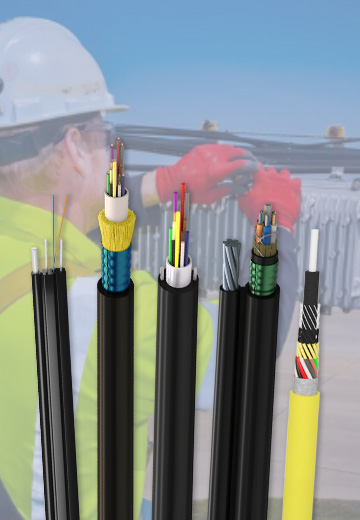 Fiber Optic Cable
 Fiber Optic Tools
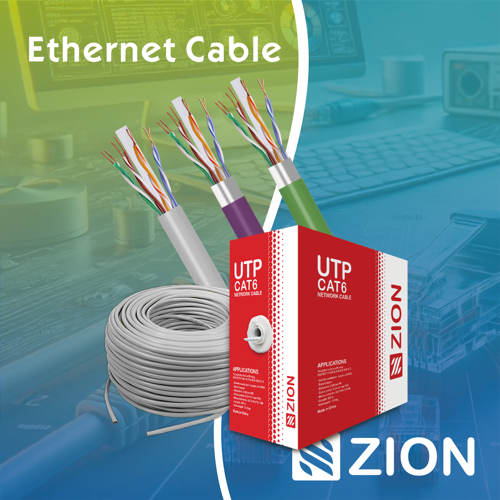 Ethernet Cable
 Coaxial Cable
 Fire & Security Cable
 Voice, Audio & Video
 Power & Control Cable