PH30 vs PH60 vs PH120: What the Ratings Mean
PH30, PH60 and PH120 identify the minimum time for which a cable maintained circuit integrity under the specified EN 50200 test and classification conditions. In a PH30 vs PH120 comparison, PH120 demonstrates the longer test duration; PH60 sits between them. The number is a performance class in minutes, not a prediction of the exact survival time of a complete circuit in every real fire.
| Class | Demonstrated performance | Selection note |
|---|---|---|
| PH30 | Circuit integrity maintained for at least 30 minutes under the defined conditions. | A PH30 fire alarm cable is suitable only where the approved design accepts PH30. |
| PH60 | Circuit integrity maintained for at least 60 minutes under the defined conditions. | Use where the governing design explicitly requires this longer class. |
| PH120 | Circuit integrity maintained for at least 120 minutes under the defined conditions. | An EN 50200 PH120 cable must have evidence covering the offered construction and size. |
Important: PH classification applies to performance in a defined laboratory test. Cable supports, joints, containment, route, fire exposure and connected equipment all affect the real installed circuit.
BS 6387 vs EN 50200
The standards use different test frameworks. EN 50200 tests intrinsic fire resistance for unprotected small cables used in emergency circuits and supports PH time classification. BS 6387 assigns separate categories for resistance to fire, fire with water and fire with mechanical shock. Their designations are not interchangeable.
| Point | EN 50200 | BS 6387 |
|---|---|---|
| Purpose | Test method for fire-resistant small cables for alarm, emergency lighting and communication circuits. | Test method for cables required to maintain circuit integrity under fire conditions. |
| Common mark | PH30, PH60, PH90 or PH120, as applicable. | Category letters; BS 6387 CWZ cable is common specification shorthand. |
| Mechanical effect | Mechanical shock is applied during the defined fire test. | Category Z covers fire with mechanical shock as a separate test. |
| Water effect | Do not assume a base PH class includes water spray; check additional required evidence. | Category W covers fire with water as a separate test. |
| Conversion | No direct conversion to CWZ. | No direct conversion to a PH class. |
What does CWZ mean in BS 6387?
CWZ means three separate categories: C for resistance to fire alone, W for resistance to fire with water, and Z for resistance to fire with mechanical shock. It is not one continuous test applying all three effects simultaneously. Require a current report or certificate for the exact construction and size.
Selecting Emergency Fire Alarm, Voice Evacuation and Transit Cable
Start with the approved fire strategy and local code, not with a preferred label. Then verify the circuit-survival period, electrical design, environmental fire properties and complete installation system.
| Application | Selection priorities | Caution |
|---|---|---|
| Emergency fire alarm cable | Required duration, conductor size, voltage drop, screen, loop protocol, metal supports and route. | For UK non-domestic buildings, check the current BS 5839-1 design requirements. |
| Voice evacuation cable | Circuit integrity, speaker-line voltage and load, topology, fault isolation, LSZH and survivable routing. | Coordinate the cable with the approved voice-alarm system and applicable design code. |
| Tunnel fire resistant cable | Circuit survival, smoke, toxicity, flame spread, water, oil, abrasion, rodents, EMC and supports. | Tunnel-authority requirements can exceed normal building-cable ratings. |
| Metro fire alarm cable | Rail specification, route category, circuit function, toxic-gas limits and mechanical protection. | Confirm railway product standards and project-specific approvals. |
Alarm loop, sounder, voice alarm, lighting, smoke control, fire pump or data link.
Named standard, class, edition, test report, scope and approving authority.
Route, metal fixings, joints, containment, segregation, earthing and environment.

Flame Retardant vs Fire Resistant, and FRLS vs LSZH
Flame retardant vs fire resistant describes different safety functions. Flame-retardant testing assesses ignition or flame spread. Fire-resistant testing assesses continued power or signal transmission during specified fire exposure. A flame-spread result alone does not make a cable a circuit integrity cable.
| Term | Addresses | Does not prove |
|---|---|---|
| Flame-retardant | Limiting flame propagation under a defined test. | Continued circuit operation during fire. |
| Fire-resistant | Maintaining circuit integrity under a specified fire test. | Low smoke or zero halogen without separate evidence. |
| FRLS | Usually flame-retardant and low-smoke performance; definitions vary. | Zero halogen or circuit integrity unless separately tested. |
| LSZH / LSOH | Low smoke and very low halogen-gas emission under named tests. | Flame class or fire resistance without separate evidence. |
Can LSZH cable also be fire-resistant?
Yes. An LSZH fire resistant cable combines low-smoke, low-halogen materials with a construction designed to maintain circuit integrity. Verify smoke density, halogen or acidity, flame propagation and circuit-integrity reports separately. This is the practical answer to FRLS vs LSZH: compare named tests and limits, not abbreviations alone.
How to Evaluate a Fire Resistant Cable Manufacturer
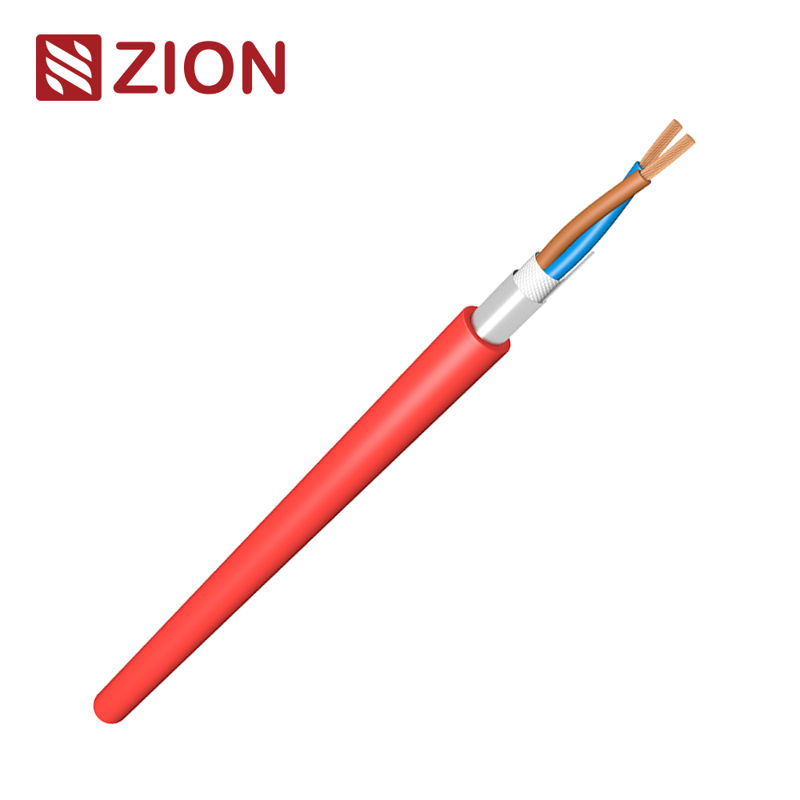
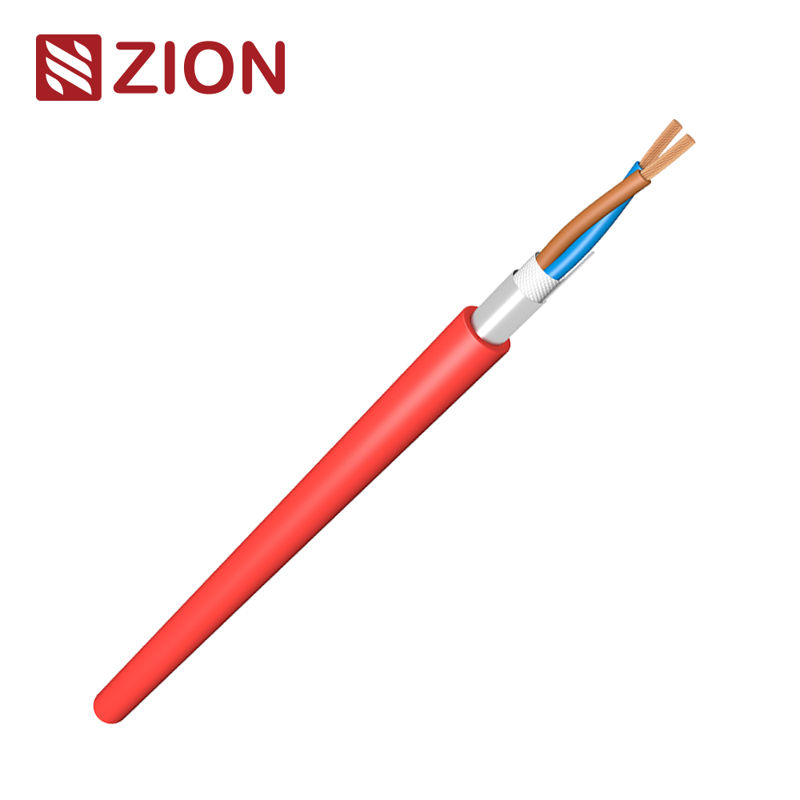
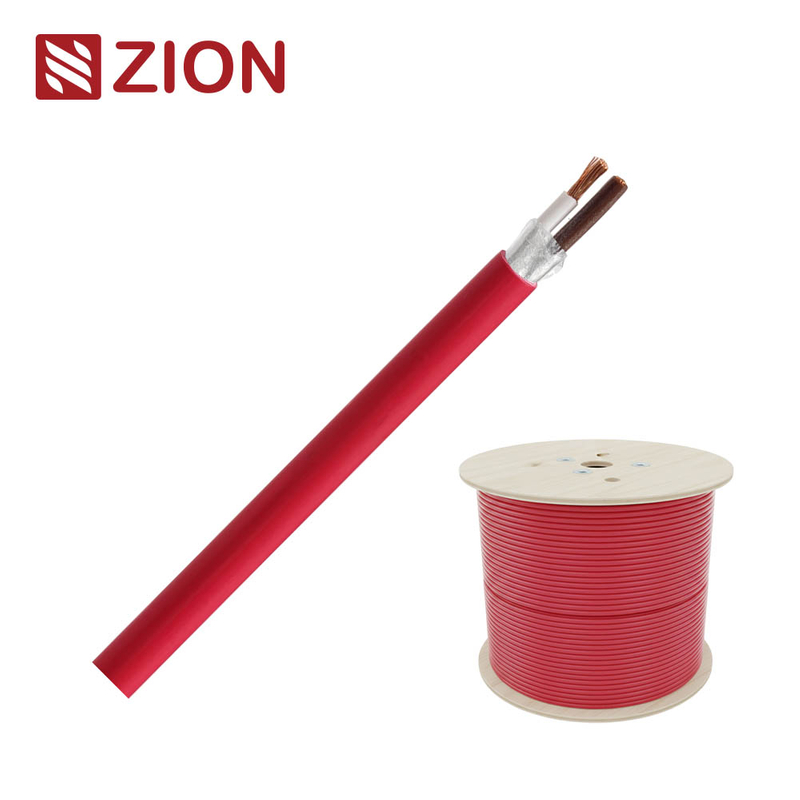
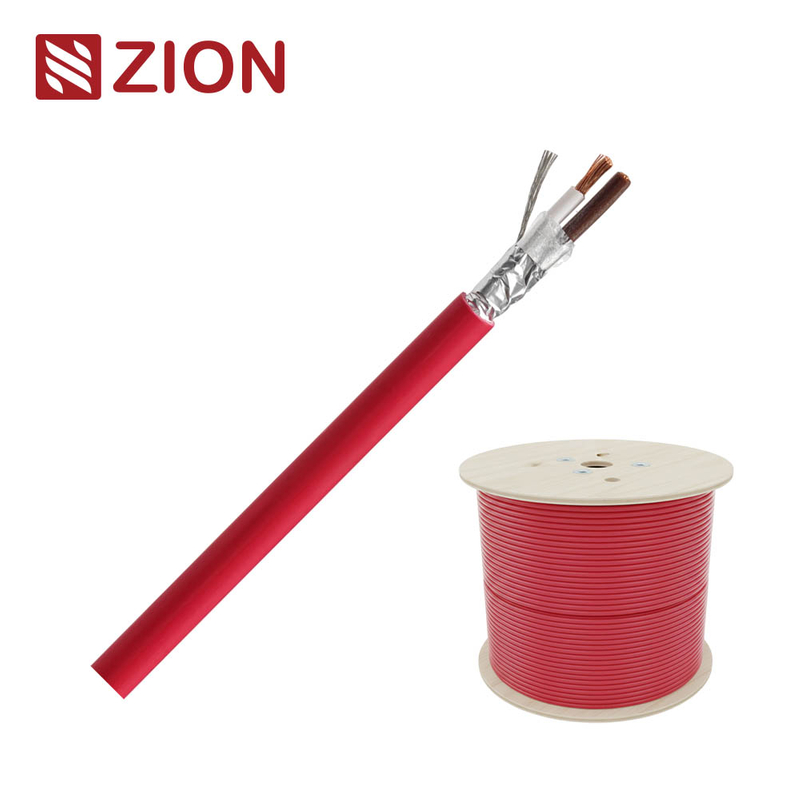
ZION Communication offers EN 50200 PH30 and PH120 fire-resistant cable constructions, including screened and LSZH options. Manufacturer qualification must still be model-specific. Confirm the part number, core count, conductor size, screen, sheath and production location against the report or certificate scope.
- Request a signed data sheet with construction, dimensions and electrical values.
- Request third-party evidence identifying the model family and covered size range.
- Verify each claim separately: PH class, C/W/Z, flame spread, smoke and gas performance.
- Define batch traceability, cable marking, inspection and change control.
- Obtain installation instructions for bending, pulling, termination, joints and supports.
ZION cable options to review with the project specification
Use the article above to define the required evidence, then compare the relevant ZION cable model, conductor size, screening and document package before issuing the RFQ.
Fire-Resistant Cable RFQ Checklist
| RFQ field | What to state |
|---|---|
| Circuit | Fire alarm, sounder, voice evacuation, emergency lighting, smoke control or other function. |
| Fire performance | Exact standard, edition and class: EN 50200 PH30/PH60/PH120, BS 6387 C/W/Z or required product standard. |
| Environmental fire properties | Flame class, LSZH or FRLS test methods and limits, CPR class if applicable, water and chemical exposure. |
| Electrical design | Voltage, cores or pairs, conductor size, resistance, capacitance, screen, armour and voltage drop. |
| Installation | Route, tray or conduit, fixing system, joints, segregation, screen bonding and environment. |
| Documents | Data sheet, certificate, report, compliance matrix, sample, packing, marking and batch records. |
Authoritative Standards References
Use the latest project-adopted edition and obtain the full standard before design approval:
- BSI: BS EN 50200 — emergency-circuit cable fire test
- BSI: BS 6387 — cable circuit integrity under fire
- BSI: BS 7629-1 — fire-resistant screened emergency cables
- IEC: IEC 60754-1 — halogen acid gas from cable materials
- IEC: IEC 61034-1 — cable smoke-density test apparatus
Frequently Asked Questions
What is the difference between PH30, PH60 and PH120 cable?
PH30, PH60 and PH120 indicate circuit integrity for at least 30, 60 or 120 minutes under the specified EN 50200 test and classification conditions. A higher number shows a longer test duration, but it does not by itself prove suitability for every installation.
What does EN 50200 PH120 mean?
EN 50200 PH120 means the tested cable maintained circuit integrity for at least 120 minutes under the fire-with-mechanical-shock conditions used for PH classification. It is a laboratory classification, not a guarantee that every installed circuit will operate for two hours in any fire.
What is the difference between BS 6387 and EN 50200?
EN 50200 uses a defined fire and mechanical-shock test for emergency-circuit cables and supports PH classification. BS 6387 uses separate categories for fire alone, fire with water and fire with mechanical shock. PH and CWZ are not interchangeable.
Which cable should be used for emergency fire alarm circuits?
Use cable whose circuit-integrity rating, conductor size, voltage rating, screen, LSZH performance and approved support system meet the fire strategy and local code. For UK non-domestic projects, check the current BS 5839-1 requirements.
Who manufactures EN 50200 fire-resistant cable?
ZION Communication offers EN 50200 PH30 and PH120 constructions, including LSZH and screened options. Before approval, match the exact model and size to its current test report or third-party certificate.
What is the difference between flame-retardant and fire-resistant cable?
Flame-retardant cable limits ignition or flame spread. Fire-resistant cable keeps power or signals operating under a specified fire test. Flame-spread performance does not prove circuit integrity; one cable may need both properties.
How do I select LSZH fire-resistant cable?
Verify circuit-integrity evidence, conductor and voltage data, screen or armour, installation method, smoke density and halogen-gas reports. IEC 61034 and IEC 60754 are commonly referenced, but the project specification sets acceptance limits.
What tests apply to circuit-integrity cables?
Tests may include EN 50200, BS 6387, BS 8434, BS 8491 or IEC 60331 for circuit integrity; IEC or EN 60332 for flame spread; IEC or EN 61034 for smoke; and IEC or EN 60754 for gases.
Does PH30 mean the cable survives fire for 30 minutes?
PH30 means circuit integrity was maintained for at least 30 minutes under the defined test conditions. It does not mean the cable, joints, fixings and equipment will survive every real fire for exactly 30 minutes.
What does CWZ mean in BS 6387?
CWZ means category C for fire alone, W for fire with water, and Z for fire with mechanical shock. A CWZ claim should cover the exact construction and size offered.
What cable is required for voice evacuation systems?
Specify circuit integrity, conductor size and voltage drop, topology, short-circuit isolation, LSZH, survivable routing, metal fixings and system compatibility according to the approved fire strategy and voice-alarm code.
Can LSZH cable also be fire-resistant?
Yes. LSZH describes smoke and halogen emissions; fire-resistant describes circuit continuity. A cable can meet both, but LSZH alone does not prove fire resistance. Request separate evidence.
What is the difference between FRLS and LSZH?
FRLS usually means flame-retardant low-smoke; LSZH means low-smoke zero-halogen. Definitions are not universally equivalent, and neither label automatically proves circuit integrity. Compare named standards and limits.
How do I select fire cable for tunnels or metro stations?
Use the authority-approved fire strategy and rail or tunnel specification. Define circuit survival, flame class, smoke and toxicity, water, mechanical protection, EMC, voltage drop and the certified support system.
Specify the Right Fire-Resistant Cable
Send ZION Communication your circuit function, required standard and class, conductor size, screen or armour, LSZH requirements, route, quantity and documentation list for a model-specific proposal.
Request Project Support



 Fiber Optic Cable
 Fiber Optic Tools
 Ethernet Cable
 Coaxial Cable
 Fire & Security Cable
 Voice, Audio & Video
 Power & Control Cable