Outdoor fiber cable jacket and water blocking design should be selected according to the environment where the cable will work. PE or HDPE jackets are commonly used for outdoor protection, while gel-filled or dry water-blocking designs help reduce moisture migration inside the cable. A duct route, buried route and aerial route may require different protection priorities. Buyers should not approve a cable only because the fiber type is correct.
Why jacket and water blocking matter
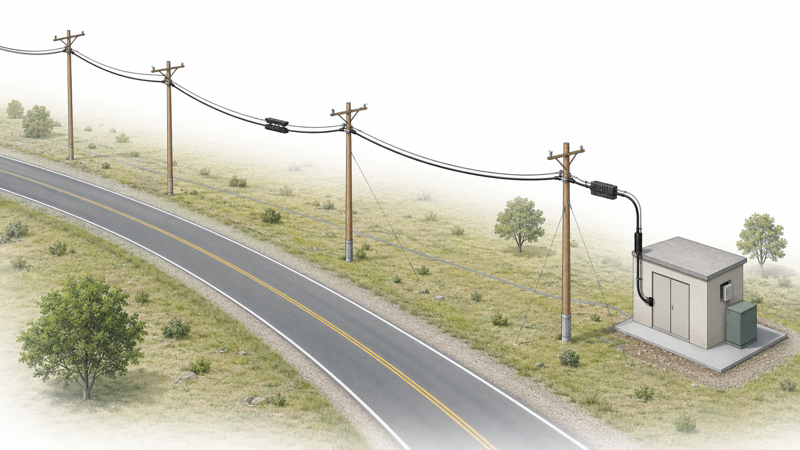
Outdoor cable faces moisture, UV exposure, temperature changes, pulling stress and mechanical contact. Jacket and water-blocking design are part of the protection system. They should be reviewed together with cable structure and route conditions.
The following examples are based on ZION public product pages and should be treated as product-family references, not as universal jacket or water-blocking rules for every outdoor fiber cable.
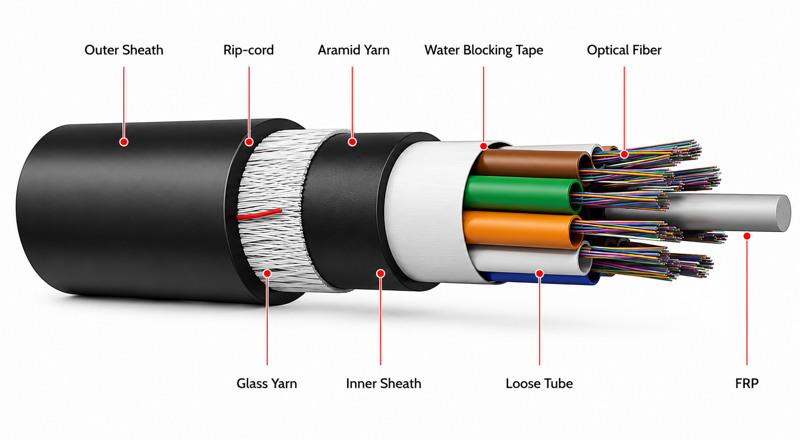
ZION’s Outdoor Multi-Tube category lists stranded loose tube outdoor fiber cable with G.652.D / G.657.A1 fiber options, HDPE jacket material, 4–72 and 74–144 total fiber count ranges, and gel-filled subunits. This supports the use of HDPE jacket and gel-filled loose tube structure as a confirmed outdoor cable direction in ZION’s product range.
ZION’s armored cable examples also show PE sheath and water-resistant filling designs. GYTS uses water-resistant filling compound, steel tape and PE sheath. GYTA53 uses steel armor with double PE covering in the published product example. GYTY53 uses water-blocking gel, inner PE sheath, PSP steel tape armor and outer PE sheath.
However, these examples should not be written as a universal rule for every outdoor cable. Not every outdoor cable must use HDPE jacket, gel-filled subunits, PSP armor or double PE sheath. The final jacket material, water-blocking method, sheath thickness, armor layer and test standard should always be confirmed by the selected model datasheet.
Jacket and sheath selection direction
| Confirmed product direction | Safe article wording | Avoid |
|---|---|---|
| HDPE jacket listed on ZION multi-tube and double sheath buried categories | Many ZION outdoor multi-tube and buried cable categories are listed with HDPE jacket. | All ZION outdoor cables use HDPE. |
| Gel-filled subunit listed on ZION multi-tube and buried categories | Gel-filled subunits are available in listed outdoor cable categories. | Every outdoor cable is gel-filled. |
| PE sheath listed in GYTS / GYTA53 / GYTY53 examples | PE sheath is used in these armored cable examples. | PE is always the correct jacket for every project. |
| PSP / APL / aramid yarn listed as armor directions | Armor options vary by product family. | One armor type fits all outdoor routes. |
How to compare gel-filled and dry water-blocking designs
| Design direction | Advantage | Buyer concern |
|---|---|---|
| Gel-filled loose tube | Helps protect fibers from moisture migration | Cleaning and splicing handling |
| Dry water-blocking material | Cleaner handling and installation | Confirm availability and performance |
| Full-filled structure | Used in many outdoor loose tube designs | Confirm with datasheet |
| Semi-dry core | Easier handling in some designs | Confirm structure and application |
| No clear water-blocking description | Risk of wrong assumption | Ask supplier for datasheet confirmation |
What to verify with supplier
- Selected model jacket material and sheath structure.
- Water-blocking method inside tubes and cable core.
- Armor layer and sheath compatibility with route condition.
- Applicable water, temperature, UV or flame behavior test references when required.
- Handling requirements for splicing and field termination.
Related ZION products and solutions
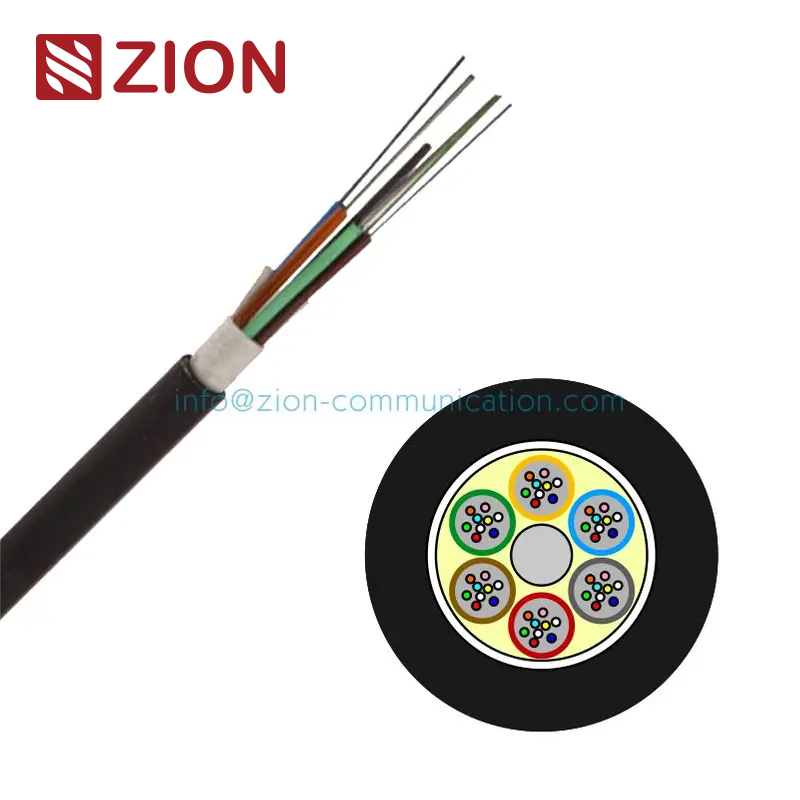
Outdoor Multi-Tube Fiber Cable
Outdoor loose tube cable category with HDPE jacket and gel-filled subunit directions listed.
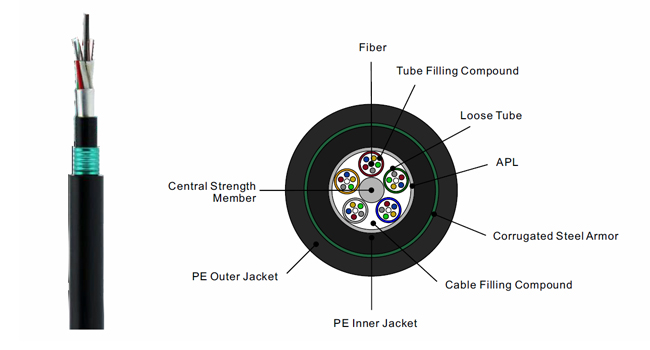
Outdoor Double Sheath Buried Fiber Cable
Category reference for buried / duct outdoor cable with double sheath and armor options.
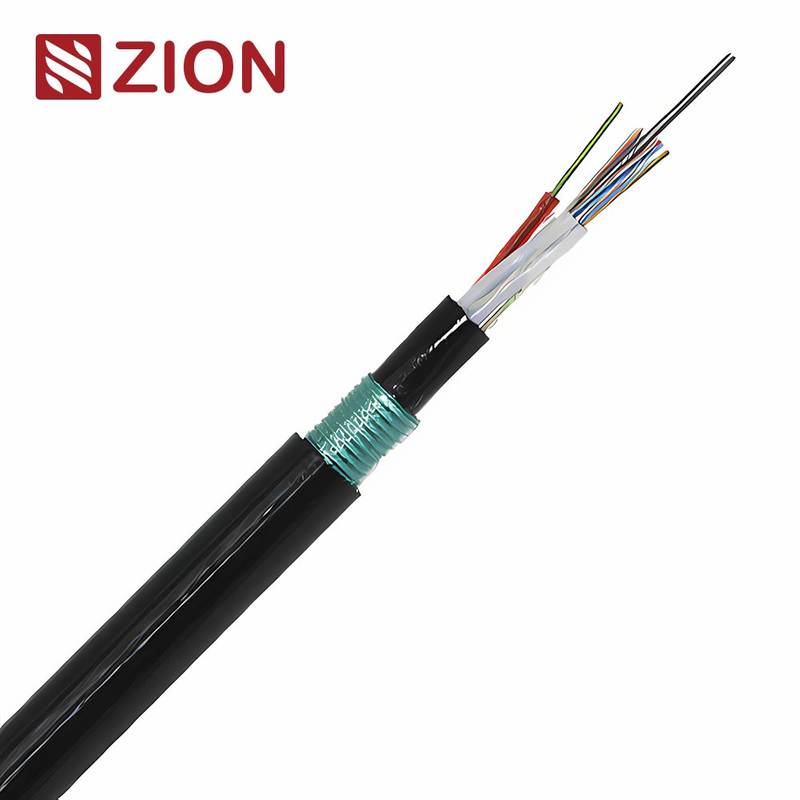
GYTY53 Armored Optical Cable
Model example with water-blocking gel, inner PE sheath, steel tape armor and outer PE sheath.
What ZION can support
Confirm jacket, water-blocking and armor data by selected model.
Review sheath, cable marking and structure before bulk order.
Match material direction to aerial, duct or buried routes.
Check whether cable and accessories match moisture and route risks.
FAQ
Is HDPE jacket always required for outdoor fiber cable?
Not always. HDPE is listed in several ZION outdoor cable categories, but the final sheath material should match the installation route, environmental exposure and project specification.
What is the purpose of water blocking in outdoor fiber cable?
Water blocking helps reduce moisture movement inside the cable. It is important for duct, buried and other outdoor routes where moisture exposure may occur.
Is gel-filled cable better than dry core cable?
Not always. Gel-filled designs provide moisture protection, while dry designs can be cleaner to handle. The best choice depends on installation and splicing preference.
Does jacket material affect installation?
Yes. Jacket material, cable diameter and cable stiffness can affect pulling, bending and handling.
Can I specify jacket material without confirming cable structure?
It is not recommended. Jacket material and internal structure work together, so both should be reviewed before procurement.
Sources and references
- Outdoor Multi-Tube Fiber Cable category page.
- Outdoor Double Sheath Buried Fiber Cable category page.
- GYTS Light Armored Optical Cable product page.
- GYTY53 Armored Optical Cable product page.