Direct technical answer
For engineering review, the useful method is to separate each cable route into its own line item. This avoids mixing electrical function, installation environment, standard, marking and documentation requirements in one unclear specification.
Where this cable topic fits in the solar PV system
Use this table as a reading map. It is not a substitute for local electrical design, but it helps buyers and engineers describe the cable route clearly before comparing product families.
| Input to confirm | Why it matters | Buyer action |
|---|---|---|
| String current | Affects conductor size and thermal margin | Share module string and inverter data |
| Route length | Affects voltage drop and cost | Separate panel leads from longer DC trunk sections |
| Installation method | Affects jacket, UV and protection requirement | State rooftop, tray, conduit or outdoor route |
| Color and polarity | Affects installation and maintenance clarity | Confirm red / black or project color rule |
| Packing length | Affects site waste and handling | Define reel, roll or drum length before ordering |
Questions buyers and engineers usually search before choosing
- Is 4 mm2 or 6 mm2 solar cable better?
- Can PV cable size be selected only by inverter power?
- What causes voltage drop in solar PV cable?
- How do AWG sizes compare with mm2 solar cable sizes?
- What route details are needed before confirming PV cable size?
Is 4 mm2 or 6 mm2 solar cable better?
Neither size is automatically better. A shorter low-current string may use 4 mm2, while longer routes or higher current may require 6 mm2 or larger. The decision should consider current, allowable voltage drop, ambient temperature, grouping, installation method and local electrical rules.
Can PV cable size be selected only by inverter power?
Inverter power is not enough by itself. PV cable size is usually checked by string current, route distance, voltage drop, temperature derating, cable grouping and termination. The same inverter capacity can have different cable needs if the string layout or route length changes.
What causes voltage drop in solar PV cable?
Voltage drop increases when cable length becomes longer, conductor size is too small or current is higher. In solar projects, voltage drop review is important because long string or combiner routes can reduce system efficiency and create avoidable heating or performance concerns.
How do AWG sizes compare with mm2 solar cable sizes?
AWG and mm2 are different sizing systems. Projects using IEC language often specify mm2, while North American projects may use AWG. Buyers should avoid converting casually; the approved cable schedule should state the required size system and matching standard.
What route details are needed before confirming PV cable size?
Useful details include string current, system voltage, one-way route length, installation method, ambient temperature, cable grouping, connector or terminal type, target voltage drop and the project standard. Without these details, any size recommendation is only a rough reference.
Related ZION product families mentioned in this article
These product links are included as technical references for route planning. Final cable selection should still be checked against project drawings, electrical rules, environmental conditions and documentation requirements.
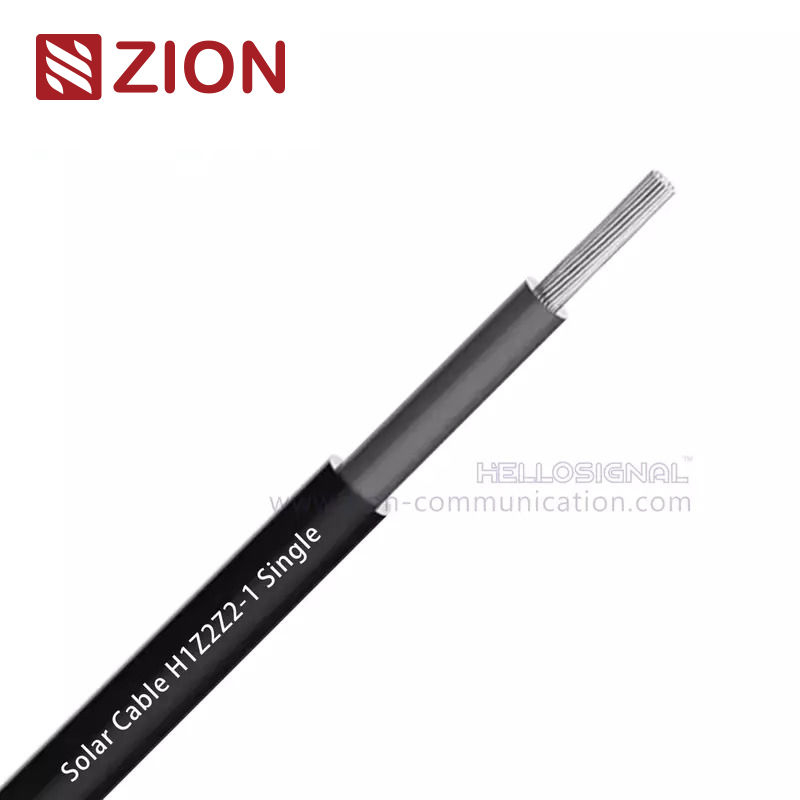
H1Z2Z2-K Solar Cable
Single-core PV cable direction for European and IEC-based solar project specifications.
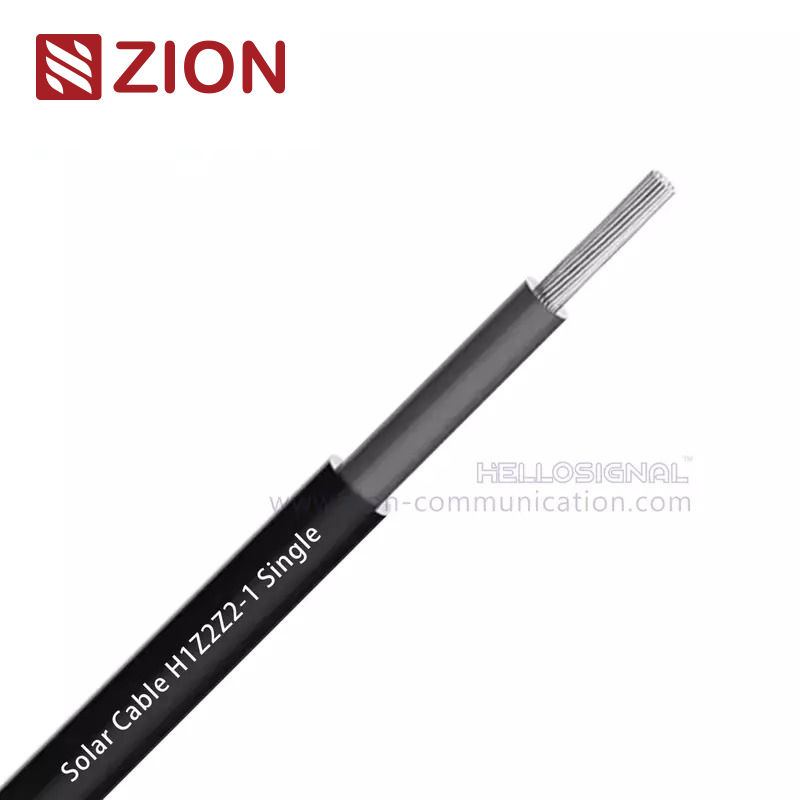
PV1-F Solar Cable
PV1-F / H1Z2Z2-K product direction for routine photovoltaic cable selection.
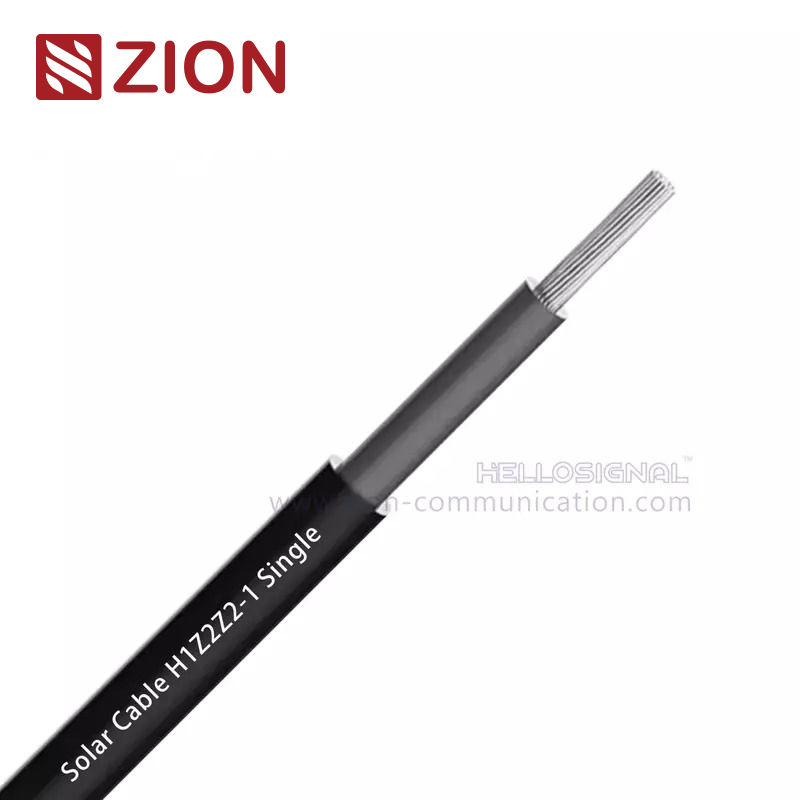
UL 4703 PV Wire
PV wire direction for projects where UL 4703 and AWG sizing are part of the purchasing document.
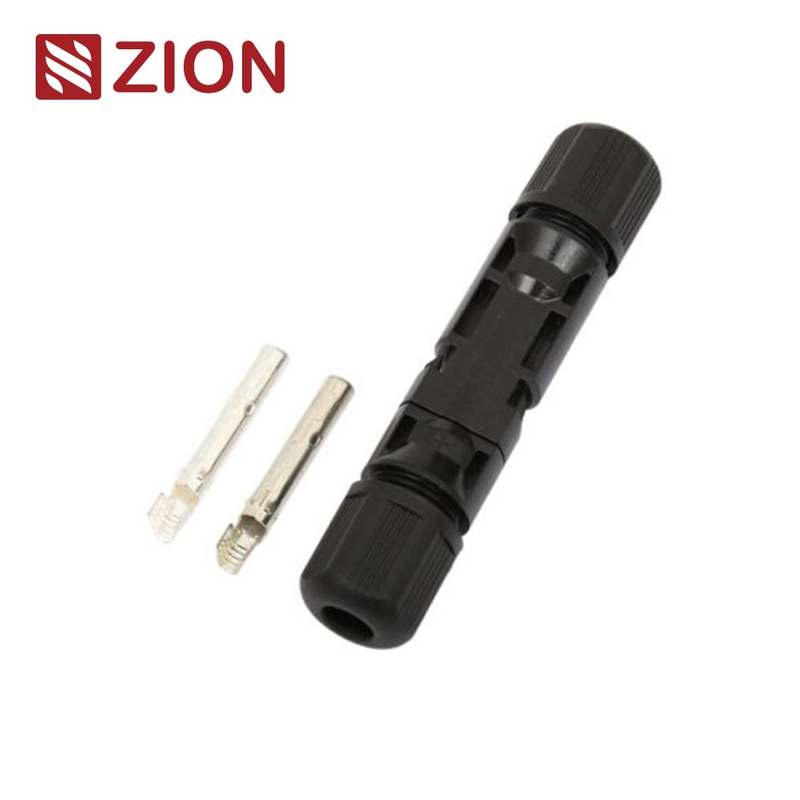
MC4 Solar Connector
Connector family used with solar cable assemblies, extension leads and panel interconnection routes.
What to verify before using the article for selection
Sizing mistakes that increase project cost
- Using one size for every route without separating short leads and long runs.
- Ignoring voltage-drop target before final selection.
- Forgetting color, marking and reel length until after order confirmation.
- Using connector assemblies without confirming cable outer diameter and polarity.
What to verify before final cable selection
- Project type and installation area
- Cable family, size, color and route length
- Required standard, certificate or datasheet request
- Packing length, label, marking and delivery notes
- Drawings, cable schedule or device list when available
Common technical questions
What size cable is commonly used for solar panels?
Common PV cable sizes include 4 mm2 and 6 mm2 in many IEC-style projects, but the correct size depends on string current, route length, voltage drop, installation method, temperature and local code.
Is 4 mm2 or 6 mm2 solar cable better?
Neither size is automatically better. A shorter, lower-current route may use 4 mm2, while longer routes or higher voltage-drop limits may require 6 mm2 or larger. The final choice should be calculated.
What causes voltage drop in PV cable?
Voltage drop increases with current and cable length and decreases with larger conductor cross-section. Long DC string runs, high current and hot installation environments make voltage-drop checks more important.
Should PV cable size be selected by inverter power?
Inverter power alone is not enough. Engineers usually check string configuration, maximum current, cable route, ambient conditions, protective devices and the required PV cable standard before selecting cable size.