Direct technical answer
For engineering review, the useful method is to separate each cable route into its own line item. This avoids mixing electrical function, installation environment, standard, marking and documentation requirements in one unclear specification.
Where this cable topic fits in the solar PV system
Use this table as a reading map. It is not a substitute for local electrical design, but it helps buyers and engineers describe the cable route clearly before comparing product families.
| Decision point | H1Z2Z2-K / PV1-F direction | UL 4703 direction |
|---|---|---|
| Market / project document | Often used where IEC / EN PV cable direction is specified | Used where UL PV wire direction is specified |
| Sizing language | Usually mm² such as 4mm², 6mm², 10mm² | Usually AWG such as 10AWG, 12AWG |
| project review detail | Voltage, color, single-core or twin-core, drum length | Voltage class, AWG size, color, packing and marking |
| Risk if unclear | Wrong certification direction or marking mismatch | Wrong wire type or unsuitable purchasing document |
Questions buyers and engineers usually search before choosing
- Which is better: H1Z2Z2-K, PV1-F or UL 4703?
- Can H1Z2Z2-K and PV1-F be used interchangeably?
- When does a project need 1500V solar cable?
- What should be written in a PV cable specification?
- Why do buyers ask for certificates before ordering solar cable?
Which is better: H1Z2Z2-K, PV1-F or UL 4703?
There is no single best option for every project. H1Z2Z2-K and PV1-F are commonly associated with IEC or European project language, while UL 4703 is used for North American PV wire requirements. The correct choice follows the project country, approval documents and inverter or module specification.
Can H1Z2Z2-K and PV1-F be used interchangeably?
They are often discussed together, but they should not be treated as automatically interchangeable. Buyers should check the exact standard, voltage rating, temperature rating, conductor class, sheath material, marking and certificate scope before approving a replacement.
When does a project need 1500V solar cable?
A 1500V PV cable is selected when the DC string design and equipment ratings require it. The cable rating must match the system voltage and project approval documents. Do not choose 1500V only because it sounds higher; confirm it with the electrical design.
What should be written in a PV cable specification?
A practical PV cable specification should include standard, rated voltage, conductor material, cable size, insulation and sheath material, color, meter marking, package length, certificate request and whether the route is module string, combiner, inverter-side DC or extension assembly.
Why do buyers ask for certificates before ordering solar cable?
Certificates help confirm that the cable family and marking correspond to the required project standard. They do not replace engineering review, but they reduce approval risk when submitted together with datasheet, test report, packing details and project cable schedule.
Related ZION product families mentioned in this article
These product links are included as technical references for route planning. Final cable selection should still be checked against project drawings, electrical rules, environmental conditions and documentation requirements.
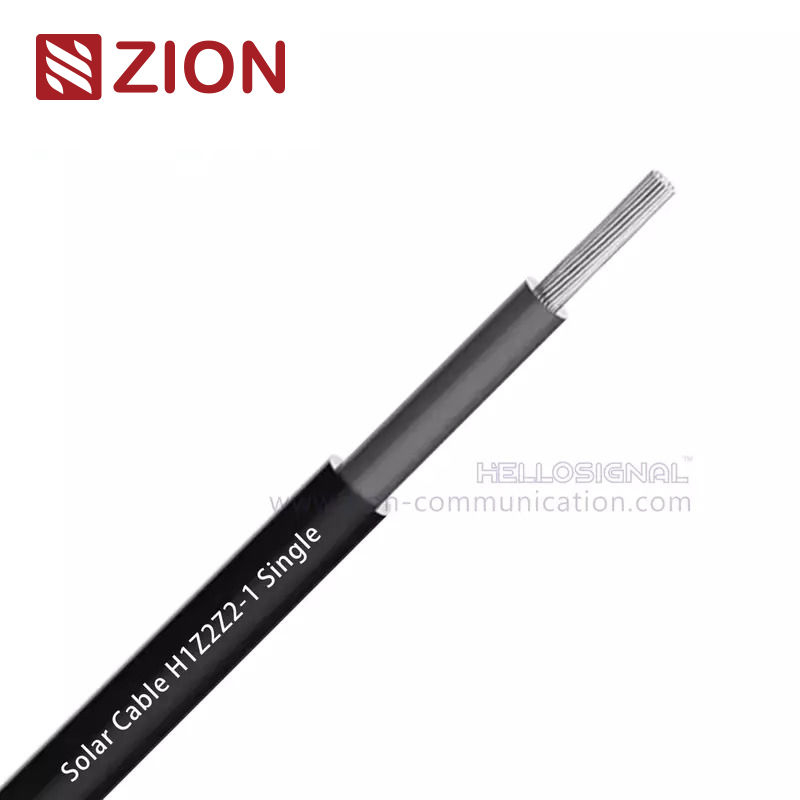
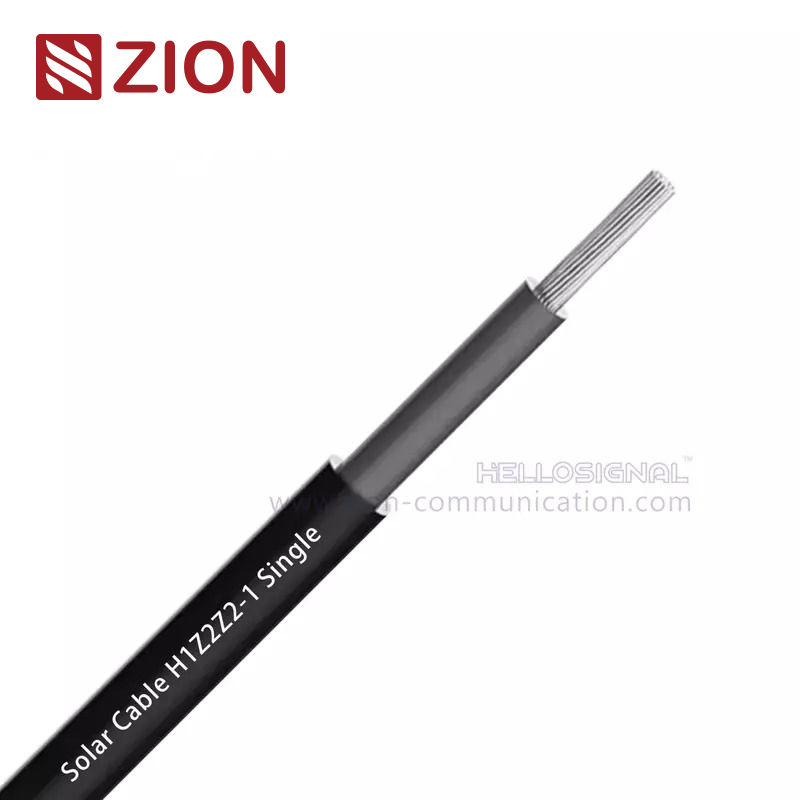
H1Z2Z2-K Solar Cable
Single-core PV cable direction for European and IEC-based solar project specifications.
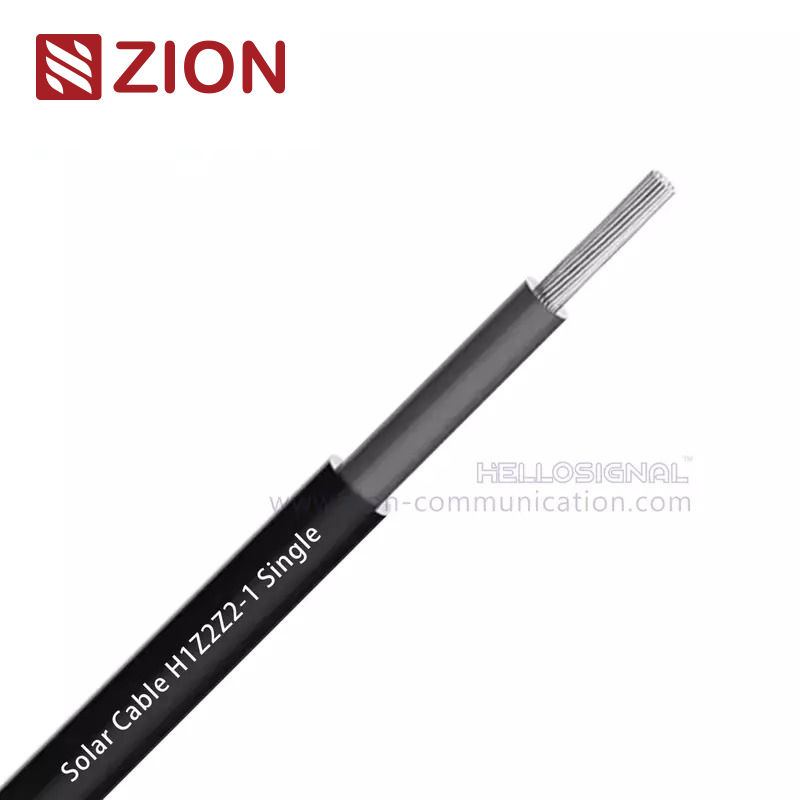
PV1-F Solar Cable
PV1-F / H1Z2Z2-K product direction for routine photovoltaic cable selection.
UL 4703 PV Wire
PV wire direction for projects where UL 4703 and AWG sizing are part of the purchasing document.
Solar Cable
PV cable family for module strings, combiner boxes and inverter-side DC cable routes.

Cable Documentation Support
Documentation reference for datasheets, product matching, samples and project document packages.
What to verify before using the article for selection
Selection boundary before final selection
- Do not select PV cable only by “red and black solar cable”.
- Ask whether the project uses IEC / EN direction or UL direction.
- Confirm whether the requested cable is single-core, twin-core or pre-assembled with connectors.
- Include cable marking and packing requirements in the project review.
What to verify before final cable selection
- Project type and installation area
- Cable family, size, color and route length
- Required standard, certificate or datasheet request
- Packing length, label, marking and delivery notes
- Drawings, cable schedule or device list when available
Common technical questions
What is the difference between H1Z2Z2-K and PV1-F solar cable?
Both names are associated with PV cable used in IEC or European-style solar projects, but project documents may specify one standard or marking direction. The required certificate and jacket marking should be confirmed.
When is UL 4703 PV wire used?
UL 4703 PV wire is used where the project requires UL or North American PV wire compliance. It is commonly specified with AWG sizing rather than metric square millimeter sizing.
Can H1Z2Z2-K, PV1-F and UL 4703 be treated as interchangeable?
They should not be treated as automatically interchangeable. The project market, required standard, certificate, cable marking, voltage rating and inspection requirement should decide which cable is acceptable.
What should a PV cable specification include?
A PV cable specification should include standard, conductor size, color, rated voltage, temperature rating, construction, certificate requirement, cable marking and packing length.