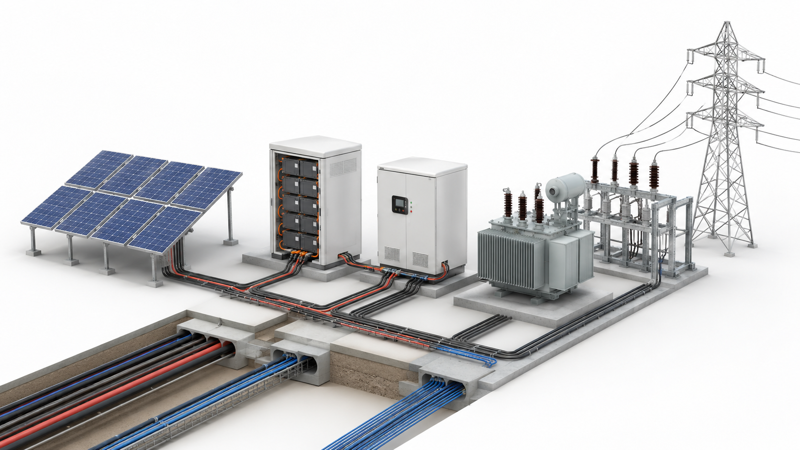
A utility-scale solar farm cable plan should be divided by project zone, not by one general “solar cable” item. The array field needs PV string cable, combiner routes may require larger DC cable, inverter stations need DC and AC-side cable planning, underground or exposed routes may need mechanical protection, and monitoring systems may require RS485, Ethernet or fiber. Before procurement, EPC teams should prepare route length, cable schedule, voltage level, standard, installation method and documentation requirements.
Cable zones in a utility-scale solar farm
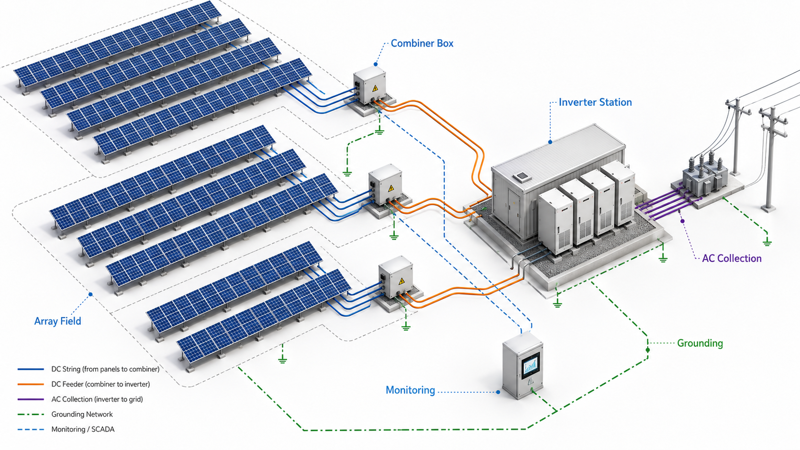
Large solar farms are easier to quote when the cable list is split by field zone and system function. This avoids mixing PV strings, AC collection, grounding and monitoring in one unclear cable line.
| Project zone | Cable family | Main decision |
|---|---|---|
| Module array | PV string cable | Standard, size, UV and outdoor performance |
| Combiner box route | PV DC cable | Current, voltage drop, route length |
| Inverter station | DC and AC power cable | Equipment terminal, current and installation |
| Underground / exposed route | Armoured or protected cable | Mechanical protection and route design |
| Grounding network | Grounding cable | Local code and bonding design |
| Monitoring / SCADA | RS485, Ethernet, fiber | Protocol, distance, EMI and outdoor route |
What information should EPC teams prepare?
A complete solar farm cable RFQ should use drawings and route sections whenever available. Drum planning, route length and installation method can change quotation and logistics.
| Information needed | Why it is needed |
|---|---|
| Site layout | Calculates cable route and drum planning |
| Combiner box quantity | Defines string cable and feeder demand |
| Inverter location | Affects DC and AC cable route length |
| Cable tray / trench design | Affects jacket and protection choice |
| Monitoring architecture | Defines RS485, Ethernet or fiber route |
| Local standard | Determines cable approval and documents |
| Packing plan | Reduces cutting waste and logistics issues |
Route and protection risks in solar farms
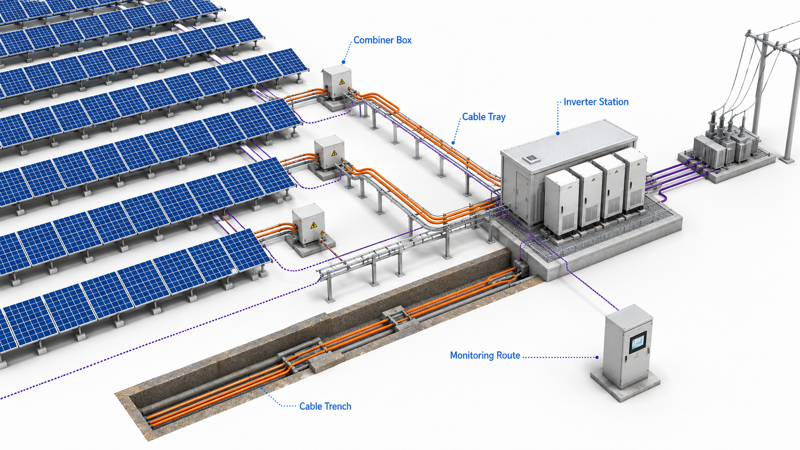
Solar farms have long outdoor routes, and cable damage risk may come from route design as much as cable selection. Mechanical protection, trench detail and cable separation should be reviewed before final purchase.
| Risk | Result | Prevention |
|---|---|---|
| Route not separated by cable type | Wrong cable quoted | Build BOM by PV, AC, grounding and communication |
| Long route ignored | Voltage drop or cost increase | Review route before final cable size |
| No outdoor protection planning | Jacket damage or installation risk | Confirm tray, conduit, trench or armoured route |
| Monitoring cable added late | Rework and communication failure | Include SCADA cable in early BOM |
| Poor drum planning | Waste and installation delay | Match drum length to route sections |
Related ZION products and solution pages
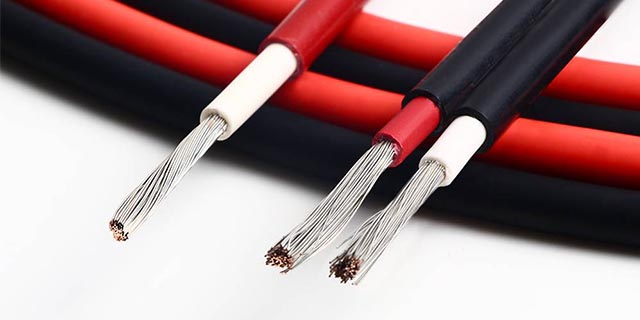
Utility-Scale Solar Farm Cable Solution
Main application page for ground-mounted PV farm cable planning and BOM review.
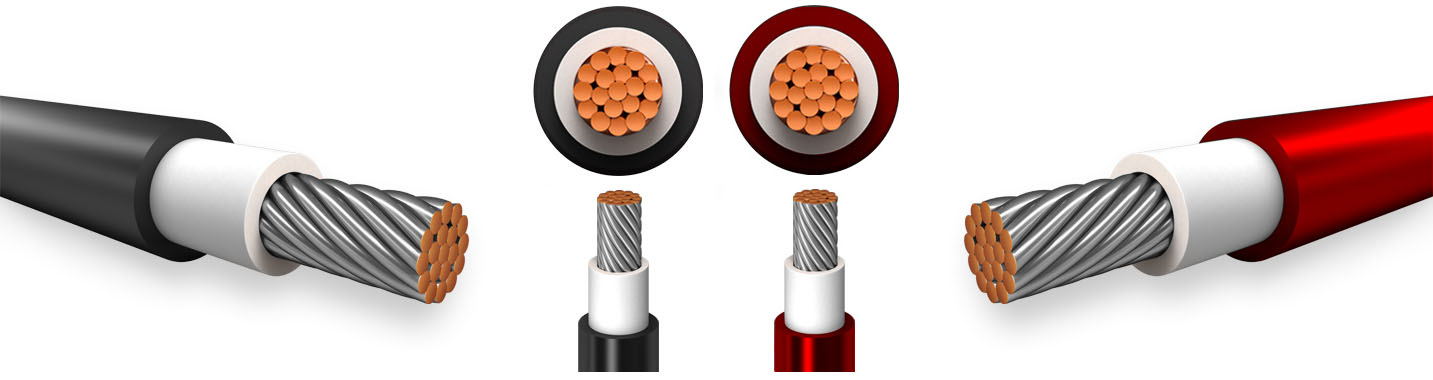
Solar Cable Product Category
Main PV DC cable family for PV strings and combiner box routes.
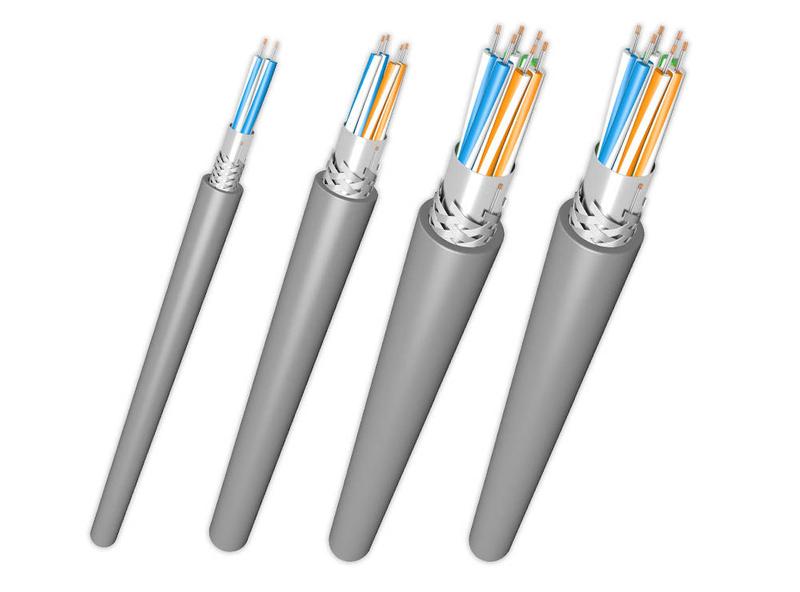
RS485 / RS232 Communication Cable Solution
Supports inverter, meter and gateway communication in monitoring systems.
Energy & Power Infrastructure Cable Solutions
Parent solution for solar PV, battery and power infrastructure cable routes.
Communication cable planning
Monitoring and SCADA cable should be planned early. Inverters, meters, weather stations and gateways may use RS485, Ethernet or fiber depending on distance, protocol and network architecture.
- Confirm device interface and protocol before ordering cable.
- Separate communication route from power route when required by design.
- Consider shielded cable when the route is near electrical noise.
- Use fiber backbone when distance and EMI conditions justify optical communication.
FAQ
What cables are used in a utility-scale solar farm?
A solar farm may use PV string cable, larger DC cable, AC power or collection cable, grounding cable, armoured cable, RS485, Ethernet and outdoor fiber depending on system design.
Is PV cable enough for the whole solar farm?
No. PV cable is mainly for DC-side solar routes. AC output, grounding, monitoring and protected underground routes may require different cable families.
Why is route planning important for solar farm cable?
Route planning affects cable length, voltage drop, drum planning, installation method and mechanical protection. It should be done before price comparison.
Can RS485 be used for solar farm monitoring?
RS485 is commonly used in industrial monitoring systems, but the final choice depends on device protocol, distance, noise environment and system architecture.
When should fiber be considered in solar monitoring?
Fiber may be considered for longer site backbone routes, EMI-sensitive areas or central monitoring networks. Device compatibility and converter requirements must be confirmed.
What should EPC teams send for solar farm cable quotation?
Send layout, cable schedule, route length, standard, cable size, installation method, quantity, packing and document requirements.
Sources and references
Use ZION Utility-Scale Solar Farm Cable Solution and project-specific drawings. Cable sizing, grounding, AC routes and underground protection should follow project engineer and local code approval.