
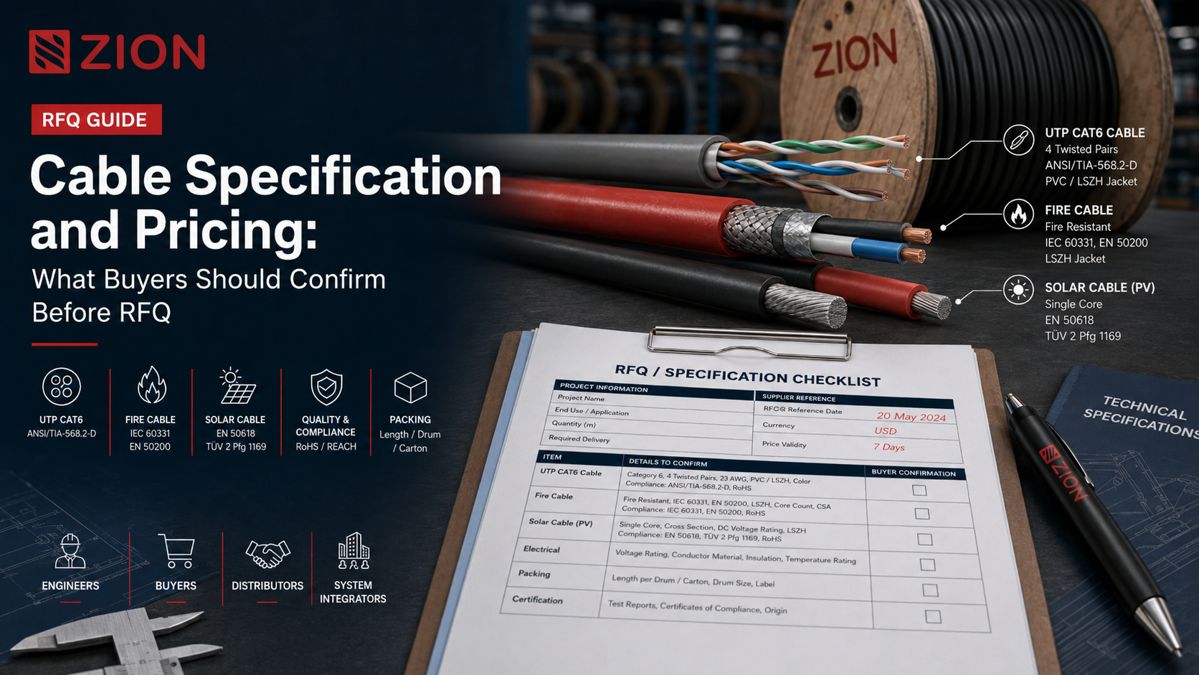
Copper cable pricing is not determined only by the copper market price. For industrial communication, structured cabling, security systems, fire alarm networks, building automation, solar projects and low-voltage applications, the final cable price depends on multiple technical specifications.
A small difference in conductor material, copper weight, shielding structure or fire rating can significantly affect cable performance and project cost. For this reason, professional buyers should confirm the complete cable specification before sending an RFQ.
A clear RFQ helps suppliers provide accurate quotations, avoid specification misunderstandings and ensure the cable meets project requirements. The following checklist explains what buyers should confirm before purchasing copper cables.
Conductor Material: Bare Copper, CCA or Copper Alloy?
The conductor material is the first specification buyers should confirm. Different conductor materials have significant differences in electrical performance, reliability and application suitability.
Bare Copper
Bare copper is commonly used for professional communication and industrial cable applications where electrical conductivity, mechanical strength and long-term reliability are important.
- Good electrical conductivity
- Lower transmission loss compared with lower-conductivity alternatives
- Better mechanical strength for installation and termination
- Suitable for PoE, industrial communication and critical low-voltage systems
Common applications include Cat5e, Cat6, Cat6A Ethernet cables, RS485 communication cables, fire alarm cables, security cables and industrial control cables.
Copper Clad Aluminum
Copper clad aluminum uses an aluminum core with a copper layer. It is usually selected for lower material cost and reduced cable weight, but it has higher resistance and lower mechanical strength than pure copper.
For PoE, long-distance transmission, fire alarm, industrial communication or safety-critical projects, buyers should not accept conductor substitution unless the project specification clearly allows it.
| RFQ Item | What to Confirm | Example RFQ Wording |
|---|---|---|
| Conductor material | Bare copper, CCA or other conductor type | Bare copper conductor |
| Copper purity | Only specify when required by the project or standard | Copper purity according to project specification |
| Conductor type | Solid or stranded | Solid bare copper for horizontal LAN cable |
| Application | LAN, fire alarm, RS485, security, solar or control | For indoor structured cabling installation |
AWG or mm²: Confirm the Actual Conductor Size
Cable size directly affects resistance, signal transmission distance, voltage drop, temperature performance and power capability. A quotation without a clear conductor size cannot be compared accurately.
Communication cables are often specified by AWG, while power, solar and many industrial cables are commonly specified by mm². Buyers should avoid using only a general product name such as “Cat6 cable” or “solar cable” without confirming conductor size.
| Cable Type | Common Size Format | RFQ Example |
|---|---|---|
| Ethernet cable | AWG | Cat6 UTP 23AWG solid bare copper cable, 305m box |
| RS485 cable | AWG or mm² | RS485 shielded cable, conductor size according to project requirement |
| Security cable | AWG | Security alarm cable, conductor size confirmed before quotation |
| Solar cable | mm² | Solar PV cable 4mm² or 6mm² copper conductor |
When comparing quotations, confirm whether the quoted cable uses the same conductor size, conductor material and cable structure. A lower price may come from a smaller conductor or different material.
Shielding: UTP, FTP, SFTP or Overall Shield?
Shielding affects electromagnetic interference protection. Different environments require different shielding structures, especially for industrial communication, building automation, access control, CCTV and solar monitoring systems.
| Shielding Structure | Description | Typical Application |
|---|---|---|
| UTP | No shielding | General office LAN where EMI risk is limited |
| FTP or F/UTP | Overall foil shield | Building cabling and moderate interference environments |
| SFTP or SF/UTP | Foil and braid shielding | Higher EMI environments and industrial areas |
| Individual pair shield | Shielding for each pair | Applications requiring improved pair isolation |
Buyers should confirm shield material, coverage, drain wire requirement and grounding method. For example, a professional RFQ may state: “Cat6A SFTP 23AWG 4-pair bare copper cable with aluminum foil and braided shield.”
Jacket Material: PVC, LSZH, PE or Special Jacket?
The outer jacket determines cable durability, installation suitability and fire safety performance. Jacket selection should match the installation environment instead of being selected only by price.
PVC Jacket
PVC is commonly used for general indoor cabling because it is cost-effective and provides basic mechanical protection. It is often used for indoor LAN cables, security cables and control cables where the project specification allows PVC.
LSZH Jacket
Low Smoke Zero Halogen jacket is commonly required in public buildings, transportation projects, data centers, hospitals, airports and projects where smoke and halogen emission control is important.
Outdoor Jacket
Outdoor cables may require PE jacket, UV resistance, water blocking, gel filling or armoring. Buyers should confirm whether the cable will be installed indoor, outdoor, in conduit, underground, on tray or exposed to sunlight.
Before quotation, ask the supplier whether the proposed jacket is suitable for the installation environment, especially for outdoor, riser, plenum, tunnel, industrial or solar project use.
Fire Rating: Confirm the Required Safety Standard
Fire performance is one of the most important specifications for building and infrastructure projects. Different countries, building types and project owners may require different cable fire ratings.
| Fire Rating or Standard | Common Use | Buyer Confirmation |
|---|---|---|
| CMP | Plenum spaces | Confirm whether the project requires plenum-rated cable |
| CMR | Riser installations | Confirm vertical installation requirements |
| LSZH | Public buildings and transportation projects | Confirm smoke and halogen requirements |
| IEC flame-retardant standards | International low-voltage and building projects | Confirm the exact standard required by the specification |
| CPR classification | European construction projects | Confirm required CPR class before quotation |
Instead of writing “fire cable required,” buyers should provide the cable structure, conductor size, jacket material and fire standard. For example: “Fire alarm cable, 2C x 1.5mm², LSZH jacket, flame-retardant requirement according to project specification.”
Length Tolerance: Confirm Delivery Quantity
Cable length affects project calculation, installation planning and site material control. Even when the nominal length is clear, the buyer should confirm length tolerance and packing length.
| Product Type | Common Packing Length | What to Confirm |
|---|---|---|
| LAN cable | 305m box | Box length and tolerance |
| Control cable | 100m, 305m, 500m or project length | Roll or drum length |
| Solar cable | Roll or drum according to project requirement | Drum length and site handling requirement |
| Industrial cable | Customized length | Minimum order length and cutting tolerance |
A practical RFQ can state: “Cable length tolerance to be confirmed before order” or “Cable length tolerance according to agreed purchase specification.”
Packing Requirements: Protect Cable During Transportation
Proper packing is important for international shipment and site handling. Packing method should match cable size, cable weight, installation method and delivery distance.
Small communication cables may use carton boxes or pull boxes. Larger outdoor, industrial and solar cables may require wooden drums, reels or export packing. Buyers should confirm drum size, gross weight, label information, cable marking, batch number and moisture protection.
Packing differences can affect freight cost, unloading method and warehouse handling. For project supply, packing should be confirmed before final quotation instead of after production.
Alternative Specification: Reduce Cost Without Reducing Performance
Professional buyers may allow alternative specifications when the project permits. This can help reduce cost, shorten delivery time or match local availability. However, alternatives should always be reviewed against the project’s electrical, mechanical, environmental and fire safety requirements.
For example, a project may request Cat6A SFTP 23AWG LSZH cable. Depending on the actual application, possible alternatives could include a different shielding structure, a different jacket material or an equivalent standard. The supplier should clearly explain the difference rather than simply replacing the specification.
| Original Requirement | Possible Discussion Point | Review Before Acceptance |
|---|---|---|
| Higher shielding level | Can a lower shielding level meet the EMI environment? | Site interference risk and grounding condition |
| Specific jacket material | Can another jacket meet the installation environment? | Indoor, outdoor, flame, smoke and UV requirements |
| Specific conductor size | Can another size meet electrical performance? | Voltage drop, resistance, distance and current requirement |
| Specific packing length | Can project logistics accept another packing length? | Site installation plan and waste control |
Copper Reference Date: How Copper Price Is Calculated
Copper prices fluctuate regularly. For this reason, international cable quotations often require a copper reference date or copper benchmark. Without this, the buyer may receive quotations based on different copper price assumptions.
Common reference methods include LME copper price, Shanghai copper price, monthly average copper price or an agreed fixed copper basis. The RFQ should define whether the quotation is fixed or subject to copper price adjustment.
A useful RFQ wording is: “Copper price basis to be stated in quotation, including reference date, benchmark and adjustment condition.” This helps buyers understand whether price differences come from material cost or cable specification differences.
RFQ Checklist for Copper Cable Buyers
Before sending an inquiry, buyers should prepare a structured RFQ checklist. This allows each supplier to quote on the same basis and reduces the risk of hidden specification differences.
| Specification | Buyer Should Confirm | Why It Matters |
|---|---|---|
| Conductor material | Bare copper, CCA or other material | Affects resistance, performance and cost |
| AWG or mm² | Actual conductor size | Affects transmission, voltage drop and copper weight |
| Cable structure | Pair count, core count and lay-up | Affects application suitability |
| Shielding | UTP, FTP, SFTP, braid or individual shield | Affects EMI protection |
| Jacket | PVC, LSZH, PE or special jacket | Affects installation and safety requirement |
| Fire rating | CMP, CMR, LSZH, IEC or CPR requirement | Affects project compliance |
| Length tolerance | Nominal length and acceptable tolerance | Affects project quantity planning |
| Packing | Box, roll, reel or wooden drum | Affects logistics and site handling |
| Alternative specification | Allowed or not allowed | Helps control cost without losing required performance |
| Copper reference date | Benchmark and adjustment rule | Improves quotation transparency |
How ZION Communication Supports Copper Cable RFQ Review
ZION Communication supports copper cable supply for structured cabling systems, fire alarm systems, security and CCTV systems, building automation systems, industrial communication networks and solar energy systems.
For project RFQs, buyers can provide the application, installation environment, conductor requirement, shielding structure, jacket requirement, fire rating, packing method and copper reference rule. ZION can then help review whether the RFQ information is sufficient for a comparable quotation.
Whether the requirement is for Ethernet cable, RS485 communication cable, fire alarm cable, security cable, low-voltage system cable or solar cable, confirming the correct specification before RFQ is the key step to achieving reliable performance and transparent pricing.
Related Product Categories
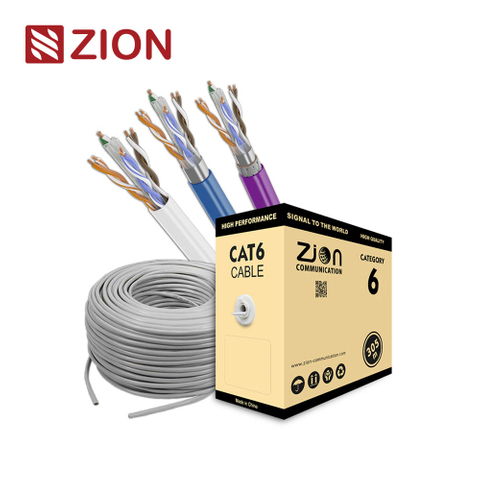
Ethernet cable options for structured cabling and building network projects.
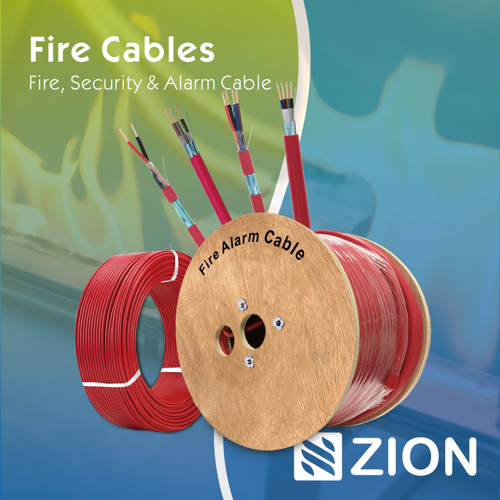
Low-voltage fire alarm cabling for building safety and alarm systems.
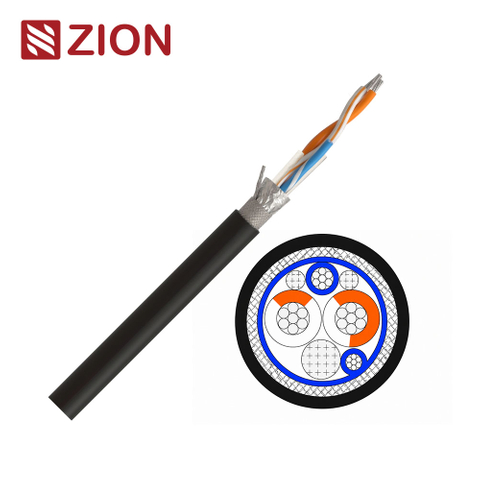
Shielded communication cable for BMS, automation and industrial networks.
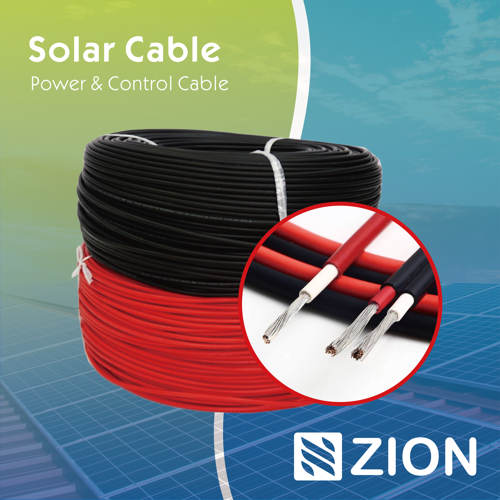
Copper conductor solar cable options for PV string and project supply requirements.
FAQ
Why do copper cable quotations vary so much between suppliers?
Quotation differences may come from copper price basis, conductor material, conductor size, shielding, jacket material, fire rating, packing method and delivery terms. Buyers should compare quotations using the same technical specification.
Should buyers accept CCA instead of bare copper?
CCA may reduce cost, but it has different electrical and mechanical properties from bare copper. For PoE, industrial communication, safety systems and long-distance transmission, buyers should confirm whether the project specification allows CCA before accepting it.
What copper price information should be included in an RFQ?
The RFQ should ask suppliers to state the copper reference benchmark, reference date and whether the quotation is fixed or adjustable according to copper price movement.
What is the most important cable specification before RFQ?
There is no single item. Buyers should confirm conductor material, AWG or mm² size, shielding, jacket, fire rating, length tolerance, packing and copper reference date before comparing prices.