Choose duct fiber cable when the project needs easier maintenance, future cable replacement or a protected underground pathway. Choose direct burial fiber cable when the cable will be installed directly into soil and must rely on its own armor, sheath and moisture protection. The correct choice depends on civil work design, soil condition, rodent risk, available conduit, pulling distance, maintenance access and future expansion plans.
Direct burial and duct routes solve different problems
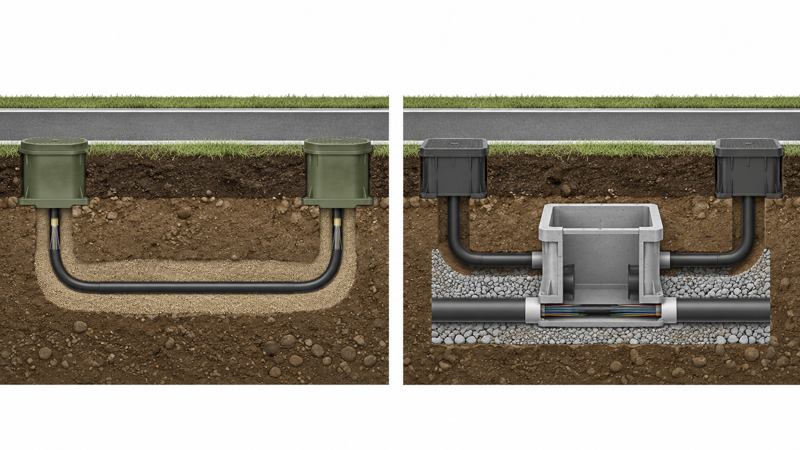
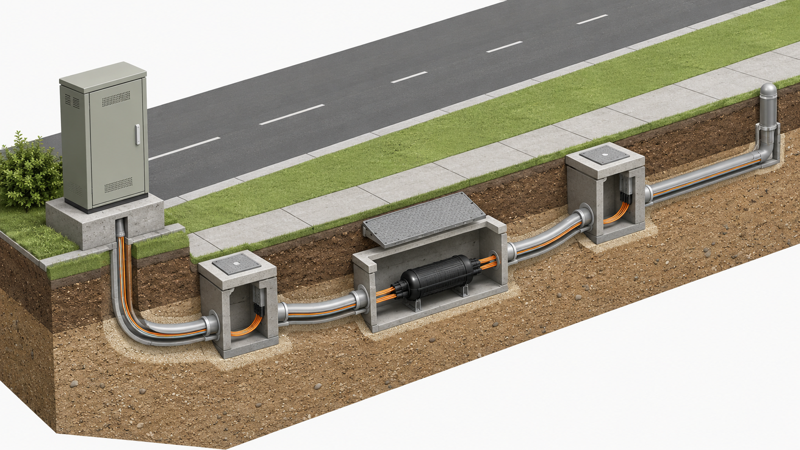
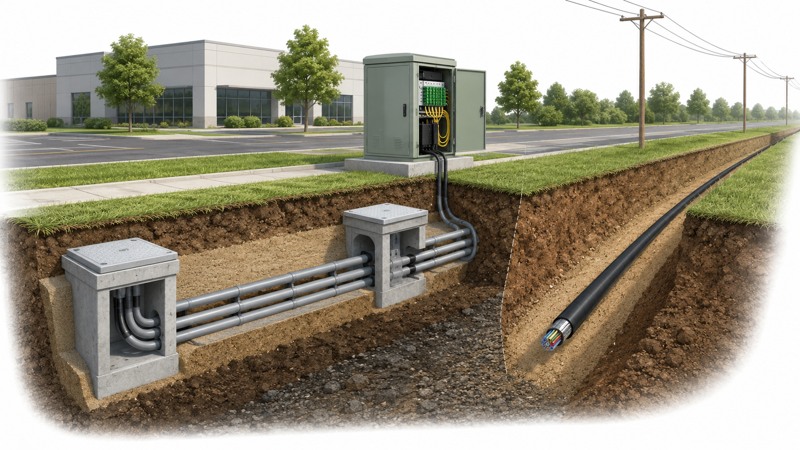
Duct installation creates a protected pathway for the cable and can support easier replacement if the duct route is well designed. Direct burial removes the conduit layer, so the cable structure must provide more protection against soil pressure, moisture and mechanical damage.
For underground routes, Duct and Direct Burial Fiber Network Solution is the most relevant ZION solution reference.
Direct burial vs duct comparison
| Item | Duct fiber cable | Direct burial fiber cable |
|---|---|---|
| Installation method | Cable is pulled or blown inside conduit / duct | Cable is installed directly into trench or soil |
| Protection source | Duct provides external pathway protection | Cable construction provides main protection |
| Maintenance access | Easier if duct route is well designed | Harder because cable is in soil |
| Future replacement | Usually easier | Usually more difficult |
| Main selection focus | OD, pulling tension, bend control, water blocking | Armor, sheath strength, crush resistance, rodent risk |
| Best for | Municipal duct networks, campuses, upgradeable routes | Rural routes, open fields, areas without conduit |
How route condition changes the decision
| Route condition | Better direction | Reason |
|---|---|---|
| Existing duct is available | Duct cable | Reduces excavation and supports future replacement |
| No duct and long rural route | Direct burial armored cable | Avoids building a full conduit route |
| Rocky soil or heavy mechanical risk | Armored cable or duct protection | Extra mechanical protection is needed |
| Future cable upgrade expected | Duct route | Easier to replace or add cable |
| High rodent risk | Armored or anti-rodent solution | Cable needs additional protection |
| Complex bends and manholes | Duct cable with controlled pulling plan | Installation stress must be managed |
Common underground project mistakes
- Calling every underground cable “duct cable” even when some sections are directly buried.
- Choosing armored cable without checking whether the route requires duct pulling or direct burial protection.
- Ignoring future replacement and maintenance access during civil planning.
- Not confirming cable diameter, drum length and bend route before quotation.
Do not publish or specify universal burial depth, trench design or civil cost without local project rules. These details vary by region and contractor method.
Related ZION products and solutions
Duct and Direct Burial Fiber Network Solution
Solution page for underground duct and direct burial route decisions.
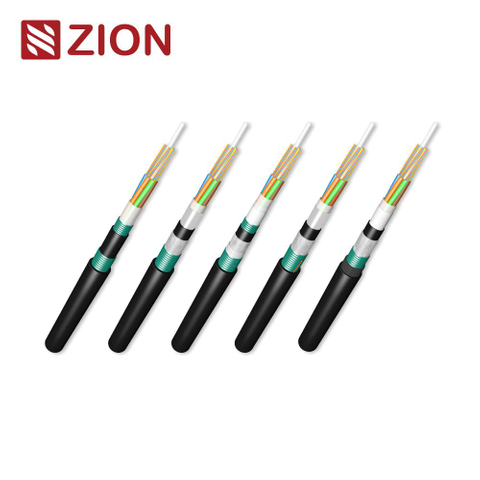
Direct Buried Fiber Optic Cable
Product category for direct buried outdoor fiber cable options.
What ZION can support
Review duct and burial sections separately before quotation.
Confirm cable OD, sheath, armor and water-blocking structure.
Check cable and accessory needs for handholes, closures and route transitions.
Prepare cable options based on route length, fiber count and packing length.
FAQ
Is direct burial fiber cable the same as duct fiber cable?
No. Direct burial cable must provide its own underground protection, while duct cable relies more on the conduit route.
Is duct installation always better than direct burial?
Not always. Duct installation can improve maintenance and replacement, but it may require more civil work.
When should armored direct buried cable be used?
It should be considered when the cable is exposed to soil pressure, rodent risk, rough installation or mechanical impact.
What information should I provide for an underground fiber cable quotation?
Provide route length, installation method, duct size if any, soil condition, fiber count, fiber type, cable structure, packing length and required documents.
Can one project use both duct and direct burial cable?
Yes. Many real projects have mixed routes, so the route should be divided into sections and specified separately.
Sources and references
- Duct and Direct Burial Fiber Network Solution for underground application planning.
- Direct Buried Fiber Optic Cable category page.