01
Duct installation
Used when conduit, microduct, handholes or manholes protect the cable route. Selection focuses on pulling tension, cable OD, water blocking and bend control.

Choose the cable construction by route condition, not only by fiber count. ZION supports duct fiber cable, armored direct buried cable and related ODN products for underground telecom, ISP, municipal, campus, industrial and rural broadband projects.
Used when conduit, microduct, handholes or manholes protect the cable route. Selection focuses on pulling tension, cable OD, water blocking and bend control.
Used when the cable is installed directly into soil. Selection focuses on crush resistance, armor, rodent risk, moisture protection and outer sheath strength.
Splice closures, ODFs, terminal boxes and splitter locations should be planned around maintenance access, route section length and optical budget.
Drum length, route section, cable marking, pulling direction and packing label should be confirmed before production to reduce site handling problems.
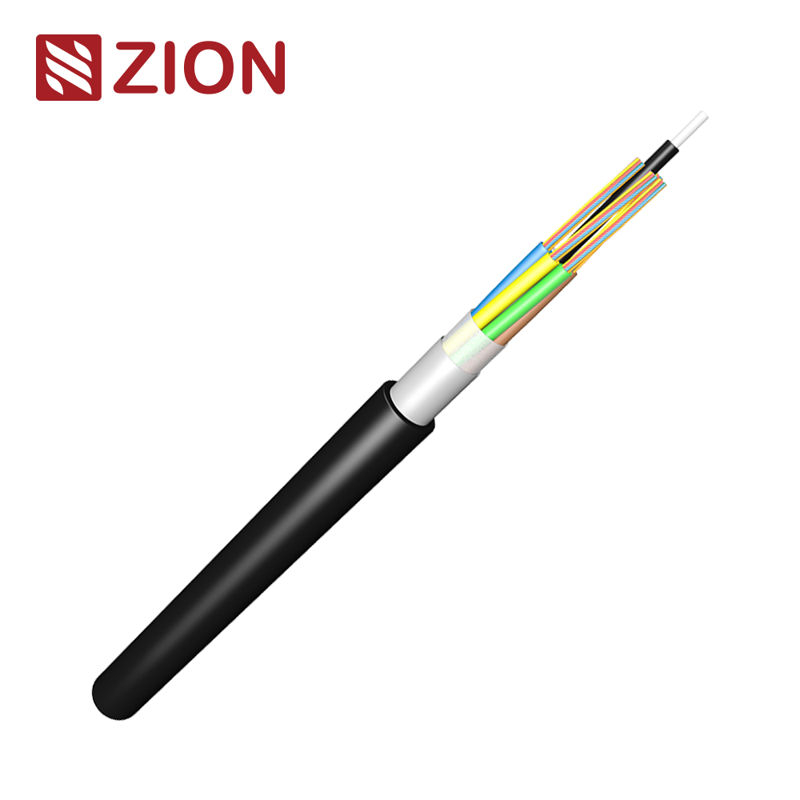
Loose-tube outdoor cable for protected underground conduit, metro backbone, campus backbone and ISP access routes.
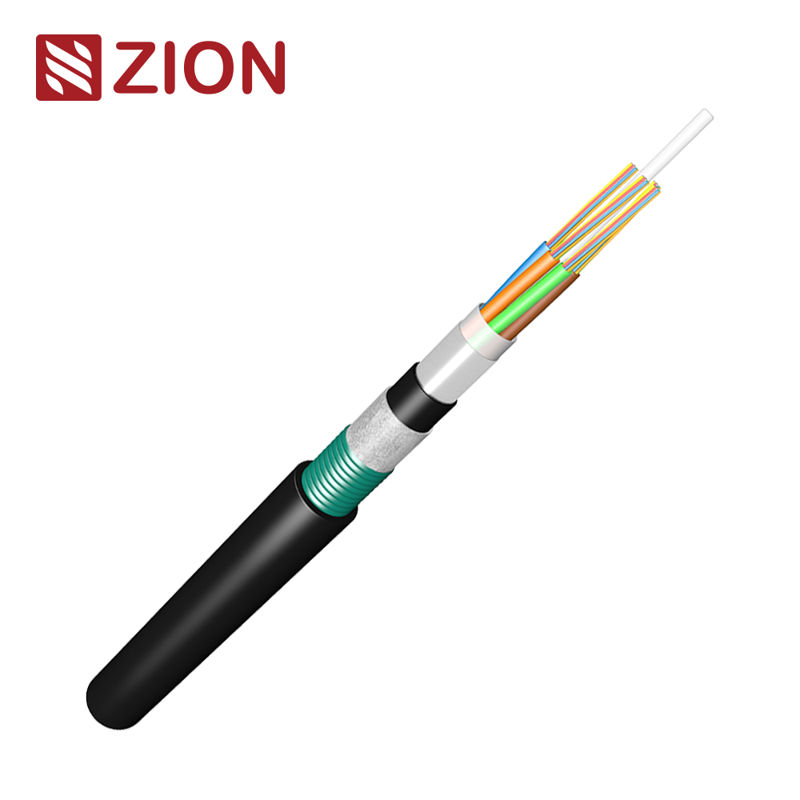
Armored underground fiber cable for soil pressure, external impact, rodent exposure and routes without continuous duct protection.

Terminal and access box for splice management, adapter installation, branch distribution and last-mile connection points.

PLC and FBT splitter options for PON distribution, split ratio planning, enclosure integration and optical budget control.
| Route condition | Recommended product direction | Engineering focus | Typical project use |
|---|---|---|---|
| Continuous underground duct is available | Duct fiber optic cable | Cable OD, pulling tension, water blocking and route bends | Metro backbone, campus backbone, ISP access route |
| Duct is unavailable, damaged or only partial | Direct buried armored fiber cable | Armor structure, crush resistance, sheath strength and rodent protection | Rural broadband, long outdoor route, greenfield construction |
| Underground route connects to buildings or cabinets | Cable plus terminal box, ODF or closure | Splice protection, adapter interface, maintenance access and cable entry | Campus, industrial park, municipal access network |
| PON architecture is used | Cable plus splitter and terminal access products | Split ratio, optical budget, connector type and enclosure space | FTTH, FTTB, ISP last-mile deployment |
| Selection item | What to confirm | Why it matters |
|---|---|---|
| Installation method | Duct, microduct, direct burial, mixed route or building entry | Determines whether the cable needs stronger armor, smaller OD or different sheath structure. |
| Fiber count | Backbone capacity, branch requirement and future reserve | Affects cable structure, diameter, drum length, splice planning and project cost. |
| Mechanical risk | Crush, impact, soil pressure, pulling tension and bend condition | Helps avoid using a light duct cable in a route that needs armored protection. |
| Water protection | Water-blocking yarn, tape, gel-filled loose tube or route drainage condition | Important for underground routes with manholes, water accumulation or long outdoor exposure. |
| Rodent risk | Rural area, farmland, utility route or exposed buried section | May require stronger sheath or armor direction instead of standard outdoor cable. |
| Packing and drum | Drum length, route section length, pulling direction and cable marking | Reduces site cutting, wrong delivery section and installation handling problems. |
A standard duct cable should not be treated as a direct buried cable when there is no continuous conduit protection.
Long pulling sections, tight bends and small ducts should be reviewed before cable OD and drum length are confirmed.
Closures, terminal boxes and ODF positions should match splice access, route sections and maintenance habits.
Fiber count alone is not enough. Installation method, route condition, sheath, armor and packing details must be confirmed.
| Input | Recommended information | Used for |
|---|---|---|
| Route type | Duct, direct burial, mixed route, building entry or FTTH access | Cable family selection |
| Cable specification | Fiber count, fiber type, sheath material, armor requirement and cable length | Model recommendation and quotation |
| Environment | Soil condition, water risk, rodent risk, duct ID and installation route notes | Mechanical and water-blocking design check |
| ODN accessories | Closures, terminal boxes, splitters, adapters, patch cords or ODF requirement | Project BOM matching |
| Packing request | Drum length, cable marking, label, OEM packing and delivery schedule | Production and logistics planning |
| Documents | Datasheet, drawing, test report, compliance file or project submission document | Distributor, tender and engineering approval support |
If the cable is protected by continuous conduit, duct cable is usually reviewed first. If the cable is installed directly in soil or the duct is not continuous, armored direct buried cable should be considered.
No. Fiber count is only one input. Installation method, route condition, cable length, sheath, armor, water protection, packing and document requirements should also be confirmed.
Yes. Many projects include duct sections, direct burial sections, building entry points and PON access points. The BOM should separate each route section before final product selection.
Yes. Sample and datasheet support can be matched to the selected product family, fiber count, cable construction, target market and current production plan.
For many cable families, sheath printing, drum length, packing label and OEM or ODM packaging can be discussed according to project quantity and manufacturing feasibility.
Common accessories include splice closures, terminal boxes, ODFs, adapters, patch cords and splitters. The exact list depends on network architecture and access point design.
Lead time depends on cable type, fiber count, material availability, customization level, testing requirement and order schedule. It should be confirmed with the final BOM.
Yes. ZION can support product selection, project BOM review, sample preparation, datasheet matching, labeling discussion and packaging coordination for distributors and integrators.
Send route type, fiber count, cable length, duct condition, soil risk, accessory requirement and target delivery schedule. ZION can help review the cable direction and project BOM before quotation.