01
ADSS route
All-dielectric design for pole lines where metal messenger or grounding complexity should be avoided.

Aerial fiber networks are usually chosen when pole infrastructure is available, civil work must be reduced, or rural access needs faster deployment than new underground routes. Product selection should begin with span length, pole condition, wind and ice exposure, electrical clearance, sag limits and maintenance access. ZION supports ADSS, Figure-8 self-supporting cable and related aerial route product recommendations for ISP access, rural broadband and backbone extensions where tensile performance and field installation risk need to be checked before procurement.
Start by separating the route into engineering sections. Each section may need a different cable construction, passive component, enclosure, connector interface or packing method. The following modules help procurement and engineering teams avoid treating the whole network as one generic fiber cable order.
All-dielectric design for pole lines where metal messenger or grounding complexity should be avoided.
Integrated messenger construction for economical aerial access and rural distribution lines.
FTTH drop cable connects aerial distribution points to subscriber entry routes.
Terminal boxes and splitters organize branch connections and future maintenance.
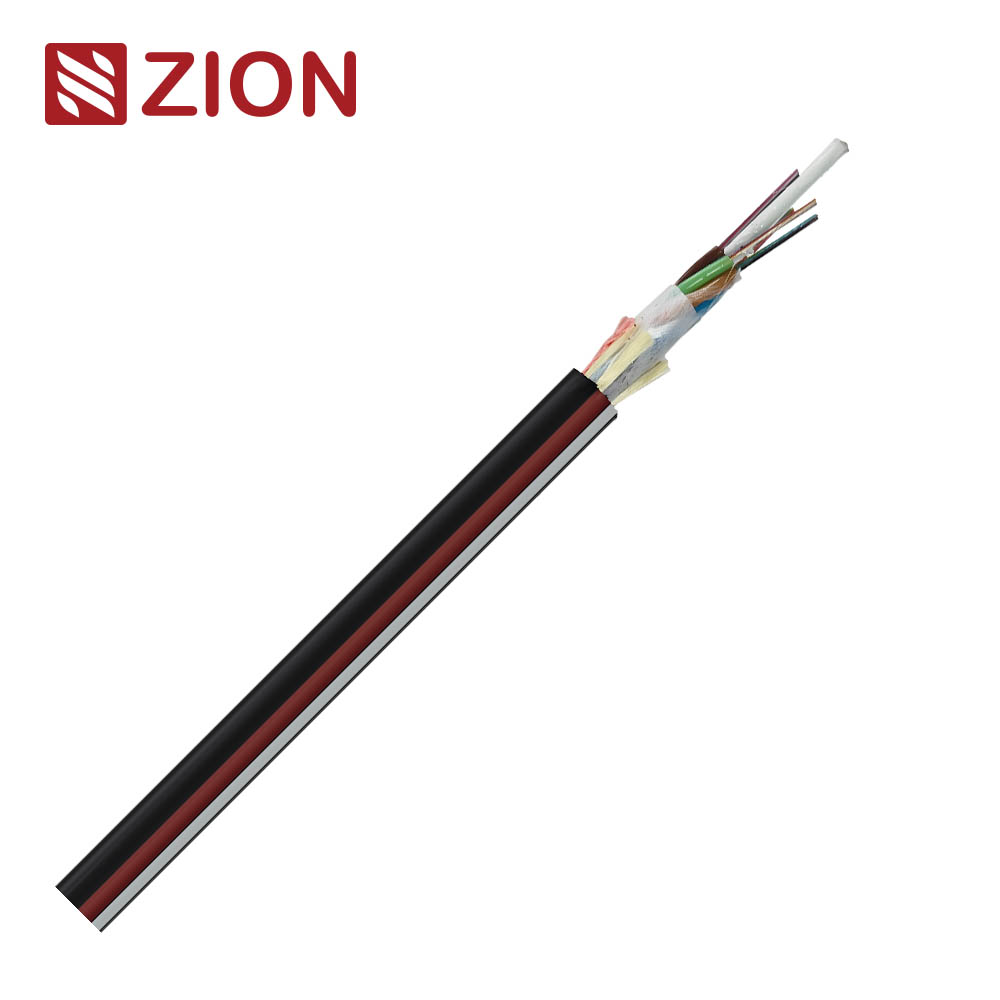
Self-supporting outdoor fiber cable for pole-line routes where messenger wire is not preferred and electrical isolation is important.
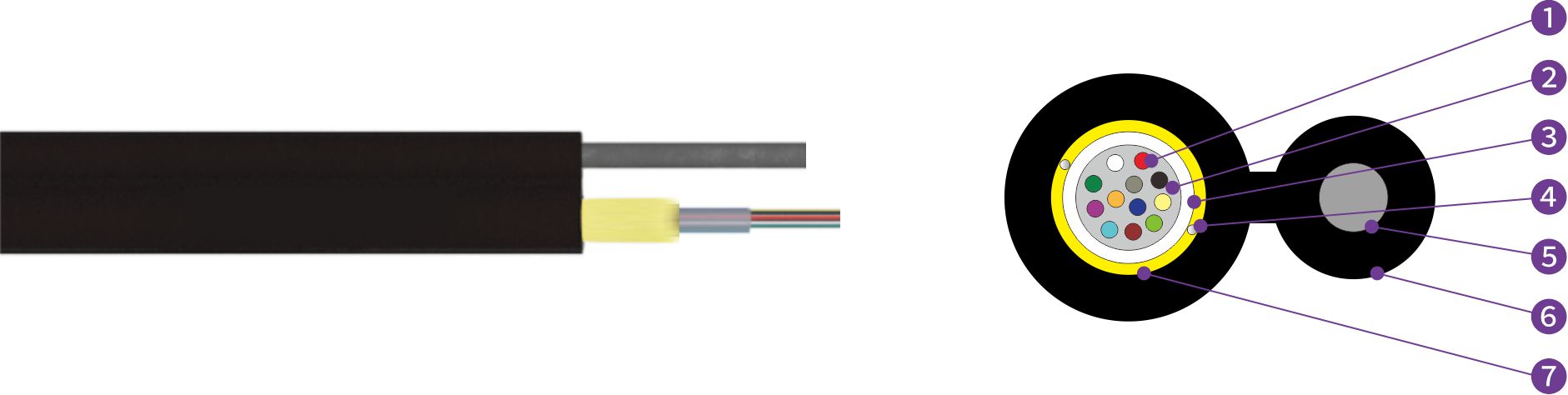
Integrated messenger construction for economical aerial distribution and rural access routes with predictable pole attachment points.

Figure-8 cable with additional mechanical protection for aerial routes exposed to handling, wind, and local route hazards.

Wall or pole terminal box for fiber access, splice management, adapter loading and subscriber branch distribution.
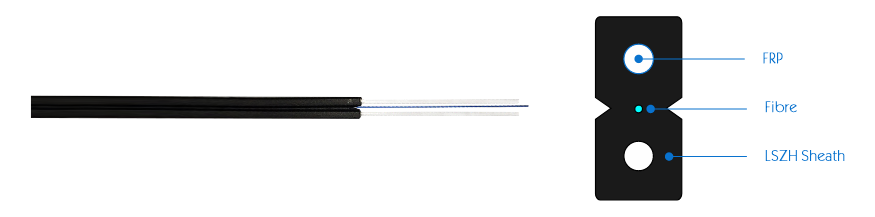
Compact flat drop cable for last-mile FTTH routing, indoor/outdoor access segments and tight building entry paths.

PLC or FBT splitter options for PON distribution, split ratio planning, enclosure integration and optical budget control.
| Application / Route | Recommended product direction | Key requirement |
|---|---|---|
| Long-span pole line | ADSS cable | Check span, sag, wind, ice, tension and clamp selection. |
| Short/medium rural access | Figure-8 self-supporting cable | Confirm messenger strength, pole hardware and bending control. |
| Subscriber branch | FTTH drop cable and drop clamp | Keep drop length, bending radius and facade routing under control. |
| Aerial distribution point | Terminal box with splitter option | Match capacity, sealing, adapter type and maintenance access. |
| Project condition | Recommended direction | Risk focus |
|---|---|---|
| Electrical corridor nearby | Prefer ADSS where all-dielectric construction is required | Avoid unreviewed metallic components and confirm clearance. |
| Cost-sensitive pole-line access | Review Figure-8 cable | Messenger design and pole attachment must match span. |
| High wind or ice exposure | Request mechanical review before order | Sag, tension and clamp load can dominate cable choice. |
| Frequent branch drops | Use terminal box and organized drop routing | Poor branch management increases service and repair time. |
| Document / input | Why it matters |
|---|---|
| Pole distance list | Needed for span and sag review. |
| Weather condition | Wind, ice and temperature define mechanical margin. |
| Pole hardware plan | Clamp, bracket and suspension method must match the route. |
| Fiber count and split plan | Avoids shortage at distribution points. |
| Drum length plan | Reduces field splicing and excess cable waste. |
Aerial, duct, buried and building-entry sections must be separated. One cable type rarely covers every route condition without risk.
Splitters, connectors, splices and patch cords all add loss. They must be checked before finalizing the product list.
Drum length, sheath marking, carton labels and sample references affect site handling, distributor work and installation speed.
Yes. Sample support depends on the exact cable type, construction, connector style and current production plan. Use Sales Support to confirm sample availability and the information needed for testing.
Yes. Datasheets, construction drawings, packing details and available certification documents can be matched to the selected product model and target market requirements.
For many cable families, jacket color, sheath printing, drum length, carton label and OEM or ODM packing can be discussed according to project quantity and manufacturing feasibility.
MOQ and lead time vary by cable family, fiber count, material availability, certification requirement, customization level and order schedule. Confirm them with the project BOM instead of relying on a general estimate.
Send route type, installation method, fiber count, span or duct length, environmental risk, required standards, connector type, split ratio, packaging preference and expected delivery schedule.
Yes. Distributor and integrator support can include product selection, sample preparation, labeling, packing discussion, datasheet matching and project-by-project BOM review.
The recommended products depend on route method, fiber count, installation environment, split architecture, connector interface, packing method and testing requirements. The product cards above show the most relevant starting points.
Yes, many real projects use mixed routes. The important point is to separate each route section and confirm the correct cable construction, enclosure and connector requirements for that section.
Pole-line, ADSS and Figure-8 route planning.
Read MoreUnderground duct and armored buried cable selection.
Read MoreDrop cable, splitter and terminal box combination.
Read MorePassive splitter, terminal and patching architecture.
Read MoreAerial, duct, buried and utility-line route comparison.
Read MoreLong-span and low-density access deployment.
Read MoreSend your route method, fiber count, environment, split plan, connector interface, packing preference and target schedule. ZION can help review the product direction before sample or quotation discussion.