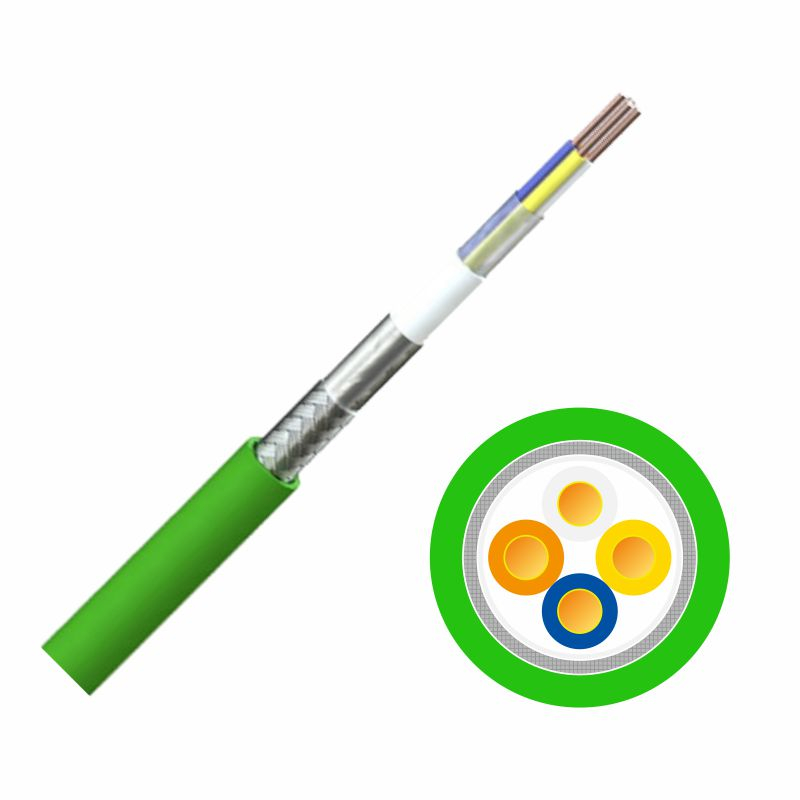
Type A Option
PROFINET Copper Cable Type A
Recommended for fixed industrial Ethernet routes between PLCs, switches, I/O stations and control cabinets.
Type AFixed routeIndustrial Ethernet
View Product 
ZION helps machine builders, automation integrators and distributors select PROFINET Type A, Type B and Type C cables for PLCs, drives, remote I/O, industrial switches, robots and control cabinets. The right selection starts from the installation route: fixed, flexible or high-flex movement.
Specify PROFINET cable by installation behavior: fixed installation, flexible wiring or high-flex motion. Then confirm shielding, jacket, conductor construction, bend radius, connector plan, marking, packing and document requirements before quotation.
| Project Condition | Recommended ZION Direction | Why It Matters | Information to Confirm |
|---|---|---|---|
| Fixed PLC, switch or control cabinet route | PROFINET Copper Cable Type A | Suitable for fixed industrial Ethernet wiring where the cable is installed and not repeatedly moved. | Route length, cable tray or cabinet path, connector type, jacket and packing length. |
| Machine wiring with limited flexibility | PROFINET Copper Cable Type B | Used when the installation needs more flexibility than a fixed solid-conductor route. | Bending condition, equipment layout, conductor preference, connector compatibility and cable OD. |
| Moving machine section or repeated bending area | PROFINET Copper Cable Type C | Selected where industrial Ethernet communication and cable movement both need attention. | Movement frequency, drag-chain requirement, bend radius, oil exposure and service environment. |
| Route close to motors, drives or power cables | Shielded PROFINET cable | Industrial EMI can affect communication stability if shielding and grounding are not planned correctly. | Shield termination, grounding method, separation distance and cabinet bonding practice. |
| Distributor stock or OEM project supply | Bulk cable with custom marking and packing discussion | Clear type marking and packaging reduce installation mistakes and warehouse confusion. | Print text, jacket color, reel length, label format, carton or drum packing and destination market. |
Recommended for fixed industrial Ethernet routes between PLCs, switches, I/O stations and control cabinets.

Suitable for flexible machine wiring, equipment connection and panel-to-device industrial Ethernet links.
Selected for machine-side communication where repeated bending, movement and industrial Ethernet stability must be reviewed together.
Send the target cable type, installation route, shielding requirement, jacket direction, conductor construction and termination plan.
Provide quantity, packing length, delivery plan, destination and distributor or OEM requirements before quotation.
Clarify datasheet, sample, marking photo, test report or compliance document needs before mass order.
Type A is generally used for fixed installation, Type B for flexible machine wiring and Type C for higher-flex or repeated-motion industrial routes. The final choice should be confirmed by route condition, bending requirement, termination method and project specification.
It should not be replaced only by category name. Industrial automation routes often require shielding, mechanical strength, jacket suitability, bend radius and connector compatibility that should be reviewed before substitution.
Use a Type C or high-flex direction when the cable is installed in moving machine sections, repeated bending areas, cable carriers or applications where movement and communication stability are both important.
Industrial Ethernet cables may pass near drives, motors, relays or power cables. Shielding, grounding and route separation help reduce communication interference and installation risk.
Send the required cable type, product link or datasheet, fixed or moving route, jacket requirement, shielding requirement, connector plan, quantity, packing length, destination and document requirements.
Yes. Custom marking, jacket color, reel length, carton labels, drum packing and OEM/ODM requirements can be discussed after the specification, order quantity and destination market are clear.
Samples can be discussed after confirming cable type, length, jacket, marking, packing and the required datasheet or test information.
Check cable marking, drum label, route separation, bend radius, pulling condition, shield termination, connector compatibility and approved documents before installation to reduce rework risk.
Send cable schedule, route condition, quantity, packing requirement, product links and document requests. ZION can help organize Type A, Type B or Type C cable direction before quotation and sample discussion.