RJ45 Pass-Through Plug vs Standard RJ45 Plug: Which One Should You Choose?
Author: Site Editor Publish Time: 28-04-2026 Origin: Site
RJ45 Pass-Through Plug vs Standard RJ45 Plug: Which One Should You Choose?
A practical buying and installation guide for comparing pass-through RJ45 plugs and standard RJ45 plugs by termination speed, wiring visibility, crimping reliability, cable compatibility and project use case.
Pass-through RJ45 plugs make wire order easier to verify before crimping and can improve field termination speed.
Standard RJ45 plugs are widely used, cost-effective and reliable when installers are experienced.
Choose based on installer skill, crimping tool type, cable category, conductor type and project quality-control needs.
■ Quick Answer
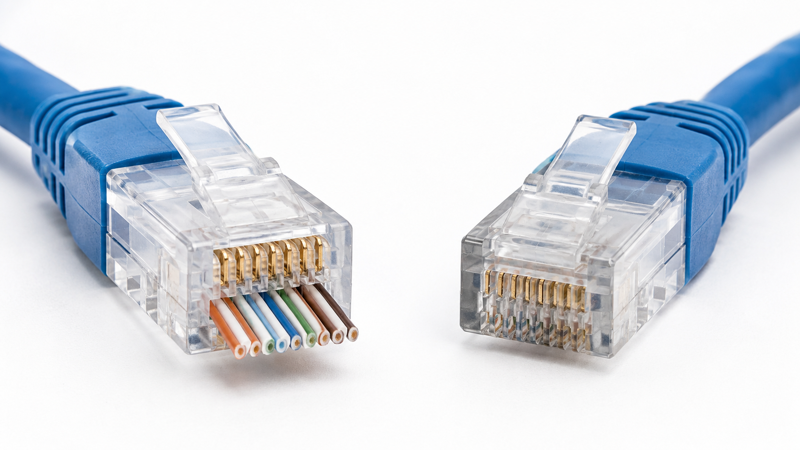
A pass-through RJ45 plug allows the eight conductors to pass through the front of the connector before crimping, so installers can visually confirm the wire sequence and then trim the excess during crimping. A standard RJ45 plug requires the conductors to be cut to the correct length before being inserted into the plug.
For field installers, training teams and projects with many on-site terminations, pass-through plugs can reduce wiring-order mistakes and speed up work. For experienced technicians, factory-assembled patch cords or cost-sensitive bulk projects, standard RJ45 plugs remain a practical and widely used option.
If your team needs faster visual checking and easier field termination, choose pass-through RJ45 plugs. If your team already has mature termination skills and wants lower connector cost, standard RJ45 plugs are still reliable.
■ What Are Pass-Through and Standard RJ45 Plugs?
RJ45 plugs are modular connectors used to terminate Ethernet cables such as Cat5e, Cat6 and Cat6A patch cords. The plug type affects how the conductors are inserted, checked, cut and crimped.
| Plug Type | Structure | Main Advantage | Typical Use |
|---|---|---|---|
| Pass-Through RJ45 Plug | Conductors pass through the front before crimping | Easy wire-order verification | Field termination, training, fast installation |
| Standard RJ45 Plug | Conductors stop inside the plug | Lower cost and broad availability | Experienced termination, factory patch cords, general use |
■ RJ45 Pass-Through Plug vs Standard RJ45 Plug Comparison
The key difference is not data speed alone. The real difference is installation workflow, inspection convenience, tool requirement and termination consistency.
| Comparison Item | Pass-Through RJ45 Plug | Standard RJ45 Plug | Decision Logic |
|---|---|---|---|
| Wire Order Checking | Very easy before crimping | Harder after insertion | Pass-through helps reduce wiring sequence mistakes. |
| Termination Speed | Usually faster for field work | Depends heavily on installer skill | Pass-through is friendly for large on-site jobs. |
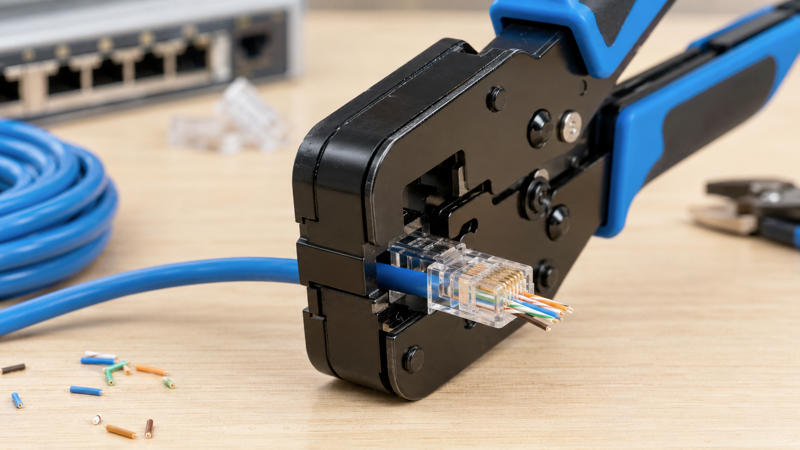
| Tool Requirement | Requires pass-through crimping tool with cutter | Uses standard RJ45 crimping tool | Check tool compatibility before buying. |
| Connector Cost | Usually higher | Usually lower | Standard plugs may be better for cost-sensitive projects. |
| Learning Curve | Easier for beginners | Requires more practice | Pass-through is useful for training and mixed-skill teams. |
| Common Risk | Poor trimming if tool is not sharp | Conductors may not fully reach the end | Both require proper crimping and testing. |
Best for quick wire-order checking, field termination and reducing beginner mistakes.
Pass-through plugs need a compatible crimping tool that trims conductors cleanly.
Using the wrong plug for solid, stranded, shielded or Cat6A cable may cause unstable links.
■ When to Choose Pass-Through RJ45 Plugs
Pass-through RJ45 plugs are useful when installers need to make many cable terminations quickly while still checking conductor order before final crimping. They are especially practical for on-site cabling, maintenance work and training environments.
Field Termination
Installers can pull conductors through, verify the sequence and crimp with fewer wiring mistakes.
Training and Mixed-Skill Teams
The visible wire order makes pass-through plugs easier for new technicians to learn.
Fast Troubleshooting Replacement
Useful when technicians need to re-terminate damaged plugs during network maintenance.
■ When to Choose Standard RJ45 Plugs
Standard RJ45 plugs remain a mature and widely used option. They are suitable for experienced installers, factory assembly and projects where tool compatibility and connector cost are important.
Standard RJ45 plugs require precise conductor length control. If wires are too short, they may not fully reach the contact area; if the jacket is stripped too far, strain relief may be poor.
Best fit: experienced production teams, factory patch cord assembly, standard maintenance kits, cost-sensitive projects and stable termination workflows.
■ Cable and Tool Compatibility
RJ45 plug selection must match the cable category, conductor type, cable outer diameter, insulation diameter, shielding design and crimping tool. A connector that works for one cable may not be reliable for another.
| Compatibility Item | What to Check | Why It Matters | Common Mistake |
|---|---|---|---|
| Cable Category | Cat5e, Cat6 or Cat6A plug rating | Higher-category cables may have larger conductor and OD. | Using Cat5e plug on large Cat6A cable. |
| Conductor Type | Solid or stranded compatible contact blade | Contact design affects bite and electrical stability. | Using the wrong plug for solid or stranded conductor. |
| Shielding | UTP or shielded RJ45 plug | Shielded cables need grounding continuity when required. | Using UTP plug on shielded cable when grounding is needed. |
| Cable Diameter | Cable OD and insulation OD | Plug housing must accept the cable properly. | Cable too thick for the plug body. |
| Crimping Tool | Standard or pass-through crimping tool | Pass-through plugs need trimming during crimping. | Using standard tool on pass-through plugs without trimming function. |
■ Common Termination Risks
Most RJ45 plug problems are not caused by the plug type alone. They are caused by poor stripping length, wrong wire order, poor crimp pressure, wrong connector match or lack of testing.
| Risk | Possible Result | Prevention |
|---|---|---|
| Wrong T568A / T568B sequence | No link, split pair or unstable connection | Verify wire order before crimping and test after termination. |
| Conductors not fully inserted | Poor contact or intermittent link | Check conductor position at the plug nose. |
| Poor strain relief | Cable may loosen under pulling or bending | Ensure the jacket is held by the plug strain relief. |
| Untrimmed conductor ends | Possible short risk or poor connector fit | Use a sharp pass-through crimping tool and inspect the end face. |
| Wrong plug for cable type | Weak mechanical or electrical contact | Match plug to category, conductor, shielding and cable OD. |
■ Decision Rules / Engineer’s Shortcut
The best plug is the one that matches the installer workflow, cable construction and quality-control requirement.
| Project Condition | Recommended Choice | Reason | Checkpoint |
|---|---|---|---|
| Many on-site terminations | Pass-through RJ45 plug | Faster visual checking and easier workflow. | Use compatible pass-through crimping tool. |
| Experienced production team | Standard RJ45 plug | Stable process and lower connector cost. | Control wire length and crimping quality. |
| Training or beginner installers | Pass-through RJ45 plug | Wire order is easier to inspect. | Inspect trimming quality after crimping. |
| Cost-sensitive patch cord assembly | Standard RJ45 plug | Lower material cost for skilled production. | Test every finished cable. |
| Cat6A or large OD cable | Choose compatible Cat6A-rated plug | Cable size and conductor diameter affect fit. | Confirm plug housing and load bar design. |
Need speed and visual checking? Choose pass-through. Need lower cost with skilled termination? Choose standard. In both cases, match the plug to the cable and test the finished link.
■ OEM Ordering Notes
For OEM buyers, RJ45 plug orders should specify more than “RJ45 connector.” The plug design must match the cable category, conductor type, cable diameter and tool system.
Connector Specification
Confirm pass-through or standard type, Cat5e/Cat6/Cat6A rating, UTP or shielded design and contact material.
Cable Match
Confirm solid or stranded conductor, AWG size, insulation OD, cable OD and jacket material.
Packaging and Tools
Confirm bulk bag, jar, blister pack, OEM label, barcode and compatible crimping tool if supplied as a kit.
A complete RJ45 plug RFQ should include plug type, cable category, shielded or unshielded design, conductor type, AWG range, cable OD range, contact plating, packing method and tool compatibility.
■ FAQ
Are pass-through RJ45 plugs better?
They are better for quick wire-order checking and field termination, but standard plugs can be equally reliable when installed correctly.
Do pass-through plugs need a special crimping tool?
Yes. They normally require a pass-through crimping tool that can cut the excess conductors cleanly during crimping.
Can I use standard crimpers for pass-through plugs?
Not recommended unless the tool is designed for pass-through plugs. Otherwise, the conductor ends may not be trimmed properly.
Are pass-through plugs good for Cat6A?
They can be, but the plug must be Cat6A-rated and compatible with the cable OD, conductor size and shielding design.
What is the main risk of standard RJ45 plugs?
The main risk is inaccurate conductor length or incomplete insertion, which can cause weak contact or failed tests.
What should buyers confirm before ordering RJ45 plugs?
Confirm plug type, cable category, shielded or unshielded design, solid or stranded compatibility, AWG range, cable OD and tool compatibility.
Need RJ45 Plugs for Your Ethernet Cable Project?
ZION Communication can support standard RJ45 plugs, pass-through RJ45 plugs, shielded RJ45 connectors, crimping tools and Ethernet cable solutions for Cat5e, Cat6 and Cat6A projects.