What Is an MPO Loopback Module? Uses, Mapping, and Compatibility Guide
Author: James Publish Time: 26-03-2026 Origin: Site
What Is an MPO Loopback Module?
A practical engineering reference for understanding MPO loopback modules, their testing logic, mapping requirements, compatibility limits, and buying criteria in high-density fiber environments.
MPO loopback modules are passive assemblies used to send optical signals back to receiving lanes for port verification, diagnostics, and simulation.
Correct fiber count, gender, polarity, and internal lane mapping matter more than simple connector fit.
For procurement, the real selection threshold is compatibility with the target transceiver architecture and test objective, not just low price.
■ 1) What It Is MPO Loopback Module
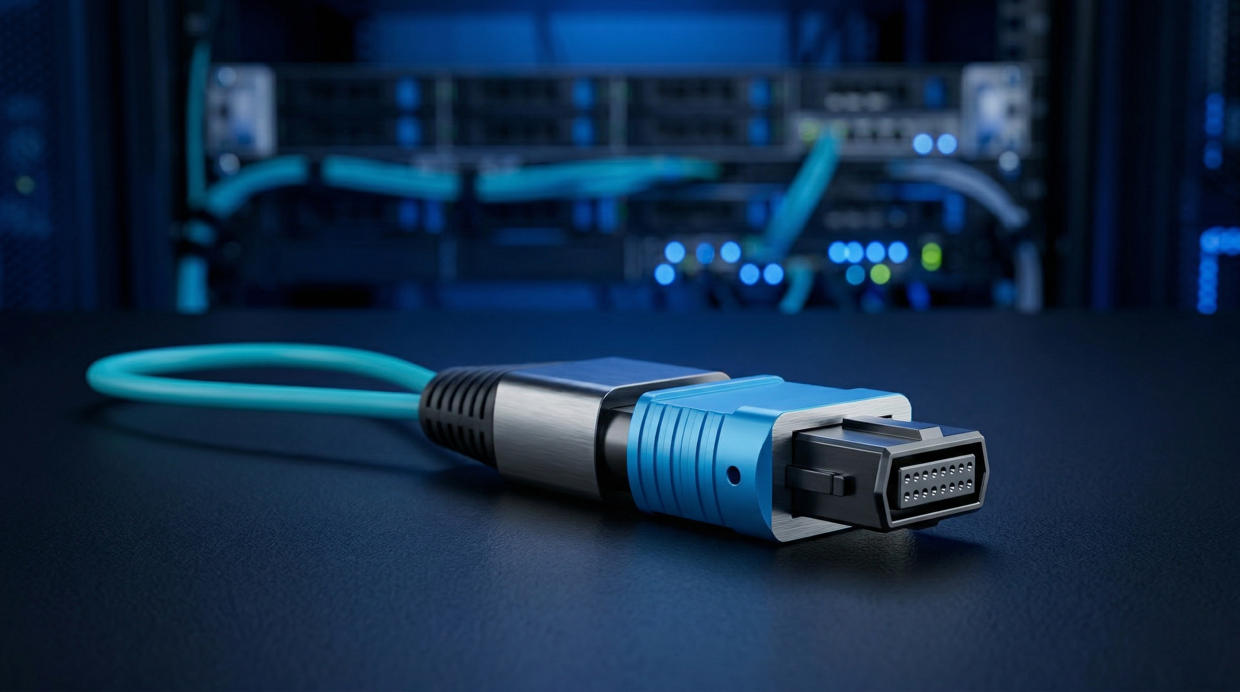
An MPO loopback module is a passive fiber optic assembly that routes transmitted optical lanes back into receiving lanes within the same MPO interface. Instead of building a full link between two devices, the module creates a closed optical return path for verification, diagnostics, and simulation.
In practice, this means an engineer can insert the module into an MPO port, adapter, or related interface and confirm whether the equipment can transmit and receive light through a defined internal mapping. This makes the module useful for transceiver checks, switch port verification, lab validation, and staged deployment testing.
| Item | What It Does | Best Use Case | Main Limitation |
|---|---|---|---|
| MPO Loopback Module | Returns Tx lanes to Rx lanes through internal fiber routing | Port verification, diagnostics, simulation | Must match mapping and connector requirements |
| MPO Trunk Cable | Connects separate endpoints across a structured link | Permanent or semi-permanent network paths | Not intended for direct loopback testing |
| Duplex LC Loopback | Creates a return path on two-fiber interfaces | Simple duplex optics testing | Not suitable for parallel MPO lane groups |
■ 2) Types / Categories / Architecture
MPO loopback modules are not all identical. The market uses different physical formats and internal designs depending on test depth, panel fit, fiber count, and intended optic platform.
Common ways to categorize MPO loopback modules
The most useful categories for selection are connector format, fiber count, gender, fiber type, and housing style. These factors directly affect whether the module can be deployed in a real system without rework.
| Category | Typical Options | Why It Matters | Procurement Note |
|---|---|---|---|
| Fiber count | MPO-8, MPO-12, MPO-24 | Must align with the lane architecture being tested | Do not assume physical fit equals functional fit |
| Connector gender | Male, Female | Guide pin arrangement must match the mating interface | Confirm both module gender and adapter/transceiver mating style |
| Fiber type | OS2, OM3, OM4, OM5 | Affects optical compatibility and expected performance | Match the module to the target test environment |
| Housing / form | Compact module, cassette-like body, pigtail-like loopback assembly | Changes handling, panel access, and labeling convenience | Choose based on field workflow, not appearance alone |
■ 3) How It Works / Mapping / Logic
The internal logic of an MPO loopback module is simple in concept but critical in execution. The assembly routes outgoing optical lanes to specific return lanes so the device under test sees a valid optical receive condition. That routing is controlled by the module’s fiber mapping.
For parallel optics, the mapping cannot be random. The transmit lanes must loop to the correct receive lanes based on the target transceiver or port architecture. A module that physically inserts into the port but returns the wrong lanes can create misleading test results, wasted troubleshooting time, or false failure reports.
Typical mapping logic
The exact pattern depends on system design, but a loopback module generally pairs selected transmit fibers with corresponding receive fibers inside the same MPO structure. This may follow a direct pair strategy, a mirrored return strategy, or a customer-defined mapping for a specific validation workflow.

| Mapping Element | What to Confirm | Why It Affects Testing | Risk if Ignored |
|---|---|---|---|
| Lane count | How many active lanes the equipment expects | Defines whether the loopback structure is even relevant | No valid optical return path |
| Tx-to-Rx pairing | Which transmit lanes return to which receive lanes | Determines whether the port sees a successful link condition | False-negative diagnostics |
| Polarity basis | How the system manages fiber position orientation | Changes effective lane order | Misinterpretation of continuity or performance |
| Reference drawing | Supplier’s mapping diagram or customized pinout | Provides the only reliable basis for purchase validation | Wrong custom build or delayed approval cycle |
■ 4) Common Mistakes / Risks
Most field issues with MPO loopback modules come from incomplete specification rather than product defects. The module may be built correctly to the wrong assumptions. That creates delays, retesting, and confusion between procurement, integration, and operations teams.
Typical deployment mistakes
Ordering by connector type alone and ignoring internal mapping.
Assuming all MPO-12 or MPO-24 loopbacks behave the same.
Overlooking gender mismatches at the equipment or adapter side.
Using multimode loopbacks in a single mode validation workflow or vice versa.
Skipping insertion loss review when the test threshold is tight.
Failing to specify labels, port identification, or project reference marks for field teams.
| Mistake | Operational Impact | Cost Effect | Prevention Method |
|---|---|---|---|
| No mapping confirmation | Invalid test results, repeat diagnostics | High hidden labor cost | Approve drawing before PO release |
| Wrong gender | Cannot mate in field | Immediate replacement cost | Match to transceiver or adapter interface |
| Wrong fiber type | Misaligned optical environment | Retest and material waste | Tie PO to target system spec |
| Unclear labeling | Field confusion and handling mistakes | Small unit cost, large project friction | Standardize label and packaging rules |
■ 5) Decision Rules / Engineer’s Shortcut
This section is intended as a fast screening tool for engineers, buyers, and project teams. Use it to decide whether an MPO loopback module is appropriate and what information must be fixed before you place an order.
| Decision Question | If Yes | If No | Engineering Action |
|---|---|---|---|
| Do you need to verify an MPO port without building a full link? | Loopback module is usually appropriate | Consider trunk or harness validation path instead | Define test objective first |
| Is the target lane mapping known? | Proceed to drawing review | Do not release PO yet | Request mapping confirmation from design or supplier |
| Does the transceiver / adapter interface require a specific gender? | Specify mating condition on order | Confirm physically before buying | Do not rely on assumptions from old projects |
| Is insertion loss a critical threshold in this test workflow? | Ask for test data or tighter specification | Standard quality may be acceptable | Align performance spec to test sensitivity |
| Will the modules be used repeatedly in field operations? | Prioritize housing durability and labeling | Basic packaging may be sufficient | Match construction to handling frequency |
■ 6) Application Scenarios
MPO loopback modules are useful wherever teams need fast, controlled, repeatable validation of parallel optical interfaces. The exact value changes by environment, but the common benefit is reduced troubleshooting time and clearer fault isolation.
| Scenario | Why Loopback Helps | What Teams Should Watch | Recommended Focus |
|---|---|---|---|
| Data center switch commissioning | Validates port behavior before live patching | High port density increases handling mistakes | Clear labeling and mapping control |
| Lab simulation and equipment staging | Creates a simple test path without full link buildout | Need match to device architecture | Standardize reference modules by platform |
| Factory verification | Supports repeatable outgoing inspection or acceptance routines | Overly generic stock can create mismatch later | Tie SKU to actual test cases |
| Troubleshooting suspected optics or port issues | Quickly isolates equipment-side problems from cabling issues | Wrong assumptions can produce false fault isolation | Use alongside documented test method |
For broader structured cabling context, this topic usually sits upstream of MPO Fiber Solutions and downstream of detailed operational pages such as How to Test MPO Fiber Links and a Compatibility FAQ. That internal content flow helps readers move from system overview to implementation checks.
■ 7) FAQ
What is an MPO loopback module mainly used for?
It is mainly used for port verification, diagnostics, and simulation in MPO-based optical systems. The module routes transmitted lanes back to receiving lanes so equipment can be checked without a full network link.
How do I know whether an MPO loopback module is compatible with my system?
Compatibility should be judged by four primary factors: fiber count, connector gender, fiber type, and internal lane mapping. Connector appearance alone is not enough for a reliable decision.
Is a low-cost standard module acceptable for every project?
Not always. In simple validation workflows a standard build may be sufficient, but projects with specific transceiver architectures, strict insertion loss requirements, or repeated field use often need tighter specification control or custom mapping.
Can MPO loopback modules be customized?
Yes. Suppliers can often customize fiber type, connector gender, internal mapping, labels, housing style, and packaging. Customization is especially useful when the test workflow is fixed and repeatability matters.
What information should be prepared before requesting a quote?
Prepare the target application, fiber count, fiber type, connector gender, mapping requirement, performance expectation, label requirement, and estimated quantity. This shortens the approval cycle and reduces sourcing mistakes.
Do loopback modules require special maintenance?
They are passive components, but connector cleanliness, protective storage, and proper handling still matter. In repeated field use, contamination or damage at the MPO end face can affect test stability and create false diagnostics.
■ 8) Conclusion
An MPO loopback module is a compact but important tool for testing and simulating high-density optical interfaces. Its value lies in controlled return paths, clear lane mapping, and faster fault isolation. For engineering teams, the key is to define the test objective first, then lock the module specification around actual system requirements rather than generic connector assumptions.
For buyers and project teams, the most effective next step is to prepare a small specification checklist before RFQ: fiber count, fiber type, connector gender, mapping logic, labeling, and quantity. That approach reduces rework, improves procurement accuracy, and makes field validation more predictable.
If you are evaluating an MPO loopback module for a switch port, transceiver test setup, factory verification process, or customized parallel optics workflow, send the target connector type, fiber count, fiber type, and mapping requirement. That is the fastest way to confirm a suitable configuration.