Custom Branded Cable: What MOQ and Lead Time Should Buyers Expect?
Author: Site Editor Publish Time: 22-04-2026 Origin: Site
Custom Branded Cable: What MOQ and Lead Time Should Buyers Expect?
A practical B2B reference for procurement teams, engineers, project managers, and system integrators evaluating custom cable branding, private label packaging, and OEM customization.
Branding-only requests usually have lower MOQ and shorter lead time than technical redesign projects.
MOQ rises when branding expands into new materials, connectors, structure, or special compliance requirements.
For first orders, a phased path is usually safer: standard cable first, branded version second, deeper OEM customization later.
■ Quick answer for buyers
Custom branded cable usually does not mean full custom cable development. In most B2B buying situations, it means a standard cable structure with added branding elements such as jacket printing, private label packaging, custom labels, or brand-specific carton marks. That distinction matters because MOQ and lead time rise sharply once a buyer moves from branding on an existing cable to new materials, new connectors, or a modified cable structure.
In practical sourcing, buyers should generally expect lower MOQ and faster lead time for branding-only requests, and higher MOQ plus longer scheduling windows for OEM private label or full custom development. For planning purposes, simple label or packaging customization may start at relatively low order quantities, while private label packaging and deeper structural changes usually require higher commitment and more approval time.
The most common buyer mistake is treating “custom branded cable” as one category. In reality, a label change, a jacket print request, a private label packaging program, and a fully customized cable build are four different commercial situations with very different MOQ and lead time logic.

■ What counts as a custom branded cable?
For procurement teams, engineers, project managers, and system integrators, “custom branded cable” usually falls into four practical levels:
This framework matters because many buyers ask for “custom branded cable” when they actually want only printing and packaging, not a new cable design. Defining that boundary early makes MOQ and lead time discussions much more accurate.
■ MOQ and lead time expectations
For branding on an existing cable design, buyers should typically expect a moderate MOQ and a medium lead time, not full product-development commitment. The following ranges are best used as planning benchmarks.
| Branding level | Typical buyer request | Typical MOQ | Typical lead time | Commercial reality |
|---|---|---|---|---|
| Basic label customization | SKU label, carton mark, shipment label | 50–100 units | 2–3 weeks | Best for pilot orders and fast market testing |
| Jacket branding | Logo print, part number, meter mark | 100–500 units | 3–5 weeks | A practical middle ground for visible brand control |
| OEM private label | Branded inner packs, labels, retail box, master cartons | 500–1000 units | 4–8 weeks | Better for recurring procurement and channel programs |
| Branding + structural customization | Branding plus conductor, insulation, connector, color, or build changes | 1000+ units | 8–16 weeks or more | Moves toward full OEM or ODM-style project logic |
MOQ and lead time vary by cable type, customization depth, raw material availability, packaging requirements, testing scope, and factory scheduling. Buyers should treat these figures as planning ranges rather than fixed universal rules.
■ Why MOQ rises on branded cable orders
MOQ is not only about the cable itself. It is usually about the total production disturbance created by the order. MOQ rises when factories must absorb more setup work, more material planning, more packaging preparation, or more quality control effort for a relatively small batch.
Branding-only customization is usually easier to launch than structure customization. A logo print on a proven cable can often fit into an existing workflow. Once the request expands into new conductor size, new insulation thickness, new connector type, non-standard color, or special compliance requirements, the project behaves like a partially custom product and the MOQ threshold usually increases.
Buyers usually get the best MOQ outcome when they keep the cable structure standard in the first order and customize only the identity layer: print, label, or packaging.
■ What affects MOQ and lead time?
| Factor | Impact on MOQ | Impact on lead time | Why it matters |
|---|---|---|---|
| Existing cable structure already in production | Lower | Lower | Uses proven materials and standard workflow |
| New jacket print or print content | Medium | Medium | Requires artwork confirmation and printing control |
| Custom jacket color | Medium to high | Medium to high | May require non-standard material planning |
| Branded inner or outer packaging | Medium to high | Medium to high | Adds packaging preparation and approval work |
| New connector or modified termination | High | High | May trigger tooling or assembly adjustment |
| New cable construction or performance spec | High | High | Moves beyond branding into product development |
| Specialty components or uncommon materials | High | Very high | Supply chain readiness becomes the main risk |
■ Branding request or product development?
This is the most important commercial threshold in the whole project.
Logo print
Part number print
Custom label
Outer carton mark
Branded packaging
Conductor size or structure
Shielding design
Insulation or jacket material
Connector type
Custom color system
Mechanical or compliance changes
Every RFQ should clearly state whether the request is branding-only, branding + packaging, branding + minor configuration change, or branding + full technical redesign. If that boundary is not defined, the quotation process slows down and MOQ or lead time estimates become less reliable.

■ Engineer’s shortcut
| Buyer situation | Best-fit sourcing path | Why |
|---|---|---|
| You need a fast pilot run with your label | Standard cable + custom label | Lowest disruption and fastest commercial validation |
| You need visible brand presence on the cable itself | Standard cable + jacket printing | Good balance between brand control and manageable MOQ |
| You need repeatable branded retail or project packaging | OEM private label | Better for stable reorder programs and channel use |
| You need a branded cable that is also technically unique | Custom cable + branding | Choose this only when the application really requires it |
The safest sourcing path is usually standard cable first → branded version second → deeper OEM customization only after repeat demand is proven. This approach usually lowers risk, reduces working-capital pressure, and improves reorder consistency.
■ Procurement checklist before asking for quotation
| Checkpoint | What to define | Why it matters |
|---|---|---|
| Product scope | Cable type, application, core performance requirements | Distinguishes standard-platform orders from real custom development |
| Customization scope | Label, print, packaging, color, connector, structure | Directly affects MOQ and lead time |
| Artwork and marking | Logo, print content, label format, barcode, carton mark | Avoids approval delays before production |
| Commercial volume | Pilot order, repeat order, annual program | Helps the supplier match the right production model |
| Schedule | Sample requirement, target ship date, approval timeline | Makes lead time estimates more realistic and executable |
■ When to choose custom branded cable
You already know the cable structure works technically and only need stronger brand presentation.
You need project-specific identification, traceability, or reseller differentiation.
You want a more professional branded package for channel, OEM, or distributor sales.
You want to reduce SKU confusion or mixed-brand installation risk in the field.
It is usually not the best first step when the core issue is still technical uncertainty. If the team is unsure about cable structure, material, connector compatibility, or compliance strategy, solve the engineering problem first and add branding after the product platform is stable.
If branding is the goal, keep the first order close to an existing cable platform. If performance is the goal, define the technical target first and treat branding as a secondary layer.
■ FAQ
Not always. A custom branded cable may only mean adding logo print, labels, or branded packaging to a standard cable. OEM private label is usually a deeper commercial program with more branding control and typically higher MOQ and longer lead time than lighter customization.
For branding on an existing cable rather than a new technical design, buyers should usually expect a mid-range MOQ. In many practical projects, it sits between simple relabeling and full OEM private label packaging.
A practical planning range is about 3–5 weeks for branding on an existing cable structure, while OEM private label with more packaging work can move toward 4–8 weeks. Standard stock is usually faster, and structurally customized projects can take much longer.
Because MOQ reflects setup cost, procurement effort, print or packaging preparation, line efficiency, and QC workload. High-volume factories often protect efficiency with stricter MOQ thresholds, while flexible suppliers may accept smaller runs for simpler customization.
Yes. The easiest way is to keep the cable structure standard, approve print content quickly, simplify packaging, and avoid new materials or connectors in the first order.
Usually when the application requires a technical change that branding cannot solve, such as performance limits, installation constraints, connector compatibility, compliance demands, or project-specific environmental conditions.
■ Conclusion
For most buyers, the better question is not simply “What is the MOQ for custom branded cable?” It is “How much of this request is branding, and how much is real product customization?”
If the cable structure is already proven and the request is limited to print, label, or packaging, MOQ and lead time are usually manageable. If the project adds new materials, colors, connectors, dimensions, or construction changes, buyers should expect a different commercial model with higher MOQ, longer lead time, and more approval work.
The safest sourcing path is usually standard cable first → branded version second → deeper OEM customization only after repeat demand is proven. That approach lowers cost risk, speeds market entry, improves reorder consistency, and gives procurement teams more control over both branding and supply stability.
ZION can help you distinguish branding-only requests from true custom cable development, then align sampling, quotation, production, and delivery around that decision.



 Fiber Optic Tools
Products 6 families
Solutions 6 markets
Resources Tools & docs
Certificate
Certification and compliance references for project review, qualification and purchasing documentation.
 Fiber Optic CableAccess and backbone
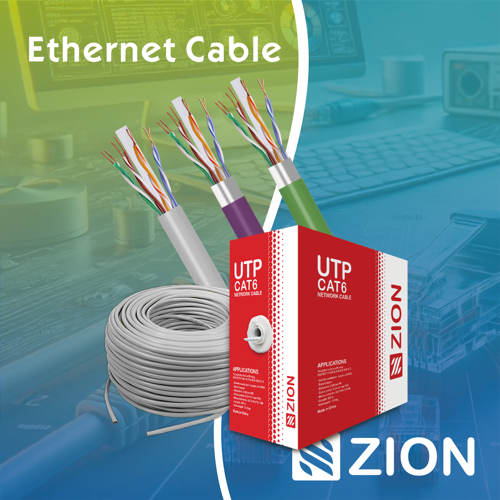 Ethernet CableCat5e to Cat8
 Coaxial CableRF and video signal
 Fire, Security & AlarmSafety systems
 Voice, Audio & VideoSignal cabling
 Power & Control CableEnergy and control
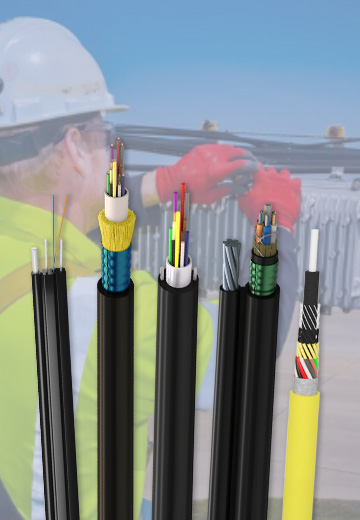
Fiber optic cable systems
Outdoor, indoor, FTTH and distribution cable lines for access networks, backbone routes and campus deployments.
 Telecom & ISP NetworksFTTH, PON, ODN
  Data Center InfrastructureServer room cabling
  Building Low-Voltage SystemsBMS, AV, weak current
  Security & Fire ProtectionAlarm, CCTV, access
  Industrial Automation CablePLC, RS485, fieldbus
  Energy & Power InfrastructureSolar, battery, power
 Telecom & ISP Networks
For FTTH / PON access, outdoor fiber deployment, aerial routes, duct routes, direct burial routes, rural broadband and ODN planning.
Tools
Use calculators and planning tools for conduit capacity, PoE voltage drop and fiber optic link loss budget work.