Datasheet vs Test Report vs Price Book: What Cable Buyers Need
Author: Site Editor Publish Time: 22-04-2026 Origin: Site
Datasheet vs Test Report vs Price Book: What Buyers Actually Need
Cable sourcing becomes slower and riskier when teams ask for the wrong document at the wrong stage. This guide explains what each document does, where its boundary is, and how procurement, engineering, QA, and project teams should use datasheets, test reports, price books, and quotations more effectively.
A datasheet defines the product, but it is not shipment-level proof.
A test report proves specific tested parameters, but it is not a commercial offer.
A price book helps budgeting, while a quotation converts exact technical scope into a buyable offer.
■Why Buyers Confuse These Documents
In cable sourcing, procurement, engineering, QA, consultants, and project managers often ask for documents using the same generic words: “catalog,” “report,” “best price,” or “technical file.” The problem is that each department is trying to solve a different risk. Procurement wants commercial comparability. Engineers want structure and performance details. QA wants evidence. Project teams want something actionable for internal approval and ordering.
That is why document confusion causes so many avoidable delays. A datasheet may be technically useful but commercially incomplete. A test report may look authoritative but may only cover a narrow scope. A price book may help budgeting but not support a real purchase decision. A quotation may look sufficient, but if its technical basis is not aligned, it becomes a pricing document without engineering control.
■Core Differences and Boundaries
| Document | Main Purpose | Best Use Stage | What It Usually Includes | What It Does Not Guarantee |
|---|---|---|---|---|
| Datasheet | Technical definition | Initial screening, model comparison | Construction, materials, parameters, standards references | Batch-level proof, exact commercial terms |
| Test Report | Evidence of tested performance | Compliance review, consultant approval | Measured parameters, methods, results, dates, test party | Commercial availability, full configuration coverage |
| Price Book | Budgetary pricing reference | Early budgeting, distributor planning | Product families, indicative prices, volume assumptions | Final project price, exact scope fit |
| Quotation | Purchasable commercial offer | Approval, negotiation, PO release | Price, quantity, MOQ, lead time, trade terms, scope notes | Independent technical proof unless supported by attachments |

■What Each Document Actually Does
Datasheet
A datasheet is the product’s technical baseline. It explains what the cable is designed to be and where it is intended to be used.
Construction and material details
Electrical, mechanical, or optical parameters
Environmental and standards references
Model and application overview
Test Report
A test report proves that a defined sample, product family, or batch was checked against specific criteria.
Measured values and methods
Pass/fail results
Testing date and responsible party
Scope limitations
Price Book
A price book is used for early budget planning, range comparison, or distributor support across a product family.
Indicative pricing by family or size
Assumed volume levels
Currency and validity notes
Commercial reference only
Quotation
A quotation is the commercial document that turns a requirement into a buyable offer.
Exact product scope and quantity
Unit price and commercial terms
MOQ and lead time
Packing, validity, and exclusions
■What Buyers Need at Each Buying Stage
| Buying Stage | Main Question | What Usually Matters Most | Main Risk If Missing |
|---|---|---|---|
| Early research | Is this cable family relevant? | Datasheet + budgetary price indication | Time wasted on the wrong product type |
| Technical review | Does the product truly fit the application? | Datasheet + relevant test report(s) | Compatibility error or unsupported claim |
| Budget alignment | Is it commercially realistic? | Price book or budgetary quotation | Wrong budget assumptions |
| Order placement | What exactly are we buying and under what terms? | Formal quotation + confirmed technical scope | Commercial mismatch, approval delay, rework |
■Role-Based Document Needs
| Role | Primary Need | Most Useful Documents | Main Risk If Misused |
|---|---|---|---|
| Procurement | Commercial comparability | Quotation, price book, datasheet | False apples-to-apples comparison |
| Engineer | Technical suitability | Datasheet, test report | Wrong construction or unsupported deployment |
| QA / Compliance | Evidence and traceability | Test report, batch docs, declarations | Approval rejection or audit weakness |
| Project Manager | Delivery certainty | Quotation, datasheet, key evidence | Delay, scope drift, re-approval cycle |
| Distributor | Range and price visibility | Price book, datasheet, framework quotation | Outdated assumptions or margin pressure |
■Common Sourcing Mistakes
Using a datasheet as proof
A datasheet may state design intent or standards alignment, but it does not automatically prove tested performance for the exact approval scenario.
Requesting “a report” too vaguely
Fire, electrical, dimensional, transmission, and third-party reports are not interchangeable. Buyers should define which risk needs evidence.
Treating a price book as a quote
Indicative pricing often excludes exact quantity, customization, packaging, destination, and compliance cost factors.
Comparing unmatched quotations
A lower price can hide thinner scope, fewer deliverables, weaker packing assumptions, or missing document support.
■Engineer’s Shortcut
| Your Question | Ask For First | Why |
|---|---|---|
| What is this cable and where can it be used? | Datasheet | It defines structure, materials, and intended application. |
| Has this claim actually been tested? | Test report | It gives evidence for specific measured parameters. |
| What is the expected price level? | Price book | It supports early budgeting and comparison. |
| What is your actual offer for my project? | Formal quotation | It ties exact scope, quantity, price, terms, and delivery assumptions together. |
■Decision Rules for Procurement Teams
Ask for a Datasheet When
You are narrowing product options
You need technical baseline details
You are checking compatibility
You need consistent model comparison
Ask for a Test Report When
A claim affects approval or safety
The consultant needs evidence
The environment is high risk
The project references standards explicitly
Ask for a Price Book When
You are preparing early budgets
You manage multiple standard SKUs
You are screening suppliers
You need a commercial planning range
Ask for a Formal Quotation When
Specification and quantity are clear
You need real lead time and MOQ
You need approval-ready commercial terms
You are close to PO release
Start with the datasheet to confirm fit. Use price guidance to screen feasibility. Request only the test evidence that matters to approval. Close with a formal quotation that reflects exact scope, quantity, terms, and deliverables.

■FAQ
Is a datasheet enough for project approval?
Usually not by itself. A datasheet defines the product, but projects with consultant review, regulated installation, or higher deployment risk often also need relevant test evidence and a formal quotation.
Is a test report more important than a datasheet?
They do different jobs. A datasheet explains intended design and parameters, while a test report proves specific tested results. Most approvals need both in combination rather than one replacing the other.
Can a price book be used as a quotation?
It should not be treated that way. A price book is mainly a planning reference, while a quotation reflects actual quantity, scope, commercial terms, delivery conditions, and validity.
What should be included in a cable quotation?
At minimum: product description, technical basis, quantity, unit price, trade term, MOQ where relevant, lead time, packing assumption, quotation validity, and any exclusions or optional document deliverables.
Why do buyers sometimes receive the wrong test report?
Because the request is too broad. Asking for “a test report” does not define whether you need type test evidence, batch test data, internal QC records, or third-party verification for a specific property.
What is the biggest document risk in cable procurement?
Comparing prices without confirming technical scope. A cheaper-looking offer can become more expensive if construction, testing support, packing, or shipment documents are not aligned.
■Conclusion
Buyers do not need more paperwork. They need the right document for the right decision. A datasheet explains what the cable is designed to be. A test report supports a specific claim with evidence. A price book helps budgeting and range planning. A quotation makes the purchase actionable by tying exact scope to real commercial terms.
For procurement and engineering teams, the practical sequence is straightforward: confirm technical fit with the datasheet, verify high-risk claims with relevant test reports, use price references for planning, and finalize decisions with a quotation based on exact requirements. That approach reduces sourcing mistakes, improves approval efficiency, and makes supplier comparison more defensible.
Zion Communication can help match the right combination of datasheet, test evidence, and quotation documents based on your application, approval level, and purchasing stage.



 Fiber Optic Tools
Products 6 families
Solutions 6 markets
Resources Tools & docs
Certificate
Certification and compliance references for project review, qualification and purchasing documentation.

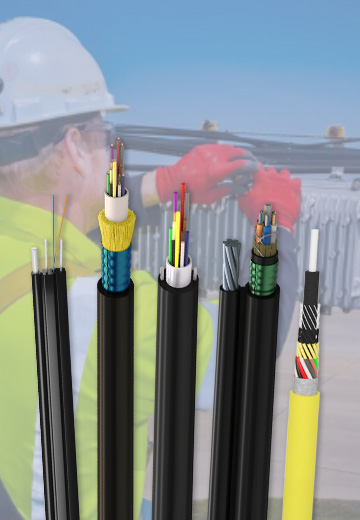 Fiber Optic CableAccess and backbone
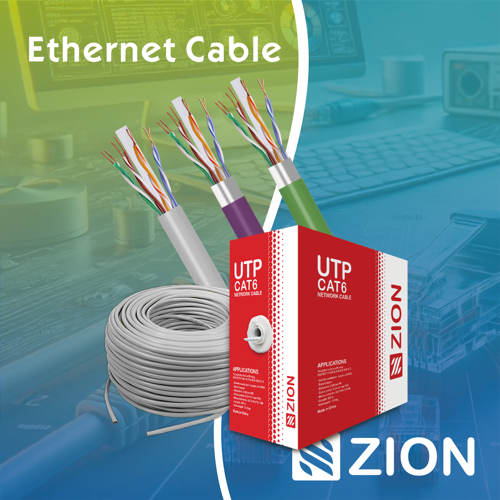 Ethernet CableCat5e to Cat8
 Coaxial CableRF and video signal
 Fire, Security & AlarmSafety systems
 Voice, Audio & VideoSignal cabling
 Power & Control CableEnergy and control
Fiber optic cable systems
Outdoor, indoor, FTTH and distribution cable lines for access networks, backbone routes and campus deployments.
 Telecom & ISP NetworksFTTH, PON, ODN
  Data Center InfrastructureServer room cabling
  Building Low-Voltage SystemsBMS, AV, weak current
  Security & Fire ProtectionAlarm, CCTV, access
  Industrial Automation CablePLC, RS485, fieldbus
  Energy & Power InfrastructureSolar, battery, power
 Telecom & ISP Networks
For FTTH / PON access, outdoor fiber deployment, aerial routes, duct routes, direct burial routes, rural broadband and ODN planning.
Tools
Use calculators and planning tools for conduit capacity, PoE voltage drop and fiber optic link loss budget work.