BLOG / RFQ EFFICIENCY / PROCUREMENT RISK
How Wrong or Incomplete Datasheets Can Delay a Project Quote
A project quote is often delayed not because suppliers are slow, but because the datasheet is not quotation-ready. Missing, vague, or contradictory cable specifications force extra engineering review, increase pricing assumptions, and make supplier comparison less reliable.
Procurement TeamsEngineersProject ManagersSystem IntegratorsOEM BuyersRFQ Teams
Datasheets delay quotations when core construction, material, compliance, or packing details are missing or inconsistent.
Incomplete datasheets slow the quote. Wrong datasheets are worse because they can cause both delay and wrong-product pricing risk.
A quotation-ready datasheet reduces clarification loops, improves supplier comparison, and helps projects move to PO faster.
■ Why Datasheet Problems Delay Quotes
A cable quote is not just a commercial response. It is a technical-commercial validation process. Before price, lead time, MOQ, and documentation can be confirmed, the supplier needs to understand exactly what must be manufactured, how it should perform, which standards apply, and how it should be packed and delivered. If the datasheet does not define those points clearly, the quotation cannot move smoothly.
That is why missing conductor size, vague shielding language, unclear jacket material, contradictory drawings, undefined flame rating, or absent packing requirements often cause quotation delay. The supplier must either stop for clarification, make assumptions, add risk margin, or issue only a conditional quote.
Answer first
Wrong or incomplete datasheets delay project quotations because suppliers cannot confidently validate cost, manufacturability, compliance, or delivery conditions until the missing or conflicting information is resolved.
■ Wrong vs Incomplete Datasheets
These two issues often appear together, but they are not identical. Understanding the difference helps buyers identify whether the priority is clarification, correction, or full file revision.
| Type | What it means | Typical example | Quotation impact |
|---|
| Wrong datasheet | The file contains incorrect or contradictory information. | The title says LSZH cable, but the material table lists PVC jacket. | The supplier may quote the wrong product or stop for re-confirmation. |
| Incomplete datasheet | Important quotation-critical fields are missing. | Core count is given, but conductor size and shielding structure are absent. | The quote becomes slow, conditional, or assumption-based. |
| Wrong + incomplete | The file is both unreliable and unfinished. | Drawing does not match the table, and several key fields are blank. | Highest risk of repeated clarification loops and re-quotation. |
Field reality
Incomplete datasheets usually cause slow quotes. Wrong datasheets are more dangerous because they can also lead to wrong scope, wrong cost base, and later disputes.
■ Where the Delay Happens Inside the Quote Process
From the buyer side, a supplier may simply look “slow.” In reality, the delay often happens inside several review stages before the quote can be released responsibly.
| Quote stage | What is checked | What causes delay | Likely result |
|---|
| RFQ intake | Whether the request is quotable | Missing basic product definition | Clarification before costing starts |
| Engineering review | Construction, feasibility, compliance | Contradictions between drawing, table, and notes | Technical hold or revision request |
| Costing | Material, process, testing, scrap | Undefined conductor, shielding, or jacket system | Provisional or delayed price |
| Sourcing | Raw material and special component availability | No defined material grade or test path | Longer lead time or added risk margin |
| Commercial review | Packing, labeling, MOQ, shipment assumptions | Missing reel length, printing, or packaging rules | Quote remains incomplete |
| Final approval | Whether the supplier can quote with acceptable risk | Too many unresolved assumptions | Conditional quote or no release |
■ Most Common Datasheet Errors That Slow a Quote
Missing conductor details
A quote usually requires conductor material, size, stranded or solid construction, and sometimes class or resistance expectation. “2 core” or “4 pair” is not enough.
Vague insulation or jacket description
“Outdoor material” or “plastic sheath” does not define the actual cost and compliance path. PVC, PE, XLPE, LSZH, TPU, and PUR can create very different pricing and performance logic.
Unclear shielding structure
Shielded is not enough for quotation. Suppliers often need foil, braid, foil + braid, drain wire, pair shielding, and coverage details to price correctly.
No standard or compliance reference
If no UL, IEC, CPR, RoHS, flame class, or project standard is named, the supplier cannot define testing scope or qualification burden clearly.
Drawing-table mismatch
When the cross-section drawing conflicts with the written table, confidence drops immediately and quotation often stops until the file is corrected.
Missing packing or labeling information
Reel length, carton style, pallet rules, meter marking, and print requirements all influence final cost and shipment planning.
■ Why This Is a Buyer Risk, Not Just a Supplier Problem
Datasheet quality affects the buyer’s side as much as the supplier’s. A poor datasheet makes supplier comparison weaker, internal approvals slower, and total project timing less predictable.
| Impact area | What happens | Why it matters |
|---|
| Procurement | More clarification emails and less comparable quotes | Negotiation quality and sourcing speed both suffer |
| Engineering | Repeated review of drawings, materials, and standards | More non-value-added workload |
| Commercial control | Suppliers add assumptions or exclusions | Price may look lower or higher for the wrong reasons |
| Project schedule | RFQ delay shifts approval, PO, and production booking later | Later stages become compressed and harder to control |
| Risk of wrong supply | A contradictory datasheet may still receive a quote | The wrong cable may be benchmarked or even ordered |
Practical rule
If two suppliers return very different prices for what appears to be the same cable, the first thing to check is not price discipline. It is specification clarity.
■ Which Datasheet Fields Are Quote-Critical?
Not every field has the same effect on quotation speed. Some are essential for feasibility and cost. Others mainly affect final commercial completeness.
| Priority level | Typical fields | Why they matter |
|---|
| Must-have | Cable type, core/pair count, conductor size, conductor material, insulation, shielding, jacket, voltage rating, temperature rating, standard/compliance | Without these, the supplier cannot confirm the core technical and cost structure. |
| Strongly recommended | OD target, drain wire, braid coverage, armor, color code, bend radius, installation environment | These improve feasibility review and reduce hidden assumptions. |
| Commercially important | Packing length, labeling, jacket print, test report request, document package, MOQ expectation | These affect final quotation completeness and logistics cost. |
| Helpful but secondary | Internal codes, project notes, installation remarks | Useful for coordination, but not usually the first reason a quote is delayed. |
■ When to Review the Datasheet Before RFQ
A pre-RFQ datasheet review is especially important when the order involves custom construction, multiple suppliers, compliance-sensitive applications, or non-standard packing and documentation requirements.
Use a pre-RFQ review when…
The cable is customized instead of standard catalog stock
Several suppliers will quote against the same file
The project has flame, safety, or certification sensitivity
The environment is outdoor, industrial, or otherwise demanding
Also review before RFQ if…
The datasheet was compiled from legacy files
The drawing and table were revised by different teams
Special labeling or reel rules apply
The order needs extra test reports or approval documents
When to choose it
If the order is high-value, multi-supplier, compliance-sensitive, or partly customized, review the datasheet before sending RFQs. It usually saves more time than it costs.
■ Quotation-Ready Datasheet Checklist
A quotation-ready datasheet should allow a supplier to review the request without immediately asking basic clarification questions.
| Check item | Status | Why it matters |
|---|
| Product name and application are clear | Yes / No | Defines the quotation context |
| Core count or pair count is defined | Yes / No | Sets the base construction scope |
| Conductor material and size are defined | Yes / No | Controls material cost and electrical logic |
| Insulation and jacket materials are defined | Yes / No | Affects process, application fit, and compliance |
| Shielding structure is clearly described | Yes / No | Needed for both cost and performance evaluation |
| Voltage, temperature, and standard references are stated | Yes / No | Defines boundary conditions and compliance path |
| Drawing matches the table and notes | Yes / No | Prevents trust loss and rework |
| Packing, labeling, and reel requirements are defined | Yes / No | Needed for commercial completeness |
| Required documents are listed | Yes / No | Avoids late-stage test and documentation surprises |
Engineer’s shortcut
If two or more quotation-critical fields are unclear, expect delay. If the drawing and material table do not match, revise the file before RFQ instead of asking suppliers to guess.
■ FAQ
Can a supplier still quote from an incomplete datasheet?
Yes, but the quotation is usually conditional. The supplier may add assumptions, exclusions, or validity limits, which makes supplier comparison less reliable.
Which missing items usually create the biggest delay?
Conductor definition, shielding structure, jacket and compliance requirements, and packing method are among the most common delay points because they affect both cost and feasibility.
Why do two suppliers quote the “same” cable differently?
Because they may not actually be quoting the same thing. A vague datasheet allows different assumptions on materials, shielding, standards, or documentation scope.
Is a part number enough for quotation?
Only when it refers to a stable, well-defined standard item. For OEM and project cables, a part number alone is often not enough without the technical definition behind it.
Can datasheet problems affect lead time as well as price?
Yes. Late confirmation of materials, tests, or packing details can slow the quote first and then also shift production planning later.
What is the fastest way to reduce quotation delay?
Make the datasheet quotation-ready before RFQ. Confirm construction, material system, standards, packing, and required documents in one stable file.
■ Conclusion
Wrong or incomplete datasheets delay project quotes because suppliers cannot confidently validate, cost, and schedule a cable product that is not clearly defined. The result is more clarification, more assumptions, slower comparisons, and higher sourcing risk.
For procurement teams, this means a longer RFQ cycle. For engineers, it means more revision work. For project managers, it means timeline pressure moves downstream. The practical fix is simple: stabilize the datasheet before RFQ and make it quotation-ready.
Need a faster RFQ process?
Send ZION your target application, cable structure, compliance requirement, and packing expectation. Clearer input usually means faster and more reliable quotation output.



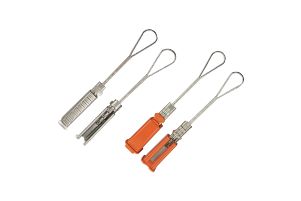 Fiber Optic Tools
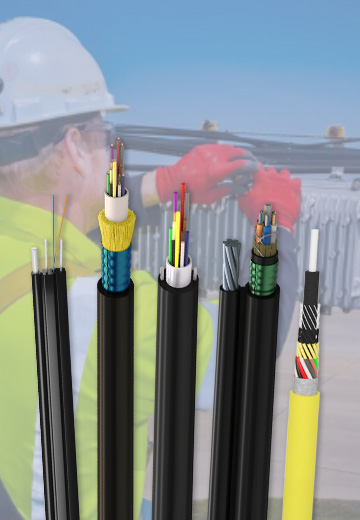 Fiber Optic CableAccess and backbone
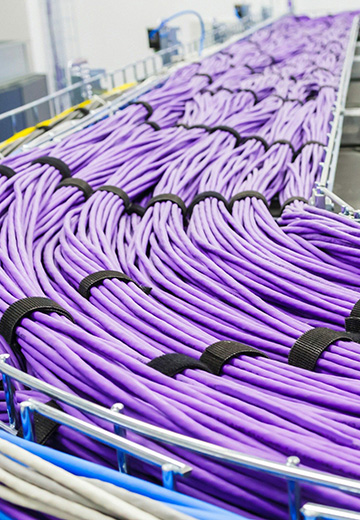
 Ethernet CableCat5e to Cat8
 Coaxial CableRF and video signal
 Fire, Security & AlarmSafety systems
 Voice, Audio & VideoSignal cabling
 Power & Control CableEnergy and control
 Telecom & ISP NetworksFTTH, PON, ODN
  Data Center InfrastructureServer room cabling
  Building Low-Voltage SystemsBMS, AV, weak current
  Security & Fire ProtectionAlarm, CCTV, access
  Industrial Automation CablePLC, RS485, fieldbus
  Energy & Power InfrastructureSolar, battery, power