Double Jacket Fiber Optic Cable: When Should You Use It?
Author: Site Editor Publish Time: 22-04-2026 Origin: Site
Double Jacket Fiber Optic Cable: When Should You Use It?
Double jacket fiber optic cable is usually the right choice when a route faces outdoor exposure, building-entry transition, direct-burial risk, rodent pressure, or higher mechanical abuse than a standard indoor cable can handle comfortably. The key is that “double jacket” is not a universal premium feature. It is a construction strategy that must match the real route, protection target, and compliance requirement of the project.
Use double jacket when the route has a real transition or protection problem, not just because it sounds more durable.
For building entry, verify whether the cable is truly suitable for indoor/outdoor use and how the transition is intended to be handled.
For burial or rodent-prone pathways, confirm armor, water blocking, jacket material, and approved installation method on the datasheet.
■ What Is a Double Jacket Fiber Optic Cable?
A double jacket fiber optic cable has two sheath layers rather than one, but buyers should not treat that phrase as one fixed product class. In real projects, the term usually points to one of two practical directions. One is an indoor / outdoor transition cable that uses an outer protective jacket over an inner cable suited to interior routing requirements. The other is a rugged outdoor design intended to improve survivability in harsher pathways, often with extra protection against abrasion, rodent attack, crush, or burial exposure.
That difference matters. A double jacket cable for outdoor-to-indoor continuity is not automatically the same as a double jacket armored cable for direct burial. The correct selection depends on route type, protection target, compliance requirement, maintenance expectations, and installation method.
| Construction idea | Typical purpose | What buyers should verify |
|---|---|---|
| Double jacket indoor / outdoor cable | Outdoor route that continues into a building | Indoor suitability, flame rating, transition method, jacket removability |
| Double jacket rugged outdoor cable | Higher mechanical abuse, exposed utility routes, industrial pathways | Crush, abrasion, UV, water blocking, installation environment |
| Double jacket armored burial cable | Direct burial or rodent-prone environments | Armor type, burial suitability, water blocking, pulling and bending limits |

■ When Should You Use It?
Use double jacket fiber optic cable when the route has at least one meaningful risk that a standard single-jacket indoor cable does not manage well. That usually means one of the following conditions: an outdoor run that enters a building, a direct-burial installation, a rodent-prone pathway, or an environment with higher abrasion, crush, pull, or handling stress.
If the route is fully indoor, protected, and low-abuse, double jacket is often unnecessary. In those cases it may add cost, diameter, stiffness, and termination complexity without reducing a real deployment risk.
| Project condition | Use double jacket? | Why it makes sense | Main caution |
|---|---|---|---|
| Outdoor run that continues indoors | Usually yes | Supports route continuity and may reduce transition hardware or splice work | Still verify indoor suitability and local code requirements |
| Direct burial | Usually yes | More robust protection against environment and abuse | Double jacket alone does not prove burial suitability |
| Rodent-prone route | Often yes | Helps support a tougher construction strategy | Confirm whether armor is also required |
| Outdoor duct route with moderate exposure | Maybe | May improve durability and route flexibility | A standard outdoor cable may already be enough |
| Fully indoor riser or plenum route | Usually no | No real benefit if the environment is already protected | Extra bulk and cost may not create value |
| Short patching, cabinet interconnect, low-risk interior route | No | Standard indoor cable is usually more practical | Do not over-specify based on name alone |
■ Typical Application Scenarios
1) Outdoor-to-Indoor Building Entry
This is one of the clearest reasons to choose a double jacket design. If a cable route starts outside and continues into a building, project teams usually want to avoid unnecessary transition hardware, extra splice points, and avoidable installation complexity. A properly selected indoor / outdoor double jacket cable can simplify that route strategy, but the installer still needs to verify the intended entry method and the cable’s interior suitability for the specific part of the route.
2) Direct Burial or Harsh Outdoor Pathways
If the cable will be buried or placed where it sees tougher environmental exposure, double jacket becomes much more attractive. In these routes, the extra sheath construction is usually part of a broader protection package that may also include water blocking and armor. The objective is not “more layers for the sake of more layers.” It is better survivability, lower replacement risk, and more stable long-term performance in a harsher pathway.
3) Rodent-Prone or Abuse-Prone Environments
Campus routes, utility corridors, industrial sites, tunnels, and exposed perimeter infrastructure often create risks that a standard indoor cable is not designed to absorb. In these environments, double jacket can be part of a practical risk-control strategy. Still, if the real threat is rodent damage, you should not stop at the phrase “double jacket.” You should verify whether the datasheet also specifies armor or another rodent-protection measure.
4) Projects Where Maintenance Risk Matters More Than Initial Material Cost
On higher-value routes, the installation team may prefer a more robust cable because access is difficult, downtime is expensive, or repair work would interrupt operations. In those cases, double jacket is often justified not by the raw cable price, but by the cost of failure, re-entry, replacement labor, and service disruption.
| Scenario | Why double jacket helps | Extra item to check |
|---|---|---|
| Building entry from outdoor route | Supports route continuity and may reduce transition complexity | Indoor suitability, flame rating, and local code path |
| Direct burial | Improves protection in harsher underground conditions | Armor, water blocking, burial approval |
| Industrial or exposed utility route | Better survivability under abrasion and handling stress | Crush resistance, bend limits, pulling limits |
| Rodent-prone pathway | Supports a tougher protection strategy | Whether dedicated rodent protection is specified |
■ Double Jacket vs Other Common Cable Choices
The easiest way to avoid selection mistakes is to compare double jacket against the real alternatives, not against an abstract idea of “better cable.” In many projects, the correct choice is driven by route boundary, compliance, and maintainability rather than by a simple desire for higher ruggedness.
| Cable type | Best fit | Main advantage | Main limitation |
|---|---|---|---|
| Single-jacket indoor cable | Indoor riser, plenum, horizontal routes | Simpler, smaller, often more economical | Not intended for outdoor exposure |
| Single-jacket outdoor cable | Outdoor-only duct or protected OSP route | Good for basic outdoor routing | May complicate building-entry transition |
| Double jacket indoor / outdoor cable | Outdoor route that continues into building spaces | Reduces route interruption and may simplify transition strategy | Still must match interior compliance and routing rules |
| Double jacket armored burial cable | Direct burial, rodent-prone, harsh outdoor environments | Higher survivability and protection margin | Heavier, stiffer, and often more expensive |
| Armored indoor cable | Indoor routes with higher crush or abuse risk | Added protection for interior environments | Does not replace true outdoor suitability |
■ Engineer’s Shortcut and Buying Checklist
Before sending an RFQ or approving a substitution, ask the questions below. If you cannot answer them clearly, the cable type is probably not fully specified yet.
| Question | If yes | Likely implication |
|---|---|---|
| Will the route start outdoors and continue indoors? | Yes | Strong case for indoor / outdoor double jacket construction |
| Will the cable be directly buried? | Yes | Check burial suitability, armor, and water blocking explicitly |
| Is rodent damage a realistic risk? | Yes | Do not rely on “double jacket” alone; verify rodent protection strategy |
| Is the route fully indoor and protected? | Yes | Standard indoor cable may be more practical and cost-efficient |
| Is failure access difficult or expensive? | Yes | More robust construction may be justified by maintenance risk reduction |
| Is the project team using “double jacket” as a generic safety phrase? | Yes | Pause and convert the request into route, environment, and compliance details |
■ Common Selection Mistakes
Using “double jacket” as a substitute for full specification. It does not replace the need to define route type, installation method, and protection target.
Assuming double jacket always means armored. Some double jacket cables are dielectric and aimed at indoor / outdoor routing rather than burial.
Ignoring the building-entry boundary. Outdoor-to-indoor transitions should be reviewed as a route and compliance issue, not just a toughness issue.
Over-specifying for low-risk interiors. In protected indoor routes, the extra cost and handling burden may not generate real value.
Under-specifying rodent or burial protection. If the real threat is rodents or direct burial, verify armor and installation approval directly on the datasheet.
■ FAQ
■ Conclusion
Double jacket fiber optic cable should be used when the project has a real environmental transition or protection challenge: outdoor-to-indoor routing, direct burial, rodent exposure, or higher mechanical abuse. It should not be treated as a default upgrade for every job.
The safest purchasing approach is simple: define the route first, identify the risk second, and then verify the real construction details on the datasheet. That lowers the chance of over-specification, compliance confusion, installation rework, and premature field failure.
Share your route type, installation method, fiber count, environment, and compliance target. ZION can help you narrow the correct construction before sampling or quotation.



 Fiber Optic Tools
Products 6 families
Solutions 6 markets
Resources Tools & docs
Certificate
Certification and compliance references for project review, qualification and purchasing documentation.
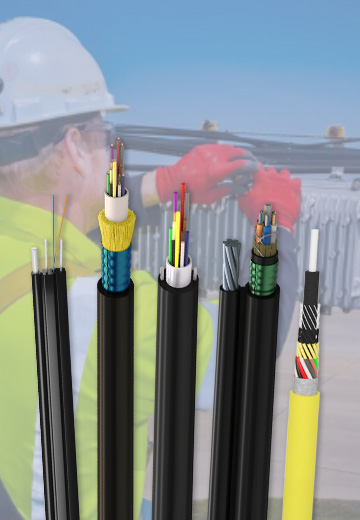 Fiber Optic CableAccess and backbone
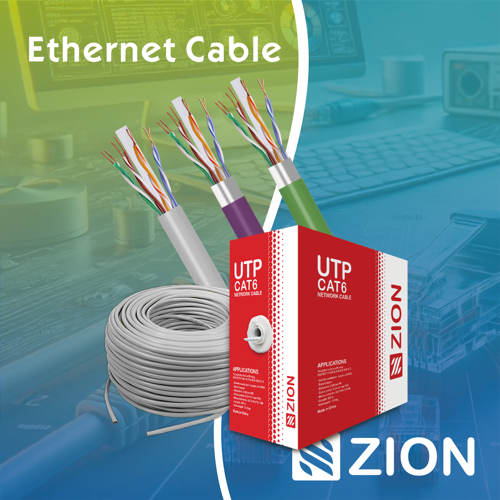 Ethernet CableCat5e to Cat8
 Coaxial CableRF and video signal
 Fire, Security & AlarmSafety systems
 Voice, Audio & VideoSignal cabling
 Power & Control CableEnergy and control
Fiber optic cable systems
Outdoor, indoor, FTTH and distribution cable lines for access networks, backbone routes and campus deployments.
 Telecom & ISP NetworksFTTH, PON, ODN
  Data Center InfrastructureServer room cabling
  Building Low-Voltage SystemsBMS, AV, weak current
  Security & Fire ProtectionAlarm, CCTV, access
  Industrial Automation CablePLC, RS485, fieldbus
  Energy & Power InfrastructureSolar, battery, power
 Telecom & ISP Networks
For FTTH / PON access, outdoor fiber deployment, aerial routes, duct routes, direct burial routes, rural broadband and ODN planning.
Tools
Use calculators and planning tools for conduit capacity, PoE voltage drop and fiber optic link loss budget work.