Fire Alarm and PAGA Cable Selection Guide | What to Confirm Before You Quote
Author: Site Editor Publish Time: 23-04-2026 Origin: Site
Fire Alarm and PAGA Cable Selection: What Information Is Needed Before You Quote?
If a buyer asks for a fire alarm or PAGA cable quotation with only “2-core fire-resistant cable” or “please quote PAGA cable,” the risk of a wrong quote is high. In life-safety projects, cable selection depends on system function, fire-performance level, shielding, installation environment, approvals, and documentation—not conductor count alone. This page helps procurement teams, engineers, project managers, and system integrators collect the right information before requesting or issuing a quote.
Do not quote from core count alone. System role, fire performance, and approvals change the correct cable construction.
Fire alarm and PAGA projects often differ in circuit type, shielding need, survivability expectation, and installation environment.
A good RFQ should include technical data, route conditions, compliance basis, and documentation requirements.
■ Why This Matters Before You Quote
A quotation error in fire alarm or PAGA cable supply is rarely just a pricing problem. It can trigger approval failure, installation rework, poor system compatibility, delayed commissioning, or project-side disputes over compliance. In life-safety systems, the cable is not selected by “2 cores” or “LSZH” alone. The correct quotation normally depends on the system type, exact circuit function, fire-performance level, conductor size, screening method, mechanical protection, installation route, approval path, and required document package.
That is why experienced buyers and suppliers do not start with price. They start with application clarity. A detector loop, a fire alarm control pair, a voice alarm speaker line, and a PAGA emergency broadcast feeder may all be called “fire cable” in informal communication, but they do not always share the same structure or approval basis.
■ Fire Alarm Cable vs PAGA Cable
Fire alarm cable is typically used for detection, signaling, monitoring, control, notification, and sometimes emergency voice functions within a fire safety system. PAGA means Public Address and General Alarm. It is commonly used in marine, offshore, oil & gas, utility, and heavy industrial projects where routine paging, emergency broadcast, and alarm priority may be integrated into one system architecture.
The two cable families can overlap in fire-performance and low-smoke requirements, but the quotation logic is often different. Fire alarm projects frequently focus on alarm loop integrity, tested fire resistance, and building-code alignment. PAGA projects often add speaker loading, audio signal integrity, screening, route survivability, redundancy, marine environment exposure, and project-specific system interfaces.
| Item | Fire Alarm Cable | PAGA Cable |
|---|---|---|
| Main function | Detection, signaling, notification, control | Paging, emergency broadcast, general alarm, control |
| Common circuits | Detector loops, NAC, control pairs, monitor circuits | Speaker lines, audio pairs, control/data pairs, amplifier links |
| Typical priority | Alarm continuity, approved fire performance | Emergency override, audio clarity, route reliability |
| Typical project type | Commercial buildings, public facilities, industrial buildings | Offshore, marine, oil & gas, utility, heavy industry |
| Quote risk if underspecified | Wrong fire grade or wrong code basis | Wrong conductor size, shielding, route protection, or system suitability |

■ Minimum Information Required Before Quotation
If the goal is a reliable quotation rather than a rough placeholder price, the supplier should ask for the minimum information set below. Missing any one of these items can change not only price, but also the correct cable family.
| Information required | What the buyer should provide | Why it changes the quote |
|---|---|---|
| System type | Fire alarm, voice alarm, EVAC, or PAGA | Different system roles may require different cable constructions |
| Exact circuit function | Detector loop, speaker line, control pair, monitoring pair, data pair | Function determines conductor, screen, and survivability needs |
| Fire-performance level | Flame retardant only, fire resistant, standard grade, enhanced grade, required duration | Fire behavior affects materials, approvals, and price |
| Standard / approval basis | NFPA, BS, IEC/EN, project spec, marine class, consultant list | The same core count may not satisfy the same project basis |
| Conductor configuration | Core count, pair count, conductor size, solid or stranded | Direct impact on ampacity, flexibility, voltage drop, and cable OD |
| Shielding requirement | Unscreened, overall screen, individual pair screen, braid | EMI environment often changes the correct design |
| Installation environment | Indoor, outdoor, tray, conduit, marine deck, direct burial | Route conditions affect sheath, armor, UV, oil, and moisture protection |
| Mechanical protection | No armor, armored, rodent-resistant, impact-resistant | Protection level affects weight, flexibility, and cost |
| Documentation package | Certificates, test reports, reel marking, COC, inspection requirements | Life-safety projects often require traceable documentation before approval |
| Commercial execution data | Quantity, reel length, destination, lead time, OEM print, packing style | A technically correct quote can still fail on delivery format and paperwork |

■ Key Differences That Affect Cable Selection
Many quotation problems come from using one generic term—“fire cable”—for several different project intents. The table below shows where the selection logic usually changes.
| Decision item | Why it matters for fire alarm cable | Why it matters for PAGA cable |
|---|---|---|
| Circuit role | Loop and signaling continuity drive selection | Audio path, speaker load, and control logic matter more |
| Survivability | Often a primary question in fire scenarios | May also be critical where emergency broadcast must remain available |
| EMI sensitivity | Depends on route and signaling design | Often more visible in audio/control applications and industrial environments |
| Environment severity | Commonly indoor building routes | Often includes offshore, marine, chemical, moisture, or weather exposure |
| Approvals | Building fire system and local code alignment | Project spec, emergency communications, owner requirement, or class-related basis |
| Common quoting mistake | Assuming LSZH automatically means fire resistant | Assuming “speaker cable” is enough without screen, route, and emergency function details |
■ Technical Parameters to Confirm
Once the application family is clear, the next step is to lock down the technical inputs that actually determine cable construction and project suitability.
1. Conductor count, pair count, and size
Always confirm core or pair count together with conductor cross-section. A 2-core cable for a small control circuit is not the same as a 2-core cable intended for long speaker runs. If the customer cannot provide a final size, ask for route length, load, and system type before offering a recommendation.
2. Solid, stranded, or flexible stranded conductor
This affects flexibility, termination style, and installation handling. Fixed building routes may tolerate a different conductor class than vibration-prone or equipment-linked routes in industrial and marine projects.
3. Screened or unscreened construction
If the route passes near power trays, VFDs, motors, pump rooms, switchboards, or industrial cabinets, shielding becomes a real design question rather than an optional upgrade. Buyers should clarify whether they need no screen, overall foil screen, braid, or individually screened pairs.
4. Flame retardant vs fire resistant
These are not the same. Flame-retardant cable limits flame spread. Fire-resistant cable is designed to maintain circuit integrity for a defined period or test basis. If the project requires survival during fire, the quote should reflect the relevant fire-resistance expectation rather than only an LSZH or flame-retardant statement.
5. Standard grade, enhanced grade, or project-specific survivability
In some project frameworks, the buyer or consultant may specify standard grade, enhanced grade, or a named fire test route. That information should appear in the RFQ, because the same nominal construction may not satisfy the same survivability expectation.
■ Installation Environment and Route Risk
A cable that is technically correct for one project can be a poor choice for another route condition. Environment changes jacket compound, armor decision, screening need, and sometimes even the approval path.
| Route / condition | Questions to ask | Typical impact on cable selection |
|---|---|---|
| Indoor building route | Is it riser, tray, conduit, or exposed installation? | LSZH, fire performance, bendability, and OD control become important |
| Industrial plant area | Any motors, VFDs, oil, chemicals, or heavy mechanical abuse nearby? | Screening, sheath toughness, and protection level may increase |
| Outdoor route | UV exposure, standing water, temperature swing, or conduit entry? | UV-resistant jacket, moisture protection, and route sealing matter |
| Direct burial or underground | Is armor needed? Any rodent risk or compressive load? | Mechanical protection and water resistance may be mandatory |
| Marine or offshore | Salt atmosphere, deck exposure, vibration, emergency system role? | PAGA suitability, route durability, and project-specific compliance become critical |
| Hazardous / owner-controlled area | Any owner spec, approved list, or project engineering note? | Supplier should quote against the project document, not against a generic assumption |
■ Documents, Approvals, and Commercial Data
Life-safety cable quotations are not complete when only the technical core is defined. Documentation and delivery format often determine whether the cable can actually be released, approved, shipped, and accepted on site.
Documents buyers often need
Datasheet and cable construction confirmation
Fire test reports or performance summary
Approval certificates or declared compliance route
Reel labels, sheath print format, and traceability details
Country-of-origin, packing list, and inspection documents where required
Commercial data that changes execution
Quantity in meters
Preferred reel length
Destination country and Incoterm
Lead time expectation
OEM print or private-label requirement
Inspection witness, pre-shipment test, or sample request
| Missing item | What can go wrong | What to request before quote approval |
|---|---|---|
| No named standard or approval path | Buyer and supplier assume different compliance routes | Project spec, consultant note, or required approval list |
| No fire-performance detail | Wrong cable family quoted | Fire resistant / flame retardant status plus required test level |
| No route description | Cable unsuitable for UV, moisture, oil, or mechanical risk | Installation method and exposure conditions |
| No shielding clarification | Signal interference or overdesigned cost | EMI environment and required screen type |
| No delivery / marking requirement | Packaging, labeling, or project traceability problems | Reel length, sheath print, label format, packing standard |
■ Engineer’s Shortcut and RFQ Template
If a buyer needs fast quotation support, the simplest solution is to send the information below in one message. This saves time for both sales and engineering teams and reduces the chance of misquotation.
The inquiry only says “fire-resistant cable” but does not define the system or circuit.
The buyer requests “equivalent” cable without naming the approval basis.
The route includes harsh exposure but no environmental conditions are stated.
The customer asks the supplier to size the cable without route length or load information.
■ FAQ
■ Conclusion
Before quoting fire alarm or PAGA cable, the real task is not to guess a model number. It is to define the application clearly enough that the supplier can match cable construction, fire performance, route suitability, approvals, and delivery requirements to the project. That is why better quotations start with better input.
For procurement teams, the value of this page is simple: it helps you avoid under-specified RFQs and compare suppliers on the same technical basis. For engineering teams, it reduces rework and approval risk. For suppliers, it creates a cleaner path from inquiry to qualified quotation.



 Fiber Optic Tools
Products 6 families
Solutions 6 markets
Resources Tools & docs
Certificate
Certification and compliance references for project review, qualification and purchasing documentation.
 Fiber Optic CableAccess and backbone
 Ethernet CableCat5e to Cat8
 Coaxial CableRF and video signal
 Fire, Security & AlarmSafety systems
 Voice, Audio & VideoSignal cabling
 Power & Control CableEnergy and control
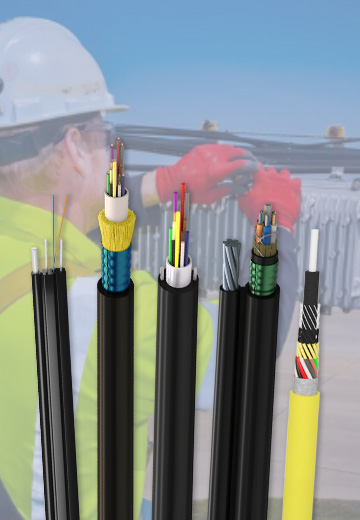
Fiber optic cable systems
Outdoor, indoor, FTTH and distribution cable lines for access networks, backbone routes and campus deployments.
 Telecom & ISP NetworksFTTH, PON, ODN
  Data Center InfrastructureServer room cabling
  Building Low-Voltage SystemsBMS, AV, weak current
  Security & Fire ProtectionAlarm, CCTV, access
  Industrial Automation CablePLC, RS485, fieldbus
  Energy & Power InfrastructureSolar, battery, power
 Telecom & ISP Networks
For FTTH / PON access, outdoor fiber deployment, aerial routes, duct routes, direct burial routes, rural broadband and ODN planning.
Tools
Use calculators and planning tools for conduit capacity, PoE voltage drop and fiber optic link loss budget work.