RG59+2C CCTV Cable Buying Guide: How to Choose the Right Cable for Analog Surveillance
Author: Site Editor Publish Time: 23-04-2026 Origin: Site
RG59+2C CCTV Cable Buying Guide
RG59+2C CCTV cable remains a practical choice for analog surveillance systems that need both video transmission and camera power in one run. But buyers should not treat it as a generic commodity. The right cable depends on conductor material, shielding quality, 2-core power size, jacket suitability, and packaging consistency. This guide helps procurement teams, engineers, and system integrators choose the correct construction while reducing signal, power, and deployment risk.
RG59+2C is best suited to analog CCTV and HD-over-coax systems that need video and separate power in one cable.
The most important buying factors are coax conductor material, shielding design, 2-core power conductor size, and indoor/outdoor jacket selection.
Low-cost construction downgrades often create image instability, voltage drop, early jacket failure, and avoidable project rework.
■ What Is RG59+2C CCTV Cable?
RG59+2C is a composite surveillance cable that combines a 75-ohm coaxial section for analog video transmission with two separate power conductors for camera power. In many markets, it is also referred to as siamese CCTV cable because the video and power sections are bonded together in one practical installation format.
The coaxial part usually includes a center conductor, dielectric insulation, shielding layer, and outer jacket. The 2-core section usually includes two insulated conductors placed parallel to the coax. The main value is straightforward: installers can pull one cable and complete both video and power routing in one run.
| Cable Part | Main Function | Why It Matters |
|---|---|---|
| RG59 coaxial core | Carries video signal | Affects signal stability and transmission quality |
| 2-core power wires | Delivers camera power | Affects voltage drop and camera reliability |
| Overall cable structure | Combines both functions in one run | Simplifies installation and material control |

■ Why Buyers Still Choose RG59+2C
Even as IP camera systems expand, RG59+2C remains relevant in analog surveillance, HD-over-coax upgrades, and retrofit projects. It is widely used in shops, warehouses, villas, parking areas, perimeter monitoring, and small-to-medium security installations where the system architecture is still coax-based rather than network-based.
For many buyers, the attraction is not novelty. It is predictable installation, easy field identification, broad compatibility with analog devices, and lower wiring complexity than separate video and power runs.
| Project Condition | RG59+2C Suitability | Reason |
|---|---|---|
| Analog CCTV with separate power | Excellent | Designed for exactly this use case |
| AHD / CVI / TVI retrofit | Excellent | Keeps coax-based wiring logic simple |
| IP camera with PoE | Poor | Ethernet cable is usually a better system fit |
| Outdoor surveillance route | Good if specified correctly | Needs weather-suitable jacket and proper protection |
| Longer run with higher camera power demand | Depends | Power conductor size and resistance become critical |

■ Key Specifications Buyers Should Check Before Ordering
Two cables may both be sold as “RG59+2C,” yet their real performance can differ sharply. The differences usually come from conductor material, shielding coverage, power core size, jacket type, and production consistency. The product name alone is never enough for engineering or procurement decisions.
| Specification Area | What to Check | Why Buyers Should Care |
|---|---|---|
| Center conductor material | Bare copper, CCS, or CCA | Affects conductivity and long-term signal stability |
| Shielding design | Foil, braid, or combined shielding | Affects interference resistance |
| Power conductor size | Material and cross-section of 2C power wires | Affects voltage drop and camera power stability |
| Jacket material | PVC, PE, LSZH, or reinforced structure | Determines indoor/outdoor suitability and service life |
| Marking and meter print | Clear identification and length marking | Improves installation control and traceability |
| Packaging consistency | Reel length, label accuracy, batch ID | Reduces warehouse confusion and site planning errors |
Indoor vs Outdoor Selection
A cable that works indoors may fail early outdoors if UV exposure, temperature changes, or moisture are not considered. “CCTV cable” does not automatically mean “outdoor-ready.” Jacket selection should follow the actual route condition.
| Installation Scenario | What to Check | Main Risk if Ignored |
|---|---|---|
| Indoor ceiling / wall routing | Flame behavior, flexibility, clean marking | Installation difficulty or code mismatch |
| Outdoor facade / rooftop | UV and weather-resistant jacket | Jacket cracking and premature replacement |
| Duct / conduit route | Pulling resistance and sheath toughness | Damage during installation |
| Exposed suspended route | Mechanical support and environmental durability | Sagging, abrasion, and service instability |
■ RG59+2C vs Other Common CCTV Cabling Options
The best choice depends on system architecture, transmission demand, and installation logic. RG59+2C is practical for analog surveillance, but not every camera project should default to it.
| Item | RG59+2C | RG6+2C | Ethernet Cable |
|---|---|---|---|
| Best fit | Analog CCTV / HD-over-coax | More demanding coax-based runs | IP cameras and PoE systems |
| Power delivery | Separate 2-core power built in | Separate 2-core power built in | PoE possible depending on design |
| Installation convenience | High for analog systems | Good but bulkier | Best for network-based architecture |
| Typical size / flexibility | Smaller and usually easier to route | Larger and usually stiffer | Depends on category and shielding type |
| Main buying risk | Underspecified power or shielding | Overbuying for a standard application | Wrong fit for analog coax architecture |
■ Decision Rules / Engineer’s Shortcut
The system is analog CCTV or HD-over-coax
Camera power is supplied separately
Installers need one simple cable run
Retrofit compatibility matters more than network migration
Distance increases
Camera power load increases
Electrical interference becomes more severe
Outdoor exposure or mechanical stress increases
The project is fully IP-based
PoE is required
The surveillance layout follows network infrastructure logic
Future migration to Ethernet architecture is highly likely
■ Common Buying Mistakes
■ What Buyers Should Ask a Supplier Before Ordering
A reliable supplier should be able to answer these questions clearly and without vague wording. Clear answers reduce specification ambiguity and improve sourcing confidence.
| Buyer Question | Why It Matters |
|---|---|
| Is the coax center conductor bare copper, CCS, or CCA? | Confirms real electrical value and project suitability |
| What is the shielding structure and braid coverage level? | Helps judge interference resistance |
| What is the exact 2-core conductor size and material? | Critical for power delivery and voltage drop control |
| Is the cable for indoor or outdoor use? | Prevents jacket mismatch and early field failure |
| Are meter marks and batch IDs printed on the jacket? | Improves installation control and traceability |
| Can you provide a datasheet and construction details? | Reduces procurement ambiguity and technical clarification delay |
| Can OEM marking and private label packaging be supported? | Important for distributors, branded channel sales, and import buyers |

■ FAQ
■ Conclusion
RG59+2C CCTV cable remains a practical and efficient choice for analog surveillance systems that need both video and power in one run. But successful sourcing depends on more than the product name. Buyers should verify conductor material, shielding structure, power core size, jacket suitability, and packaging consistency before placing an order.
For procurement teams, the best decision is usually the one that balances signal stability, voltage reliability, installation environment, and long-term maintainability instead of focusing only on unit price. In analog and retrofit projects, RG59+2C is often the right solution. In IP and PoE systems, another cable architecture may be a better investment.



 Fiber Optic Tools
Products 6 families
Solutions 6 markets
Resources Tools & docs
Certificate
Certification and compliance references for project review, qualification and purchasing documentation.
 Fiber Optic CableAccess and backbone
 Ethernet CableCat5e to Cat8
 Coaxial CableRF and video signal
 Fire, Security & AlarmSafety systems
 Voice, Audio & VideoSignal cabling
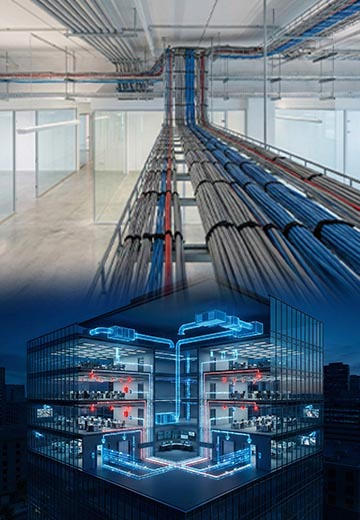 Power & Control CableEnergy and control
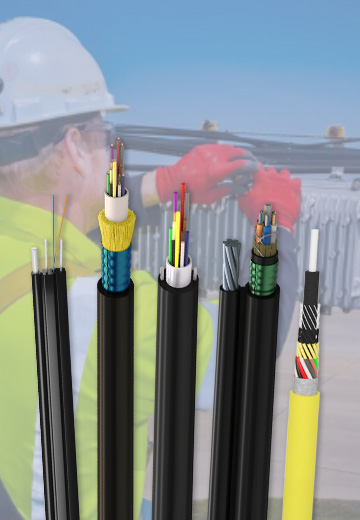
Fiber optic cable systems
Outdoor, indoor, FTTH and distribution cable lines for access networks, backbone routes and campus deployments.
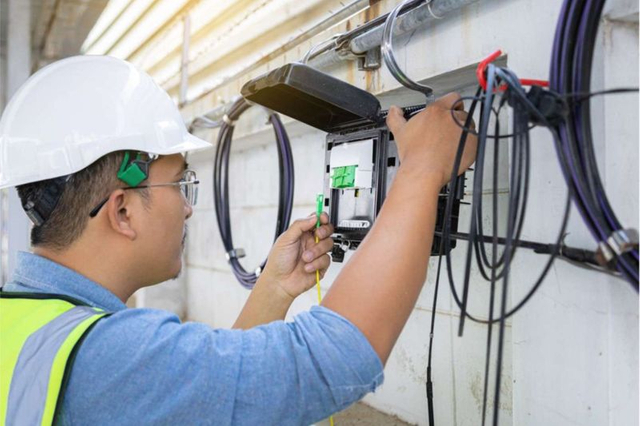 Telecom & ISP NetworksFTTH, PON, ODN
 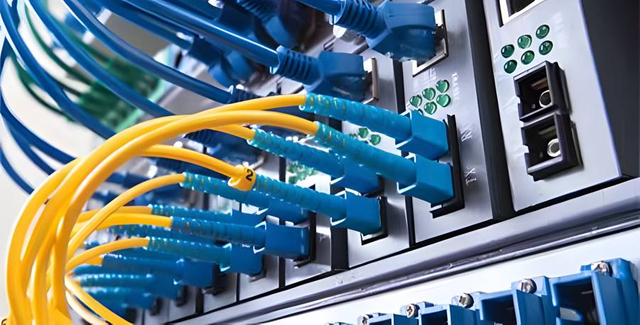 Data Center InfrastructureServer room cabling
  Building Low-Voltage SystemsBMS, AV, weak current
 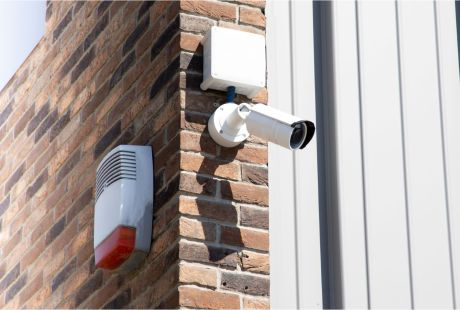 Security & Fire ProtectionAlarm, CCTV, access
  Industrial Automation CablePLC, RS485, fieldbus
  Energy & Power InfrastructureSolar, battery, power
 Telecom & ISP Networks
For FTTH / PON access, outdoor fiber deployment, aerial routes, duct routes, direct burial routes, rural broadband and ODN planning.
Tools
Use calculators and planning tools for conduit capacity, PoE voltage drop and fiber optic link loss budget work.