Circuit Integrity vs Flame Retardance vs LSZH Cable | Fire Safety Cable Selection Guide
Author: Site Editor Publish Time: 15-05-2026 Origin: Site
Circuit Integrity vs Flame Retardance vs LSZH: Fire Safety Cable Selection Logic
In low-voltage engineering, data centers, structured cabling, fire alarm systems and industrial communication projects, fire safety cable selection should not be based on vague keywords. Flame retardance, LSZH and circuit integrity solve different fire risks: flame spread, smoke and gas safety, and continued operation during fire.

■1. First: Understand That These Are Different Safety Objectives
In many project documents, expressions such as “fire safety cable”, “flame retardant cable”, “LSZH cable” and “fire resistant cable” are often used together. However, they do not describe the same performance.
A cable may limit flame spread but still generate smoke. It may be low smoke zero halogen but not designed to keep the circuit working during fire. It may also be fire resistant but still require a specific sheath material or installation method to match the project specification.
Controls how fire spreads along the cable route, cable tray, riser shaft or cable bundle.
Flame spread controlReduces smoke density, halogen acid gas and corrosion risk during cable combustion.
Smoke and gas controlKeeps the circuit working for a specified period during fire exposure.
Functional survival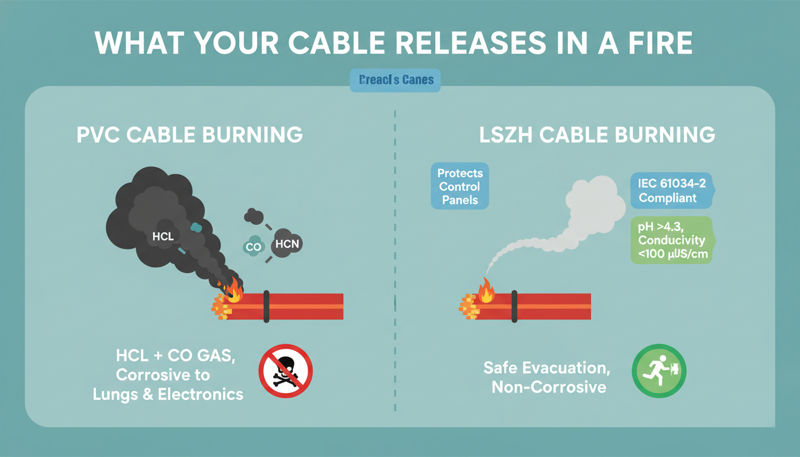
■2. Flame Retardance: Limiting Flame Spread Along the Cable
Flame retardance means that a cable is designed to reduce the speed and extent of flame propagation. It does not mean that the cable is completely non-combustible. Instead, the goal is to prevent fire from spreading quickly along the cable route.
This is especially important in vertical shafts, cable trays, equipment rooms and bundled cable installations, where cables may become a continuous path for flame spread.
| Application Area | Why Flame Retardance Matters | Selection Focus |
|---|---|---|
| Commercial building cabling | Reduces the risk of flame movement through cable routes | Basic flame propagation control |
| Low-voltage riser shafts | Vertical spaces can accelerate fire movement | Riser or vertical flame spread requirement |
| Communication rooms | High cable concentration increases fire load | Flame retardant cable jacket |
| Industrial control wiring | Helps limit local fire propagation | Flame retardant control cable |
| Security and alarm systems | Meets basic fire safety requirements in general areas | Project-specified flame rating |
- IEC 60332 series for flame propagation
- UL 1666 for riser applications
- UL 910 / NFPA 262 for plenum or air-handling spaces
- Flame retardant communication cable
- Flame retardant control cable
- Flame retardant security alarm cable
- Flame retardant optical cable sheath options
Flame retardant does not mean fire resistant. It limits flame spread, but it does not guarantee continued circuit operation during fire.
■3. LSZH: Reducing Smoke, Halogen Gas and Corrosion Risk
LSZH stands for Low Smoke Zero Halogen. It is not only about whether a cable burns. It is mainly about what the cable releases when it burns.
Dense smoke reduces visibility and slows evacuation. Halogen-containing materials may release acidic gases that can damage the respiratory system and corrode servers, switches, control cabinets, monitoring devices and other electronic equipment.
| Performance Area | Common Reference Standard | What It Evaluates |
|---|---|---|
| Low Smoke | IEC 61034 | Smoke density under specified burning conditions |
| Zero Halogen | IEC 60754 | Halogen acid gas content, acidity and conductivity |
| Flame Retardance | Often combined with IEC 60332 | Flame propagation performance of the complete cable |
- Data centers and server rooms
- Metro stations, airports and railway facilities
- Hospitals, schools and public buildings
- Monitoring centers and control rooms
- High-value equipment areas
LSZH does not automatically mean plenum rated, riser rated or fire resistant. The complete cable construction, local code and test standard must still be confirmed.
■4. Circuit Integrity: Keeping the Circuit Working During Fire
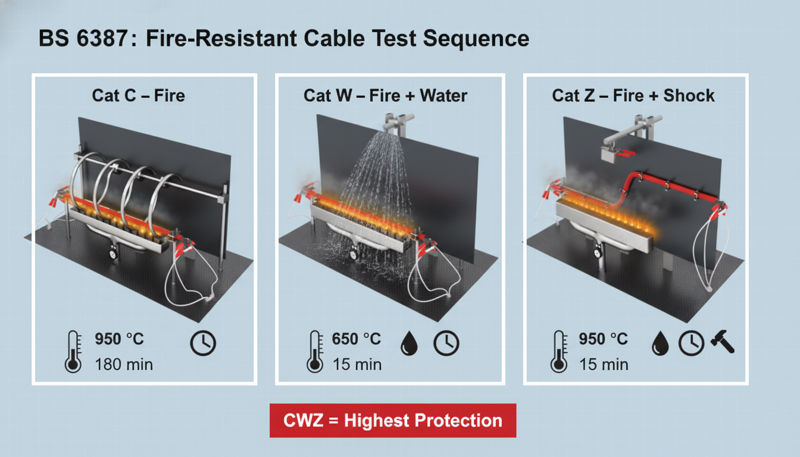
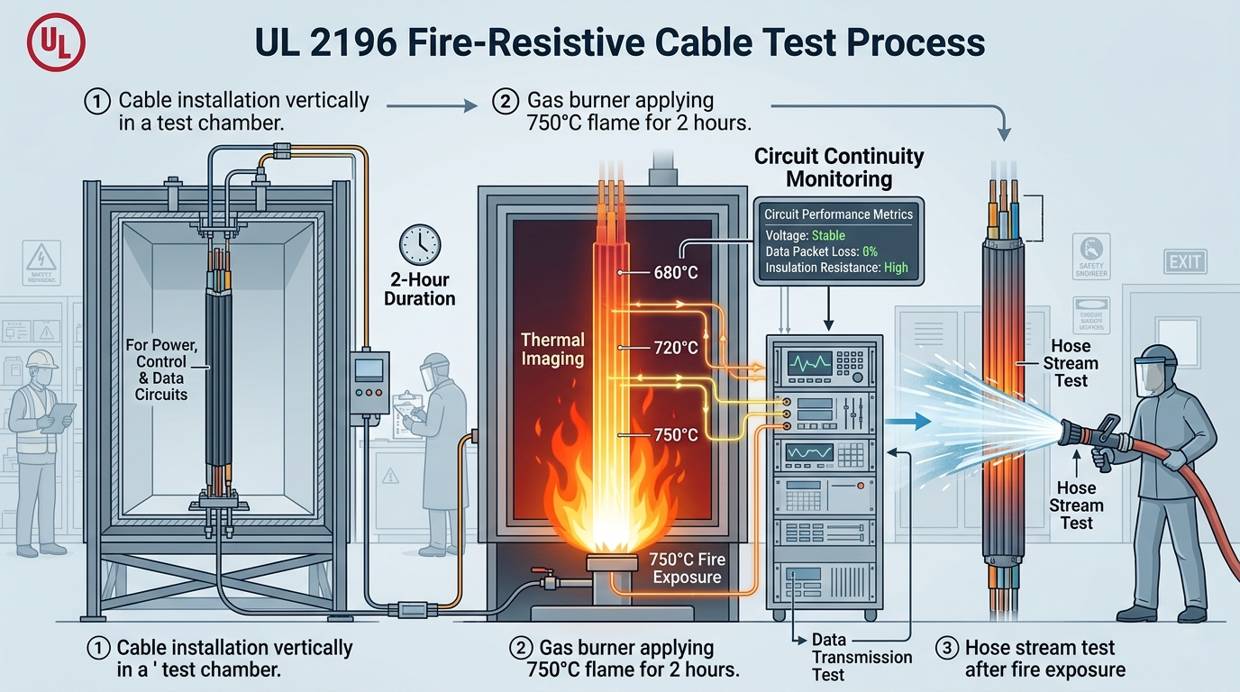
Circuit integrity refers to a cable’s ability to maintain electrical continuity or signal transmission during fire exposure for a specified period. This is the biggest difference between circuit integrity and the other two concepts.
Flame retardance asks whether fire will spread along the cable. LSZH asks whether smoke and gas will be safer. Circuit integrity asks whether the cable can still work during fire.
Provides high-temperature electrical insulation and helps maintain conductor separation under fire exposure.
Protects the conductor, core or optical unit from direct flame and heat attack.
Forms a protective ceramic-like structure under high temperature to support insulation performance.
| System | Why Circuit Integrity Is Needed | Risk If Wrong Cable Is Used |
|---|---|---|
| Fire alarm system | Alarm and control signals must continue during fire | Fail Alarm communication may be interrupted |
| Emergency lighting | Evacuation routes require continued power | Fail Escape visibility may be reduced |
| Smoke extraction system | Fans and control circuits must remain operational | Warning Smoke control may be affected |
| Public address / voice evacuation | Evacuation messages must continue | Fail Emergency instructions may stop |
| Access control release system | Doors may need to unlock or release during fire | Warning Evacuation route control may fail |
■5. Comparison Table: Flame Retardance vs LSZH vs Circuit Integrity
The three concepts should be understood as different layers of cable fire safety performance. They may be combined in the same cable, but one label should not be used to replace another.
| Item | Flame Retardance | LSZH | Circuit Integrity |
|---|---|---|---|
| Main Objective | Limit flame spread | Reduce smoke, halogen acid gas and corrosion | Maintain power or signal during fire |
| Main Question | Will fire spread along the cable? | Will smoke and gas be safer? | Will the circuit keep working? |
| Fire Behavior | Slows flame propagation | Produces less smoke and no halogen acid gas | Continues operation for a specified time |
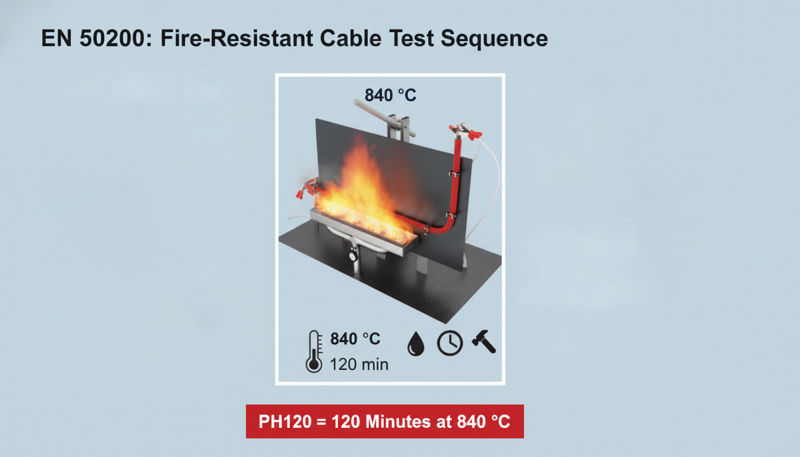
| Typical Standards | IEC 60332, UL 1666, UL 910 / NFPA 262 | IEC 61034, IEC 60754 | IEC 60331, BS 6387, EN 50200 |
| Typical Materials | FR-PVC, flame retardant polyolefin | LSZH polyolefin compounds | Mica tape, fire-resistant wrapping, ceramic-forming insulation |
| Typical Applications | General building cabling, risers, equipment rooms | Data centers, hospitals, airports, metro stations | Fire alarm, emergency lighting, smoke extraction, life safety systems |
| Common Mistake | Thinking flame retardant means non-combustible | Thinking LSZH means fire resistant | Thinking cable approval alone guarantees system compliance |
■6. Project Requirement Quick Check
Use this simple logic tool to identify the likely cable safety direction before preparing a datasheet request or quotation. Final selection should still be checked against project drawings, local regulations and the required test reports.
Select the project conditions above and click the check button. The result will suggest whether your project should focus on flame retardance, LSZH, circuit integrity or a combined requirement.
■7. ZION Selection Guide: Choose by Application, Not by Keyword
ZION recommends that engineers and procurement teams avoid selecting cables only by broad words such as “fire safety”, “flame retardant”, “LSZH” or “fire resistant”. A more reliable approach is to classify the cable requirement according to installation environment, system function, applicable standard and acceptance documents.
| Installation Area | Key Concern | Suggested Cable Direction |
|---|---|---|
| General office or commercial area | Basic flame spread control | Flame retardant cable |
| Low-voltage shaft or riser | Vertical flame propagation | Flame retardant / riser-rated cable |
| Ceiling void or air-handling space | Smoke and flame spread | Project-specified plenum or equivalent requirement |
| Data center | Low smoke, low corrosion and equipment protection | LSZH + flame retardant cable |
| Metro, airport, hospital, school | Evacuation safety and smoke control | LSZH + required flame retardance |
| Fire alarm, emergency lighting, smoke extraction | Continued operation during fire | Circuit integrity / fire resistant cable |
- Flame retardant communication cables
- Flame retardant control cables
- Flame retardant RS485 / Modbus cables
- Flame retardant security alarm cables
- Flame retardant optical cable sheath options
- LSZH fiber optic patch cords
- LSZH FTTH drop cables
- LSZH indoor fiber optic cables
- LSZH data center cabling
- LSZH security and control cables
- Fire resistant fire alarm cables
- Emergency lighting cables
- Fire control and linkage cables
- Smoke extraction and fan control cables
- Voice evacuation system cables
■8. FAQ
Not necessarily. Many LSZH cables are designed with flame retardant performance, but LSZH mainly refers to low smoke and zero halogen properties. The flame retardance level should be confirmed through the relevant test standard, such as IEC 60332.
It depends on the project requirement. If the fire alarm circuit only requires flame retardance, it may be acceptable. However, if the system must continue operating during a fire, circuit integrity or fire resistant cable should be considered.
Not always. Many modern fire resistant cables use LSZH sheaths to combine low smoke zero halogen performance with circuit integrity. However, LSZH performance should still be verified separately through the product datasheet and test report.
For most general data center cabling areas, LSZH and flame retardant performance are usually more relevant because the priority is low smoke, low corrosion and equipment protection. For emergency systems, fire control circuits, smoke extraction or critical power/control links, circuit integrity may also be required.
No. Flame retardant cable is designed to limit flame spread. Fire resistant or circuit integrity cable is designed to continue working during fire for a specified period. They are different performance concepts.
Need Help Matching Cable Fire Performance to Your Project Standard?
ZION can support engineering teams with cable structure selection, LSZH sheath options, flame retardant requirements, fire resistant cable configuration, datasheet preparation and project-specific documentation review.