EN 50200 Fire Resistance Test for Emergency Circuit Cables | Fire Alarm & Emergency Lighting Cable Reference
Author: Site Editor Publish Time: 15-05-2026 Origin: Site
EN 50200 Reference: Fire Resistance Test for Emergency Circuit Cables
EN 50200:2015 is a key European reference for evaluating whether small emergency circuit cables can maintain circuit integrity during fire exposure and mechanical shock. For fire alarm, emergency lighting, voice alarm and emergency communication systems, the focus is not only flame resistance, but whether the circuit can keep operating during a defined survival time.
- EN 50200:2015 is used to evaluate circuit integrity under fire and mechanical shock conditions.
- PH30, PH60, PH90 and PH120 indicate survival duration in minutes.
- Flame retardant cable, LSZH cable and fire resistant emergency circuit cable are not the same thing.
■ What Is EN 50200?
EN 50200:2015 is a European fire resistance test method for small, unprotected cables used in emergency circuits. These cables are commonly found in fire alarm systems, emergency lighting, voice alarm systems, emergency control circuits and emergency communication lines.
In project documentation, the equivalent national adoption may appear as BS EN 50200:2015 or another local EN 50200 adoption. Always confirm the exact edition, project specification and third-party test report before treating a cable as compliant.
The core purpose of EN 50200 is to check whether the cable can maintain circuit continuity while exposed to fire and mechanical shock. In real projects, this helps engineers and procurement teams distinguish between ordinary flame-retardant cable and true fire resistant cable for life safety systems.
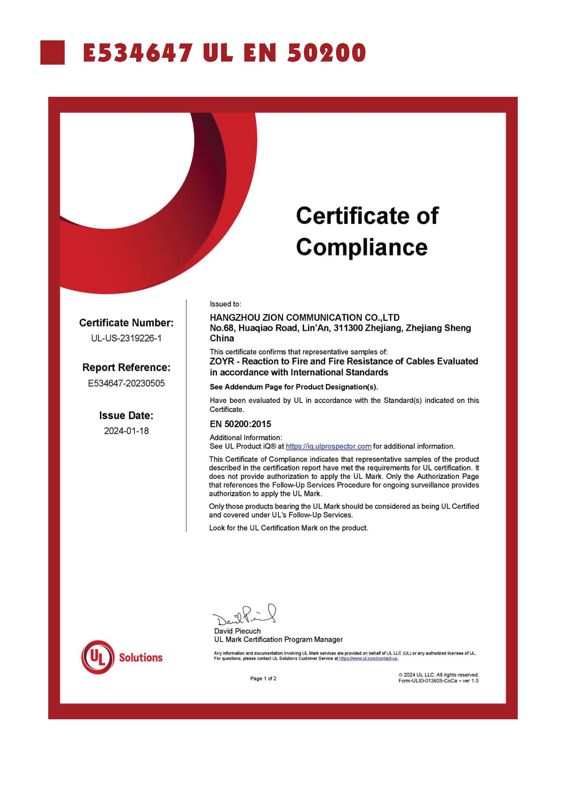
Reference standards must be connected with test evidence
For fire resistant emergency circuit cable, a standard name alone is not enough. Engineers and procurement teams should confirm the exact cable construction, PH rating, test report, certification scope and project requirement before using the cable in a life-safety circuit.
- Check whether EN 50200:2015 is required by the project specification.
- Confirm whether the requirement is PH30, PH60, PH90 or PH120.
- Match certificate, cable structure and installation environment before quotation.
Engineering meaning
EN 50200 is not simply asking, “Will the cable burn?” It is asking, “Can this emergency circuit continue working during fire exposure for the required time?”
■ Why EN 50200 Matters for Emergency Circuits
During a fire, some electrical systems must continue operating long enough to support evacuation, emergency response and safety control. Cable failure can interrupt alarms, lighting, communication or control signals at the most critical moment.
| Emergency System | Why Cable Integrity Matters | Typical Cable Requirement |
|---|---|---|
| Fire alarm system | Alarm signals must remain active during evacuation. | Fire resistant signal cable, often LSZH. |
| Emergency lighting | Escape routes must remain visible during fire conditions. | Fire resistant power or control cable. |
| Voice alarm system | Evacuation instructions may need to continue during emergency operation. | Fire resistant communication or speaker cable. |
| Smoke control interface | Control signals may be needed for smoke extraction or emergency equipment. | Fire resistant control cable, shielding if required. |
| Emergency communication | Communication circuits may need to survive for a defined time window. | Fire resistant low-voltage or data cable. |
■ What Does EN 50200 Test?
EN 50200:2015 evaluates the ability of a cable to maintain circuit integrity under fire exposure combined with mechanical shock. The method is especially relevant to smaller emergency circuit cables rather than large power transmission cables.
Fire Exposure
The cable is exposed to a defined flame condition to simulate fire attack.
Mechanical Shock
Impact is applied during the test to simulate disturbance during fire.
Circuit Monitoring
The electrical circuit is monitored to check whether continuity is maintained.
Time Classification
The cable is classified according to how long it maintains circuit integrity.
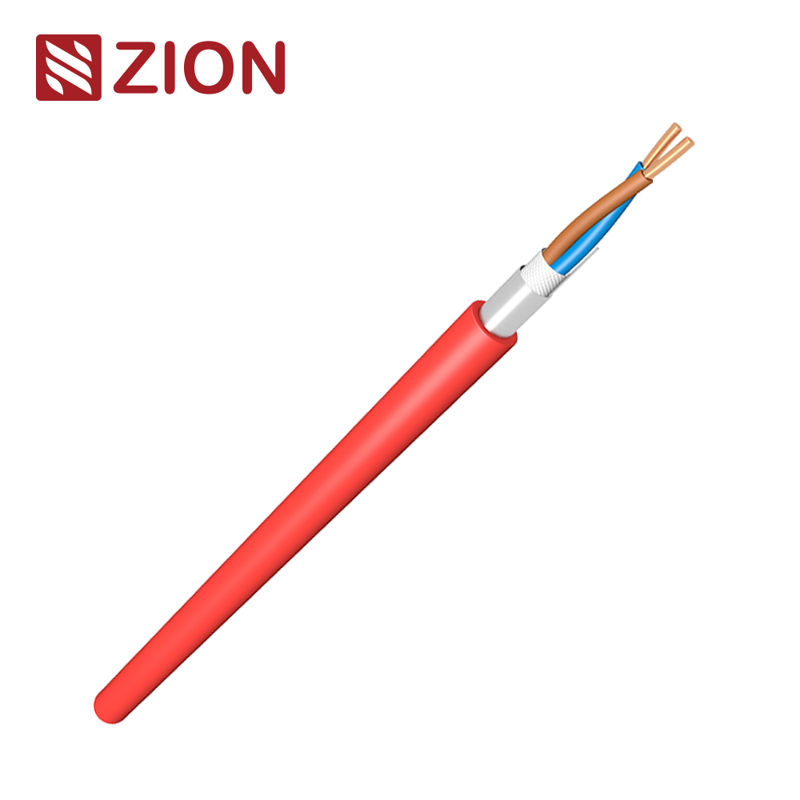
EN 50200 PH120 fire resistant cable should be selected by tested construction
In emergency circuit design, the product structure matters. Conductor type, insulation system, shielding, LSZH sheath, voltage rating and PH classification all affect whether the cable is suitable for the required life-safety route.
A PH120 fire rated signal cable should not be selected only by color or product name. Enhanced circuit integrity for fire alarms depends on the tested cable design and the project’s required survival duration.
View PH120 Solid Fire Cable■ Video References for Fire Cable Standards
Use these video references as supporting visual material for fire resistant cable testing, circuit integrity and safety cable selection. They are suitable for helping engineers, procurement teams and project owners understand why fire performance cannot be judged only by cable appearance or generic “fire-rated” wording.
Fire Cable Test Reference
A visual reference for understanding how fire resistant cable performance is tested and why circuit continuity matters in emergency routes.
Emergency Circuit Integrity Reference
A supporting video reference for explaining cable survival, emergency circuit operation and practical fire cable selection.
■ EN 50200 PH Ratings Explained
EN 50200 results are commonly expressed using PH ratings. The number refers to the fire survival duration in minutes. For example, PH30 means 30 minutes of circuit integrity under the defined test conditions.

| Rating | Survival Duration | Project Interpretation | Risk Level if Underspecified |
|---|---|---|---|
| PH30 | 30 minutes | Basic emergency circuits, common fire alarm or emergency lighting routes. | Lower |
| PH60 | 60 minutes | Larger buildings, longer evacuation routes or higher safety requirements. | Medium |
| PH90 | 90 minutes | Complex evacuation layouts, higher-risk areas or consultant-specified systems. | Medium |
| PH120 | 120 minutes | Enhanced fire survival requirement or critical infrastructure projects. | High |
■ Fire Resistant Cable Is Not the Same as Flame Retardant Cable
One of the most common project mistakes is confusing flame retardant cable with fire resistant cable. Flame retardant performance is mainly about limiting flame spread. Fire resistant performance is about maintaining circuit function during fire exposure.
| Performance Type | Main Question | Typical Purpose |
|---|---|---|
| Flame retardant | Does the cable limit flame spread? | Reduce fire propagation along cable routes. |
| LSZH | Does the cable reduce smoke and halogen gas? | Improve evacuation visibility and reduce corrosive gas risk. |
| Fire resistant / circuit integrity | Can the cable continue operating during fire? | Maintain emergency circuit operation for a required period. |

■ EN 50200 vs IEC 60331 vs BS 6387
EN 50200 is often discussed together with IEC 60331 and BS 6387. These standards are related to fire resistant cable performance, but they are not interchangeable. The project specification should always identify the required standard, rating and test condition.
| Standard / Reference | Main Focus | Typical Project Use | Selection Note |
|---|---|---|---|
| EN 50200:2015 | Fire resistance of small emergency circuit cables with mechanical shock. | European building safety and emergency circuit reference. | Commonly linked with PH ratings. |
| IEC 60331 | Circuit integrity under flame conditions. | International fire resistant cable reference. | Often used for broader international projects. |
| BS 6387 | Fire resistance under defined fire, water and mechanical shock categories. | UK and Commonwealth project specifications. | Category letters and test conditions must be checked carefully. |
| Enhanced UK fire cable test references | Additional fire, impact and water-related survival requirements may be specified. | Projects with stricter emergency circuit requirements. | Do not assume water spray or enhanced testing from the EN 50200 label alone. |
Engineer’s shortcut
If the project only says “fire resistant cable”, ask for the exact standard. If it says EN 50200, ask for the required PH rating. If it also mentions water spray, enhanced impact or UK fire cable requirements, confirm the exact test reference in the project documents.
■ Where EN 50200 Cables Are Commonly Used
EN 50200-related cables are mainly selected for safety-critical circuits in buildings and infrastructure. The correct cable depends on circuit function, voltage, conductor size, shielding requirement, installation route and required survival duration.
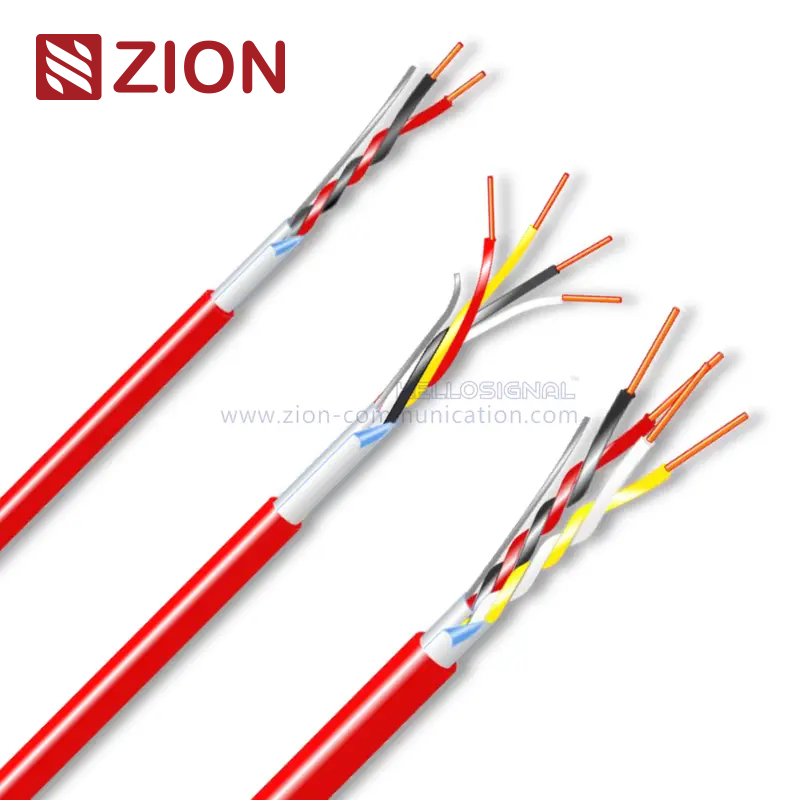
Fire Alarm Loop Circuits
Used for alarm signal transmission where circuit continuity is required during fire conditions.
- Fire resistant signal cable
- LSZH sheath for indoor routes
- Optional shielding for EMI-sensitive areas
Emergency Lighting Circuits
Used where escape routes must remain illuminated during evacuation.
- Fire resistant power or control cable
- PH rating based on evacuation design
- Route protection and fixing method to be confirmed
Voice Alarm / PA Systems
Used for voice evacuation, emergency broadcast and public address system continuity.
- Fire resistant audio or speaker cable
- Low smoke sheath for public buildings
- Stable signal transmission during emergency operation
Emergency Communication
Used for safety communication circuits in large buildings, campuses and transportation facilities.
- Fire resistant low-voltage cable
- Shielded option if interference risk exists
- Documentation matched to project requirement
BMS Emergency Interfaces
Used for emergency control signals between fire systems, dampers, fans and building management systems.
- Fire resistant control cable
- RS485 / control pair options
- Shielding and grounding design to be checked
Public Buildings & Infrastructure
Used in airports, hospitals, commercial buildings, tunnels, stations and high-occupancy facilities.
- Higher PH rating may be required
- LSZH fire resistant cable for building safety routes is often preferred.
- Third-party test evidence may be required
■ Related ZION Cable Pages
For project selection, EN 50200 should be connected with actual cable construction, system type and installation environment. The following ZION pages can be used as internal references for related cable families.
■ Engineer’s Selection Guide for EN 50200 Projects
Cable selection should start from the system function and project specification, not from the product name alone. For emergency circuit cable, the engineering risk is usually hidden in missing details.
| Project Question | What to Check | Risk If Ignored |
|---|---|---|
| Is the cable used for life safety? | Fire alarm, emergency lighting, voice alarm, emergency control. | High |
| What PH rating is required? | PH30, PH60, PH90, PH120 or project-specific requirement. | High |
| Is water spray required? | Check whether BS 6387, BS 8434 or another enhanced fire cable reference is specified. | Medium |
| Is LSZH required? | Usually important for indoor public buildings and evacuation routes. | Medium |
| Is shielding required? | Important for signal circuits, RS485, BMS or EMI-sensitive areas. | Medium |
| Is certification required? | Confirm test report, rating, cable construction and applicable standard. | High |
■ ZION Cable Recommendation Logic
ZION supports project-based selection for fire alarm, emergency lighting, control, signal and customized emergency circuit cable applications. Cable construction can be discussed according to conductor size, insulation, sheath, shielding, voltage rating, flame performance and required fire resistance level.
Why some emergency circuit cables can reach higher PH ratings
Higher fire survival performance is usually related to the complete cable construction, not the outer sheath alone. Depending on the product design, fire resistant emergency circuit cables may use mica tape wrapping, silicone rubber insulation, ceramic-forming insulation systems, LSZH sheath materials, metallic shielding or other fire survival structures.
For example, mica tape can help maintain insulation integrity during high-temperature exposure, while silicone rubber or ceramic-forming insulation systems may support circuit continuity when standard polymer insulation would fail. The exact structure must always be confirmed against the tested cable design and project requirement.
Recommended for Fire Alarm Systems
- Fire resistant signal cable
- LSZH outer sheath for indoor safety routes
- Optional shielding for noise-sensitive circuits
- PH rating matched to consultant specification
Recommended for Emergency Lighting
- Fire resistant power or control cable
- Voltage rating matched to system design
- Route and fixing method reviewed before ordering
- Higher survival duration for complex evacuation layouts
Recommended for Voice Alarm
- Fire resistant speaker or communication cable
- Low smoke sheath for public areas
- Stable signal transmission during emergency operation
- Conductor size selected by circuit length and load
Recommended for BMS Emergency Control
- Fire resistant control cable
- Shielded pair option for RS485 / Modbus circuits
- Compatibility with control cabinet wiring
- Documentation prepared according to project request
■ Project Requirement Quick Check
Use this quick check to clarify the basic requirement before requesting a quotation. It does not replace the project specification, but it helps avoid common selection mistakes.
■ Common Mistakes When Specifying EN 50200 Cable
Using “fire resistant” as a generic term
Always confirm the exact test standard, PH rating and cable construction.
Confusing PH30 with PH120
Both may be fire resistant, but the required survival duration is very different.
Ignoring water spray requirements
Do not assume water spray is included unless the project clearly requires it.
Selecting only by price
Emergency circuit cable should be evaluated by documentation, reliability and compatibility.
Over-specifying or under-specifying PH rating
PH120 is not always the correct answer. Some projects may only require PH30 or PH60, while others need PH90 or PH120. Select the PH class according to evacuation time, route importance, building risk level and consultant specification.
■ FAQ
Is EN 50200 used for fire alarm cable?
Yes. EN 50200 is relevant to emergency circuit cables, including cables used for fire alarm, emergency lighting, voice alarm and communication systems.
What does PH30 or PH60 mean?
PH30 means the cable maintained circuit integrity for 30 minutes under the defined test conditions. PH60 means 60 minutes. The same logic applies to PH90 and PH120.
Is EN 50200 the same as IEC 60331?
No. Both relate to fire resistant cable performance, but their test methods and market usage are different. EN 50200 is strongly associated with small emergency circuit cables and mechanical shock during fire exposure.
Does EN 50200 automatically mean LSZH?
No. LSZH describes smoke and halogen emission behavior, while EN 50200 focuses on fire resistance and circuit integrity. Many building projects may require both.
Can ZION supply EN 50200-related fire resistant cable?
ZION can support fire alarm, emergency lighting, control, signal and customized emergency circuit cable solutions. The required PH rating, cable size, sheath material, shielding and test documentation should be confirmed before quotation.
Need Fire Resistant Cable for an Emergency Circuit Project?
Send ZION your project standard, PH rating, cable size, sheath requirement, shielding request and installation environment. Our team can help match the cable construction with your fire alarm, emergency lighting or building safety system requirement.