FPV Inner-Winding Optical Fiber Spools – Eliminate Fiber Damage, Reduce Attenuation, Improve Flight Stability
Author: Site Editor Publish Time: 04-12-2025 Origin: Site

Inner-Winding Fiber Deployment System: Technical Advantages Explained
■ Introduction
In fiber optic UAV and FPV transmission systems, the design of the spool affects transfer quality, reliability, and performance. The inner-winding (payout) design has advantages in attenuation control, mechanical abrasion, and anti-interference performance.
This article details the technical advantages of the inner-winding architecture over the conventional outer-winding design.

■ Zero-Friction Release for Low Signal Attenuation
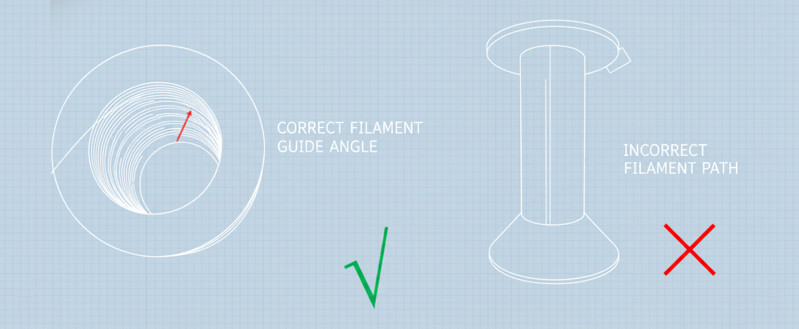
The key advantage of the inner-winding FPV fiber spool is its zero-friction payout.
With the fiber being released at its core, the fiber does not experience micro-abrasion or over-bending.
Technical Advantages:
Significantly lower optical attenuation
Improved transmission quality over long distances
No mechanical abrasion to the fiber’s protective layers
Constant performance under high-speed payout
In contrast: The outer-winding release increases attenuation and Poses a risk of mechanical damage to the fiber during flight.
■ No Crossing, No Tangling: The Inner-Winding Is Mechanically Reliable
Inner-winding mechanisms keep the fiber layers organized.
The payout generally comes from the center and is Center-pull, Minimizing the risk of:
Overlap
Tangle
Overstretch
Collapse
The inner-winding FPV fiber spool is mechanically reliable, especially on long-distance flights where a smooth release of the fiber is vital.
Outer-winding risk: Fiber moves freely; vibrations and maneuvers may cause folding, crossing, or jamming — especially in high-dynamic FPV operations.

■ Smooth Release at Any Angle: Attitude-Independent Payout
Inner-winding FPV fiber spools work regardless of the device’s orientation — vertical, inverted, or tilted:
FPV take-off and landing positions
Rotations or abrupt changes in drone attitude
The payout remains consistent because release is governed by internal geometry — not gravity or inertia.
Outer-winding limitation: Requires strict horizontal mounting. Tilt increases drag, introduces uneven tension, and may stall payout — especially in aggressive flight profiles.
■ Enhanced System Robustness in High-Vibration Environments
While optical fiber is inherently immune to EMI/RF, the deployment system must withstand the physical byproducts of high-interference environments (e.g., motor jitter or vibration caused by heavy electromagnetic loads).Inner-winding FPV fiber spools provide superior mechanical isolation, ensuring stable payout even when the drone frame experiences significant vibration.
Ideal for: Industrial inspection sites, urban power-line zones, and RF-restricted areas.
Benefit: Minimizes micro-bending and tensile spikes caused by system vibration, ensuring low-loss transmission over kilometers.
■ High-Speed Flight Stability: Optimized Low-Tension Release
Inner-winding systems maintain consistent, low release tension (typically 3–5 N), making them ideal for UAVs operating at high speeds:
Benefits of Optimized Tensile Release:
Effectively prevents fiber damage from mechanical errors
No risk of physical contact with drone structure after payout
Stable payout enhances flight dynamics and control responsiveness
Low malfunction rate in extended long-range FPV missions
Outer-winding challenge: Variable tension, stalling, and jerky payout can cause sudden spikes (>10 N), risking fiber snap or snag — especially during rapid acceleration or descent.
■ Technical Comparison: Inner-Winding vs. Outer-Winding
Feature | Inner-Winding System | Outer-Winding System |
Fiber Release Method | From core, friction-free | From outer layer, high friction |
Attenuation | Very low | Higher, increases with friction |
Mechanical Reliability | No crossing or knotting | Higher risk of tangling |
Orientation Flexibility | Works at any angle | Must stay horizontal |
High-Speed Suitability | Stable payout | Tension spikes likely |
Fiber Protection | Excellent | Moderate to poor |
Application Range | Long-distance, high-reliability UAV/FPV | Short-distance or low-demand use |
■ Conclusion
The inner-winding fiber deployment system delivers decisive mechanical and optical advantages for UAV and FPV long-range, low-loss applications. Its:
Minimal Friction payout
Anti-tangling reliability
Attitude-independent release
Optimized tensile control (3–5 N)
ensure high-performance, interference-free operation — without risk of damage or signal degradation — making it the superior architecture over traditional outer-winding designs for professional and mission-critical deployments.
Contact us for more information

James is a technical manager and associate at Zion Communication.
Specializes in Optical Fiber communications, FTTH Solutions,
Fiber optic cables, ADSS cable, and ODN networks.
james@zion-communication.com
+86 13777460328