From 10G to 800G (and Beyond): Ethernet Speed Evolution Explained
Author: Michael Publish Time: 05-01-2026 Origin: Site
ZION COMMUNICATION · Cable Academy
From 10G to 800G (and Beyond): Ethernet Speed Evolution Explained
How Ethernet scales from enterprise networks to AI data centers — including a brief look at 1.6T.
■ 1) Executive Summary
Ethernet speed evolution is not simply “faster cables.” From 10G to 800G, Ethernet has transformed from copper-centric LAN links into multi-lane optical systems designed for cloud-scale and AI data centers. This guide explains the key generations (25G/50G/100G/200G/400G/800G), the technologies that enable each step, and why 1.6T (1600G) is already on the roadmap.

■ 2) Why Ethernet Speed Evolution Matters Today
Ethernet scaling has accelerated due to hyperscale cloud computing, AI/HPC workloads dominated by east–west traffic, and ever-higher switch ASIC capacity. At the same time, power density, cooling limits, and ESG reporting make Energy per Bit (W/Gbps) a real engineering constraint.
■ 3) 10G Ethernet: The Peak of Practical Copper
10G was the last generation where twisted-pair copper played a central role in structured cabling. In enterprise environments, 10GBASE-T typically relies on Cat6A to reach the full 100 m channel distance.
| Standard | Medium | Typical Distance | Typical Use Case |
|---|---|---|---|
| 10GBASE-T | Cat6A (copper) | Up to 100 m | Enterprise LAN, DC horizontal |
| 10GBASE-SR / 10GBASE-LR | Fiber | ~300 m to 10 km (typical) | Backbone, DC uplinks |
■ 4) 25G & 40G: The First Break from Copper Thinking
25G Ethernet emerged to reduce cost per bit and align efficiently with switch ASIC design. It reduced the need to aggregate multiple 10G links while delivering higher uplink capacity for ToR and leaf architectures.
| Speed | Typical Medium | Typical Role | Notes |
|---|---|---|---|
| 25G | Fiber / DAC / AOC | ToR → Leaf | Lower cost per bit than aggregating 10G |
| 40G | Fiber | Early spine/uplinks | Often replaced by 100G in modern designs |
While 25GBASE-T / 40GBASE-T exist for Cat8 at short distances (typically ≤30 m), most deployments prefer optical links for efficiency and signal integrity.
■ 5) 50G Ethernet: The New Building Block
50G is a foundational lane speed for modern Ethernet. It aligns with next-generation SerDes and becomes the building block for higher rates through multi-lane aggregation.
| Aggregate Speed | Lane Structure (Typical) | What It Enables |
|---|---|---|
| 50G | 1 × 50G | Next-gen leaf/uplink building block |
| 100G | 2 × 50G or 4 × 25G | Mainstream DC/spine baseline |
| 400G | 8 × 50G | Hyperscale fabrics |
■ 6) 100G Ethernet: The Modern Baseline
100G is widely deployed for data center spines, campus backbones, and cloud interconnects. In practice, 100G is delivered via optical modules and fiber connectivity—there is no widely adopted “100GBASE-T” path in structured twisted-pair copper.
■ 7) 200G & 400G: Scaling for Cloud and AI
As switch ASIC capacity increased (12.8T → 25.6T → 51.2T), higher port speeds became necessary to scale bandwidth without exploding port count, cabling bulk, and power/thermal load.
| Speed | Typical Lane Structure | Primary Use | Key Enablers |
|---|---|---|---|
| 200G | 4 × 50G | AI clusters/uplinks | PAM4, higher density optics |
| 400G | 8 × 50G | Hyperscale DC / spine-leaf | QSFP-DD, parallel fiber |
■ 8) 800G Ethernet: The AI Fabric Era
800G is driven by AI/HPC workloads and extreme east–west traffic. At these speeds, optical signal quality, connector performance, and power efficiency become dominant constraints. Ethernet at 800G is fully fiber-native in practical systems.
■ 9) Beyond 800G: A Brief Look at 1.6T Ethernet
With 800G entering deployment, industry roadmaps already extend toward 1.6T (1600G) Ethernet. The drivers are clear: AI cluster scale, next-generation switch ASIC capacity, and the need to improve Energy per Bit at extreme bandwidth levels.
In practical terms, 1.6T is expected to rely on higher-speed optical lanes (for example, 16 × 100G in early forms, progressing toward fewer lanes at higher per-lane speeds). As with prior transitions, a key reality holds: at terabit scale, Ethernet is fully optical by necessity—there is no realistic twisted-pair Base-T path at 1.6T.
| Generation | Typical Lane Concept | Main Driver |
|---|---|---|
| 800G | 8 × 100G (typical) | AI/HPC fabrics |
| 1.6T | 16 × 100G (early) → fewer lanes at higher per-lane speeds | Switch ASIC scaling + Energy per Bit |

■ 10) Energy per Bit: The Hidden Driver of Speed Evolution
In ESG and carbon-neutrality planning, Energy per Bit (W/Gbps) matters as much as bandwidth. At ≥10G, optical Ethernet often offers a lower watts-per-Gbps path than high-speed copper—especially at data-center scale.
| Interface Type | Absolute Power | Energy per Bit | Planning Note |
|---|---|---|---|
| 10GBASE-T | Moderate | Poor | DSP-heavy; heat/cooling becomes visible at scale |
| 100G Optical | Higher | Much lower | 10× bandwidth with favorable W/Gbps |
| 400G / 800G Optical | Higher | Better at scale | Fewer ports for the same throughput; reduces cabling bulk |
■ 11) Copper vs Fiber: Where the Boundary Now Lies
| Speed Range | Dominant Medium | Design Implication |
|---|---|---|
| 1G – 10G | Copper (Cat6 / Cat6A) | Structured cabling sweet spot |
| 25G – 40G | Mostly fiber | Cat8 is niche (≤30 m) |
| 50G – 800G+ | Fiber | Fiber-native by design (density + power) |

■ 12) ZION COMMUNICATION Perspective
ZION COMMUNICATION aligns cabling recommendations with the real Ethernet evolution: Cat6/Cat6A for reliable 1G–10G access networks, Cat8 for niche short-reach data center scenarios, and single-mode & parallel fiber for scalable 25G–800G+ architectures (including 1.6T-ready planning).
■ 13) Conclusion
From 10G to 800G—and now toward 1.6T—Ethernet has evolved into a fiber-centric, multi-lane optical system where power efficiency is as important as bandwidth. Understanding this trajectory helps engineers and decision-makers design networks that are scalable, efficient, and future-ready.



 Fiber Optic Tools
Products 6 families
Solutions 6 markets
Resources Tools & docs
Certificate
Certification and compliance references for project review, qualification and purchasing documentation.

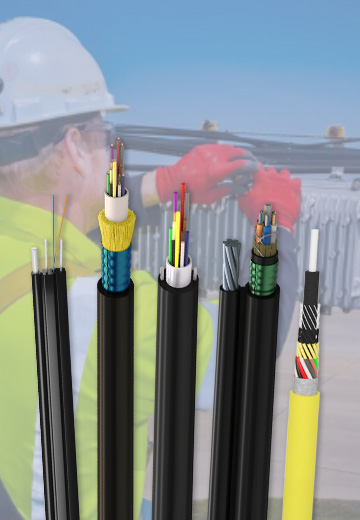 Fiber Optic CableAccess and backbone
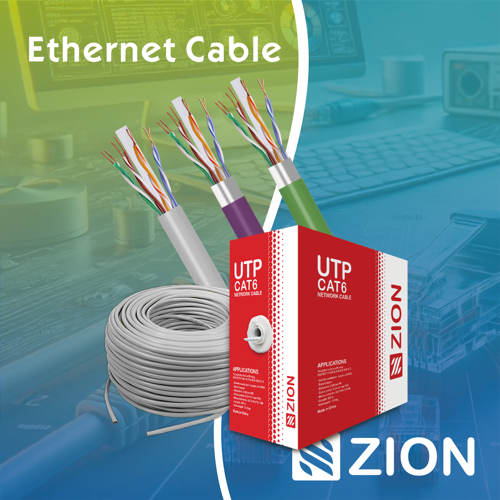 Ethernet CableCat5e to Cat8
 Coaxial CableRF and video signal
 Fire, Security & AlarmSafety systems
 Voice, Audio & VideoSignal cabling
 Power & Control CableEnergy and control
Fiber optic cable systems
Outdoor, indoor, FTTH and distribution cable lines for access networks, backbone routes and campus deployments.
 Telecom & ISP NetworksFTTH, PON, ODN
 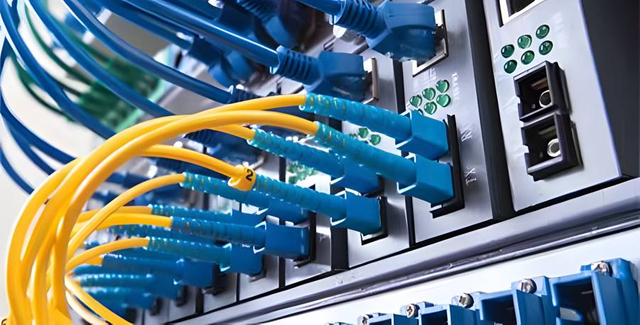 Data Center InfrastructureServer room cabling
  Building Low-Voltage SystemsBMS, AV, weak current
  Security & Fire ProtectionAlarm, CCTV, access
  Industrial Automation CablePLC, RS485, fieldbus
  Energy & Power InfrastructureSolar, battery, power
 Telecom & ISP Networks
For FTTH / PON access, outdoor fiber deployment, aerial routes, duct routes, direct burial routes, rural broadband and ODN planning.
Tools
Use calculators and planning tools for conduit capacity, PoE voltage drop and fiber optic link loss budget work.