GYTA53 vs GYTY53: Direct Buried Optical Fiber Cable Structure & Application Guide
Author: James Publish Time: 29-07-2025 Origin: Site
■ Direct Buried Optical Fiber Cable: GYTA53 vs GYTY53
Direct buried optical fiber cables are made for underground use. They don’t need extra pipes. These cables handle tough conditions. They are strong, keep out water, and last long. GYTA53 and GYTY53 are two common types. Each type works best in different situations.
■ What is a Direct Buried Optical Cable?
Pressure from the ground
Water getting in
Chemicals in the soil
Damage from animals or machines
They have special features:
Metal armor layers
Two plastic coats
Tubes filled with gel to block water
A steel wire in the center for strength
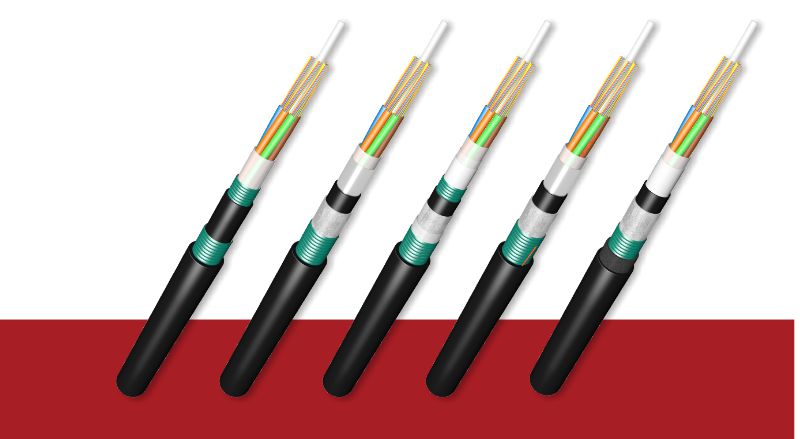
■ GYTA53 vs GYTY53: Structural Comparison
Feature | ||
Armor Layers | Aluminum tape + steel tape | Only steel tape |
EMI Shielding | Yes (aluminum layer) | No |
Rodent Resistance | Better (two armor layers) | Good (one armor layer) |
Cost | More expensive | Cheaper |
Best For | Places with electrical interference | Normal underground use |
Fiber Capacity | Up to 144+ fibers | Up to 144+ fibers |
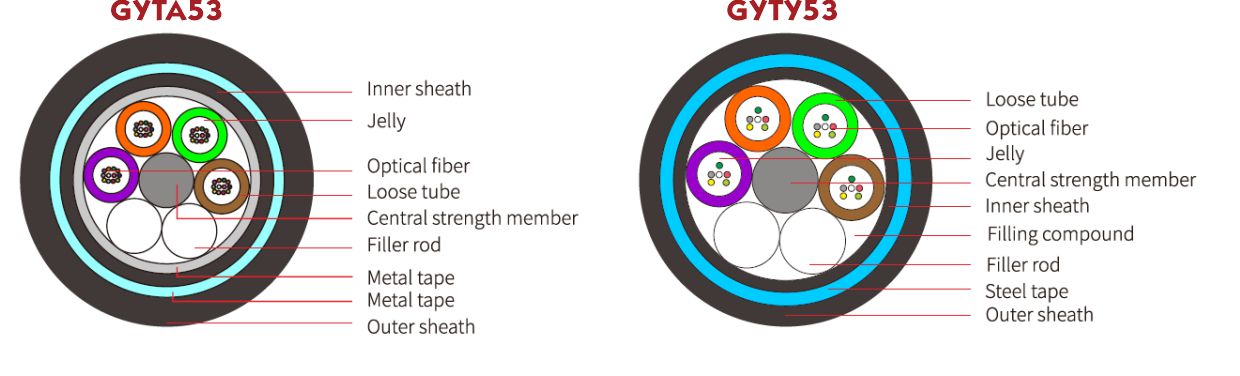
■ GYTA53 Cable

How it’s made:
Core: Tubes with gel to stop water.
Strength: Steel wire in the middle.
Inner Layer: Plastic coating.
Armor:
First: Aluminum tape (blocks electrical interference).
Second: Steel tape (stops damage).
Outer Layer: Tough plastic cover.
Why use it:
Blocks electrical interference well.
Stops animals from biting through.
Good near power lines or train tracks.
■ GYTY53 Cable

How it’s made:
Core: Tubes with gel like GYTA53.
Strength: Steel wire, sometimes with plastic coating.
Armor: Only steel tape.
Outer Layer: Two plastic coats.
Why use it:
Costs less than GYTA53.
Strong enough for most underground jobs.
Works well in normal areas
■ Where to Use Direct Buried Optical Cable
Both cables work for:
Long-distance internet lines.
Big buildings or factories.
Places that need tough cables.
Use GYTA53 when:
There’s electrical equipment nearby.
Animals might damage the cable.
Use GYTY53 when:
You want to save money.
The area has no electrical interference.
■ Q&A – Key Questions Answered
Q1: Can these cables hang in the air?
A: No. They are too heavy. Use lighter cables for hanging.
Q2: How deep to bury them?
A: About 1 meter deep, or as local rules say.
Q3: Do animals chew through them?
A: Usually no. The steel tape stops most animals. GYTA53 is even better.
Q4: Which cable for power plants?
A: GYTA53, because it blocks electrical interference.
Q5: How long do they last?
A: 20–30 years if installed right.
■ Need a Reliable Supplier of Outdoor Optical Cables?
Zion Communication offers:
✔ Large selection of outdoor fiber cable categories.
✔ A/B (OEM/ODM) branding into the problem you need.
✔ Compatibility with ITU-T, IEC, and TIA/EIA standards.
✔ Cost-effective and rapid delivery.
Contact us now to get datasheets, samples, and a project-based quote.
Customize Your Outdoor Optical Fiber Cable

James is a technical manager and associate at Zion Communication.
Specializes in Optical Fiber communications, FTTH Solutions,
Fiber optic cables, ADSS cable, and ODN networks.
james@zion-communication.com
+86 13777460328