Solid vs Stranded Ethernet Cable: Which One Should You Choose?
Author: Site Editor Publish Time: 28-04-2026 Origin: Site
Solid vs Stranded Ethernet Cable: Which One Should You Choose?
A practical guide for comparing solid and stranded Ethernet cables by conductor structure, flexibility, signal performance, installation environment, patch cord use and project ordering requirements.
Solid Ethernet cable is better for permanent links, wall cabling, longer runs and lower electrical resistance.
Stranded Ethernet cable is better for patch cords, frequent movement, tighter bending and daily equipment connections.
For structured cabling projects, use solid cable in the wall and stranded patch cords at the rack or workstation side.
■ Quick Answer
Choose solid Ethernet cable for permanent installations such as in-wall cabling, horizontal cabling, ceiling pathways and patch panel termination. Choose stranded Ethernet cable for patch cords, equipment connections and areas where the cable is frequently bent, moved or unplugged.
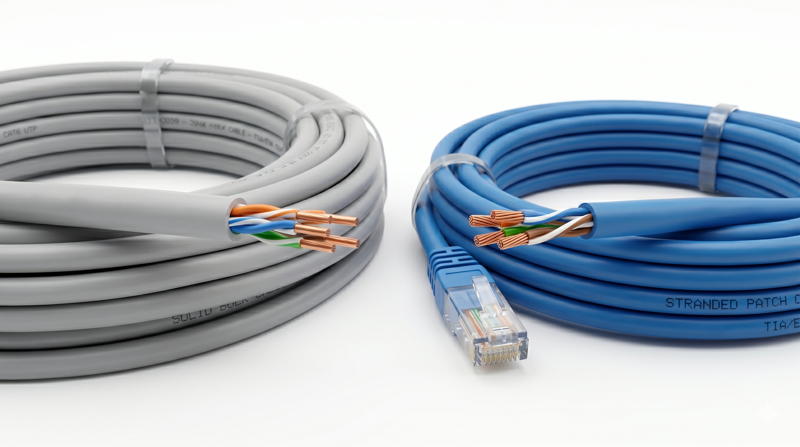
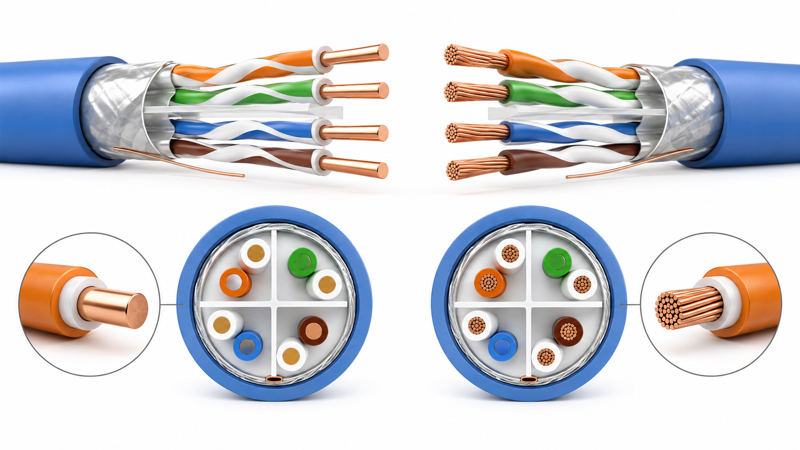
The difference is inside the conductor. A solid cable uses one single copper conductor per core, while a stranded cable uses multiple thin copper strands twisted together. This affects flexibility, signal stability, resistance, termination method and long-term durability.
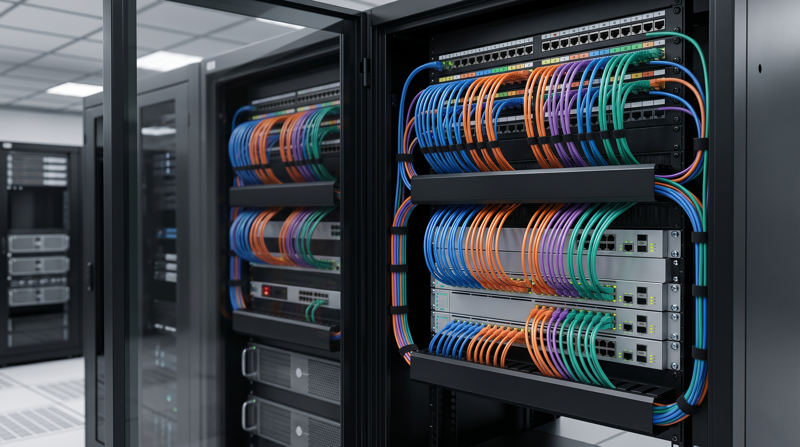
For most structured cabling projects: use solid cable for fixed links, then use stranded patch cords from patch panel to switch and from wall outlet to device.
■ What Solid and Stranded Mean
In Ethernet cable construction, “solid” and “stranded” describe the copper conductor inside each insulated core. Both can be used in Cat5e, Cat6 and Cat6A cables, but they are designed for different installation roles.
| Cable Type | Conductor Structure | Main Advantage | Typical Product |
|---|---|---|---|
| Solid Ethernet Cable | One solid copper wire per conductor | Lower resistance and stable long-run performance | Bulk cable, horizontal cable, installation cable |
| Stranded Ethernet Cable | Multiple fine copper strands per conductor | Better flexibility and repeated bending durability | Patch cord, equipment cable, short jumper cable |
■ Solid vs Stranded Ethernet Cable Comparison
Solid and stranded cables are not “good vs bad.” They are two designs for different use cases. The right choice depends on whether the cable will stay fixed or move frequently.
| Comparison Item | Solid Ethernet Cable | Stranded Ethernet Cable | Decision Logic |
|---|---|---|---|
| Flexibility | Lower | Higher | Stranded is better for patch cords and movable links. |
| Electrical Resistance | Lower | Slightly higher | Solid is better for longer fixed links and PoE margin. |
| Permanent Installation | Best fit | Not preferred | Use solid for wall, ceiling and conduit installation. |
| Patch Cord Use | Less ideal | Best fit | Stranded handles bending and daily movement better. |
| Termination | Works well with IDC keystone jacks and patch panels | Works well with RJ45 plugs designed for stranded conductors | Match connector type to conductor type. |
| Common Risk | Can break if repeatedly bent sharply | Not ideal for long permanent links | Use each cable type in its proper role. |
Best for horizontal cabling, permanent links, patch panel termination and PoE-ready infrastructure.
Excellent for patch cords, but not the best choice for long fixed installation runs.
Using the wrong plug or jack for the conductor type can cause weak termination and unstable links.
■ When to Choose Solid Ethernet Cable
Solid Ethernet cable is the standard choice for fixed structured cabling. It is commonly installed behind walls, above ceilings, through conduits and between patch panels and wall outlets.
Permanent Links
Use solid cable for horizontal cabling from patch panel to outlet or consolidation point.
Longer Cable Runs
Lower conductor resistance helps maintain signal and power delivery margin over distance.
PoE Infrastructure
Solid copper cable is preferred for PoE, PoE+ and PoE++ permanent cabling projects.
■ When to Choose Stranded Ethernet Cable
Stranded Ethernet cable is designed for flexibility. It is commonly used in finished patch cords because the cable may be bent, moved, unplugged and reconnected many times during normal operation.
Stranded cable is not a replacement for solid bulk cable in long fixed runs. It is best used as a flexible connection cable between equipment and cabling outlets.
Best fit: rack patch cords, workstation patch cords, short jumper cables, test leads, temporary links, frequently moved equipment and cabinet connections.
■ Performance, PoE and Distance
For high-performance or high-power networks, conductor design matters. Solid conductors usually provide lower resistance and better power-delivery margin, while stranded conductors trade some electrical margin for flexibility.
| Scenario | Preferred Choice | Reason | Buyer Checkpoint |
|---|---|---|---|
| Long permanent link | Solid cable | Better signal and resistance margin. | Confirm category and test requirement. |
| PoE / PoE++ device link | Solid copper permanent cable + stranded patch cord | Balances power margin and flexible equipment connection. | Avoid CCA and undersized conductors. |
| Frequent unplugging | Stranded patch cord | Better bending and movement resistance. | Use proper RJ45 plug and boot design. |
| High-density rack patching | Stranded patch cord | Easier routing and cable management. | Check AWG, length and bend radius. |
■ Installation and Durability
Solid cable is mechanically stable when installed once and left in place. However, repeated sharp bending can damage the conductor. Stranded cable is more tolerant of movement, but it is not as ideal for long fixed routes.
| Installation Factor | Solid Cable | Stranded Cable | Practical Advice |
|---|---|---|---|
| Bend Tolerance | Lower | Higher | Use stranded where the cable moves often. |
| Pulling Through Pathways | Good for fixed installation | Not preferred for long pathway pulls | Use solid bulk cable for structured cabling routes. |
| Termination Stability | Good with IDC terminals | Good with proper RJ45 plugs | Do not mix connector type incorrectly. |
| Daily Handling | Not ideal | Excellent | Use stranded for patch cords and device-side connections. |
■ Decision Rules / Engineer’s Shortcut
The easiest way to choose is to ask one question: will the cable be fixed in place or moved frequently?
| Project Requirement | Recommended Choice | Reason | Checkpoint |
|---|---|---|---|
| Wall outlet to patch panel | Solid Ethernet cable | Permanent fixed link. | Confirm Cat6 or Cat6A requirement. |
| Patch panel to switch | Stranded patch cord | Flexible rack connection. | Choose proper length and AWG. |
| Workstation to wall outlet | Stranded patch cord | Frequent movement and bending. | Check jacket and boot durability. |
| PoE camera permanent run | Solid copper cable | Better power delivery margin. | Avoid CCA cable. |
| Temporary test link | Stranded patch cord | Better for repeated handling. | Use a tested patch cord. |
Fixed route = solid cable. Flexible connection = stranded cable. For a complete structured cabling channel, both are usually used together.
■ OEM Ordering Notes
When ordering Ethernet cables, buyers should clearly specify whether the cable is solid or stranded. This affects conductor design, connector compatibility, packaging, test method and final application.
Cable Specification
Confirm Cat5e, Cat6 or Cat6A, solid or stranded conductor, AWG size, shielding and jacket material.
Connector Compatibility
Confirm RJ45 plug or IDC termination type according to conductor structure and application.
Project Packaging
Confirm length, color, labels, barcode, OEM brand, bag, reel or carton packaging for project delivery.
A good RFQ should not only say “Cat6 cable.” It should specify solid or stranded conductor, AWG, copper material, shielding, jacket, length, termination type and test requirement.
■ FAQ
Is solid Ethernet cable better than stranded?
Solid cable is better for fixed permanent links, while stranded cable is better for flexible patch cords. Neither is universally better.
Can I use stranded cable inside walls?
It is generally not preferred. Solid cable is the standard choice for in-wall and horizontal structured cabling runs.
Can I make patch cords with solid cable?
It is possible with the correct plugs, but stranded cable is usually better for patch cords because it handles bending and movement better.
Which cable is better for PoE?
Solid copper cable is usually better for PoE permanent links because it has lower resistance and better power-delivery margin.
Do solid and stranded cables use different RJ45 plugs?
They may require different plug designs. Always match the RJ45 plug type to the conductor structure for reliable termination.
What should buyers confirm before ordering?
Confirm cable category, solid or stranded conductor, AWG, copper material, shielding, jacket, connector type, length and test requirement.
Need Solid or Stranded Ethernet Cable for Your Project?
ZION Communication can support solid bulk Ethernet cables, stranded patch cords and customized copper cabling solutions for structured cabling, data centers, office networks, PoE applications and OEM projects.