What Is an MPO Patch Panel? Definition, Types, and How to Choose One
Author: James Publish Time: 26-03-2026 Origin: Site
What Is an MPO Patch Panel?
An MPO patch panel is the rack-level management platform that organizes high-fiber-count backbone links, works with MPO cassettes and trunk cables, and helps data center teams balance density, maintainability, and future migration paths.
MPO patch panels are chassis-level platforms for organizing high-density fiber termination and cross-connect management.
They are not the same as MPO cassettes; cassettes are modular inserts that often sit inside the panel.
The right choice depends on rack density target, access style, cassette compatibility, polarity planning, and future upgrade path.
■ 1) Definition and system role
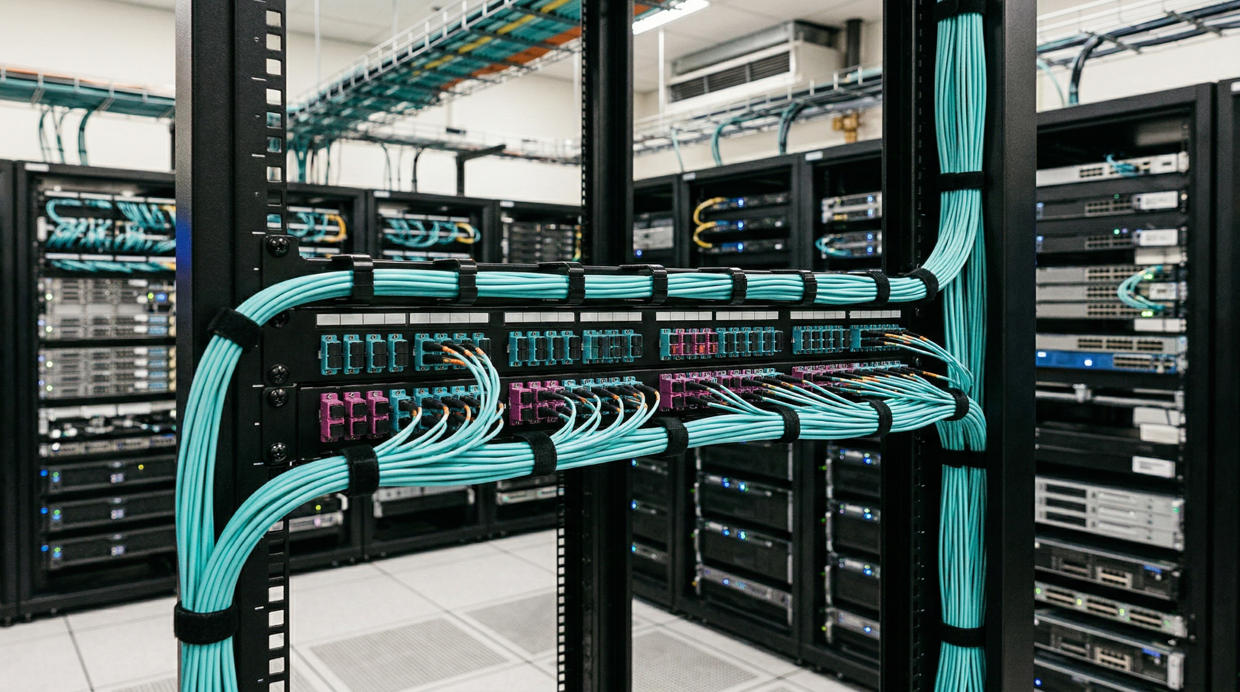
An MPO patch panel is a rack-mounted enclosure used to organize, terminate, and manage high-density fiber links inside structured cabling systems. In practical deployments, it acts as the physical platform that receives backbone trunks, provides a modular installation area for cassettes or adapter plates, and presents a controlled patching interface for active equipment connections.
The panel itself is not only a mechanical housing. It influences cable routing discipline, front/rear accessibility, labeling space, bend-radius protection, service workflow, and future migration options. In dense racks, those details affect both deployment cost and long-term maintenance quality.
| Item | What it does | Why it matters |
|---|---|---|
| Rack-mounted chassis | Provides enclosure structure for fiber termination and patching | Determines density, protection, and service workflow |
| Module hosting area | Accepts cassettes, MPO adapter plates, or hybrid modules | Supports LC breakout today and different front-port strategies later |
| Cable management zone | Controls entry direction, slack handling, bend radius, and labeling | Reduces service errors and protects optical performance over time |
■ 2) Types, architecture, and relation to cassettes
The most common confusion in high-density fiber design is the difference between an MPO patch panel and an MPO cassette. They are related, but they serve different roles.
MPO patch panel vs MPO cassette
The patch panel is the outer rack-level platform. The cassette is a removable module installed inside that platform. A cassette often converts one or more MPO rear interfaces into front-facing LC duplex or SC ports, while the panel manages the rack structure, module capacity, access method, and cable routing environment.
| Component | Primary function | Typical decision focus | Common mistake |
|---|---|---|---|
| MPO patch panel | Rack enclosure, module hosting, cable management | Density, access style, modular capacity, serviceability | Assuming every panel supports every cassette format |
| MPO cassette | Breakout or interface conversion | Front connector type, fiber mapping, polarity, loss budget | Treating cassette selection as independent from trunk polarity |
| MPO trunk cable | Backbone transmission path between zones or cabinets | Fiber count, length, polarity method, connector gender | Choosing trunk count before defining future breakout strategy |
Common panel architectures
MPO patch panels generally fall into several structural categories. The right architecture depends on how often the rack will be serviced, how dense the installation is, and whether the project is expected to evolve from LC breakout to direct MPO patching.
| Panel type | Best fit | Strength | Limitation |
|---|---|---|---|
| Fixed chassis | Stable, low-touch cabinets | Simple and cost-efficient | Rear access may be harder after full rack population |
| Sliding tray chassis | Frequent service or dense front patching | Better technician access | Mechanically more complex and usually higher cost |
| Empty modular enclosure | Projects needing phased growth | High flexibility for cassettes and adapter plates | Requires tighter part compatibility planning |
| Preloaded panel | Fast deployment schedules | Shorter installation time and less on-site assembly | Lower flexibility if design changes late |
■ 3) How it works in a structured cabling link
In a typical data center link, the MPO patch panel sits between permanent backbone cabling and patch-level service access. The rear side usually receives MPO trunk connections from a backbone route. The front side either exposes direct MPO interfaces or hosts cassettes that present LC duplex ports for equipment patching.
Basic link logic
A common structured path looks like this: backbone route → MPO trunk cable → MPO patch panel → cassette or adapter interface → LC patch cords or MPO jumpers → switch, server, or storage port. This layered structure improves organization, keeps permanent cabling protected, and makes future moves or upgrades easier to manage.
| Link stage | Typical component | Primary design concern | Operational impact |
|---|---|---|---|
| Backbone segment | MPO trunk cable | Fiber count, route length, polarity, loss | Defines long-term scalability and migration freedom |
| Management segment | MPO patch panel | Rack density, access method, labeling, module fit | Affects service time and patching discipline |
| Interface conversion | MPO cassette or adapter plate | Connector format, mapping, insertion loss | Affects compatibility with present equipment |
| Equipment patching | LC patch cords or MPO jumpers | Connector cleanliness, port organization, reach | Influences daily maintenance reliability |
■ 4) Common mistakes and deployment risks
MPO patch panel projects rarely fail because the idea is wrong. They fail because the panel decision is made without enough attention to module compatibility, service access, or future transition planning.
High-frequency mistakes
Choosing panel size only by current fiber count, with no allowance for expansion or spare capacity.
Assuming all cassettes are mechanically compatible across different panel platforms.
Ignoring polarity and connector gender planning until after hardware is purchased.
Selecting a dense fixed panel in racks where routine service access will be difficult.
Underestimating labeling and cable routing needs, which later raises maintenance time and error risk.
| Mistake | Short-term effect | Long-term risk | Control action |
|---|---|---|---|
| Selecting chassis before cassette and trunk logic | Project parts may still fit physically | Higher rework risk during testing or future expansion | Define whole link architecture first |
| Over-maximizing density in a service-heavy rack | Saves rack units initially | Harder maintenance, higher downtime exposure | Balance density with access style |
| Insufficient bend-radius and cable entry planning | Messy installation appearance | Stress on connectors, harder troubleshooting | Confirm rear routing and management accessories early |
| No clear labeling and test documentation discipline | Commissioning may still finish | Operational confusion during moves, adds, and changes | Standardize labels, polarity records, and test reports |
■ 5) Decision Rules / Engineer’s Shortcut
For engineers and project buyers, the fastest selection method is to judge the panel through four questions: How dense is the rack target, how often will the panel be serviced, what interface is needed now, and how likely is future reconfiguration?
| If your condition is... | Recommended panel direction | Why | Watch-out point |
|---|---|---|---|
| High rack density, limited service frequency | Compact fixed or modular high-density panel | Maximizes fibers per rack unit | Confirm access will remain acceptable after full population |
| Frequent moves, adds, and changes | Sliding tray or front-service-friendly chassis | Reduces technician effort and service risk | Cost may be higher, but lifecycle labor is usually lower |
| Current equipment needs LC breakout | Panel compatible with MPO cassettes | Supports clean transition from backbone MPO to front LC | Check cassette form factor and polarity method |
| Likely future migration to direct MPO links | Modular platform accepting both cassettes and adapter plates | Keeps upgrade path open without replacing chassis | Plan fiber count and front-port mix early |
| Budget-sensitive project with stable topology | Simple fixed chassis with disciplined routing accessories | Lower initial cost and lower part complexity | Avoid false savings that create service difficulty later |
■ 6) Application scenarios
MPO patch panels are most useful where fiber counts rise faster than available rack space, and where structured cabling needs to remain modular. That makes them common in data centers, enterprise backbones, cross-connect areas, and staged network upgrades.
| Scenario | Why MPO patch panel fits | Typical front-end strategy | Main selection priority |
|---|---|---|---|
| High-density data center row | Supports large backbone counts in limited rack space | MPO cassette breakout or direct MPO | Density plus maintainability |
| Cross-connect zone | Creates clean service interface between fixed links and equipment | Mostly cassette-based breakout | Access speed and label visibility |
| Enterprise backbone consolidation | Organizes multiple fiber runs into a standard rack platform | LC breakout for current switching infrastructure | Compatibility and upgrade headroom |
| Migration-oriented deployment | Lets operators start with breakout and later reconfigure for direct MPO use | Modular mix of cassettes and adapter plates | Chassis flexibility and part standardization |
■ 7) FAQ
Is an MPO patch panel the same as an MPO cassette?
No. The patch panel is the rack-mounted chassis or enclosure, while the cassette is a module installed inside it. The cassette usually performs interface conversion, while the panel manages density, access, and cable routing.
How do I know whether I need a cassette-based panel?
If your backbone is MPO but your active equipment still requires LC duplex patching, a cassette-compatible panel is usually the practical choice. If your system already uses direct MPO connectivity, adapter-plate-based designs may be more suitable.
What is the main selection factor: density or maintainability?
In engineering terms, both matter, but maintainability should not be sacrificed blindly for density. A panel that is too compact for the service pattern of the rack can create higher labor cost and greater operational risk over time.
Can MPO patch panels support future upgrades?
Yes, if the chassis is modular and compatible with both cassettes and adapter plates. This allows the same panel platform to support current LC breakout needs and future direct MPO migration without changing the whole rack enclosure.
What risks should procurement teams pay attention to?
The main risks are mechanical incompatibility between panel and cassette, incomplete polarity planning, and underestimating service access requirements. These issues can increase rework cost even if the hardware appears similar at first glance.
Can patch panels be customized for project requirements?
Yes. Common project variables include chassis height, port count, cassette quantity, adapter format, cable entry direction, labeling, and accessory configuration. Customization should still be evaluated against testability, delivery timing, and long-term compatibility.
■ 8) Conclusion
An MPO patch panel is the rack-level management framework for high-density fiber systems. Its value is not limited to holding connectors. It shapes how backbone trunks are organized, how cassettes are deployed, how technicians access the link, and how easily the system can scale later.
For most projects, the correct selection sequence is straightforward: define the service pattern of the rack, confirm the interface strategy, verify cassette and trunk compatibility, and then choose the panel platform with the right density and access style. This reduces rework risk and creates a more stable upgrade path.
Share your rack unit target, cassette requirement, trunk fiber count, connector format, and application scenario. We can help you narrow the configuration and identify a practical enclosure strategy.