Cable & Wire | High quality and excellent service at reasonable prices.
info@zion-communication.com

News Details

HOME » News / Blog » Optical Communication » FPV Drone Fiber Optic Communication Solution | Jam-Proof UAV Control

FPV Drone Fiber Optic Communication Solution | Jam-Proof UAV Control

Author: James     Publish Time: 25-12-2025      Origin: Site

FPV DRONE SOLUTION · FIBER OPTIC CONTROL LINK
Fiber Optic FPV Drone Communication System
Un-jammable optical control for contested electromagnetic environments. Replace RF dependence with a physical single-mode fiber link for deterministic control and stable real-time video—when jamming is guaranteed.
Zero RF Emissions Jam-Proof Link Stable HD Video Drone-Mounted Spool


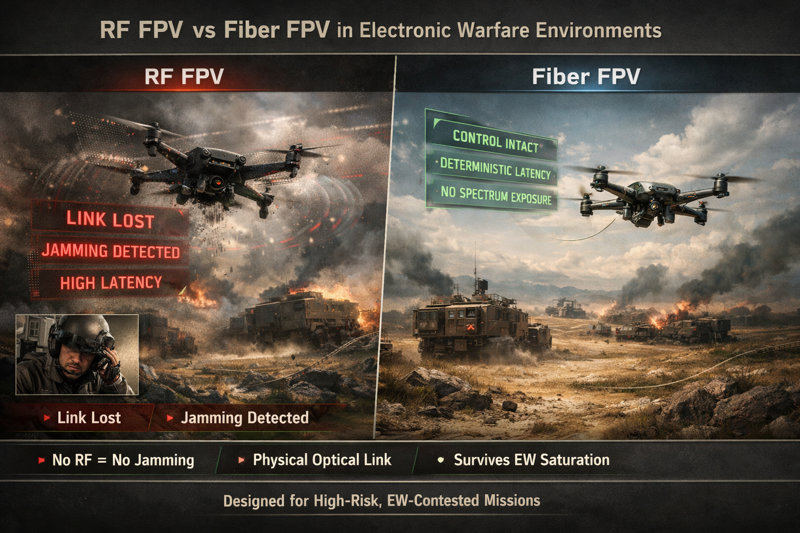
 Why RF FPV Fails in EW-Heavy Environments

Why RF FPV Fails in EW-Heavy Environments

  • Link instability caused by wideband noise, sweeping jammers, or frequency denial.

  • Video freeze & latency spikes that break precision piloting and terminal guidance.

  • Spectrum exposure enables detection, direction-finding, and rapid counteraction.

  • Mission uncertainty: even a robust airframe becomes ineffective when the link collapses.

Bottom line: Control is not an airframe problem—it’s a  communications survivability problem.


 ZION Solution: Optical Control Instead of RF Dependence

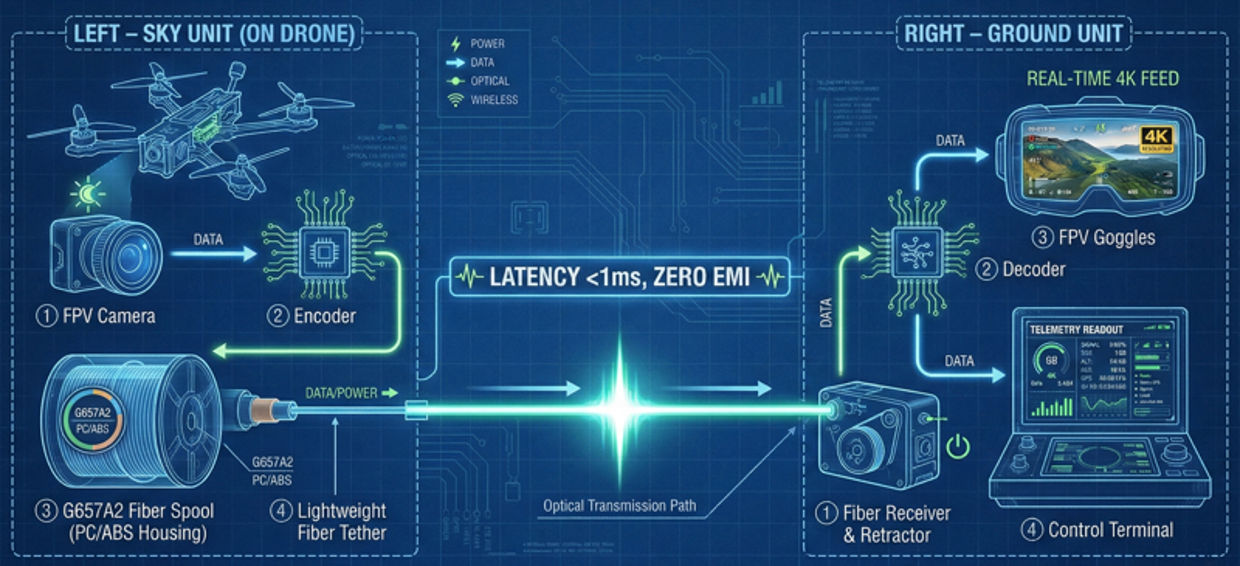
FPV UAV Optical Fiber Transmission

What it is
A drone-to-operator  single-mode optical fiber link providing command/control and real-time video without RF emissions.
Why it works
Electronic warfare attacks the spectrum. Fiber optics bypass the spectrum completely— nothing to jam, spoof, or DF.
What you gain
Deterministic control, stable video, and mission reachability in environments where RF FPV becomes unreliable.


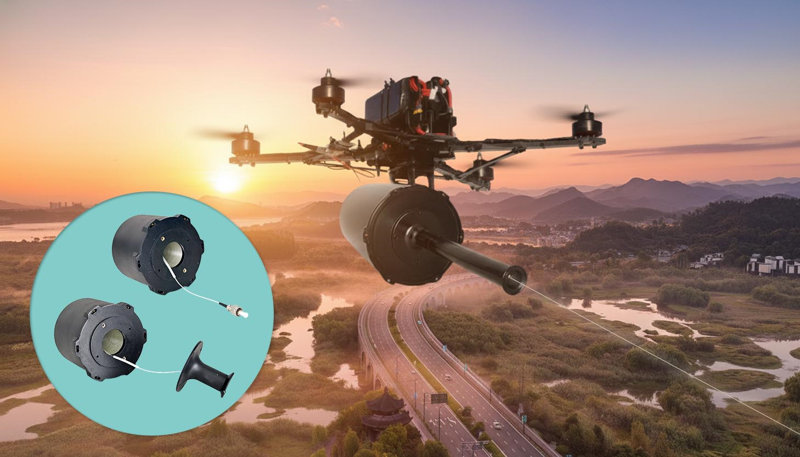
 How It Works: Drone-Mounted Passive Spool Deployment

How It Works-Drone-Mounted Passive Spool Deployment

  1. Spool on the drone: the fiber reel is mounted to the UAV, not deployed from the launch point.

  2. Low-tension payout: fiber releases passively, allowing slack and ground contact.

  3. Terrain-tolerant: avoids dragging kilometers of fiber through grass, rubble, or trenches.

  4. Mass decreases over time: as fiber pays out, the drone gets lighter—improving handling in terminal phase.

Note: “Drag” here means  ground dragging & snag risk, not aerodynamic drag.


 Key Advantages for Contested Operations

Un-jammable
No RF link means no jamming, no spoofing, no spectrum denial failure mode.
Stable Video & Control
Consistent real-time transmission supports precision piloting and terminal corrections.
Low Signature
No emissions for RF interception or direction-finding; reduces discoverability.
Mission Reachability
Maintains link integrity where RF platforms are forced to abort or lose control.


 Typical Operational Range (Mission-Dependent)

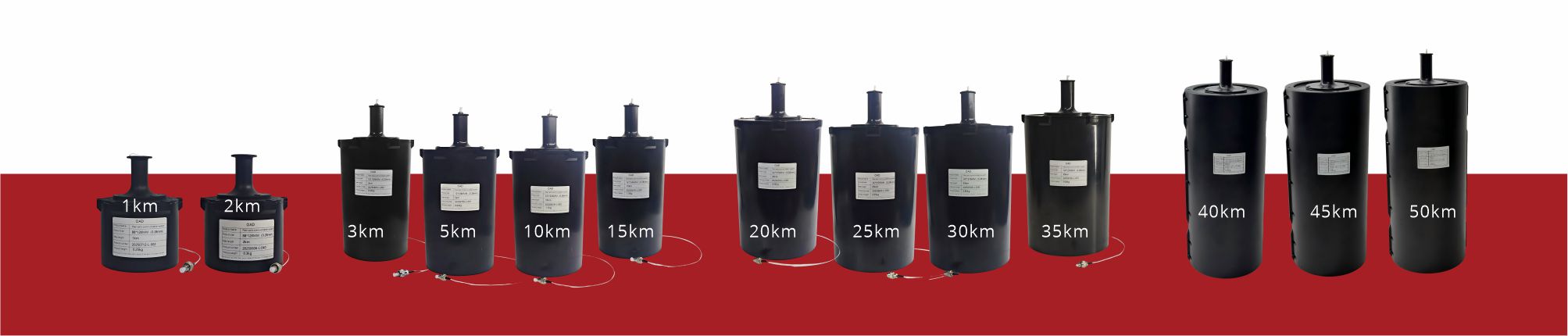
Micro-Line Spool Series FPV Drone Optical Fiber

Mission Profile Typical Range
Tactical strike / EW penetration 10–15 km
Extended reach missions 20–30 km
Long-range attack (validated scenarios) ~40 km (application-dependent)
Engineering note: range is typically limited by  battery, payload, airframe efficiency, and spool reliability— not optical attenuation.


 Integration Options (Customize for Your Platform)

  • Fiber spool formats: multiple reel sizes and winding geometries for smooth payout.

  • Fiber selection: single-mode, bend-tolerant options, mission-length configurations.

  • System pairing: kits designed for rapid field deployment and scalable procurement.

  • Production scalability: stable supply for volume demands and repeatability.


FAQ (Field-Driven Questions)

Why not deploy fiber from the operator?
Ground-deployed fiber must be pulled through terrain, increasing snag and break risk. Drone-mounted payout keeps tension low and supports slack deployment.
Can the link be jammed?
No RF emissions means no spectrum attack surface. The primary vulnerability becomes physical fiber integrity, not electronic interference.
What limits range in real missions?
Endurance, payload mass, propulsion efficiency, and flight profile are typically dominant constraints—not optical loss.
Get the Right Fiber Spool for Your Mission Profile
Share your platform type, target range, payload envelope, and operating environment. ZION can recommend a suitable spool configuration and fiber specification for stable payout and reliable optical control.
*This solution page describes a fiber-optic communication approach for unmanned platforms. Integration details depend on platform design and mission requirements.


Contact us for more information

James Zion


James is a technical manager and associate at Zion Communication. 

Specializes in Optical Fiber communications,  FTTH Solutions, 

Fiber optic cables,  ADSS cable, and ODN networks.

james@zion-communication.com

+86 13777460328


We use cookies to enable all functionalities for the best performance during your visit and to improve our services by giving us some insight into how the website is being used. Continued use of our website without changing your browser settings confirms your acceptance of these cookies. For details, please see our privacy policy.
×