How to Avoid Cable Specification Mismatch in Bulk Orders
Author: Site Editor Publish Time: 16-04-2026 Origin: Site
How to Avoid Cable Specification Mismatch in Bulk Orders
A practical engineering and procurement reference for reducing order ambiguity, preventing production drift, and locking down the exact cable build before mass production starts.
Most bulk-order mismatch problems come from vague specifications, not from obvious wrong-product shipments.
The safest control method is to tie quotation, sample approval, PO, QC, print marking, and shipment release to the same revision-controlled spec.
Conductor material, jacket type, shielding structure, compliance rating, print wording, and packaging length should never be left to supplier interpretation.
■ Why cable specification mismatch happens in bulk orders
Cable specification mismatch in bulk orders usually happens because the commercial description is shorter than the real engineering build standard. A quotation may say “Cat6 outdoor cable” or “LSZH control cable,” but that wording does not fully define conductor material, shielding structure, jacket compound, print marking, compliance level, or packaging rules. In sample quantities, this may only create inconvenience. In large-volume production, it can cause project rejection, return freight, site delays, warranty disputes, and margin loss. The practical fix is to treat the order as a controlled technical package rather than a generic purchase item. That means freezing the exact cable construction, documentation version, and acceptance basis before the factory starts production.
In real projects, mismatch often means the delivered cable is close to the request, but still wrong for the application. Typical examples include CCA instead of solid bare copper, PVC instead of LSZH, indoor-only jackets used in outdoor runs, general “shielded cable” supplied with the wrong shielding design, or OEM print wording that does not match the approved project file.

■ Where bulk orders usually fail
Bulk orders are riskier because more people and more documents are involved. Sales teams, buyers, engineers, production planners, QC inspectors, and logistics staff may all work from different versions of the same order. If the specification is incomplete or scattered across email notes, quotation remarks, and sample comments, interpretation errors become very likely.
| Stage | What goes wrong | Result |
|---|---|---|
| Inquiry | Buyer describes the application, but not the full build standard. | Supplier quotes a technically similar but different cable. |
| Quotation | Key details are hidden in notes instead of shown in the main technical line. | Wrong assumptions carry into PO release. |
| Sample approval | Sample is approved visually, without full datasheet or cross-section confirmation. | Mass production may not match the intended design. |
| PO release | Purchase order uses a short product title only. | Factory builds to internal default version. |
| Production | Material alternatives are used without formal approval. | Delivered cable no longer matches project requirements. |
| QC & shipping | Inspection focuses on dimensions only, while marking, packaging, or compliance details are missed. | Non-compliant cable still reaches the site. |
■ Specification control checklist before production
The easiest way to reduce mismatch is to stop treating cable as a generic commodity. A bulk cable order should be controlled by a specification package that clearly defines all critical materials, performance targets, identification rules, and acceptance requirements.
| Category | What must be confirmed |
|---|---|
| Product identity | Exact cable type, internal model code, revision number, and applicable standard. |
| Conductor | Material, AWG/mm², solid or stranded structure, conductor class, and tolerance. |
| Insulation | Material, nominal thickness, pair or core color code, and diameter range. |
| Shielding | U/UTP, F/UTP, U/FTP, S/FTP, foil type, braid coverage, drain wire, or screen design. |
| Cable structure | Separator, filler, ripcord, armor, strength members, and core arrangement. |
| Jacket | PVC, PE, LSZH, TPU, PUR, UV resistance, oil resistance, temperature range, and outdoor suitability. |
| Performance | Category rating, impedance, attenuation, voltage rating, bend radius, or mechanical thresholds. |
| Compliance | RoHS, REACH, CPR, UL, flame class, halogen requirement, or project-specific certification. |
| Identification | Jacket color, OEM print wording, meter marking, logo format, and repeat interval. |
| Packaging & testing | Reel or drum length, label format, pallet rules, test records, acceptance criteria, and traceability method. |
If any of these items is still vague, the order is not fully controlled. In large cable orders, incomplete control almost always becomes a cost issue later.

■ Engineer’s shortcut: parameters that should never be assumed
The most expensive mismatch cases usually happen when buyers assume a parameter is obvious and suppliers assume it is flexible. That gap is where production drift begins.
| Parameter | Common assumption | Real risk | Control action |
|---|---|---|---|
| Conductor material | “Copper means copper.” | CCA or lower-grade alternatives may be used. | State solid bare copper or exact material requirement in writing. |
| Jacket type | “Black cable is outdoor.” | Black PVC may still be indoor-only and not UV-stable. | Specify PE or exact outdoor-grade jacket and environmental limits. |
| Shielding structure | “Shielded cable is enough.” | Different shielding designs behave differently in EMI-heavy environments. | Call out exact structure such as F/UTP or S/FTP. |
| Fire behavior | “LSZH is enough.” | LSZH is not the same as fire-resistant or CPR-rated cable. | State the exact compliance target, not a general material description. |
| Performance level | “Equivalent Cat6A is acceptable.” | Equivalent wording may hide construction differences or unclear test basis. | Require exact standard and test method. |
| Print marking | “Standard print is okay.” | Wrong OEM wording can block inspection or site acceptance. | Approve print artwork separately before production. |
| Packaging length | “1000 ft is standard.” | Factory reel length or tolerance may differ from site expectations. | Freeze reel, drum, and length tolerance in the order file. |
■ A safer process for bulk cable ordering
Do not start with a short cable name only. Define environment, performance target, compliance level, termination compatibility, and installation method first.
The factory should build to one approved datasheet, drawing, or specification sheet with a clear revision reference.
Commercial wording should match the technical build. Avoid “or equivalent,” “standard quality,” or vague export-packing language.
Sample approval should include datasheet confirmation, cross-section or construction review, print check, and test-basis confirmation.
Jacket print, meter marking, logo spacing, carton label, and shipping mark should be approved as separate release items.
List non-negotiable items clearly. Any material or construction change affecting performance, compliance, or installation should require written re-approval.
For large or customized orders, verify the first production lot for diameter, conductor, shield design, jacket, print, and packaging before full release.
QC, shipment release, and traceability records should all point to the same approved version, not to separate internal assumptions.
Many disputes start because the buyer approved a “sample” while the factory followed an internal model code. If the sample, quotation, and PO are not linked to the same revision-controlled build sheet, the supplier and buyer may both believe they are correct.
■ Procurement view: how mismatch becomes expensive
Specification mismatch is not only a technical issue. It changes the full procurement cost structure by adding rework, delay, freight, re-inspection, and trust loss. A cheaper quotation can become the most expensive option if the order leaves too much room for interpretation.
| Mismatch type | Immediate cost | Secondary cost | Typical business impact |
|---|---|---|---|
| Wrong material | Replacement or scrap | Delay, freight, claim handling | Margin loss |
| Wrong compliance level | Site rejection | Re-inspection and resupply | Reputation damage |
| Wrong print marking | Rework or remarking | Customs or acceptance problems | Delivery delay |
| Wrong reel length | Stock imbalance | Labor inefficiency on site | Installation disruption |
| Wrong application grade | Premature failure risk | Maintenance and warranty cost | Long-term trust loss |
| Wrong shielding or performance | Troubleshooting and downtime | Extra labor and replacement planning | Operational disruption |
■ When to use strict specification control
Not every cable order needs the same level of control. For routine replenishment of a well-defined standard item, a lighter workflow may be enough. But for project-based or customized cable orders, strict specification control is usually the lower-cost option overall.
| Order scenario | Control level | Why it matters |
|---|---|---|
| OEM branding or custom print | High | Print errors can block acceptance, resale, or traceability. |
| Large-volume project order | High | Small spec errors multiply across the full shipment. |
| Regulated building or industrial application | High | Compliance mismatch may cause rejection or safety risk. |
| New supplier onboarding | High | Different factories may interpret the same wording differently. |
| Custom packaging or reel format | Medium to High | Packaging mismatch affects handling, storage, and site workflow. |
| Repeat order of proven standard item | Medium | Still confirm revision, print, and packaging to avoid drift over time. |
■ Practical pre-PO release checklist
Before releasing the purchase order, use a final control list to confirm that the commercial file and technical file point to the same build standard. If several of these items are still open, the order is not ready for production release.
Exact product code confirmed
Datasheet revision approved
Application scope aligned
Conductor material and size confirmed
Shielding structure confirmed
Jacket type and environment rating confirmed
Fire or compliance standard confirmed
Performance basis defined
Acceptance criteria agreed
Color and print approved
Packaging length and reel type approved
Label and shipping mark approved
Sample approval linked to the same revision
No substitution without written approval
PO wording matches the approved spec

■ FAQ
Usually, the order is released with incomplete technical control. The quote, sample approval, PO, and factory build standard do not fully match.
No. A sample helps only when it is linked to an approved datasheet, construction details, print file, and revision-controlled production record.
Conductor material, jacket compound, shielding structure, fire or compliance rating, print wording, and packaging length are among the most common failure points.
Use one approved technical file, require the quotation and PO to match it, and apply a short pre-PO checklist before production release.
Yes. Incorrect print can cause inspection failure, customs issues, branding problems, and loss of traceability at the project site.
Allow no substitution unless the change is reviewed and approved in writing before production. This is especially important for materials, shielding, jacket compounds, compliance claims, and print marking.
■ Conclusion
Cable specification mismatch in bulk orders is rarely a random mistake. It usually comes from vague requirements, disconnected documents, and uncontrolled assumptions. The most reliable fix is to convert every order into a controlled engineering package: exact cable build, exact material set, exact compliance target, exact print, exact packaging, and exact approval path. When these details are frozen before production starts, buyers reduce not only technical risk, but also site delay, freight loss, warranty exposure, and supplier disputes.
For procurement teams, the practical question is not simply whether a lower unit price exists. The better question is whether the quote controls enough variables to protect the final project outcome. In most real installations, clarity before production is far cheaper than correction after delivery.
ZION can support project teams with datasheets, sample confirmation, print marking review, and technical selection for custom or standard cable builds.



 Fiber Optic Tools
Products 6 families
Solutions 6 markets
Resources Tools & docs
Certificate
Certification and compliance references for project review, qualification and purchasing documentation.
 Fiber Optic CableAccess and backbone
 Ethernet CableCat5e to Cat8
 Coaxial CableRF and video signal
 Fire, Security & AlarmSafety systems
 Voice, Audio & VideoSignal cabling
 Power & Control CableEnergy and control
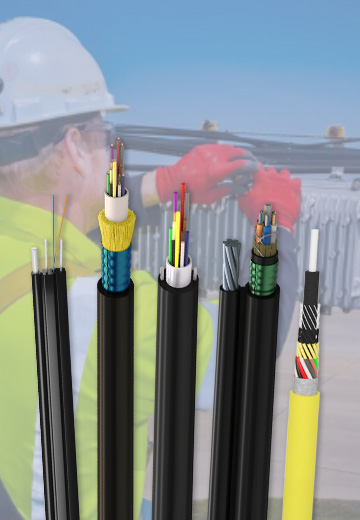
Fiber optic cable systems
Outdoor, indoor, FTTH and distribution cable lines for access networks, backbone routes and campus deployments.
 Telecom & ISP NetworksFTTH, PON, ODN
  Data Center InfrastructureServer room cabling
  Building Low-Voltage SystemsBMS, AV, weak current
  Security & Fire ProtectionAlarm, CCTV, access
  Industrial Automation CablePLC, RS485, fieldbus
  Energy & Power InfrastructureSolar, battery, power
 Telecom & ISP Networks
For FTTH / PON access, outdoor fiber deployment, aerial routes, duct routes, direct burial routes, rural broadband and ODN planning.
Tools
Use calculators and planning tools for conduit capacity, PoE voltage drop and fiber optic link loss budget work.