PE Jacket Cable for Outdoor Use: Key Things to Check Before You Buy
Author: Site Editor Publish Time: 16-04-2026 Origin: Site
PE Jacket Cable for Outdoor Use: Key Things to Check
A PE jacket is often a strong choice for outdoor cable, but the safe engineering decision depends on more than the jacket name alone. Buyers should verify UV resistance, water protection, installation suitability, temperature range, mechanical durability, and indoor transition requirements before approving a cable for field use.
Do not approve a cable for outdoor use based on “PE jacket” alone.
Check UV resistance, moisture control, temperature limits, and route suitability.
Confirm whether the project also needs direct burial, armor, or indoor fire-performance compliance.
■ Overview
For outdoor cable projects, PE jacket material is usually a positive signal, but it is not a complete selection answer. Outdoor performance depends on the full cable construction, the expected environment, and the installation method. A cable routed across rooftops, pulled through ducts, or buried in soil may all use PE, yet each application can require different levels of UV stability, water blocking, crush resistance, and code compliance.
This means buyers and engineers should treat PE jacket as one checkpoint inside a broader approval process. The practical goal is not to ask, “Is it PE?” but rather, “Is this full cable design suitable for my actual outdoor route, risk level, and maintenance plan?”

■ Why PE Jackets Are Used Outdoors
PE jackets are widely used in outdoor cable designs because they typically offer strong resistance to weathering, moisture exposure, and abrasion. In many real-world installations, PE also supports good mechanical robustness for pulling, handling, and long-term external exposure. That is why outdoor telecom, data, and utility cable constructions often rely on PE-based sheath systems.
However, PE is still a broad material label. Different formulations, added stabilizers, jacket thicknesses, and overall cable constructions can produce very different field outcomes. In procurement terms, PE can be a good starting point, but it is not a substitute for checking the actual datasheet line by line.
■ Key Things to Check Before You Approve an Outdoor PE Jacket Cable

■ Engineering Check Table for Outdoor PE Jacket Cables
| Checkpoint | What to Confirm | Why It Matters | Typical Risk if Missed |
|---|---|---|---|
| UV resistance | Sunlight resistant, UV-stabilized, outdoor-rated wording | Long-term sheath durability under external exposure | Premature aging, cracking, color fade, shorter service life |
| Moisture control | Water-blocked, gel-filled, flooded, water penetration performance | Reduces water migration in wet environments | Signal loss, corrosion, long-term reliability issues |
| Route suitability | Aerial, duct, burial, exposed tray, rooftop suitability | Ensures cable structure matches field stress and handling | Installation failure, damage, warranty disputes |
| Temperature range | Installation, storage, and operating temperatures | Avoids handling and long-term service issues | Jacket stiffness, micro-damage, difficult pulling |
| Mechanical performance | Abrasion, crush, impact, tensile limits, bend radius | Protects the cable during installation and service life | Jacket wear, structural failure, maintenance cost increase |
| Indoor transition | Flame-performance or indoor/outdoor compliance | Keeps the installation aligned with building code expectations | Rework, compliance risk, delayed inspection approval |
■ Installation Method Decision Guide
Outdoor cable should be matched to the actual installation route, not to a generic “outdoor” label. A PE jacket cable that performs well in one environment may still be the wrong construction for another. The table below gives a practical route-based decision reference.
| Installation Method | What to Prioritize | What PE Alone Cannot Guarantee | Engineering Note |
|---|---|---|---|
| Exposed outdoor routing | UV resistance, weathering, abrasion resistance | Whether the cable is optimized for wet, buried, or armored use | Best for visible external runs when sunlight exposure is continuous |
| Duct installation | Pulling performance, water blocking, abrasion during installation | Direct burial resistance or armor level | Look closely at tensile and bend-radius limits during pulling |
| Direct burial | Moisture protection, crush resistance, impact resistance, burial rating | Protection against soil pressure, rocks, or long-term external stress | Do not assume every outdoor PE cable is suitable for direct burial |
| Aerial installation | Tensile performance, UV resistance, wind and movement tolerance | Messenger support or self-supporting capability | Mechanical design matters as much as jacket material |
| Indoor-outdoor transition | Flame rating, code acceptance, pathway rules | Automatic indoor approval just because the jacket is PE | Check whether an indoor/outdoor design is required to simplify installation |

■ Common Risks and Mistakes
The most common mistake is to equate “PE jacket” with “fully outdoor-approved for any route.” In real projects, this shortcut can lead to wrong selections for buried runs, indoor transitions, or severe wet environments. Another mistake is ignoring installation temperature and only checking operating temperature, which can create pulling difficulty, jacket damage, or hidden performance problems during deployment.
Procurement teams also sometimes compare only price and jacket material while overlooking water-blocking design, mechanical protection, or maintenance implications. That may reduce initial cost on paper, but it often increases replacement risk, downtime, or labor cost after installation.
| Decision Point | Choose This Type of PE Jacket Cable When... | Do Not Choose It When... | Alternative to Review | Cost / Risk / Maintenance Impact |
|---|---|---|---|---|
| Standard outdoor PE cable | The route is exposed outdoors and the datasheet confirms UV and weather resistance | The site also needs burial protection, armor, or indoor flame compliance | Direct burial or indoor/outdoor rated construction | Lower upfront cost, but wrong selection can trigger rework |
| Water-blocked PE cable | The route includes wet ducts, outdoor handholes, or high humidity exposure | Water ingress risk is low and route protection is already strong | Standard outdoor cable if risk is minimal | Slightly higher cost, but usually lower long-term failure risk |
| Direct burial PE cable | The route is underground or exposed to soil pressure and impact | The route is only aerial or internal to protected duct systems | Duct-rated cable or aerial design | Higher material cost, but avoids expensive underground repair |
| Indoor/outdoor compatible cable | The route crosses both external and internal building sections | The project is fully external and indoor code issues do not apply | Separate indoor and outdoor cable transitions | Higher unit price can be offset by simpler compliance and installation planning |
■ Decision Rules / Engineer’s Shortcut
Use a PE jacket cable for outdoor projects when the datasheet clearly supports the actual route conditions: UV exposure, moisture level, temperature range, and mechanical handling. Do not use it just because the catalog says “PE.”
Choose it when the project needs outdoor weathering resistance and the full cable construction matches the route.
Pause the decision when the installation includes direct burial, harsh mechanical exposure, or indoor code transitions.
Upgrade the selection when moisture blocking, armor, or indoor/outdoor compliance improves lifecycle reliability.
For procurement, the lowest-risk buying rule is to approve by verified rating set, not by polymer name.
■ FAQ
Is a PE jacket always suitable for outdoor cable?
Not automatically. PE is commonly used outdoors, but the cable still needs verified UV resistance, moisture control, temperature suitability, and the right construction for the installation route.
Can a standard outdoor PE cable be used for direct burial?
Not in every case. Some outdoor cables are intended for exposed or duct use only. Direct burial projects usually require stronger mechanical and moisture-related protection, so the datasheet should state burial suitability clearly.
Why is installation temperature important if the cable is already outdoor-rated?
Because service temperature and installation temperature are not the same thing. A cable can perform well after installation but still be difficult to handle safely in low-temperature conditions.
Can PE jacket cable be routed indoors?
That depends on the cable’s compliance profile and the project requirements. Outdoor weathering performance does not automatically mean the cable is acceptable for indoor flame-related code expectations.
What is the fastest way to evaluate an outdoor PE jacket cable?
Check five items in order: UV resistance, water protection, installation method suitability, temperature limits, and mechanical durability. Then confirm whether the route includes indoor transition or special environmental risks.
■ Conclusion
A PE jacket is often the right starting point for outdoor cable selection, but it is not the whole decision. Engineers and procurement teams should verify whether the full cable design matches the actual route, exposure level, and compliance boundary of the project.
The safest purchasing approach is simple: approve outdoor cable by confirmed performance requirements, not by jacket terminology alone. That reduces rework risk, improves field reliability, and helps the project team choose a cable that is easier to install and maintain over time.



 Fiber Optic Tools
Products 6 families
Solutions 6 markets
Resources Tools & docs
Certificate
Certification and compliance references for project review, qualification and purchasing documentation.

 Fiber Optic CableAccess and backbone
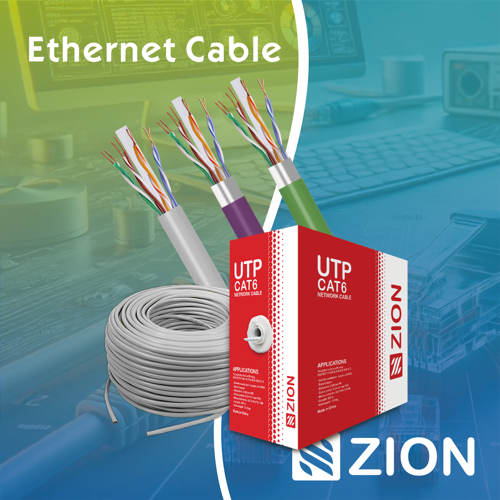 Ethernet CableCat5e to Cat8
 Coaxial CableRF and video signal
 Fire, Security & AlarmSafety systems
 Voice, Audio & VideoSignal cabling
 Power & Control CableEnergy and control
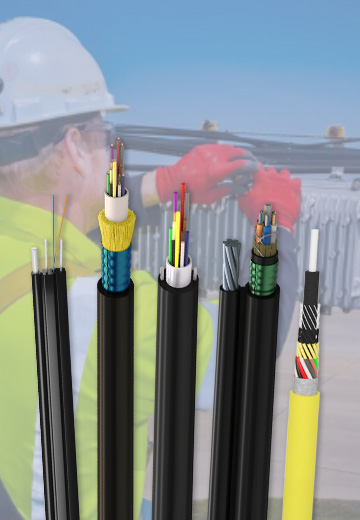
Fiber optic cable systems
Outdoor, indoor, FTTH and distribution cable lines for access networks, backbone routes and campus deployments.
 Telecom & ISP NetworksFTTH, PON, ODN
  Data Center InfrastructureServer room cabling
  Building Low-Voltage SystemsBMS, AV, weak current
  Security & Fire ProtectionAlarm, CCTV, access
  Industrial Automation CablePLC, RS485, fieldbus
  Energy & Power InfrastructureSolar, battery, power
 Telecom & ISP Networks
For FTTH / PON access, outdoor fiber deployment, aerial routes, duct routes, direct burial routes, rural broadband and ODN planning.
Tools
Use calculators and planning tools for conduit capacity, PoE voltage drop and fiber optic link loss budget work.