What Certificates Should You Ask for When Buying Cable?
Author: Site Editor Publish Time: 17-04-2026 Origin: Site
What Certificates Should You Ask for When Buying Cable?
For cable buyers, the key is not collecting the biggest certificate pack. It is requesting the exact compliance, certification, and test documents that match the exact part number, destination market, and installation environment. This guide helps engineers, procurement teams, and project managers understand which documents actually reduce approval risk, which ones are only supporting evidence, and how ZION’s available certificate resources fit into real project decision-making.
Ask for the exact document set for the exact cable model, market, and installation scenario.
Do not treat ISO 9001, a logo image, or a generic “CE certificate” as full proof of product compliance.
Use ZION’s certificate resources as a project-matching tool: certification availability depends on product type and market requirement.
■ Why Certificates Matter in Real Cable Procurement
In cable purchasing, certificates are not just administrative attachments. They affect bid approval, customs clearance, consultant review, site inspection, insurance acceptance, and future replacement responsibility. Many supply issues happen not because no documents were provided, but because the documents did not match the exact cable construction, fire class, market-access route, or claimed transmission performance.
That is why serious buyers do not ask vague questions such as “Can you send your certificates?” They ask a much more useful question: “Please send the exact compliance, certification, and test documents for this exact part number, destination market, and installation environment.”
A clean-looking certificate file does not automatically mean the ordered cable is compliant for the intended project. Scope matching is what matters.
Always match the document to four things: part number, product family, market, and application.

■ Core Document Pack Buyers Should Request First
Before checking logos or marketing claims, buyers should ask for a core document set that covers product identity, legal declaration, third-party certification, material compliance, and traceable test evidence.
| Document | What It Helps Prove | What It Does Not Prove by Itself |
|---|---|---|
| Exact datasheet + part number | Product identity, construction, conductor, jacket, and claimed specs | Legal market access or third-party listing |
| DoP / DoC / market declaration | Applicable legal declaration for the target market | Full proof of all performance claims |
| UL / ETL / other third-party certification | Independent safety certification within the covered scope | Chemical compliance or all regional approvals |
| RoHS / REACH | Material and substance compliance support | Fire performance or Cat transmission compliance |
| ISO 9001 | Factory quality-management control | Product-specific code compliance |
| Product-specific test reports | Evidence for fire, smoke, environmental, or performance claims | Broad approval across unrelated models |
■ How Requirements Change by Market
The most common buying mistake is applying one market’s document logic to another. EU building products, Great Britain construction routes, and North American code-driven projects should not be reviewed with the same checklist.
| Market / Scenario | What Buyers Should Ask For | Main Reason |
|---|---|---|
| EU building cable | DoP and related CPR documentation where applicable | Building-product fire performance and declared classification matter |
| Great Britain construction projects | Relevant CE / UK route documents depending on project requirement | Route selection and approval basis must be clear |
| U.S. / Canada code-driven projects | UL Listed or ETL Listed evidence that matches the ordered model | Listing carries more practical value than a supplier-made PDF |
| Structured cabling performance claims | Third-party performance verification or supporting performance reports | Safety certification alone does not prove Cat performance |
| OEM / export / environmental review | RoHS, REACH, MSDS, and related material documents | Material declarations are often part of approval and documentation packages |
A certificate can be valid in one market and irrelevant in another. Always review certificates in the context of destination country, installation code, and approval authority.
■ What Each Document Proves — and Does Not Prove
One of the biggest procurement risks is treating all certificates as interchangeable. In practice, they serve different purposes: some prove factory-system control, some support legal declaration, some support market access, and some show tested product performance.
| Document Type | What It Normally Proves | Risk If Misunderstood |
|---|---|---|
| ISO 9001 | The supplier operates a quality-management system | Buyers assume it proves cable fire, electrical, or data performance |
| UL / ETL certification | Independent safety certification within a defined scope | Buyers assume every similar cable model is automatically covered |
| CPR / DoP | Declared performance for covered building-product applications | Buyers use it outside the intended market or product family |
| RoHS / REACH / MSDS | Material or substance-related compliance support | Buyers mistake it for code compliance or fire approval |
| Product test report | Evidence for one tested construction or performance scope | Buyers forget to check whether the tested sample matches the ordered cable |
■ How ZION’s Available Certificates Fit into Buyer Decisions
ZION’s certificate page is most useful when treated as a structured compliance resource rather than a generic proof page. It shows that ZION has multiple certification and compliance pathways available for different products and markets, and it also makes clear that documentation availability depends on the product type and market requirement.
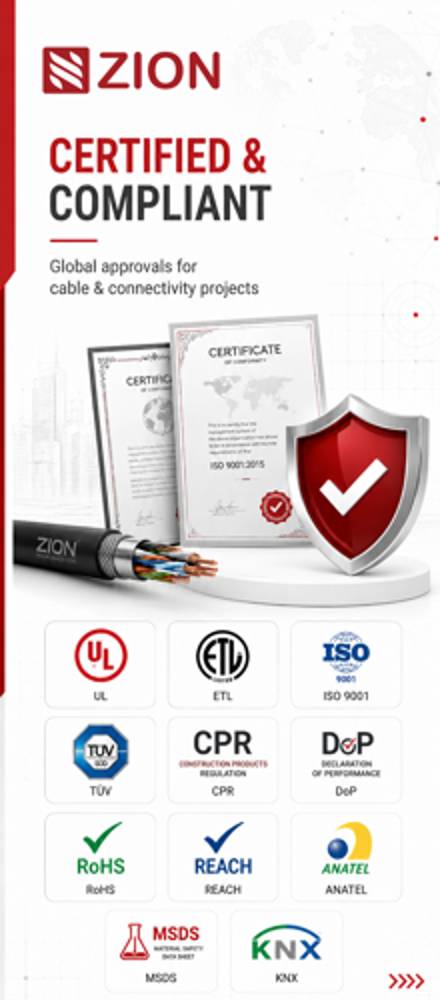
Based on the current public certificate page, ZION lists certification and compliance resources including ISO 9001, UL, ETL, CPR / DoP, TUV, ANATEL, MSDS, KNX, and RoHS & REACH. That does not mean every certificate applies to every cable family. It means buyers should request the exact document set that matches the exact project requirement.

| ZION Certificate Category Shown Publicly | Typical Buyer Use | Practical Note |
|---|---|---|
| ISO 9001 | Supplier prequalification and quality-system confidence | Useful supporting document, but not enough by itself |
| UL | North American or code-driven cable selection | Confirm the exact scope and model applicability |
| ETL | Alternative North American compliance pathway | Match the listing type to the ordered cable family |
| CPR / DoP | EU building and infrastructure approval workflows | Important for covered building cable scenarios |
| RoHS & REACH / MSDS | Material-compliance and documentation support | Request the current declaration for the exact product family |
| TUV / ANATEL / KNX | Special project, regional, or application-specific support | Confirm whether the requirement is relevant to your project scope |
The strongest procurement message is not “ZION has every certificate.” It is “ZION can provide different certification and compliance documents depending on the product family, target market, and project requirement.” That is a more accurate and more professional way to support engineering review.

■ Decision Rules / Engineer’s Shortcut
Use the table below as a quick selection tool when reviewing cable documentation during quotation, technical approval, or pre-shipment confirmation.
| Situation | What to Ask For | When It Is Not Enough | Better Buyer Action |
|---|---|---|---|
| You only received ISO 9001 | Ask for product-specific compliance and test documents | When the project requires fire class, listing, or Cat performance | Request model-matched approval evidence |
| Project is for the U.S. or Canada | Ask for UL or ETL evidence for the exact cable type | When only a logo image or generic PDF is provided | Verify listing scope before order release |
| Project is an EU building installation | Ask for CPR / DoP and product-matched performance files | When the supplier only sends a vague “CE certificate” | Match the declaration to the exact cable family |
| You need RoHS / REACH for OEM or export | Ask for current declarations for the ordered product family | When the document is a broad company statement only | Ask for scope confirmation tied to the quoted model |
| You are unsure which document actually matters | Ask ZION to map the required documents by product, market, and application | When the request is still phrased as “send all certificates” | Use a project-specific document request list |
Please send the exact compliance, certification, and test documents for this part number, destination market, and installation environment, and confirm whether each file is product-specific, market-specific, or factory-system-level.
■ Common Red Flags Buyers Should Not Accept
A file labeled “CE Certificate” with no clear scope, part number, or product-family reference.
ISO 9001 presented as proof that a cable meets fire, electrical, or Cat transmission requirements.
Copied UL or ETL logos with no model-specific explanation or scope confirmation.
CPR or DoP paperwork that does not match the actual cable family being quoted.
RoHS or REACH files that are broad company statements but not clearly tied to the ordered product family.
Test reports that do not match the conductor size, jacket material, fire rating, or structure of the cable you are actually buying.
■ FAQ
No. ISO 9001 supports confidence in factory quality-management processes, but it does not by itself prove that one specific cable model meets a fire standard, a North American listing requirement, or a transmission-performance claim.
In many projects, that is not the most useful question. Buyers should ask for the exact legal declaration or applicable market document for the cable type and destination market, especially for building-product cases.
ZION’s certificate page currently shows CPR-related and DoP-related resources. Buyers should still request the exact documents that match the ordered cable family and project requirement.
Yes. ZION’s current certificate page includes RoHS & REACH as part of its compliance resource set. As with all compliance files, buyers should request the exact declaration for the exact product family.
No. Certification availability depends on product type and market requirement. That is why product-specific document matching remains essential during quotation and approval.
Provide the exact part number, destination market, installation environment, and any project approval requirements, then ask ZION to confirm which files are product-specific, market-specific, and quality-system-level.
■ Conclusion
The best certificate strategy in cable procurement is not collecting the largest number of files. It is collecting the right proof for the right cable, right market, and right project. For that reason, buyers should separate factory-system certificates, market declarations, third-party safety listings, and material-compliance statements instead of treating them as interchangeable.
ZION’s current certificate page is useful because it presents multiple compliance pathways — including ISO 9001, UL, ETL, CPR / DoP, TUV, ANATEL, KNX, MSDS, and RoHS & REACH — while making clear that documentation availability depends on product type and market requirement. That is the correct engineering and procurement approach: match the model, match the market, match the approval route, and verify the scope before purchase.



 Fiber Optic Tools
Products 6 families
Solutions 6 markets
Resources Tools & docs
Certificate
Certification and compliance references for project review, qualification and purchasing documentation.
 Fiber Optic CableAccess and backbone
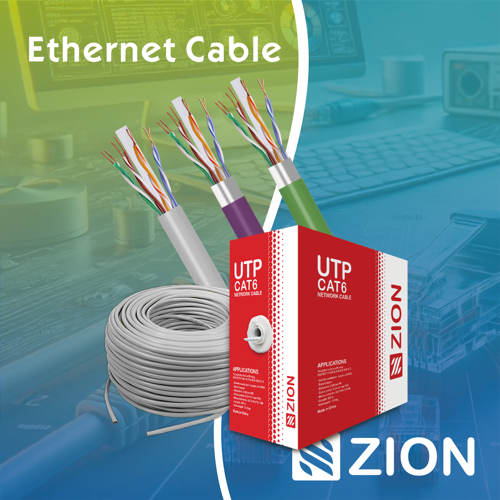 Ethernet CableCat5e to Cat8
 Coaxial CableRF and video signal
 Fire, Security & AlarmSafety systems
 Voice, Audio & VideoSignal cabling
 Power & Control CableEnergy and control
Fiber optic cable systems
Outdoor, indoor, FTTH and distribution cable lines for access networks, backbone routes and campus deployments.
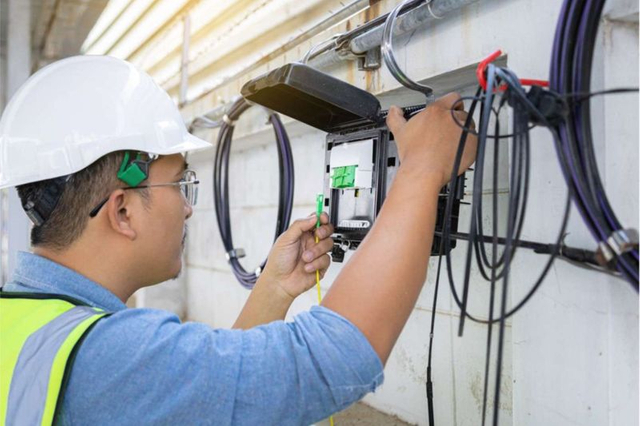 Telecom & ISP NetworksFTTH, PON, ODN
  Data Center InfrastructureServer room cabling
  Building Low-Voltage SystemsBMS, AV, weak current
  Security & Fire ProtectionAlarm, CCTV, access
  Industrial Automation CablePLC, RS485, fieldbus
 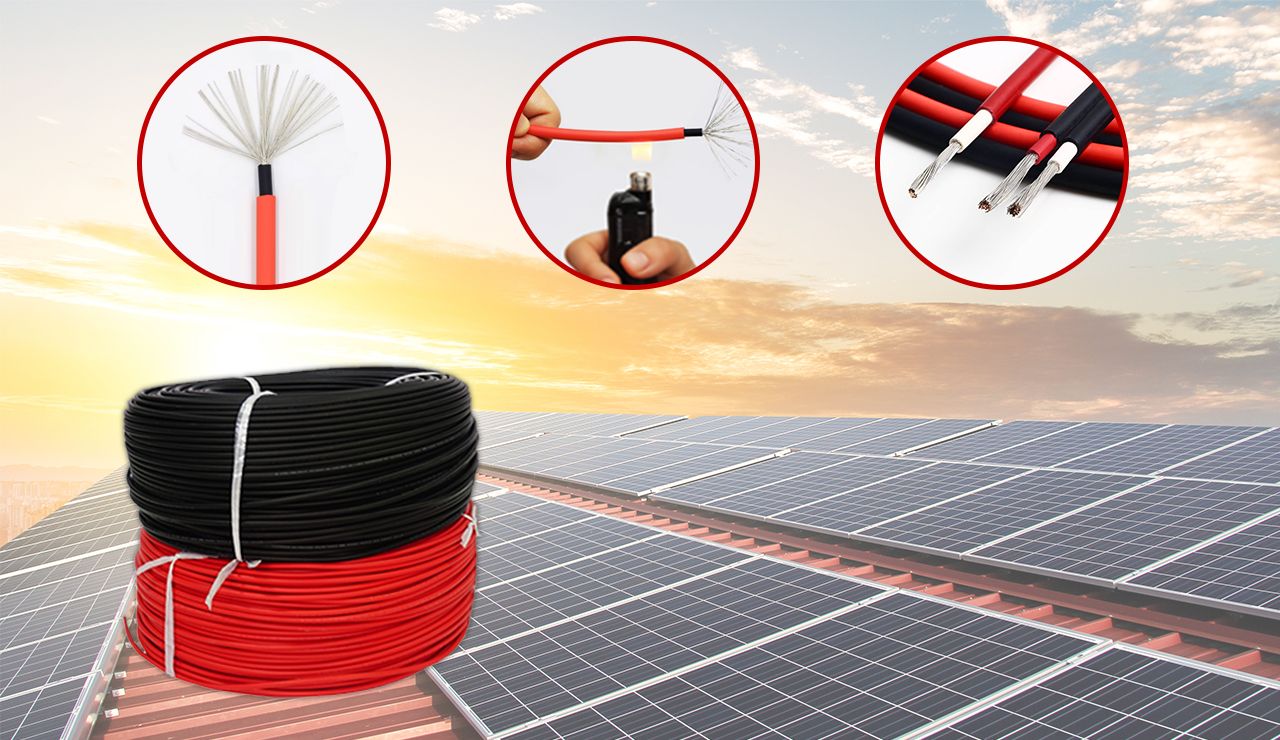 Energy & Power InfrastructureSolar, battery, power
 Telecom & ISP Networks
For FTTH / PON access, outdoor fiber deployment, aerial routes, duct routes, direct burial routes, rural broadband and ODN planning.
Tools
Use calculators and planning tools for conduit capacity, PoE voltage drop and fiber optic link loss budget work.