Signal Cable Selection Guide
What Is Foil Screen Cable and When Should You Choose It?
Foil screen cable is usually the right choice when you need better EMI protection than unshielded cable, but do not need the heavier structure, larger diameter, or higher cost of a full braided shield design. For engineers, buyers, and system integrators, the real decision is not whether a cable is simply “shielded,” but whether the shielding structure matches the electrical noise level, routing method, grounding quality, and mechanical demands of the project.
EngineersProcurement TeamsProject ManagersSystem IntegratorsControl & Communication Cabling
Choose foil screen cable for fixed signal, control, instrumentation, and communication circuits in moderate EMI environments.
Do not treat foil, braid, and foil + braid shielding as interchangeable; they solve different electrical and mechanical risks.
If the installation involves repeated flexing, severe industrial noise, or rough handling, upgrading to braided or combined shielding is often the safer engineering choice.
■ What Is Foil Screen Cable?
A foil screen cable is a cable that uses a thin metallic foil layer as its shielding structure around one or more conductors, twisted pairs, or signal groups. The screen is commonly made from aluminum/polyester foil and is often combined with a drain wire to simplify grounding and termination during installation.
Its job is to reduce electromagnetic interference and protect signal quality in applications where external noise can cause communication errors, unstable readings, false triggering, or degraded control performance. In practical B2B projects, foil screen cable is widely used for control, instrumentation, RS-485 / RS-232 communication, building management systems, security circuits, and equipment interconnection.
The key engineering value is not simply that the cable is shielded. The value is that foil shielding often delivers a practical balance of high coverage, compact size, manageable cost, and good suitability for fixed signal installations.
■ How Does Foil Screening Work?
The foil layer acts as a conductive barrier around the signal core. When electromagnetic noise is present near the cable, the screen helps intercept and redirect interference instead of allowing it to couple directly into the conductors. In the opposite direction, it also reduces signal emission from the cable to nearby circuits.
A typical foil screen construction may include conductors, insulation, twisted pair grouping, foil shield, drain wire, and an outer sheath. This means the screen is only one part of the cable’s overall anti-interference performance. Pair structure, grounding method, routing, connector quality, and separation from power circuits still matter.
| Layer | Function |
|---|
| Conductor | Carries signal, data, or control current |
| Insulation | Separates conductors electrically |
| Twisted pair or grouped cores | Improves balance and reduces noise pickup |
| Foil screen | Provides shielding coverage against EMI |
| Drain wire | Supports grounding and practical termination |
| Outer sheath | Provides mechanical and environmental protection |
Key takeaway
A foil screen can improve EMI control, but it cannot compensate for poor grounding, bad routing, or careless termination. Shielding performance is always a system-level result.
■ Foil Screen Cable vs Unshielded Cable
Unshielded cable can work well in quiet environments, short runs, or non-critical circuits. But once cables are routed near motors, drives, relays, transformers, switchgear, or dense control panels, the risk of interference increases. For many signal and communication circuits, foil screen cable provides a better balance between performance and cost.
| Item | Foil Screen Cable | Unshielded Cable |
|---|
| EMI resistance | Better | Limited |
| Signal stability | Higher in noisy environments | More vulnerable to interference |
| Risk of false signals / communication errors | Lower | Higher |
| Cable diameter | Slightly larger | Smaller |
| Initial cost | Moderate | Lower |
| Recommended for control/data circuits | Yes | Only in cleaner environments |
Field reality
The extra cost of shielding is often small compared with the cost of commissioning delays, retesting, nuisance faults, or site troubleshooting caused by signal instability.
■ Foil Screen vs Braided Shield: What Is the Real Difference?
Foil screen and braided shield are both used to reduce interference, but they are not interchangeable. Foil shielding usually provides very high coverage and is well suited to fixed signal installations. Braided shielding is generally better for repeated flexing, stronger mechanical durability, and tougher grounding continuity in harsh environments.
| Item | Foil Screen | Braided Shield | Foil + Braid |
|---|
| Shield coverage | Very high | Moderate to high | Highest overall |
| Flexibility under repeated movement | Lower | Better | Better than foil-only |
| Diameter / weight | Compact | Heavier | Largest |
| Mechanical durability | Moderate | Better | Best |
| Termination simplicity | Often easier with drain wire | More labor-intensive | More complex |
| Cost | Moderate | Higher | Highest |
| Best use case | Fixed signal and control installation | Dynamic or mechanically tougher environments | High EMI + high reliability projects |
Engineer’s shortcut
Choose foil screen cable when the installation is fixed and the goal is practical EMI control for signal circuits. Choose braided or combined shielding when movement, vibration, mechanical stress, or heavy industrial noise becomes a dominant risk.
■ When Should You Choose Foil Screen Cable?
Foil screen cable is usually the right choice when several practical conditions apply at the same time. The cable carries sensitive or low-level signals, the installation is mainly fixed, the EMI environment is meaningful but not extreme, and the project needs shielding without excessive size or cost growth.
It is especially suitable for control systems, instrumentation loops, serial communication, building automation, security systems, and equipment wiring where signal integrity matters more than repeated mechanical flexing. It is also a strong fit when tray fill, panel space, and routing convenience need to stay under control.
| Project Condition | Choose Foil Screen Cable? | Why |
|---|
| Fixed control wiring in cabinets or buildings | Yes | Good balance of shielding, size, and cost |
| Instrumentation and communication circuits | Yes | Helps protect low-level signal integrity |
| Moderate EMI with disciplined grounding | Yes | Typically sufficient and cost-effective |
| Compact routing and panel density concerns | Yes | Foil designs are usually slimmer than heavier shield options |
| Continuous movement or drag-chain use | No | Foil-only structure is not ideal for repeated flexing |
| Severe industrial EMI near drives or motors | Maybe | Consider braided or foil + braid shielding |
| Very low-noise, budget-only installation | Maybe not necessary | Unshielded cable may be enough |
■ When Should You Not Choose It?
Foil screen cable is not a universal answer. It becomes a weaker choice when mechanical demands start to dominate the application. Continuous flexing, repeated bending, torsion, strong vibration, severe industrial EMI, or rough handling can push the project beyond what a foil-only shield should carry long term.
It is also a risky choice when shield grounding and termination practice cannot be controlled consistently. A shielded cable without disciplined grounding may fail to deliver the expected benefit and can create troubleshooting complexity later.
Practical rule
If the project faces strong electrical noise and strong mechanical stress at the same time, foil-only shielding is often the wrong middle ground. That is where braid or foil + braid usually becomes the more reliable specification.
■ Typical Applications of Foil Screen Cable
For a supplier like ZION COMMUNICATION, foil screen cable fits a wide range of practical project categories where stable signal transmission matters and cable movement is limited.
Industrial control
Used in PLC systems, relay logic, instrumentation interfaces, and general automation circuits where noise can affect control stability.
Building management systems
Suitable for BMS, fire alarm signaling, access control, and monitoring networks that depend on reliable low-voltage communication.
Communication circuits
Common in RS-485, RS-232, and other serial data links where shielding helps reduce transmission instability.
Equipment interconnection
A practical option for cabinet-to-cabinet or equipment-to-panel wiring when EMI protection matters but routing space is limited.
■ What Should Buyers and Engineers Check Before Ordering?
Many cable selection failures happen because the decision is made from the label “screened cable” rather than from the real operating conditions. A better procurement process compares electrical risk, mechanical demands, routing constraints, grounding quality, and long-term maintenance impact.
| Selection Factor | What to Evaluate |
|---|
| Signal type | Control, data, instrumentation, audio, or communication |
| EMI severity | Moderate noise or heavy industrial interference |
| Installation style | Fixed routing or repeated movement |
| Shield type | Foil only, braid only, or foil + braid |
| Grounding method | Drain wire, termination hardware, and bonding plan |
| Environment | Temperature, oil, UV, moisture, flame, and chemical exposure |
| Mechanical needs | Bend radius, vibration, abrasion, and flex life |
| Cost target | Compare initial price against maintenance and failure cost |
■ Common Mistakes in Foil Screen Cable Selection
Treating all shielded cables as equal
Foil, braid, and combined shields behave differently. Selecting by name alone can lead to under-protection or unnecessary cost.
Ignoring grounding practice
A shielded cable without disciplined grounding and termination is only a partial solution and may underperform in the field.
Using foil-only cable for dynamic movement
Foil screen cable is mainly a static-installation solution, not the default choice for continuous flexing applications.
Looking only at EMI
Temperature, oil, UV, flame rating, moisture, and mechanical durability may be just as important as shielding performance.
■ FAQ
Is foil screen cable the same as shielded cable?
Foil screen cable is one type of shielded cable. The broader shielded cable category also includes braided shield, spiral shield, and foil + braid designs.
Is foil screen better than braided shield?
Not in every application. Foil screen is often better for fixed signal installations where compact size and high coverage matter. Braided shield is usually better for repeated movement and tougher mechanical conditions.
Can foil screen cable be used in industrial environments?
Yes, especially for control, instrumentation, and communication circuits. But if EMI is severe or the cable faces physical stress, a stronger shield structure may be the safer option.
Does foil screen cable need grounding?
Yes. Proper grounding and termination are essential if the shield is expected to work effectively in real installations.
Is foil screen cable suitable for moving equipment?
Usually not as a first-choice design for continuous movement. In dynamic applications, braided or specially designed flexible shielded cables are generally better.
■ Conclusion
Foil screen cable is a practical engineering choice when you need shielding for control, data, instrumentation, or communication circuits, but do not need the heavier structure of a braided shield. It is especially well suited to fixed installations with moderate EMI exposure, controlled grounding practice, and routing conditions where compact size still matters.
The best time to choose foil screen cable is when the project needs a clear improvement over unshielded cable while still maintaining reasonable cost, manageable size, and straightforward installation. The wrong time to choose it is when the application involves continuous flexing, severe industrial noise, or strong mechanical abuse. For engineers, buyers, and system integrators, the right shield type is the one that matches the real electrical and mechanical risk profile of the installation.
Need help matching shield type to your project?
ZION COMMUNICATION supports a wide range of screened cable solutions for industrial, building, communication, and control applications. If you need help comparing foil screen, braided shield, or hybrid shielding structures, start with the actual operating environment, not just the product label.



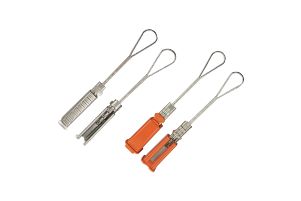 Fiber Optic Tools
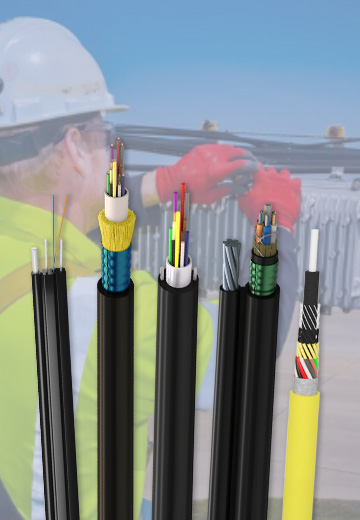 Fiber Optic CableAccess and backbone
 Ethernet CableCat5e to Cat8
 Coaxial CableRF and video signal
 Fire, Security & AlarmSafety systems
 Voice, Audio & VideoSignal cabling
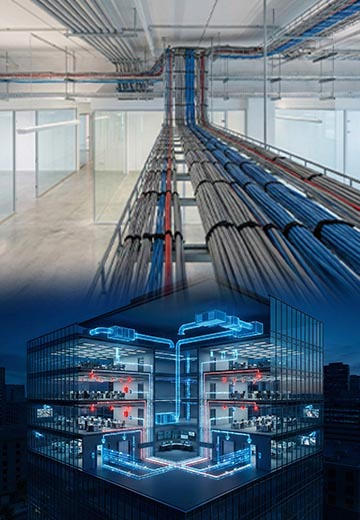 Power & Control CableEnergy and control
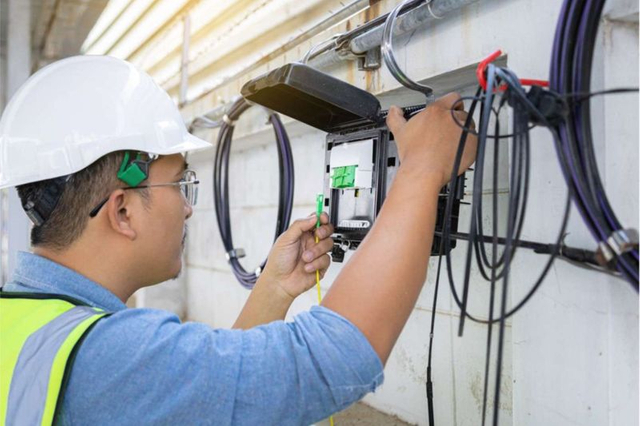 Telecom & ISP NetworksFTTH, PON, ODN
 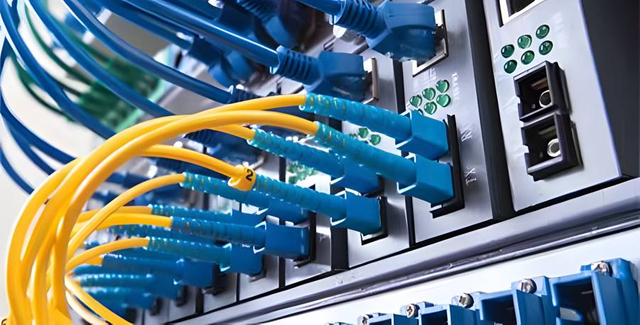 Data Center InfrastructureServer room cabling
  Building Low-Voltage SystemsBMS, AV, weak current
 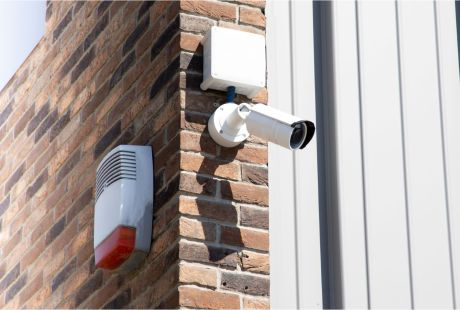 Security & Fire ProtectionAlarm, CCTV, access
  Industrial Automation CablePLC, RS485, fieldbus
  Energy & Power InfrastructureSolar, battery, power