What Is G.657.A2 Fiber? Specifications, Uses, and Differences from G.652.D
Author: Site Editor Publish Time: 31-03-2026 Origin: Site
What Is G.657.A2 Fiber? Specifications, Uses, and Differences from G.652.D
A practical guide to G.657.A2 fiber for FTTH, indoor routing, and bend-sensitive installations, including its key specifications, standard position, and comparison with G.652.D, G.657.A1, and G.657.B3.
G.657.A2 is a bend-insensitive single-mode fiber designed for tighter routing conditions than standard G.652.D.
It is widely used in FTTH drop cables, indoor cable paths, wall outlets, and compact access-network routing.
If your project needs better bend performance without moving away from mainstream single-mode deployment logic, G.657.A2 is usually the stronger choice.
■ G.657.A2 Fiber Definition in Simple Terms
G.657.A2 fiber is a bend-insensitive single-mode optical fiber designed for tighter routing conditions than standard G.652.D fiber. In practical terms, it is used when a project still needs mainstream single-mode compatibility, but the cable path includes tighter bends, smaller boxes, more corners, or more compact indoor routing than a standard straight fiber route.
This is why G.657.A2 is often discussed in FTTH, FTTx, and indoor fiber installations. It is not just a “specialty” fiber for rare applications. Instead, it is a very practical choice for real-world deployment where installers need more tolerance against bend-related signal loss near the subscriber side.
■ Where G.657.A2 Fits in the ITU-T G.657 Standard
The ITU-T G.657 family covers bending-loss insensitive single-mode optical fiber and cable. Within this family, G.657.A2 sits in a very practical middle position: it offers stronger bend tolerance than G.657.A1, while still being widely preferred for mainstream access-network and indoor deployment where compatibility matters.
In selection terms, G.657.A1 is usually seen as the lighter bend-improved option, G.657.A2 as the more balanced FTTH and indoor-routing choice, and G.657.B3 as the option for much tighter bend conditions. For many buyers, G.657.A2 becomes the most useful commercial specification because it balances performance and deployment flexibility well.
| Fiber Type | Standard Position | Minimum Design Radius | Typical Use Logic |
|---|---|---|---|
| G.657.A1 | Category A bend-insensitive fiber | 10 mm | For projects needing moderate bend improvement with standard network compatibility |
| G.657.A2 | Category A bend-insensitive fiber | 7.5 mm | For FTTH, indoor routing, wall outlets, and tighter cable pathways |
| G.657.B3 | Higher bend-performance option | 5 mm | For very tight routing environments and highly space-constrained installations |
■ Key Specifications of G.657.A2 Fiber
This is the section most readers search for first. Instead of reading the full standard, buyers and engineers usually want a clear summary of the key parameters that influence bend performance, compatibility, and installation decisions.
| Parameter | G.657.A2 Position | Why It Matters |
|---|---|---|
| Fiber type | Bend-insensitive single-mode fiber | Suitable for single-mode transmission while offering better routing tolerance |
| Standard family | ITU-T G.657 Category A | Indicates a G.652.D-compatible bend-insensitive fiber class |
| Minimum design radius | 7.5 mm | Supports tighter bends in compact installation spaces |
| Wavelength use context | Full-spectrum single-mode application environment | Fits access, indoor, and mainstream single-mode network scenarios |
| Macrobending performance | Lower bend-related loss than standard G.652.D in tight routing conditions | Improves reliability near corners, boxes, and compact cable paths |
| Compatibility | Aligned with mainstream G.652.D deployment logic | Makes mixed deployment and specification decisions easier |
| Typical applications | FTTH drop cables, indoor cables, wall outlets, terminal boxes, compact pathways | Matches real bend-sensitive installation scenarios |
Minimum Design Radius
The number most people remember about G.657.A2 is 7.5 mm. That smaller design radius is one of the clearest reasons to choose it over standard G.652.D when a route includes multiple turns, narrow installation spaces, or dense cable management.
Wavelength Range
G.657.A2 is generally discussed within the full-spectrum single-mode application context used across access and indoor optical networks. For most buyers, the important point is not theoretical wavelength discussion, but whether the fiber can work in a normal single-mode environment while offering better bend tolerance.
Macrobending Loss
The key advantage of G.657.A2 is better resistance to extra loss caused by tight bends. This matters most in customer-premises fiber paths, indoor corners, optical outlets, and compact building cable routes where standard straight routing assumptions no longer hold.
Compatibility with G.652.D
G.657.A2 is often preferred because it improves bend performance without moving away from mainstream single-mode deployment logic. That compatibility is one of the biggest reasons it is widely used in FTTH and indoor projects instead of being treated as a narrow specialty fiber.
If your project involves standard single-mode networking but the installation path is tight, crowded, or bend-sensitive, G.657.A2 is usually the specification that balances performance and practicality best.
■ Why G.657.A2 Is Used in FTTH and Indoor Routing
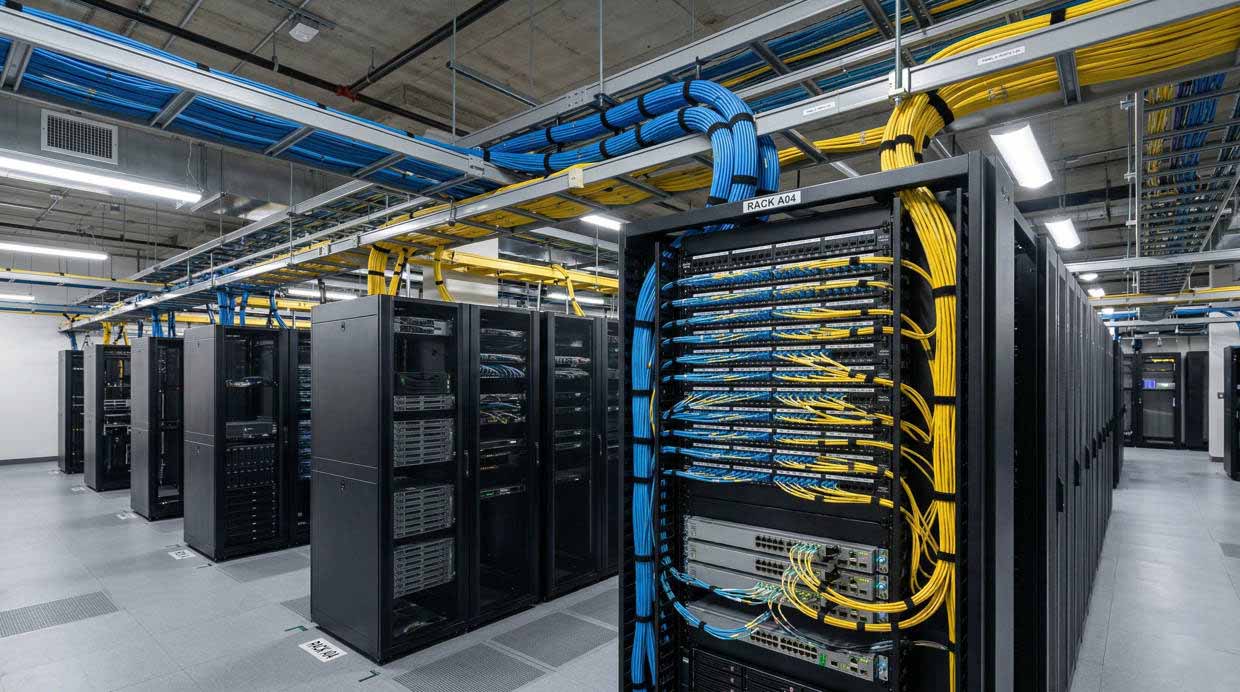
FTTH and indoor routing environments create the exact conditions where bend performance matters most. Fiber often needs to pass through wall boxes, outlet plates, distribution points, corners, risers, cabinets, and building pathways that are much tighter than standard backbone cable routes.
In these cases, G.657.A2 gives installers more margin for real-world handling. It helps reduce the practical risk associated with sharp turns and compact routing, which makes the network easier to deploy and more stable in long-term use.
Better suited to wall outlet and terminal box routing
Improves tolerance in tight indoor corners and compact conduits
Reduces the practical risk of bend-related signal issues
Fits FTTH drop cable logic and in-building access deployment well
Balances compatibility and installation flexibility better than standard G.652.D in tighter spaces
■ G.657.A2 vs G.652.D at a Glance
This is the comparison most buyers search for. G.652.D is the mainstream single-mode baseline. G.657.A2 stays close to that deployment logic while improving bend performance for tighter routing environments.
| Item | G.657.A2 | G.652.D |
|---|---|---|
| Core positioning | Bend-insensitive single-mode fiber | Standard single-mode fiber |
| Minimum design radius | 7.5 mm | Larger bend radius generally preferred in practice |
| Tight-bend routing | Better suited | Less tolerant |
| Macrobending resistance | Improved | Lower in tight routing environments |
| Network logic | Compatible with mainstream single-mode deployment logic | Mainstream baseline standard |
| Typical use cases | FTTH, indoor routing, wall outlets, compact pathways | General single-mode deployment and less bend-sensitive routes |
| Installation tolerance | Higher in space-limited environments | Lower in space-limited environments |
A simple selection rule is this: choose G.652.D when a standard single-mode route is enough and bend stress is not a major concern; choose G.657.A2 when routing is tighter and the installation needs more protection against bend-related loss.
■ G.657.A2 vs G.657.A1 vs G.657.B3
These three fiber types are often searched together because they sit on the same bend-performance spectrum, but they serve slightly different routing priorities.
G.657.A1 is the lighter bend-improvement option and suits projects where moderate bend protection is enough.
G.657.A2 is the balanced choice for tighter routing while remaining highly practical for FTTH and indoor applications.
G.657.B3 is used when the installation environment is even more compact and requires stronger bend tolerance.
For many commercial and access-network projects, G.657.A2 becomes the preferred middle ground because it improves real installation flexibility without moving into a much narrower specialty-use position.
■ When to Choose G.657.A2
G.657.A2 is usually the right choice when your project needs both single-mode compatibility and better bend performance. It is especially suitable when the route is not highly specialized, but the installation environment clearly includes tighter routing risk than a standard long straight path.
The cable path includes frequent corners or small-radius routing points
The project is FTTH, FTTx, or indoor subscriber-side deployment
The fiber will be terminated in wall outlets, ONU boxes, terminal boxes, or compact cabinets
The installer needs more margin against bend-related signal issues
The buyer wants a more installation-friendly option than basic G.652.D for access environments
If the route is open and gentle, G.652.D may still be enough. If the route is tighter, more crowded, or closer to the subscriber side, G.657.A2 is usually the smarter specification.
■ FAQs
Is G.657.A2 fiber single mode?
Yes. G.657.A2 is a single-mode optical fiber designed for better bend performance in tighter routing environments.
Is G.657.A2 compatible with G.652.D?
Yes. That compatibility is one of the main reasons G.657.A2 is widely used in FTTH and indoor routing projects instead of being treated as a separate specialty fiber system.
What is the minimum bend radius of G.657.A2 fiber?
Its minimum design radius is typically referenced as 7.5 mm, which makes it more bend-tolerant than standard G.652.D in compact installation spaces.
Is G.657.A2 better than G.652.D for FTTH?
In many FTTH and indoor routing cases, yes. It is often the better choice where tighter bends and easier installation tolerance are important.
What is the difference between G.657.A1 and G.657.A2?
The main difference is bend capability. G.657.A2 is designed for tighter routing conditions than G.657.A1 and is therefore more suitable for compact FTTH and indoor applications.
When should I choose G.657.B3 instead of G.657.A2?
Choose G.657.B3 when the routing environment is even more constrained and the project needs stronger bend tolerance than G.657.A2 typically provides.
■ Final Recommendation
If your project involves FTTH drops, indoor routing, wall outlets, terminal boxes, or compact access-network cable paths, G.657.A2 is usually the more practical and installation-friendly fiber choice. It offers better bend performance where real-world routing is tighter, while still fitting mainstream single-mode deployment logic.
If the route is not bend-sensitive and standard single-mode deployment is enough, G.652.D may still be sufficient. But when bend reliability and easier installation matter, G.657.A2 is often the stronger long-term decision.