When Is PH120 Cable Required in Fire Survival Circuits? | Fire Survival Cable Selection Guide
Author: Site Editor Publish Time: 14-04-2026 Origin: Site
When Is PH120 Cable Required in Fire Survival Circuits?
PH120 cable is usually required only when the circuit must keep operating for up to 120 minutes during a fire, especially in UK / BS-based firefighting, smoke control, phased evacuation, or other extended life-safety applications. It is not the default answer for every fire alarm or emergency lighting circuit.
PH120 is typically selected when the circuit must survive for 120 minutes, not simply because the project is “fire rated.”
Its strongest use case is extended life-safety or firefighting operation, such as smoke control, firefighting lifts, and some complex evacuation strategies.
Always specify the full application path and installation system, not just the phrase “PH120 cable.”
For engineers, buyers, and contractors, the real question is not “Is this a fire survival circuit?” but “How long must this circuit remain operational, and for what function?” In UK / BS-based design practice, PH120 is normally reserved for applications where the circuit must continue to support life safety or firefighting functions for up to two hours. That makes PH120 a strategy-driven selection, not a universal upgrade. If the building fire strategy, evacuation profile, occupancy pattern, or firefighting function does not justify 120-minute survival, specifying PH120 everywhere can increase cost without improving practical compliance.
■ 1) What PH120 Means in Practice
PH120 is a survival-time class, not a complete specification
PH120 generally indicates that a cable is intended for circuits that need to maintain function during fire exposure for up to 120 minutes. In real projects, that should not be treated as a standalone purchasing shortcut. The design still needs to define the application category, the relevant standard path, and whether the entire cable system—including supports, joints, containment, and routing—can actually maintain operation for the same duration.
| Term | Practical meaning | What it does not mean |
|---|---|---|
| PH120 | Cable selected for circuits requiring extended operational survival under fire conditions, typically up to 120 minutes | Not proof that every project or every fire alarm loop needs it |
| Enhanced fire survival | Used where evacuation, firefighting, or building operation continues for longer and needs more resilient circuits | Not the default requirement for ordinary applications |
| Cable system | Cable + supports + joints + fixings + routing + terminations | Not just the cable core and sheath |

■ 2) When PH120 Is Required
Use PH120 when the circuit must remain functional for extended life-safety operation
The clearest engineering trigger is simple: the circuit must continue operating for up to 120 minutes during a fire event. In UK / BS-based projects, this is most commonly associated with firefighting-related circuits, complex unsprinklered buildings, phased evacuation strategies, or systems that must keep working while firefighters are still actively using the building.
| Project condition | Why PH120 may be required | Typical decision outcome |
|---|---|---|
| Firefighting control circuits | System must remain available while firefighting is underway | PH120 strongly indicated |
| Smoke control / smoke extraction / SHEVS-related control | Smoke management often needs to continue beyond initial evacuation | PH120 commonly selected |
| Firefighting lift-associated control or communication circuits | Lift-related systems may need continued availability for fire service use | PH120 often required |
| Unsprinklered building with long phased evacuation | Circuit survival window may exceed standard fire alarm duration | Enhanced selection often justified |
| High-rise or remote occupied zones during incident | Critical signal paths may need to keep operating while other areas remain in use | PH120 may be justified by design assessment |
| Project fire engineering report explicitly calls for 120-minute survival | The design basis already defines the performance duration | Specify PH120 route |

■ 3) When PH120 Is Usually Not Required
Do not use PH120 as a default for every life-safety cable package
Many ordinary fire alarm and emergency lighting installations do not need two-hour circuit survival. In standard commercial, residential, retail, or light industrial projects, the applicable design path often points to a lower survival class. In those cases, PH120 may add cost, increase stiffness, complicate installation, and create an unnecessary procurement burden without reducing actual project risk.
Ordinary fire alarm loops in typical buildings are often not PH120 applications.
Routine emergency lighting circuits are often not PH120 applications.
Low-risk projects without prolonged evacuation, firefighting dependence, or extended occupied remote areas usually do not need PH120.
Projects that cannot maintain system-level survival through supports and joints gain little value from specifying a higher cable class alone.
■ 4) PH30 vs PH60 vs PH120
Choose the survival grade that matches the circuit duty, not the biggest number available
The most useful way to compare these grades is to focus on function duration. Higher grades can be necessary, but they are also more likely to affect material cost, stock strategy, termination practice, and installation planning.
| Grade | Typical survival logic | Typical project use | Commercial impact |
|---|---|---|---|
| PH30 | Shorter survival window for basic fire alarm or escape-related operation | Basic life-safety signaling where long continued operation is not required | Lower cost, simpler stocking, easier to justify in routine projects |
| PH60 | Intermediate survival duration for systems needing longer operational continuity | Many emergency lighting or medium-duty safety applications | Balanced option where PH30 is insufficient but PH120 is not justified |
| PH120 | Extended survival window for prolonged evacuation or firefighting duty | Smoke control, firefighting circuits, complex high-risk buildings, strategy-driven critical control | Higher material and installation demand, but necessary when two-hour performance is part of the design basis |
■ 5) Typical Systems That Drive PH120 Selection
PH120 usually appears where building control must continue after initial evacuation starts
This is where the engineering logic becomes practical. If the circuit supports a system that must still operate while smoke is being managed, firefighters are entering the building, or evacuation is continuing in phases, PH120 becomes much easier to justify.
■ 6) Common Specification Risks
Most PH120 mistakes come from incomplete design logic, not from the cable itself
The most expensive errors usually happen when teams over-specify, under-define, or isolate the cable from the rest of the system design. That creates avoidable cost, procurement confusion, and tender-stage disputes.
| Common mistake | Why it happens | Project consequence | Better practice |
|---|---|---|---|
| Using PH120 for every life-safety cable | Teams assume higher grade is always safer | Higher cost and unnecessary complexity | Match grade to actual function duration |
| Specifying only “PH120 cable” | Tender language is too short or copied | Ambiguity in approval and product substitution | State application, duration, and full compliance route |
| Ignoring cable supports and joints | Focus stays on cable datasheet only | System fails earlier than expected | Specify fire-rated support and matching accessories |
| Applying one market’s terminology globally | International projects mix code systems | Misalignment with local authority requirements | Confirm country-specific fire cable classification path |
| Upgrading cable without checking installation conditions | Routing, bending, space, and terminations are not reviewed | Installation delays or poor workmanship risk | Review layout, support spacing, and termination method early |
■ 7) Engineer’s Decision Table
A fast selection shortcut for engineers and buyers
| Question | If YES | If NO |
|---|---|---|
| Does the design require circuit operation for up to 120 minutes in fire? | PH120 route is likely appropriate | Review PH60 or PH30 path instead |
| Is this a firefighting, smoke control, or other prolonged operational circuit? | PH120 often justified or required | Do not assume PH120 automatically |
| Is the building unsprinklered, high-rise, or using long phased evacuation? | Enhanced survival may be needed | Standard route may be sufficient |
| Will remote occupied areas depend on the circuit during the incident? | Longer survival becomes more defensible | Lower class may still comply |
| Have the supports, joints, and accessories been matched to the same fire survival target? | The system can be specified with more confidence | The cable grade alone does not solve the project risk |
■ 8) Procurement & Project Checklist
What to confirm before issuing a datasheet request or purchase order

■ 9) FAQ
Answers to the questions buyers and specifiers ask most often
■ 10) Conclusion
PH120 cable is required when the design basis calls for 120-minute circuit survival during a fire, especially in applications tied to firefighting operation, smoke control, prolonged evacuation, or other critical life-safety functions. It should not be treated as the default choice for all fire alarm or emergency lighting projects. The most reliable engineering approach is to match the cable class to the real duty of the circuit, verify the local standard path, and specify the entire cable system—including supports, joints, and installation method—so that the project performs as intended in an actual fire scenario.
Send your project parameters, such as application type, required fire survival time, conductor size, core count, shield or armor requirement, voltage rating, installation route, and target standard. ZION can help match the cable construction and accessory path to your project specification.



 Fiber Optic Tools
Products 6 families
Solutions 6 markets
Resources Tools & docs
Certificate
Certification and compliance references for project review, qualification and purchasing documentation.

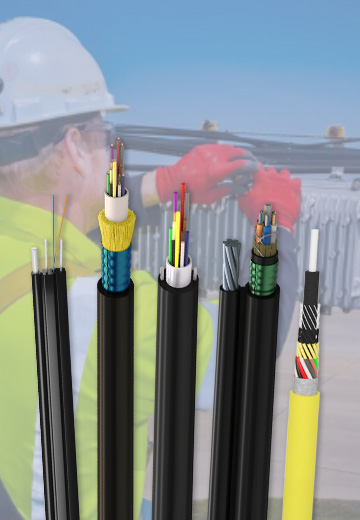 Fiber Optic CableAccess and backbone
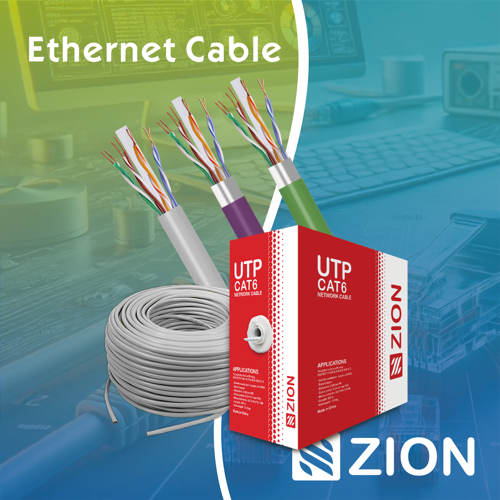 Ethernet CableCat5e to Cat8
 Coaxial CableRF and video signal
 Fire, Security & AlarmSafety systems
 Voice, Audio & VideoSignal cabling
 Power & Control CableEnergy and control
Fiber optic cable systems
Outdoor, indoor, FTTH and distribution cable lines for access networks, backbone routes and campus deployments.
 Telecom & ISP NetworksFTTH, PON, ODN
  Data Center InfrastructureServer room cabling
  Building Low-Voltage SystemsBMS, AV, weak current
  Security & Fire ProtectionAlarm, CCTV, access
  Industrial Automation CablePLC, RS485, fieldbus
  Energy & Power InfrastructureSolar, battery, power
 Telecom & ISP Networks
For FTTH / PON access, outdoor fiber deployment, aerial routes, duct routes, direct burial routes, rural broadband and ODN planning.
Tools
Use calculators and planning tools for conduit capacity, PoE voltage drop and fiber optic link loss budget work.