When Should You Choose LSZH Cable? A Practical Selection Guide for Engineers and Buyers
Author: Site Editor Publish Time: 16-04-2026 Origin: Site
When Should You Choose LSZH Cable?
Choose LSZH cable when fire smoke, corrosive gas release, and post-fire equipment damage are meaningful project risks—especially in occupied buildings, enclosed routes, and technical spaces where evacuation visibility and asset protection matter.
LSZH is the right direction when low smoke and reduced corrosive gas release are important during fire.
It is especially valuable in occupied indoor spaces, enclosed routes, and equipment-dense technical areas.
LSZH alone is not the full compliance answer—buyers still need to confirm installation rating, code path, and mechanical suitability.
■ Overview
Choose LSZH cable when the installation is inside an occupied, enclosed, evacuation-sensitive, or equipment-dense environment where fire smoke and corrosive combustion gases would create unacceptable safety or asset risk. In practical engineering terms, LSZH becomes a strong option when the project team wants to reduce three things at the same time: smoke density, acidic/corrosive gas release, and secondary damage to nearby electronics and metallic infrastructure.
That said, LSZH should not be treated as a universal upgrade for every route. It is a fire-behavior decision, not a shortcut for all compliance, durability, or installation questions. Buyers still need to verify whether the project also requires a specific building classification, plenum or riser requirement, CPR declaration, flame spread performance, or a separate fire-resistant / circuit-integrity cable.

■ What LSZH Really Means
LSZH generally means Low Smoke Zero Halogen. In the market, you may also see similar terms such as LS0H, LSHF, or halogen-free flame-retardant, depending on region and product family. The key point for engineers and buyers is that “low smoke” and “halogen free” are related but not identical concepts. One addresses how much smoke is produced during combustion; the other addresses whether halogen-containing materials release acidic and corrosive gases when burned.
That distinction matters because an accurate LSZH selection decision must look beyond a jacket label. The finished cable construction, its listing, and its intended installation environment all matter. A cable marketed as LSZH may still be the wrong choice if the route demands a different installation class, stronger environmental resistance, or operational continuity during fire.
| Term | What it focuses on | Why it matters | Common buyer mistake |
|---|---|---|---|
| Low Smoke | Reduced smoke generation during combustion | Improves visibility and helps reduce smoke-related evacuation problems | Assuming low smoke automatically covers all fire requirements |
| Zero Halogen | Reduced release of halogen acid gases when burned | Helps reduce corrosion of nearby electronics and metallic systems | Assuming halogen-free alone means safer in every installation scenario |
| LSZH Cable | Combines low smoke intent with halogen-free material strategy | Useful for indoor life-safety and equipment-protection decisions | Using LSZH as a replacement for plenum, CPR, or fire-resistant classification |
■ When LSZH Is the Right Choice
LSZH is usually the right direction when the cable route is inside a building interior or confined public space where smoke visibility affects escape and where corrosive fire gases could damage nearby systems. Typical examples include commercial buildings, hospitals, schools, airports, rail infrastructure, tunnels, technical corridors, equipment rooms, telecom rooms, and other areas where people and valuable equipment are concentrated together.
It is also a good fit when the commercial consequence of a fire extends beyond direct flame spread. In automation cabinets, control rooms, BMS spaces, data rooms, and low-voltage system environments, the initial fire may be localized, but the resulting smoke and corrosive gases can still damage connectors, boards, metal surfaces, sensors, and network equipment that were not part of the original ignition point.
| Project condition | Should LSZH be preferred? | Main reason | What still needs checking |
|---|---|---|---|
| Occupied indoor commercial building | Yes | Smoke reduction and lower corrosive gas exposure matter during evacuation and cleanup | Building code path, installation class, and product listing |
| Tunnel, station, escape corridor, underground route | Strong yes | Visibility and fire byproduct risk increase in enclosed public spaces | Transport or infrastructure fire specification |
| Control room, telecom room, server room | Yes | Helps reduce secondary damage to electronics and metallic hardware | Flame class, installation requirement, actual cable construction |
| General outdoor run with low occupancy exposure | Not by default | Outdoor performance drivers may matter more than smoke control | UV, water blocking, crush, temperature, mechanical protection |
| High-density public building with strict fire strategy | Usually yes | Life-safety and asset-protection priorities justify LSZH cost premium | Project standard, local compliance path, submittal approval |

■ When LSZH Is Not Enough
A frequent specification mistake is writing “LSZH” as though it fully answers the fire requirement. It does not. LSZH describes a material and combustion-behavior direction, but many projects also require an installation rating, a building fire classification, or a separate fire-resistance requirement. In other words, an LSZH claim may still be incomplete if the route is plenum, if the project follows CPR declarations, or if the circuit must keep operating during fire.
Another common mistake is confusing LSZH with fire-resistant cable or circuit integrity cable. These are not the same. If the application includes alarms, emergency systems, evacuation systems, or any critical function that must continue operating during a fire, the buyer should specify the actual operational fire requirement in addition to any LSZH preference.
| Selection question | Does LSZH help? | Is LSZH alone sufficient? | Buyer implication |
|---|---|---|---|
| Reduce smoke during fire | Yes | No | Confirm the actual tested cable construction and project acceptance criteria |
| Reduce corrosive gas damage | Yes | No | Ask for exact test basis and material declaration |
| Meet plenum or similar space requirement | Sometimes | No | Installation rating still governs the final product choice |
| Meet CPR or building fire classification | Often part of the answer | No | Request the declared class and supporting documentation |
| Ensure emergency circuit operation during fire | Not by itself | No | Specify fire-resistant / circuit-integrity performance separately |
■ Decision Rules / Engineer’s Shortcut
A useful engineering shortcut is to choose LSZH when two or more of the following are true: the cable is installed inside an occupied building, the route is enclosed or difficult to evacuate, nearby equipment is expensive or corrosion-sensitive, or the project documentation explicitly requires halogen-free / low-smoke behavior. That is where LSZH usually creates real value rather than just a higher material cost.
Do not default to LSZH blindly when the route is mainly exposed to UV, oil, outdoor water exposure, continuous flexing, low-temperature installation, or aggressive industrial motion. In these cases, fire behavior still matters, but mechanical and environmental fitness may become the first-pass selection filter.
| Decision point | Choose LSZH when... | Do not rely on LSZH alone when... | Alternative focus |
|---|---|---|---|
| People safety | Evacuation visibility and lower smoke output are important | The route requires a different installation class or formal fire declaration | Confirm code-compliant cable class |
| Asset protection | Electronics, connectors, and metalwork need better protection from corrosive gases | The fire event is not the main project risk | Balance against environmental and mechanical exposure |
| Procurement threshold | The owner values lower fire byproduct risk over lowest first cost | Lowest price is prioritized and code does not require LSZH behavior | Use total-risk language, not just material price |
| Maintainability | Post-fire recovery cost and contamination cleanup matter | The cable is in a harsh motion or chemical environment | Review jacket flexibility and chemical resistance data |

■ What to Ask Suppliers Before Ordering
To avoid selection errors, procurement teams should ask for three separate confirmations rather than one generic LSZH claim: the fire-behavior test basis, the installation or code classification, and the environmental / mechanical suitability of the finished cable. This simple discipline prevents one of the most common mistakes in cable buying—purchasing a cable that is technically LSZH but still wrong for the route, code path, or service conditions.
What exact standards or test reports support the LSZH claim?
Does the declaration apply to the complete cable construction or only to the jacket compound?
What installation class, listing, or project approval path does the cable satisfy?
Is the cable intended for static indoor routing, public spaces, control systems, or specialized fire-performance applications?
What are the bend radius, installation temperature, flexibility, UV, chemical, and water-resistance limits?
What options are available for conductor size, shielding, voltage range, armor, packaging, and customization lead time?
■ FAQ
Is LSZH the same as fire-resistant cable?
No. LSZH focuses on smoke and halogen-related combustion behavior. Fire-resistant or circuit-integrity cable is a different selection category used when the circuit must continue operating during a fire.
Is LSZH mandatory for every indoor project?
No. The correct choice depends on local rules, project fire strategy, occupancy conditions, and the actual installation environment. Some projects strongly favor LSZH; others are driven more by installation rating or environmental performance.
Is LSZH always better than PVC?
Not universally. LSZH is often better when smoke reduction and lower corrosive gas release matter. It is not automatically the best choice when lowest cost, strong outdoor exposure, high flexibility, or harsh industrial resistance dominates the application.
Can LSZH cable be used for control, communication, and power systems?
Yes. LSZH concepts are used across many cable families. The final product still needs to match the actual conductor design, voltage class, shielding, installation requirement, and environmental conditions of the project.
What is the safest way to specify LSZH in procurement documents?
Specify LSZH together with the required installation classification, applicable standards, and mechanical/environmental performance requirements. This avoids buying a cable that sounds compliant but is wrong for the actual route or approval path.
■ Conclusion
Choose LSZH cable when your project must reduce smoke, corrosive gas release, and secondary equipment damage during a fire—especially in enclosed occupied spaces and technical areas with high-value systems. Do not treat LSZH as a complete compliance answer on its own. The right specification is usually a combination of LSZH fire-behavior intent, the correct installation or code classification, and the right mechanical/environmental construction for the route.
When those three elements line up, LSZH becomes a strong engineering choice rather than just a marketing label. For engineers, buyers, and project teams, that is the difference between a cable that only looks compliant on paper and a cable that actually fits the job.



 Fiber Optic Tools
Products 6 families
Solutions 6 markets
Resources Tools & docs
Certificate
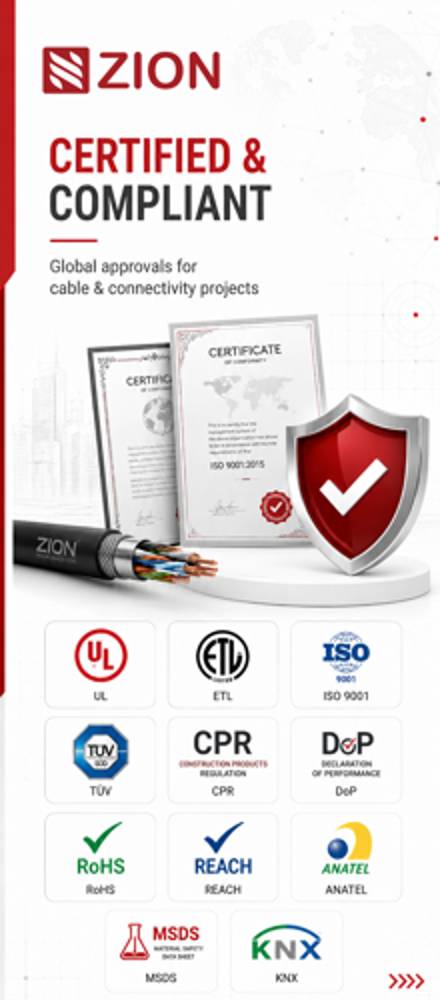
Certification and compliance references for project review, qualification and purchasing documentation.
 Fiber Optic CableAccess and backbone
 Ethernet CableCat5e to Cat8
 Coaxial CableRF and video signal
 Fire, Security & AlarmSafety systems
 Voice, Audio & VideoSignal cabling
 Power & Control CableEnergy and control
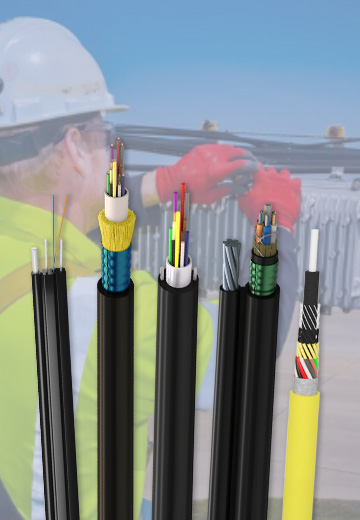
Fiber optic cable systems
Outdoor, indoor, FTTH and distribution cable lines for access networks, backbone routes and campus deployments.
 Telecom & ISP NetworksFTTH, PON, ODN
  Data Center InfrastructureServer room cabling
  Building Low-Voltage SystemsBMS, AV, weak current
  Security & Fire ProtectionAlarm, CCTV, access
  Industrial Automation CablePLC, RS485, fieldbus
  Energy & Power InfrastructureSolar, battery, power
 Telecom & ISP Networks
For FTTH / PON access, outdoor fiber deployment, aerial routes, duct routes, direct burial routes, rural broadband and ODN planning.
Tools
Use calculators and planning tools for conduit capacity, PoE voltage drop and fiber optic link loss budget work.