When Should You Use PH30 Fire Resistant Cable? Selection Guide for Fire Alarm Projects
Author: Site Editor Publish Time: 14-04-2026 Origin: Site
When Should You Use PH30 Fire Resistant Cable?
PH30 fire resistant cable is usually the right choice for standard fire alarm circuits that only need to maintain integrity for a limited evacuation window, but it is not the right default for every life-safety or fire-critical application.
Use PH30 for standard fire alarm circuits where a 30-minute survival window matches the evacuation strategy.
Do not treat PH30 as a universal “fire-rated” answer for high-rise, phased evacuation, or late-stage operational systems.
Compare cable by system duty, failure consequence, and code path—not by price alone.
■ 1) What PH30 Actually Means
PH30 is a fire performance classification commonly used in UK and BS-oriented fire alarm projects. In practical engineering terms, it means the cable is intended to maintain circuit integrity for a 30-minute period under defined fire test conditions. For many buyers, the key point is simple: PH30 is not just a marketing phrase. It is a selection threshold tied to a standard level of fire survival for emergency circuits.
However, PH30 should not be interpreted as a universal answer for every fire-critical installation. It indicates a standard level of circuit survival, not automatic suitability for every evacuation strategy, every building type, or every life-safety service. That is why the system role matters just as much as the cable label.

■ 2) When PH30 Is the Right Choice
PH30 is usually the right choice when the project is built around a standard fire alarm strategy rather than prolonged post-evacuation system operation. In many ordinary commercial and public premises, the priority is to preserve alarm transmission long enough for detection, warning, and early evacuation. In those situations, PH30 is often the efficient and practical specification.
Typical examples include offices, schools, shops, general commercial buildings, and similar non-domestic projects where the circuit mainly supports fire alarm loops, sounder circuits, or related signal paths and does not need to remain operational deep into a developed fire scenario.
Typical situations where PH30 makes sense
| Application situation | Why PH30 is often suitable | Engineering note |
|---|---|---|
| Standard fire alarm circuits | Supports ordinary detection and alarm transmission duty | Good fit when the design target is standard fire resistance |
| Normal-risk commercial buildings | Evacuation is expected to begin early after alarm activation | Common in offices, schools, retail, and similar premises |
| Projects with tight cost control | Avoids paying for unnecessary enhanced cable performance | Only valid if the system duty really remains within standard requirements |
■ 3) When PH30 Is Not Enough
PH30 becomes a weak specification when the building is larger, taller, more complex, or designed around phased evacuation and extended system operation. It is also not the right default when the circuit supports systems that may still be needed later in the incident, including functions used by the fire service or by active smoke and fire management systems.
In those cases, designers often move toward enhanced fire resistant cable or broader fire-resistant cable-system requirements, depending on the system type and the project code path. This is where the selection logic shifts from “ordinary fire alarm survival” to “continued operational integrity under more demanding conditions.”
Common triggers to move beyond PH30
| Trigger | Why PH30 may be insufficient | What to check next |
|---|---|---|
| High-rise or unsprinklered tall buildings | Evacuation and control duties can extend beyond a standard window | Check whether enhanced cable is specified |
| Phased evacuation strategy | Alarm and control circuits may need longer operational time | Review building fire strategy and consultant requirements |
| Evacuation alert systems | These may need to operate at a late stage in a fire | Enhanced cable is commonly expected |
| Smoke control, firefighting lifts, sprinkler-related controls | Failure consequence is much higher than a standard alarm loop | Assess system-level life-safety cable requirements |
■ 4) PH30 vs PH60 vs PH120
A frequent procurement mistake is comparing PH30 only against unit price. A better comparison is to look at what each survival level is intended to support. PH30 is widely associated with standard fire alarm duty, PH60 often appears in emergency lighting discussions, and PH120 is commonly associated with enhanced fire resistance for more demanding applications.
That does not mean every project automatically follows the same exact pattern, but it is a useful engineering shortcut when reading specifications, datasheets, and consultant schedules.
| Rating | Typical engineering reading | Selection logic |
|---|---|---|
| PH30 | Standard fire alarm survival level | Use when early alarm and evacuation duty is the main requirement |
| PH60 | Longer survival window often linked to emergency lighting | Check if the application specifically calls for longer standard duration |
| PH120 | Enhanced fire resistant level | Use for complex, high-risk, or extended-operation systems where failure cost is much higher |

■ 5) Decision Rules for Engineers and Buyers
For engineering, procurement, and integration teams, the best PH30 decision model is to work backward from the system role. Ask how long the circuit must remain functional, who depends on it during a fire, and what happens if it fails too early. This approach reduces the risk of buying a cable that is technically fire resistant but operationally wrong.
Fast screening checklist
| Screening question | If “Yes” | Selection implication |
|---|---|---|
| Is this a standard fire alarm circuit? | The duty is mainly detection and alarm transmission | PH30 may be appropriate |
| Is the building a normal-risk office, school, shop, or similar premise? | The evacuation model is relatively straightforward | Standard fire resistance is often enough |
| Does the circuit need to operate late into the fire event? | The cable may support ongoing critical functions | Move beyond PH30 |
| Is failure of this circuit likely to affect firefighting operations or delayed evacuation? | Consequence of failure is high | Review enhanced or system-level fire-resistant cable requirements |
■ 6) Risks, Costs, and Maintenance Logic
PH30 is often attractive because it supports many standard fire alarm projects without the extra cost of enhanced cable. For procurement teams, that can be a meaningful budget advantage across large cable quantities. For installers, it can also simplify sourcing when the specification is clearly within standard fire alarm scope.
But the cheapest cable is not the lowest-cost decision if it creates redesign, approval delays, rework, or compliance disputes later. Under-specifying survivability can become more expensive than buying the right cable once. Over-specifying every project to the highest grade also wastes budget and can reduce cost competitiveness. The real commercial objective is fit-for-duty specification.
From a maintenance perspective, problems usually come from selecting the wrong cable class for the system function, not from PH30 itself. A correctly specified PH30 cable in a standard application is efficient, practical, and easier to defend during design review and project handover.

■ 7) FAQ
Is PH30 enough for every fire alarm project?
No. PH30 is commonly used for standard fire alarm circuits, but not for every building type or system duty. Once the project involves phased evacuation, late-stage operation, or higher-consequence life-safety functions, a higher level may be required.
Can PH30 be used for emergency lighting?
Not by default. Emergency lighting is often associated with a different survival target, so teams should always check the exact application requirement rather than assuming PH30 covers all emergency circuits.
Is PH30 mainly a UK or BS-oriented specification concept?
Yes. PH30 language is most familiar in UK and British-standard-based project environments. For export or multinational projects, always verify the local fire code, approval path, and required fire test framework.
What is the most common buyer mistake?
Treating all fire resistant cable as interchangeable. The correct comparison is between system duty, failure consequence, and code requirement—not simply between two red cables with different prices.
■ 8) Conclusion
PH30 fire resistant cable is the right choice when the project requires a standard fire alarm survival level and the building strategy is based on early warning and normal evacuation rather than prolonged late-stage operation. It is a strong fit for many ordinary commercial and public buildings, but it should not be treated as a universal answer for all fire-critical systems. The most reliable selection method is to match cable grade to system role, evacuation logic, and failure consequence. For engineers and buyers, that is the safest way to control compliance risk, installation cost, and long-term project defensibility.
Send your voltage level, circuit type, installation environment, fire strategy, shielding or armor requirements, and target standard. ZION can help you narrow the cable structure and performance level for your application.



 Fiber Optic Tools
Products 6 families
Solutions 6 markets
Resources Tools & docs
Certificate
Certification and compliance references for project review, qualification and purchasing documentation.

 Fiber Optic CableAccess and backbone
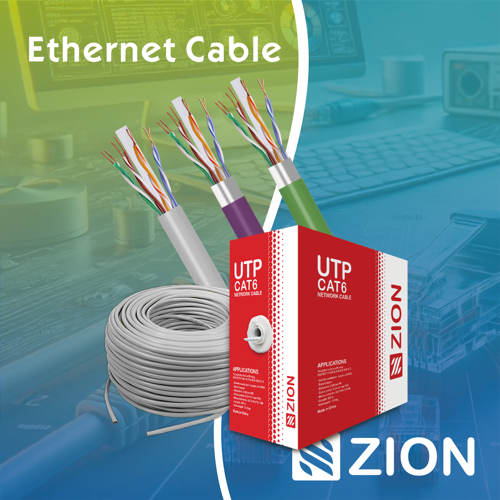 Ethernet CableCat5e to Cat8
 Coaxial CableRF and video signal
 Fire, Security & AlarmSafety systems
 Voice, Audio & VideoSignal cabling
 Power & Control CableEnergy and control
Fiber optic cable systems
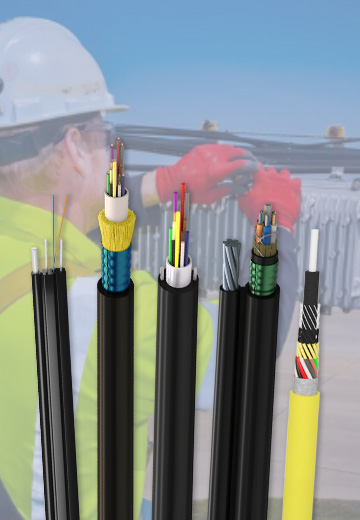
Outdoor, indoor, FTTH and distribution cable lines for access networks, backbone routes and campus deployments.
 Telecom & ISP NetworksFTTH, PON, ODN
  Data Center InfrastructureServer room cabling
  Building Low-Voltage SystemsBMS, AV, weak current
  Security & Fire ProtectionAlarm, CCTV, access
  Industrial Automation CablePLC, RS485, fieldbus
  Energy & Power InfrastructureSolar, battery, power
 Telecom & ISP Networks
For FTTH / PON access, outdoor fiber deployment, aerial routes, duct routes, direct burial routes, rural broadband and ODN planning.
Tools
Use calculators and planning tools for conduit capacity, PoE voltage drop and fiber optic link loss budget work.