Why Cable Jacket Color and Print Marking Matter in Real Projects
Author: Site Editor Publish Time: 16-04-2026 Origin: Site
Why Cable Jacket Color and Print Marking Matter in Real Projects
Cable jacket color and print marking are not cosmetic details. In real installations, they influence routing accuracy, inspection speed, maintenance efficiency, replacement accuracy, and long-term asset traceability. For engineers, contractors, and procurement teams, these details often determine whether a cable system stays manageable over time or becomes expensive to troubleshoot.
Jacket color improves fast visual identification in dense trays, cabinets, and mixed-system installations.
Print marking confirms model, rating, size, standards, and traceability information during inspection and maintenance.
In real projects, color helps teams work faster, while marking helps them work correctly.
■ Why this matters beyond appearance
Many buyers focus first on conductor size, shielding, voltage rating, fire performance, or outdoor durability. Those parameters are essential, but once the cable reaches the site, teams face another problem: identifying the right cable quickly and confidently. Jacket color and print marking solve that operational problem.
They help installers, supervisors, and maintenance technicians answer practical questions immediately: Which cable belongs to which system? Does this installed cable match the approved submittal? Is this the right fire-rated, shielded, LSZH, PVC, or outdoor construction? Can the team replace or extend it correctly years later without opening archived project records?

■ What jacket color actually does in real projects
Cable jacket color creates a fast visual classification layer. It is not always a universal standard, but in practice it is widely used for field logic, internal project conventions, zone separation, and maintenance convenience. Good color coding reduces search time, helps prevent wrong patching or cutting, and makes large installations easier to manage.
The exact meaning of each jacket color can vary by country, owner, consultant, or contractor. That is why color should support documentation, not replace it. In good projects, color coding is defined in the project standard or cable schedule before procurement starts.

■ Why print marking often matters even more than color
Color helps at a glance. Print marking provides proof and detail. A cable jacket print can include the manufacturer, product model, conductor or fiber count, conductor size, voltage rating, fire classification, shielding type, standard reference, meter marking, batch number, or project-specific custom text. This information becomes critical during receiving inspection, QA checks, installation, maintenance, and future upgrades.

■ Color vs print marking in real decision-making
A common project mistake is relying too heavily on jacket color while ignoring printed identification. Different suppliers may use similar colors, field conditions may reduce visibility, and some cable categories have limited color options. In practice, the strongest rule is simple: use color for quick recognition and print marking for confirmation.

■ What goes wrong when identification is weak
When jacket color is inconsistent or print marking is missing, project teams lose time and confidence. The result is usually not a dramatic single failure, but a chain of avoidable problems: more tracing labor, higher rework probability, slower inspections, and more difficult replacement decisions later.
■ Decision Rules / Engineer’s Shortcut
If the project includes dense cable routing, multiple systems in the same pathway, future maintenance by different teams, or formal inspection pressure, do not treat jacket color and print marking as optional. Require both from the start.
If a project has parallel cable runs, mixed systems, compliance checks, phased expansion, or maintenance teams that differ from the installation team, color logic and print marking requirements should be written into the cable specification before purchasing.
■ Procurement checks before ordering
Buyers often concentrate on price, lead time, and base technical specifications. That is necessary, but not enough. Procurement should also confirm whether the supplier can deliver the identification logic required by the project. This is especially important for custom cable programs, large rollouts, and multi-site installations.
■ How to write it into the specification and why it affects lifecycle cost
To make jacket color and print marking useful, they should not be left to informal site habits. They should be written into the purchasing specification, submittal requirement, or installation guideline. Otherwise, even a technically compliant cable may create operational confusion later.
■ FAQ
■ Conclusion
Cable jacket color and print marking matter because real projects are managed by people working under time, space, and error-pressure constraints. The more complex the installation, the more useful these details become. Jacket color supports speed. Print marking supports accuracy. Together, they improve installation control, inspection efficiency, maintenance response, and long-term asset traceability.
For engineering, procurement, and project delivery teams, the practical rule is straightforward: do not treat cable identification as an afterthought. If the project has density, compliance pressure, multiple systems, or lifecycle expectations, specify jacket color logic and print marking requirements from the beginning.



 Fiber Optic Tools
Products 6 families
Solutions 6 markets
Resources Tools & docs
Certificate
Certification and compliance references for project review, qualification and purchasing documentation.

 Fiber Optic CableAccess and backbone
 Ethernet CableCat5e to Cat8
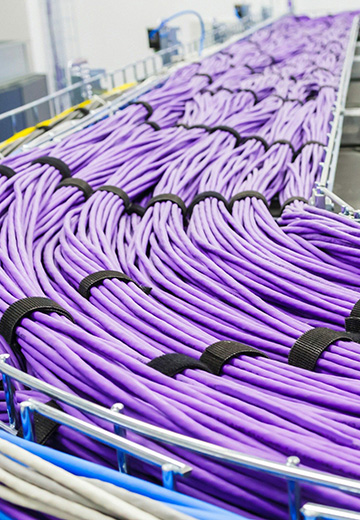 Coaxial CableRF and video signal
 Fire, Security & AlarmSafety systems
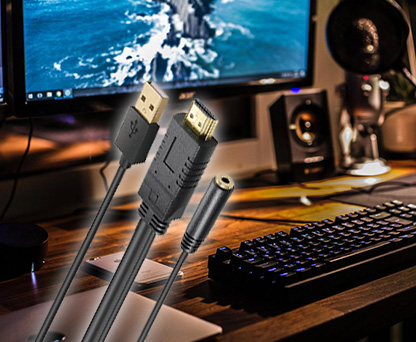 Voice, Audio & VideoSignal cabling
 Power & Control CableEnergy and control
Fiber optic cable systems
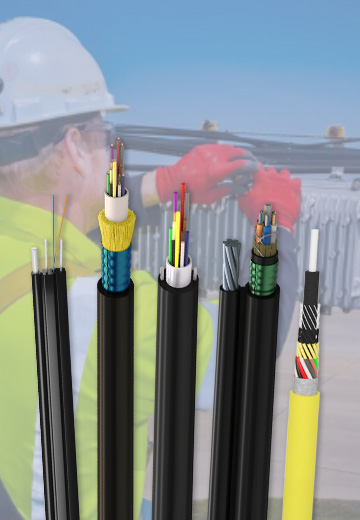
Outdoor, indoor, FTTH and distribution cable lines for access networks, backbone routes and campus deployments.
 Telecom & ISP NetworksFTTH, PON, ODN
  Data Center InfrastructureServer room cabling
  Building Low-Voltage SystemsBMS, AV, weak current
  Security & Fire ProtectionAlarm, CCTV, access
  Industrial Automation CablePLC, RS485, fieldbus
 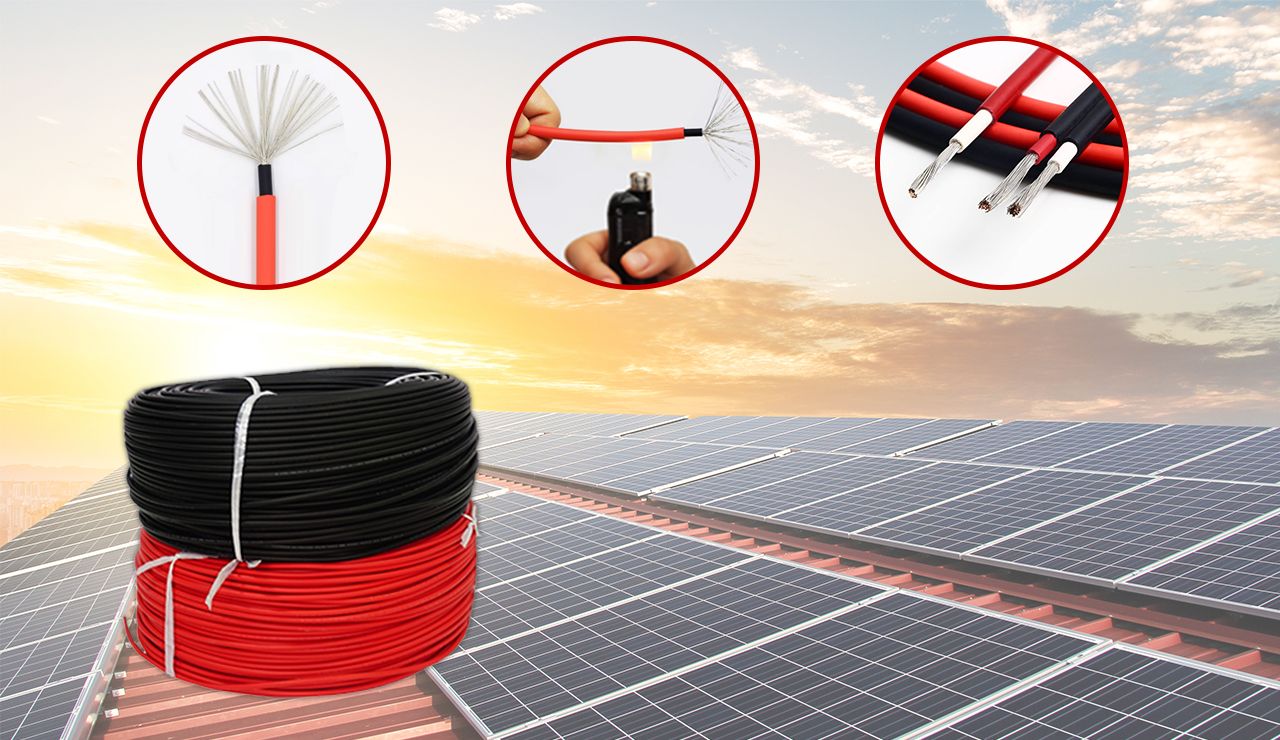 Energy & Power InfrastructureSolar, battery, power
 Telecom & ISP Networks
For FTTH / PON access, outdoor fiber deployment, aerial routes, duct routes, direct burial routes, rural broadband and ODN planning.
Tools
Use calculators and planning tools for conduit capacity, PoE voltage drop and fiber optic link loss budget work.