From RFQ to Shipment: How a Cable Order Is Managed
Author: Site Editor Publish Time: 20-04-2026 Origin: Site
From RFQ to Shipment: How a Cable Order Is Managed
A cable order should be managed as a controlled technical process, not just a quotation-to-delivery transaction. This guide explains how RFQs are clarified, how specifications are frozen, where lead-time risk really appears, and what buyers should review before shipment release.
A cable order moves through requirement review, technical clarification, production planning, inspection, packing, and shipment release.
Most problems start earlier than shipment day, usually from incomplete RFQs, vague specifications, or late changes.
For public-facing educational content, this topic should explain process logic and risk control, not disclose customer-specific payment methods or real amounts.
■ What “RFQ to Shipment” Actually Means in Cable Supply
In cable manufacturing and supply, “RFQ to shipment” describes the full order-management path from the first inquiry to final release for delivery. It includes both commercial communication and technical control. Unlike simple commodity transactions, many cable orders involve application-specific variables such as conductor size, jacket material, shielding structure, fire-performance requirement, print marking, packing length, and required approval documents. That is why order management affects not only delivery timing, but also field usability, project approval, and maintenance clarity.
This kind of article is best written as process education. It should explain what happens at each stage, what risks are being controlled, and what buyers should verify. It should not publish customer-specific pricing terms, payment arrangements, or real commercial amounts.
■ Why It Matters in Cable Supply
Cable names can look standard on paper while hiding major differences in construction and compliance. Two products described as the “same cable” may differ in conductor class, shielding level, insulation compound, sheath type, print marking, packing format, or testing scope. Those differences can change performance, installation suitability, approval outcome, and lead time.
For engineers and procurement teams, understanding the RFQ-to-shipment path helps reduce specification mismatch, schedule surprises, incomplete documentation, and late-stage rework. It also improves communication between the buyer, project team, and supplier before the order reaches production release.
| Common Failure | What Usually Causes It | Project Impact |
|---|---|---|
| Specification mismatch | Incomplete RFQ or vague technical description | Wrong product delivered for the installation need |
| Lead-time surprise | Custom materials, packing, or testing not identified early | Delayed release or unstable delivery schedule |
| Document gap | Approval requirements not aligned before production | Receiving or project approval problems |
| Late change disruption | Print, label, color, or packing revised after release | Rework, scrap risk, or shipment delay |
■ Typical Order Flow
Although details vary by product family and project complexity, most cable orders move through the same control path: RFQ review, technical clarification, quotation alignment, order confirmation, engineering and production planning, material preparation, manufacturing, inspection, packing, document preparation, and shipment release.
| Stage | Main Purpose | What Should Be Controlled | Typical Output |
|---|---|---|---|
| RFQ review | Capture buyer requirement | Application, structure, standard, quantity, packing | Initial requirement list |
| Technical clarification | Remove ambiguity | Construction details, materials, marking, documents | Confirmed technical scope |
| Quotation alignment | Match scope with schedule logic | Customization level, materials, testing workload | Formal quotation |
| Order confirmation | Freeze essentials | Model, quantity, color, marking, packing, documents | PO / order confirmation |
| Planning & materials | Prepare execution | BOM, routing, material readiness, print instruction | Production release |
| Manufacturing | Produce to defined structure | Dimensional, structural, marking, length consistency | Finished goods |
| Inspection & packing | Verify and protect product | QC status, labels, packing integrity, document match | Packed goods |
| Shipment release | Handover for delivery | Final quantity, approval status, shipping marks, paperwork | Shipment arranged |

■ RFQ Review
The first step is not to send a price immediately. It is to confirm whether the RFQ contains enough information to define the correct cable family and build logic. A good RFQ review should identify missing technical data, mismatched assumptions, and project-specific constraints before the quote becomes the baseline for the order.
Typical RFQ inputs include cable type, conductor size, number of cores or pairs, shielding requirement, insulation and jacket material, fire or environmental rating, installation condition, packing length, labeling request, and required documents. If any of these items are unclear, the risk of quoting the wrong product or misunderstanding lead time increases quickly.
| RFQ Item | Why It Matters | If It Is Missing |
|---|---|---|
| Application environment | Determines indoor/outdoor, flexibility, protection, safety need | Wrong product family may be selected |
| Conductor and core / pair details | Affects electrical performance and cost structure | Construction mismatch risk rises |
| Jacket / insulation material | Changes installation suitability and compliance path | Approval or field-use problem may appear later |
| Packing and print marking | Affects execution, identification, and logistics | Rework or site confusion may occur |
| Approval / document need | Controls testing, file preparation, and release logic | Shipment may be physically ready but not usable for approval |
■ Technical Clarification
Technical clarification converts a broad inquiry into a production-relevant definition. The purpose is not just to make the quotation look complete. The purpose is to ensure that the product to be made is truly the product needed by the project.
This stage often resolves questions such as whether shielding is overall or pair-level, whether LSZH is mandatory, whether a listed standard is required or only used as a reference, whether print marking must follow a fixed project rule, and whether shipment documents need to include test summaries or other compliance files.
Clarify installation condition: tray, conduit, indoor, outdoor, flexible use, or direct burial.
Clarify material expectations: PVC, PE, LSZH, or other specified compounds.
Clarify marking and labeling logic: fixed project print, destination label, or generic production marking.
Clarify inspection and document scope before the order is released internally.
■ Quotation & Lead Time Alignment
A well-managed quotation stage translates the confirmed technical scope into execution logic. That includes not only commercial evaluation, but also production complexity, material availability, testing requirements, and packing format. The same market description can behave very differently depending on how customized the real build is.
| Order Type | Typical Characteristics | Management Impact |
|---|---|---|
| Standard stockable item | Repeatable construction with common demand | Shorter review and planning cycle |
| Standard item with minor customization | Custom print, color, length, or packing | Moderate risk and stronger confirmation need |
| Project-specific build | Special structure, materials, compliance, or shipment requirements | Higher planning and change-control pressure |
For public educational content, this section should discuss scope complexity, change sensitivity, and schedule planning logic rather than publishing real project pricing data or customer-specific financial terms.
■ Order Confirmation & Planning
Once the quotation and scope are aligned, the order should move into confirmation. This is the point where assumptions should be removed and major variables should become stable: model, quantity, packing format, color, print marking, required documents, and shipment window. For project-managed cable orders, this step is where change discipline begins to matter.
After confirmation, internal engineering and production planning translate the commercial order into execution language. That may include product code selection, BOM matching, print-marking rules, QC checkpoints, reel or drum requirements, and traceability instructions. Material readiness is also checked at this stage, which is why schedule risk often appears here rather than only on the final shipment date.
| Planning Checkpoint | Why It Matters | Late-Stage Risk If Missed |
|---|---|---|
| Internal product code and structure match | Connects order intent to factory execution | Wrong build or partial mismatch |
| Print legend and spacing rule | Supports field identification and project acceptance | Relabeling or rejected identification |
| Material readiness | Controls actual production start timing | Schedule delay or unstable release date |
| Packing and reel / drum format | Affects execution, handling, logistics, and site use | Wrong packing, damaged goods, or installation inefficiency |
■ Production, Inspection & Packing
Production is more than simply making cable to length. It involves maintaining conductor integrity, dimensional consistency, shielding sequence, jacket appearance, print accuracy, and length control. Those details influence whether the delivered product can be installed, identified, and approved without friction.
Before shipment, inspection and testing should verify conformity to the agreed scope. The exact tests vary by product type and requirement level, but the principle is stable: release should be based on verification, not assumption. Packing and shipping preparation must then protect the product and preserve traceability through labels, reel or drum format, outer marks, and accompanying documents.
Check product structure and marking against the confirmed order scope.
Check quantity, length, packing format, and shipping marks before final release.
Check that physical goods and documentation refer to the same order logic.
| Release Check | Why It Matters | Typical Problem If Ignored |
|---|---|---|
| Structure conformity | Confirms the cable was built as intended | Site incompatibility or technical claim risk |
| Print and label accuracy | Supports identification, approval, and inventory handling | Receiving confusion or relabeling work |
| Packing integrity | Protects the cable during storage and transport | Transit damage or difficult site handling |
| Document consistency | Links goods, approval records, and shipment file | Project acceptance delay despite finished product |
■ Risk Map
Most shipment problems do not begin at the loading stage. They begin earlier, during requirement definition, change control, or planning. By the time a reel or drum is packed, many earlier decisions are already locked into the physical product. That is why process discipline matters from the RFQ stage onward.
| Stage | Typical Failure | Likely Consequence |
|---|---|---|
| RFQ | Missing or vague technical input | Wrong scope baseline for quote and planning |
| Clarification | Ambiguity left unresolved | Mismatch discovered too late |
| Confirmation | Changes not frozen before release | Rework, scrap, or confused execution |
| Planning | Special materials or labels not identified early | Lead-time instability |
| QC / release | Goods and documents not aligned | Approval or receiving delay |
| Packing / shipment | Incorrect labels, marks, or packing logic | Handling difficulty, claim risk, or receiving errors |
■ Decision Rules
Not every cable order needs the same level of process control. The more customized, approval-sensitive, or schedule-critical the project is, the more tightly the order should be managed. Use the table below as a quick screening tool.
| Order Condition | When to Choose This Management Level | When It Is Not Enough | Alternative Approach | Cost / Risk / Maintainability Impact |
|---|---|---|---|---|
| Routine repeat order | Same construction, same packing, same marking, stable history | Not enough for first-time or compliance-sensitive projects | Use controlled routine processing with confirmation checklist | Lower cost and lower admin load, but only if scope is truly unchanged |
| Light customization order | Custom print, label, color, or packing length on standard cable | Not enough when materials or approvals also change | Add stronger review on marking, packing, and release status | Moderate extra effort, but much lower execution-error risk |
| Technical project order | New project, approval-sensitive, or application-specific construction | Not enough if destination-specific shipping and document rules apply | Use full clarification + frozen confirmation + QC document alignment | Higher coordination cost, but better risk control and maintainability |
| Urgent but incomplete order | Only for temporary evaluation, not for production release | Not enough for actual manufacturing or shipping commitment | Pause and complete clarification before final release | Fast response may look efficient, but overall project risk becomes high |
As a practical rule, apply stricter control whenever the order is a first-time purchase, includes special compounds or shielding, depends on project approval files, requires custom print marking, or must meet a tight installation window.
■ FAQ
Is cable order management only important for customized products?
No. It becomes even more important for customized products, but standard products can still fail at the packing, marking, length, label, or document stage. Order management helps control those practical risks.
At which stage should print marking and packing details be locked?
Ideally before internal production release. Late changes to print legends, label content, reel length, or packing format can cause rework, schedule disruption, or mismatched shipment output.
Why can two quotes for what looks like the same cable have different lead times?
Because the visible product name may hide differences in compounds, shielding, print marking, packing method, testing scope, or production routing. Lead time depends on the confirmed build and execution requirements, not just the market label.
Is shipment delay usually caused only by manufacturing?
Not always. Material readiness, unresolved clarifications, approval-document gaps, packaging changes, and label revisions can all affect shipment release timing.
Should this article discuss real payment methods or actual project amounts?
For a public-facing B2B educational article, it is better not to. The more useful approach is to explain the workflow, control points, and risk logic without disclosing customer-specific commercial details.
What should buyers prepare to make the RFQ-to-shipment process smoother?
Prepare a clear application description, key technical parameters, compliance expectations, packing and marking requirements, realistic schedule expectations, and any documents needed for project approval or receiving.
■ Conclusion
From RFQ to shipment, a cable order is best managed as a structured technical and operational process rather than a simple buy-and-ship transaction. The goal is not just to move goods out of the factory. The goal is to make sure the right cable is defined, built, inspected, packed, documented, and released in a way the project can actually use.
For engineers, procurement teams, and project managers, better order management means fewer mismatches, fewer delays, and stronger project predictability. The more specialized or approval-sensitive the cable order becomes, the more value there is in disciplined clarification and release control.
Zion Communication can support cable buyers and project teams with requirement clarification, structure confirmation, packing review, and shipment-document alignment before release.



 Fiber Optic Tools
Products 6 families
Solutions 6 markets
Resources Tools & docs
Certificate
Certification and compliance references for project review, qualification and purchasing documentation.
 Fiber Optic CableAccess and backbone
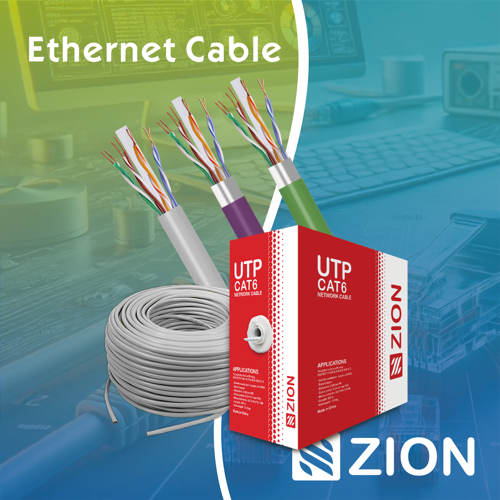 Ethernet CableCat5e to Cat8
 Coaxial CableRF and video signal
 Fire, Security & AlarmSafety systems
 Voice, Audio & VideoSignal cabling
 Power & Control CableEnergy and control
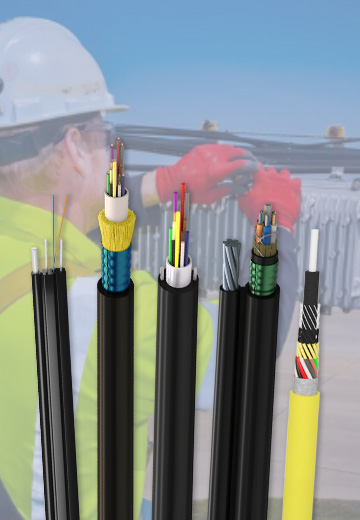
Fiber optic cable systems
Outdoor, indoor, FTTH and distribution cable lines for access networks, backbone routes and campus deployments.
 Telecom & ISP NetworksFTTH, PON, ODN
  Data Center InfrastructureServer room cabling
  Building Low-Voltage SystemsBMS, AV, weak current
  Security & Fire ProtectionAlarm, CCTV, access
  Industrial Automation CablePLC, RS485, fieldbus
  Energy & Power InfrastructureSolar, battery, power
 Telecom & ISP Networks
For FTTH / PON access, outdoor fiber deployment, aerial routes, duct routes, direct burial routes, rural broadband and ODN planning.
Tools
Use calculators and planning tools for conduit capacity, PoE voltage drop and fiber optic link loss budget work.