How to Choose Outdoor Ethernet Cable for Commercial Installations
Author: Site Editor Publish Time: 15-04-2026 Origin: Site
How to Choose Outdoor Ethernet Cable for Commercial Installations
Choose by installation route + environment + PoE load + code boundary, not by Cat number alone.
For most new commercial outdoor links, solid bare copper outdoor-rated Cat6A is the safest default.
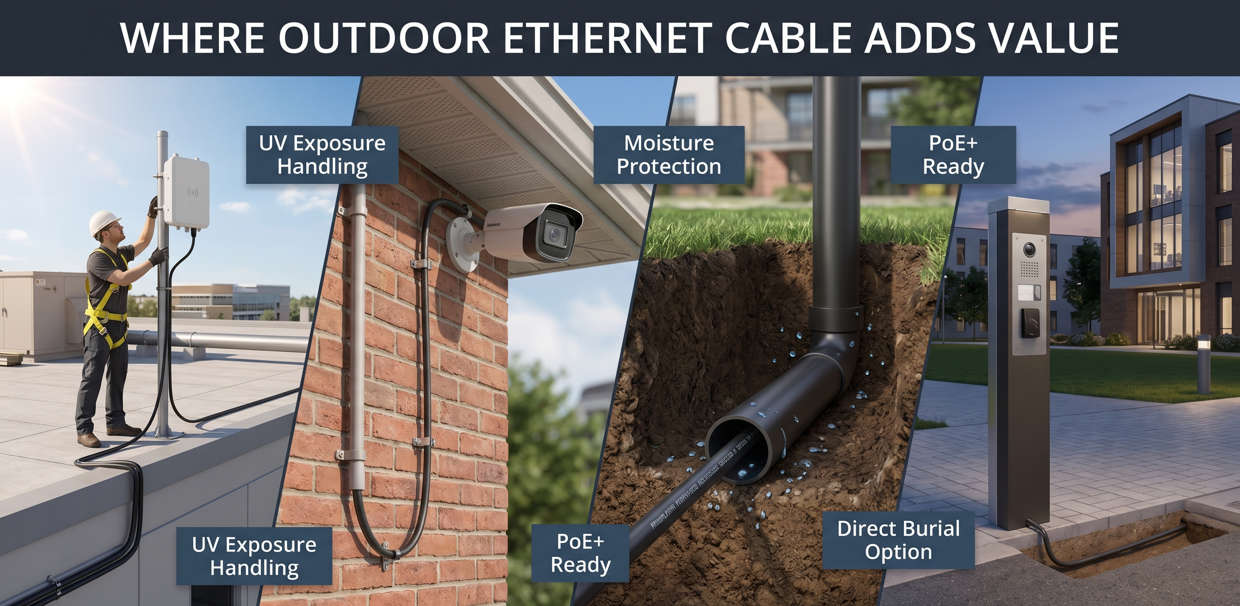
Do not assume outdoor = direct burial; UV resistance, wet-location suitability, burial readiness, and indoor transition are separate checks.
■ Overview
Outdoor Ethernet cable selection for commercial installations should start with the real deployment conditions, not with a generic category label. The correct cable is the one that matches route type, UV exposure, moisture risk, burial condition, PoE load, pathway congestion, and building-entry code requirements. In practice, commercial failures usually come from choosing indoor cable for semi-exposed runs, assuming all outdoor cable is burial-ready, underestimating PoE heat, or ignoring the transition between outside plant routing and indoor spaces.
For most new projects involving cameras, wireless access points, access control, signage, or smart-building edge devices, outdoor-rated solid bare copper Cat6A is the safest long-term baseline. It offers stronger support for higher PoE loads, better upgrade headroom, and lower risk of mid-life replacement when device density and bandwidth requirements increase.
■ Key Features
When evaluating outdoor Ethernet cable for a commercial project, focus on the features that directly affect deployment reliability, maintenance cost, and future compatibility.
■ Technical Specifications

The table below summarizes the practical specification checkpoints that matter most for engineering review and purchasing decisions.
| Specification Item | What to Check | Why It Matters |
|---|---|---|
| Cable Category | Cat5e, Cat6, or Cat6A | Determines bandwidth headroom, PoE tolerance, and upgrade readiness. |
| Conductor Material | Solid bare copper preferred | Improves resistance performance, voltage stability, and long-term link reliability. |
| Jacket Type | UV-resistant PE or equivalent outdoor jacket | Protects against sunlight, weathering, and environmental degradation. |
| Moisture Protection | Water-blocking or wet-location suitability | Reduces failure risk in conduit, underground ducts, or humid installations. |
| Burial Capability | Direct burial only if explicitly stated | Avoids procurement mistakes caused by assuming all outdoor cable is burial-ready. |
| PoE Suitability | Check bundle density, ambient heat, and power level | Higher-power PoE increases cable temperature and reduces margin. |
| Pathway Limit | Keep standard channel planning within 100 m | Protects link performance and reduces troubleshooting risk on long exterior routes. |
| Code Rating | CM / CMR / CMP / CMX / indoor-outdoor boundary as required | Affects how the cable can transition from outdoor routing into occupied building space. |
■ Construction / Materials
Construction details determine whether the cable remains reliable after years of heat, moisture, stress, and continuous power delivery. The table below is useful for product comparison and supplier evaluation.
| Construction Element | Recommended Direction | Procurement / Engineering Note |
|---|---|---|
| Conductors | Solid bare copper | Avoid low-cost substitutions that increase resistance and PoE risk. |
| Jacket | Outdoor-grade UV-resistant PE | Better for exposed runs, rooftops, and building exteriors. |
| Water Protection | Water-blocking compound or suitable dry design | Important for below-grade conduit and moisture-prone routing. |
| Shielding | Only when EMI conditions justify it | Shielding adds cost and requires proper grounding discipline. |
| Armor / Extra Mechanical Protection | Consider for industrial yards or damage-prone routes | Helps where crush, impact, or vandal risk is high. |
| Pair Design / Category Build | Cat6A for stronger PoE and upgrade margin | Particularly valuable for APs, cameras, access systems, and future 10G migration. |
■ Applications
Outdoor Ethernet cable is widely used across commercial and mixed-use projects where edge devices need stable data and power delivery beyond the controlled indoor environment.
| Application Scenario | Typical Need | Suggested Direction |
|---|---|---|
| IP Surveillance | Continuous PoE, long outdoor exposure, stable link margin | Outdoor Cat6A, solid copper, UV-resistant jacket |
| Wireless Access Points | Higher throughput and stronger PoE profile | Cat6A preferred, especially for new commercial deployments |
| Access Control / Intercom | Reliable edge connectivity at gates and entry points | Outdoor cable matched to route and moisture conditions |
| Smart Building Devices | Mixed low-voltage devices with long service life expectation | Cat6 or Cat6A based on PoE density and growth plan |
| Campus / Yard Links | More severe moisture and route complexity | Check burial readiness carefully; consider fiber for longer or lightning-sensitive links |

■ Decision Rules / Engineer’s Shortcut
This section is designed for quick engineering review, quotation decisions, and project handoff. Use it to decide when outdoor Cat6A should be the default and when alternative constructions or media are better choices.
| Situation | Choose This | Do Not Choose This When… | Alternative | Cost / Risk / Maintainability Impact |
|---|---|---|---|---|
| New commercial install with cameras, APs, or mixed PoE edge devices | Outdoor-rated Cat6A, solid bare copper | The design clearly has low power, low growth, and strict budget constraints | Cat6 only for lighter-duty projects | Slightly higher initial cost, lower upgrade and rework risk |
| Exterior wall / rooftop exposed run | UV-resistant outdoor jacket | The cable is only indoor-rated or assumes conduit will solve everything | Move to properly rated indoor/outdoor cable | Low cost increase, major reduction in weathering risk |
| Below-grade conduit or wet route | Wet-location suitable outdoor cable | The product description only says “outdoor” without water-related qualification | Select water-protected design and seal terminations correctly | Moderate cost, strong reliability benefit |
| Direct burial route | Only cable explicitly suited for burial | You are relying on generic outdoor wording | Use conduit or change to burial-capable construction | Avoids excavation, replacement, and early moisture failure |
| High EMI industrial environment | Shielded cable only when grounding is planned correctly | No bonding discipline or shield continuity is assured | High-quality UTP or fiber, depending on environment | Shielding adds cost and installation complexity |
| Inter-building link with longer distance or lightning concern | Evaluate fiber instead of copper | The route pushes copper limits or creates surge exposure | Outdoor fiber solution | Often higher material logic upfront, lower long-term electrical risk |
■ Selection Guide
A simple way to reduce procurement errors is to approve outdoor Ethernet cable in the following sequence.
■ FAQ
■ Conclusion
The best outdoor Ethernet cable for a commercial installation is the one that matches the real jobsite conditions before the purchase order is issued. That means selecting by route, UV exposure, moisture risk, burial condition, PoE load, and code transition, then confirming the correct category and construction details.
For most modern commercial deployments, outdoor-rated solid bare copper Cat6A is the strongest default because it provides better margin for PoE-powered edge devices, stronger upgrade headroom, and lower risk of early replacement. The result is a cabling system that is easier to justify technically, safer to maintain operationally, and more predictable from an engineering and procurement standpoint.



 Fiber Optic Tools
Products 6 families
Solutions 6 markets
Resources Tools & docs
Certificate
Certification and compliance references for project review, qualification and purchasing documentation.
 Fiber Optic CableAccess and backbone
 Ethernet CableCat5e to Cat8
 Coaxial CableRF and video signal
 Fire, Security & AlarmSafety systems
 Voice, Audio & VideoSignal cabling
 Power & Control CableEnergy and control
Fiber optic cable systems
Outdoor, indoor, FTTH and distribution cable lines for access networks, backbone routes and campus deployments.
 Telecom & ISP NetworksFTTH, PON, ODN
  Data Center InfrastructureServer room cabling
 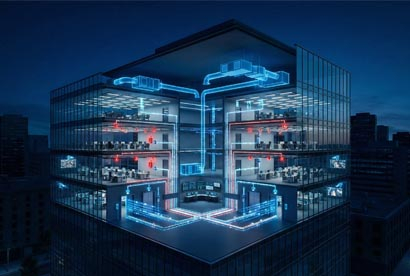 Building Low-Voltage SystemsBMS, AV, weak current
 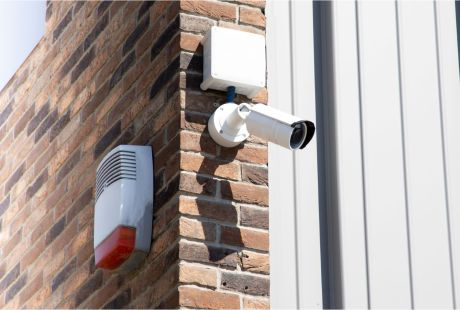 Security & Fire ProtectionAlarm, CCTV, access
  Industrial Automation CablePLC, RS485, fieldbus
 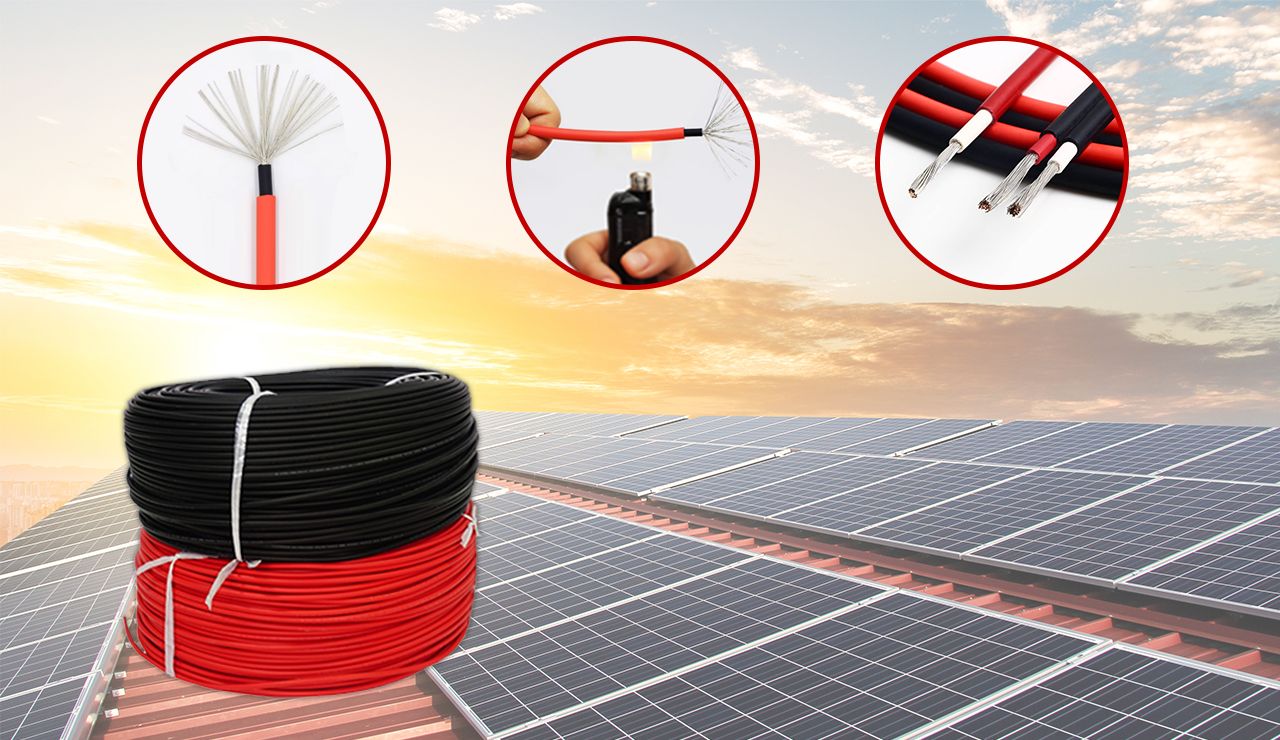 Energy & Power InfrastructureSolar, battery, power
 Telecom & ISP Networks
For FTTH / PON access, outdoor fiber deployment, aerial routes, duct routes, direct burial routes, rural broadband and ODN planning.
Tools
Use calculators and planning tools for conduit capacity, PoE voltage drop and fiber optic link loss budget work.