How to Reduce Shipment Verification Risk for Cable Orders
Author: Site Editor Publish Time: 20-04-2026 Origin: Site
How to Reduce Shipment Verification Risk for Cable Orders
A Practical Pre-Shipment Control Guide for Engineers, Buyers, and Project Teams
Shipment verification risk is mainly reduced by freezing one approved baseline before dispatch.
Buyers should verify not only total quantity, but also reel lengths, labels, print marking, packing logic, and traceability.
For custom, export, or project-critical cable orders, a stricter pre-shipment release process is usually cheaper than fixing errors after arrival.
■ What Shipment Verification Risk Means in Cable Orders
Shipment verification risk is the risk that the buyer cannot clearly confirm that the cable being dispatched is exactly the cable that was approved, ordered, tested, packed, and identified for the project. In real orders, the problem is often not dramatic product failure. It is smaller but expensive mismatches such as wrong print marking, impractical reel lengths, inconsistent labels, incomplete accessory counts, or documents that do not map clearly to the physical goods. For engineers, procurement teams, and project managers, reducing this risk means building a shipment-control process that supports receiving, installation, customs handling, and project acceptance with less dispute and less rework.
In practical terms, shipment verification is not just a logistics formality. It is the final control point before error cost rises sharply. If a mismatch is discovered before dispatch, correction is usually manageable. If the same issue is found after customs clearance, warehouse receiving, or field installation, the cost in delay, labor, coordination, and replacement can become disproportionately high.
The fastest way to lower shipment verification risk is to lock one approved baseline for specification, quantity logic, identification rules, packing format, and required documents before goods are released for shipment.
■ Where Verification Risk Usually Appears
Most shipment verification failures come from gaps between approved data and shipped reality. The shipment may contain the correct general cable family, but still fail project needs because the model detail, labeling, drum split, or traceability evidence is wrong or incomplete.
■ What Should Be Checked Before Shipment
Before dispatch, buyers are usually trying to verify five things: specification correctness, quantity correctness, identification correctness, documentation correctness, and packing readiness. These should be checked as one connected release package, not as disconnected emails or last-minute screenshots.
| Verification Area | What Should Be Checked | Why It Matters | Risk If Ignored |
|---|---|---|---|
| Cable specification | Conductor, insulation, shielding, jacket, rated voltage, fire class, fiber count or pair count | Confirms technical compliance with the approved baseline | Wrong cable may still look generally acceptable at first glance |
| Quantity | Total ordered length, reel count, reel lengths, accessory count | Supports receiving accuracy and installation planning | Short shipment, over-split reels, missing accessories |
| Identification | Product code, PO reference, reel ID, destination mark, cable print marking | Maintains traceability and site-level control | Warehouse disputes, misrouting, or wrong installation |
| Test evidence | Routine test data, inspection summary, batch-linked evidence | Shows that shipped goods match the required quality record | Acceptance becomes hard to defend or verify |
| Packing readiness | Drum type, palletization, wrapping, moisture protection, handling marks | Reduces transport damage and receiving friction | Transit damage, handling issues, customs or unloading problems |
■ Decision Rules and Verification Depth
A standard repeat order and a custom export project should not use the same verification depth. The more customized the product, the more important it becomes to review the shipment at reel level, label level, and document level rather than only at summary level.
| Order Situation | Recommended Verification Level | What to Require | Why |
|---|---|---|---|
| Standard cable, repeat order, low installation sensitivity | Basic | Packing list, total quantity confirmation, label photo, standard test record | Control cost should stay proportionate |
| Multi-item order or mixed reel lengths | Enhanced | Reel list, label set, reel-length reconciliation, model-by-model review | Totals alone are not enough |
| Custom print marking or project labeling | Enhanced to Strict | Approved artwork, sample label confirmation, production and packing photos | Identification errors are expensive to sort later |
| Fire-rated, industrial, control, or project-critical cable | Strict | Batch-linked test evidence, detailed identification, release approval before dispatch | Compliance and field risk are higher |
| Export order with customs sensitivity or many mixed SKUs | Strict | Consistent packing list, marks, reel list, label photos, shipment summary | Document inconsistency causes avoidable delay and dispute |
| Condition Found During Verification | Hold or Release? | Why |
|---|---|---|
| Wrong cable model, construction, or fire class | Hold | Technical and project approval risk is too high |
| Total quantity correct but reel lengths are impractical for installation | Usually Hold | Usability risk may still stop field work |
| Cable print marking differs from approved wording | Usually Hold | Traceability and approval consistency are affected |
| Packing list and package count do not match | Hold | Receiving and customs risk increase immediately |
| Minor layout difference on outer label, core information remains correct | Case by case | May be acceptable if traceability and project acceptance are not affected |
If the issue affects installation, compliance, traceability, customs handling, or warehouse receiving, it should not be treated as a cosmetic correction.
■ Practical Pre-Shipment Verification Workflow
The most reliable way to reduce shipment verification risk is to treat shipment release as a controlled handoff. The following workflow is simple enough for repeat use and strong enough for most export or project-driven orders.

■ High-Value Verification Documents for Cable Shipments
Not every document reduces risk equally. The most useful documents are the ones that help the buyer connect the physical goods to the approved order without guesswork.
| Document | Main Use | Best Practice | Common Weak Point |
|---|---|---|---|
| Packing list | Confirms shipped items and packing structure | List by item and package, not only by shipment total | Too general for receiving or customs checks |
| Reel list / drum list | Confirms reel count and reel lengths | Include reel ID, net length, and product reference | No clear link to physical labels |
| Label file or label sample | Confirms identification format | Approve before packing for custom projects | Late changes cause rework or mismatches |
| Cable print marking reference | Confirms on-cable identification | Approve exact wording and sequence in advance | Buyer approves specs but not marking content |
| Test report or inspection summary | Provides quality evidence | Map clearly to model and production lot when relevant | Exists, but cannot be traced to the shipment |
| Photo set | Visual confirmation of physical goods | Use both close-up and wide-angle views for labels and packing condition | Photos are too limited to verify actual release details |
A document package is only useful when the receiving team, project team, and supplier all understand how each document maps to the shipped goods. More files do not always mean less risk.
■ Verification Focus by Project Type
Different cable projects create different verification priorities. Buyers should not apply a single checklist mechanically to every order.
Focus on fire class, compliance-linked model identification, approval documents, and exact label consistency.
Focus on shielding structure, jacket material, mechanical environment requirements, and product code accuracy.
Focus on category or transmission specification, reel-length planning, and installation-stage identification.
Focus on drum-length distribution, unloading practicality, route marking, and destination-based packing clarity.
■ When to Choose a Stricter Verification Process
A stricter release process usually makes sense when the order includes custom print marking, project-specific labels, mixed reel lengths, fire-rated or industrial constructions, many SKUs in one dispatch, or export conditions where customs and receiving teams rely heavily on outer marks and consistent documents. In these cases, pre-shipment control is not extra bureaucracy. It is a lower-cost substitute for field correction and shipment dispute handling.
■ FAQ
■ Conclusion
Reducing shipment verification risk for cable orders is not about creating more paperwork. It is about making the shipment easier to verify, easier to receive, and easier to install. For most buyers, the strongest control model is straightforward: freeze the approved baseline, convert the order into verifiable units, request clear shipment evidence before dispatch, and use explicit release-or-hold rules. This approach helps reduce receiving disputes, customs friction, labeling errors, impractical reel splits, and late-stage project delays.
ZION can support project teams with product details, packing confirmation points, labeling logic, and pre-shipment coordination for customized cable orders.



 Fiber Optic Tools
Products 6 families
Solutions 6 markets
Resources Tools & docs
Certificate
Certification and compliance references for project review, qualification and purchasing documentation.

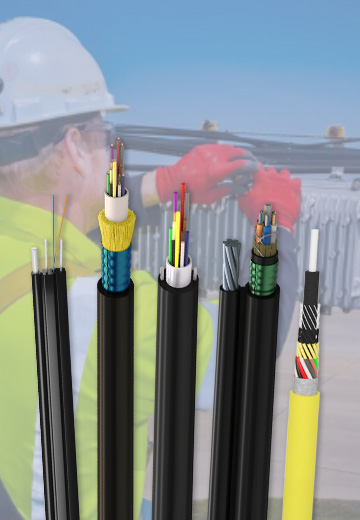 Fiber Optic CableAccess and backbone
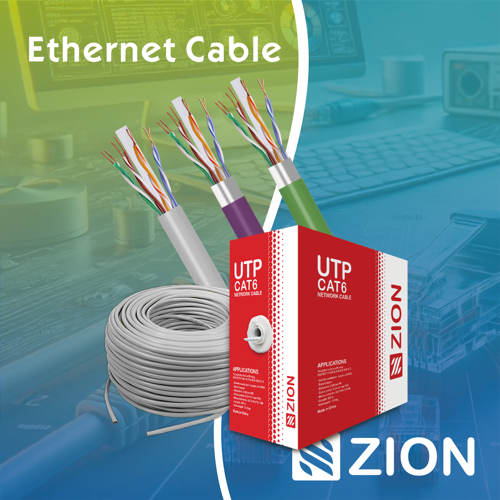 Ethernet CableCat5e to Cat8
 Coaxial CableRF and video signal
 Fire, Security & AlarmSafety systems
 Voice, Audio & VideoSignal cabling
 Power & Control CableEnergy and control
Fiber optic cable systems
Outdoor, indoor, FTTH and distribution cable lines for access networks, backbone routes and campus deployments.
 Telecom & ISP NetworksFTTH, PON, ODN
  Data Center InfrastructureServer room cabling
  Building Low-Voltage SystemsBMS, AV, weak current
  Security & Fire ProtectionAlarm, CCTV, access
  Industrial Automation CablePLC, RS485, fieldbus
  Energy & Power InfrastructureSolar, battery, power
 Telecom & ISP Networks
For FTTH / PON access, outdoor fiber deployment, aerial routes, duct routes, direct burial routes, rural broadband and ODN planning.
Tools
Use calculators and planning tools for conduit capacity, PoE voltage drop and fiber optic link loss budget work.