Copper vs CCA LAN Cable: Key Differences for Ethernet, PoE & Structured Cabling
Author: Site Editor Publish Time: 21-04-2026 Origin: Site
Copper vs CCA LAN Cable: What Is the Difference?
If you are comparing copper vs CCA cable for Ethernet projects, the practical answer is simple: pure copper LAN cable is the safer choice for structured cabling, PoE, project approval, and long-term maintenance, while CCA ethernet cable is usually a cost-down compromise with tighter performance and reliability margins.
Pure copper LAN cable is the recommended choice for permanent links, Cat5e/Cat6/Cat6A, and PoE applications.
CCA cable can reduce initial purchase cost, but usually increases risk on resistance, heat, voltage drop, and long-term maintenance.
For project approval and predictable deployment, buyers should confirm conductor material, AWG, DC resistance, PoE suitability, and fire rating in writing.
■ 1) Direct Answer
For most real Ethernet infrastructure projects, pure copper LAN cable is the better choice. It is the safer option for structured cabling, longer links, PoE devices, patch panels, and jobs where installation consistency, maintenance, and approval risk matter.
By contrast, CCA ethernet cable uses a copper-clad aluminum conductor. It may look attractive on price, but it normally gives buyers less electrical margin and more uncertainty in demanding applications. That is why the real decision is not simply “which cable is cheaper,” but “which cable reduces risk after installation.”
If the cable will be part of a permanent building network, support PoE, or be handed over as a project deliverable, choose copper. Treat CCA as a cost-down substitution, not as a like-for-like equivalent.
■ 2) Copper vs CCA at a Glance
The simplest way to understand copper vs CCA cable is to compare conductor material, resistance, PoE behavior, and lifecycle risk instead of focusing only on box price.
| Item | Pure Copper LAN Cable | CCA Ethernet Cable |
|---|---|---|
| Conductor material | Solid or stranded copper | Copper-clad aluminum |
| Electrical resistance | Lower | Higher |
| PoE suitability | Better margin | Higher voltage drop and heat risk |
| Project approval confidence | Higher | Lower |
| Initial material cost | Higher | Lower |
| Lifecycle risk | Lower | Higher |
Copper and CCA may both be sold as Ethernet cable, but they do not deliver the same risk profile once you factor in resistance, PoE load, rework cost, and project handover 、expectations.

■ 3) What Is CCA Ethernet Cable?
CCA means copper-clad aluminum. The conductor has an aluminum core with a thin copper outer layer. This structure can lower material cost and weight, but it also changes the electrical behavior of the cable compared with pure copper conductors.
That is why CCA cable often appears in price-sensitive sourcing discussions. However, the lower purchase price does not make it equivalent to solid copper cable in performance-critical or project-sensitive deployments.
Why buyers get confused
Many buyers first compare jacket print, category marking, or bundle price. But with LAN cable, the conductor metal matters. Two cables can look similar from the outside while carrying very different electrical and installation risk profiles.
■ 4) What Is Pure Copper LAN Cable?
Pure copper LAN cable uses copper throughout the conductor. In real structured cabling work, this is the baseline material expectation for horizontal cabling and for most installations where stable network performance and predictable PoE delivery matter.
For Cat5e, Cat6, and Cat6A projects, copper remains the preferred choice because it helps preserve electrical margin, supports demanding endpoints more confidently, and reduces arguments during installation, testing, and handover.
If the job includes patch panels, keystone jacks, ceiling routes, or a formal project sign-off, copper usually saves more money overall because it reduces retest and replacement risk.
■ 5) Key Engineering Differences
Electrical resistance and signal margin
The most important technical difference is resistance. Copper offers better conductivity, which means more available margin for stable transmission and remote power delivery. CCA, with its aluminum core, typically consumes more of that margin under the same use condition.
PoE, current, and heat
PoE makes conductor quality much more important. As power moves through the cable to cameras, Wi-Fi access points, VoIP phones, and access devices, higher resistance increases the risk of voltage drop and heat buildup. That is why copper is the better fit when powered endpoints are involved.
Mechanical and maintenance behavior
Material choice also affects handling and long-term maintenance confidence. In real projects, the cable is not judged only by lab numbers; it is judged by whether the link remains easy to terminate, test, and support over time.
| Engineering factor | Why it matters | Copper advantage |
|---|---|---|
| Lower resistance | Preserves signal and power margin | Better stability across real links |
| PoE support | Helps reduce voltage drop and heating concern | Safer for IP devices and higher-load endpoints |
| Project consistency | Affects approval, maintenance, and troubleshooting | Lower rework risk |
| Lifecycle confidence | Affects total installed cost | More predictable long-term choice |
CCA may reduce purchase cost, but it can also narrow the safety margin where projects fail most often: powered endpoints, longer permanent links, and installations where troubleshooting costs more than the cable itself.

■ 6) Selection Rules for Buyers and Engineers
The correct selection rule is not “always buy the cheapest box.” It is “choose the conductor material that fits the link risk, power load, and handover expectation.”
| Project condition | Recommended choice | Reason |
|---|---|---|
| Permanent structured cabling | Copper | Better approval confidence and lower rework risk |
| PoE cameras, APs, or phones | Copper | Lower resistance and better power margin |
| Cat6 / Cat6A project deployment | Copper | More predictable infrastructure choice |
| Temporary short-distance low-risk use | CCA only if compromise is explicit | Only where lifecycle risk is acceptable |
| Warranty-sensitive or handover-sensitive jobs | Copper | Lower dispute and maintenance risk |
When CCA enters the discussion
Buyers usually consider CCA for one reason: lower upfront price. That can make sense only in very limited cases, such as noncritical, short, temporary, or easily replaceable links. Even then, the compromise should be documented clearly so that future performance disputes do not become approval disputes.
Cable is rarely the largest cost in a network project. Labor, access difficulty, downtime, retesting, and replacement usually cost more than the initial savings from choosing a lower-grade conductor material.

■ 7) What to Ask a Supplier
Before approving a quotation or sample, buyers should request written confirmation on the items below. This step prevents a low-price comparison from turning into a conductor-material mismatch after delivery.
Supplier confirmation checklist
Is the conductor solid copper or CCA?
What is the AWG size?
What is the DC resistance specification?
What category performance is being claimed?
Is the cable intended for PoE or higher-load powered devices?
What is the fire rating or jacket rating?
Is the cable intended for horizontal cabling, patching, or both?
Can the supplier provide a datasheet and a clear conductor declaration in the quotation?
If a supplier uses vague phrases such as “high conductivity,” “network grade,” or “cost-effective Cat6” without clearly stating conductor material, that is a procurement warning sign rather than a technical assurance.
■ 8) FAQ
Is CCA ethernet cable the same as pure copper LAN cable?
No. CCA uses a copper-clad aluminum conductor, while pure copper LAN cable uses copper throughout the conductor. That difference affects resistance, PoE behavior, and project suitability.
Can CCA cable still work for Ethernet?
It may work in some low-demand or short-run situations, but that does not make it the preferred engineering choice for structured cabling or project-grade network infrastructure.
Is copper better for PoE?
Yes. Copper is generally better for PoE because lower resistance helps preserve power delivery margin and reduce the chance of excessive voltage drop or avoidable heat buildup.
Why do project buyers usually prefer copper cable?
Because project buyers care about handover reliability, maintenance cost, predictable installation, and lower approval risk. Copper aligns better with those priorities.
What is the difference between CCA and Cca?
CCA normally refers to copper-clad aluminum conductor, while Cca in some regulatory or fire-class contexts can refer to a fire classification term. Buyers should verify which meaning is being used instead of assuming they are the same.
■ 9) Conclusion
If the goal is dependable Ethernet infrastructure, pure copper LAN cable is the better long-term choice. It offers a stronger position for structured cabling, powered endpoints, installation consistency, and fewer arguments after delivery.
CCA ethernet cable may reduce the purchase price, but it often shifts cost and risk into the installation and maintenance phase. For procurement teams, engineers, and project managers, that is usually the wrong trade unless the use case is clearly temporary, low-risk, and explicitly approved as a compromise.
The most practical next step is simple: require every supplier to state conductor material, AWG, DC resistance, category claim, and intended use in writing before comparing price.
Send your conductor requirement, category level, PoE application, shielding preference, jacket type, and installation environment. Zion Communication can help you narrow the correct copper LAN cable option for OEM, distribution, and project-based deployment.



 Fiber Optic Tools
Products 6 families
Solutions 6 markets
Resources Tools & docs
Certificate
Certification and compliance references for project review, qualification and purchasing documentation.
 Fiber Optic CableAccess and backbone
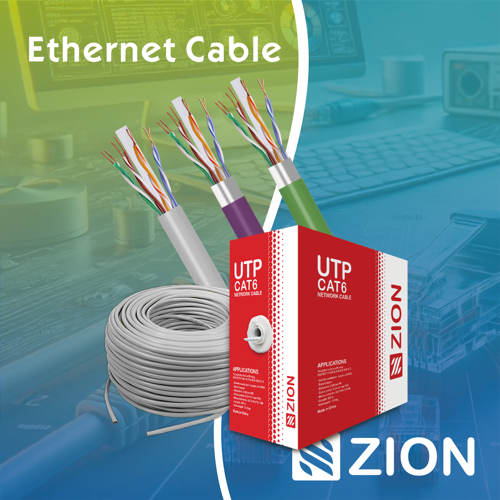 Ethernet CableCat5e to Cat8
 Coaxial CableRF and video signal
 Fire, Security & AlarmSafety systems
 Voice, Audio & VideoSignal cabling
 Power & Control CableEnergy and control
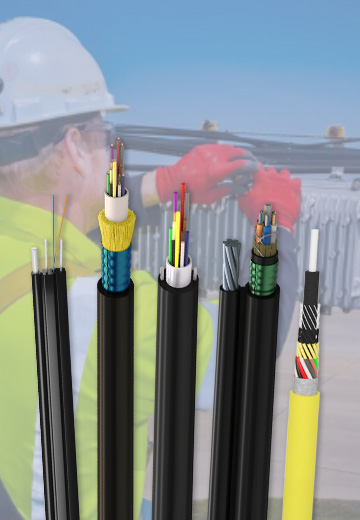
Fiber optic cable systems
Outdoor, indoor, FTTH and distribution cable lines for access networks, backbone routes and campus deployments.
 Telecom & ISP NetworksFTTH, PON, ODN
  Data Center InfrastructureServer room cabling
  Building Low-Voltage SystemsBMS, AV, weak current
  Security & Fire ProtectionAlarm, CCTV, access
  Industrial Automation CablePLC, RS485, fieldbus
  Energy & Power InfrastructureSolar, battery, power
 Telecom & ISP Networks
For FTTH / PON access, outdoor fiber deployment, aerial routes, duct routes, direct burial routes, rural broadband and ODN planning.
Tools
Use calculators and planning tools for conduit capacity, PoE voltage drop and fiber optic link loss budget work.