
The right package depends on the cable's bending limits, the loaded drum's dimensions and mass, the transport route, and the equipment available for unloading and installation. Drum material alone does not establish whether a package is suitable.
1. Choose the Drum by Its Design and Load Rating
Wooden drums are a common option for outdoor fiber optic cable, including ADSS, duct and armored constructions. They can be economical for one-way shipments and can be built around the required delivery length. Suitability still depends on the drum's construction, condition and rated load.
Where fitted, circumferential protective boards, often called lagging or battens, help shield the outer cable layers. They do not automatically provide a load-bearing surface for forklift forks or other cargo.
Steel reels may be appropriate for repeated use, demanding handling or a package requiring a particular structural design. They also require checks for flange deformation, corrosion, weld condition and sharp edges that could damage the cable.
Neither higher strength nor greater tare weight should be assumed from the material name alone. Compare the actual designs, load ratings, empty weights and prices. Any additional packaging weight reduces the payload available for cable; it does not reduce the container's rated payload itself.
| Packaging option | Potential application | Checks before approval |
|---|---|---|
| Wooden drum | One-way shipments and project delivery lengths | Rated load, barrel size, flange condition, wood compliance and weather protection |
| Steel reel | Reuse programs or packages requiring a suitable steel construction | Rated load, corrosion protection, actual tare weight, lifting arrangement and reuse logistics |
| Reels on a pallet or cradle | Grouped small reels or specially supported packages | Combined load rating, restraint, stability and overall dimensions |
| Coil or carton | Products specifically approved for this packaging | Bend limits, protection and a suitable dispensing method |
A pallet supports a handling unit; a drum supports and controls the wound cable. They perform different functions and may be used together. A heavy drum needs an appropriately designed pallet or cradle, with restraint against rolling and tipping. Stretch film is not a substitute for structural restraint.
2. Confirm Wood Packaging Requirements
ISPM 15 addresses phytosanitary risks from raw-wood packaging used in international trade. Relevant components can include drum timbers, pallets and loose blocking. Packaging made entirely from qualifying processed wood, such as plywood, is exempt; plywood flanges alone do not establish exemption for a reel containing raw-wood components. Check the complete package against destination requirements. See the IPPC ISPM 15 overview.
For regulated wood packaging, specify compliant debarked wood, an approved treatment and the authorized mark. Under ISPM 15, that mark replaces the need for a phytosanitary certificate for the packaging; a treatment document does not replace a required mark. Additional shipment documentation should be agreed separately. The ISPM 15 standard explains the scope, approved measures and marking system.
The same check applies when a steel reel is shipped with raw-wood pallets or blocking. Phytosanitary treatment is not a guarantee of weather resistance, structural strength or protection from later pest contamination.
3. Match Drum Geometry to the Cable
A usable drum specification needs more than a flange diameter. The barrel must suit the cable manufacturer's approved winding and storage requirements, while the full package must remain compatible with transport and payoff equipment.
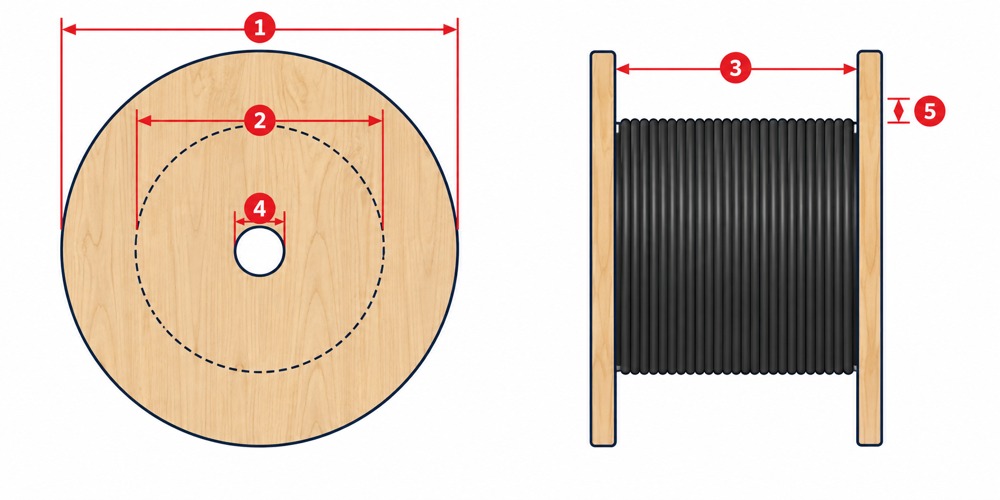
- Barrel diameter and usable winding width between the flanges.
- Flange diameter and clearance above the outer cable layer.
- Overall shipping width, including protruding hardware and protection.
- Maximum loaded mass and the drum's rated load.
- Spindle-hole dimensions and compatibility with the proposed stand or trailer.
Installation under tension may require a different minimum bend radius from static storage. Use the specific cable data sheet and winding instructions; a generic diameter multiplier cannot replace them. A bend radius and a bend diameter are also different quantities. Prysmian's optical fiber cable installation guidance illustrates why these conditions must be distinguished.
The supplier should confirm capacity using the actual cable diameter, winding arrangement, end management and protective clearance. Increasing flange size does not compensate for an undersized barrel.
Use consistent units and avoid counting packaging twice. Estimated values support equipment selection and quotations; final shipment weights must be established through the applicable shipping process.
4. Specify Delivery Lengths Around Installation Sections
A longer continuous length can avoid an intermediate splice only when the installation method and route allow that length to be placed continuously. Splice locations may already be fixed by branches, access points or network design.
Before confirming the drum schedule, agree the installation sections, termination allowances, planned slack, pulling or blowing limits, and site access. State whether each delivery length must be continuous and whether any factory joint would be acceptable under the purchase specification.
Longer lengths can increase drum dimensions, lifting demands and installation complexity. Conversely, a short drum may create an unnecessary splice when it cannot cover the intended section. Compare the cost of delivering and installing the specified sections, including packaging, freight, handling, splicing and surplus cable.
Record length tolerances explicitly. A nominal drum length with an accepted negative tolerance may be unsuitable for a section requiring the full stated length.
5. Make Labels and Records Traceable
Agree a label format that links each physical drum to the packing list and the relevant factory test records. Typical fields include:
- Supplier, cable designation, fiber count and fiber specification.
- Drum identifier and manufacturing or batch reference.
- Actual cable length and, where applicable, jacket meter-mark start and finish values.
- Net cable mass, packed-drum gross mass and overall shipping dimensions, with units.
- A clearly identified rolling-direction instruction.
- Project reference and end identification where required.
The drum schedule should use the same identifiers as the labels. State what is included in each gross-weight figure, particularly when a pallet carries several reels.
Both cable ends need suitable moisture seals and secure retention without excessive bending. Water-blocking cable construction does not remove the need to protect exposed ends. Any end opened for inspection or testing should be resealed using the approved method.
6. Plan Handling, Storage and Payoff
Conventional cable drums are normally kept with the flanges vertical and the spindle axis horizontal. A different orientation requires approval for that particular package.
For direct forklift handling, support both flanges and keep the forks clear of the cable and unsupported lagging. Crane lifting requires an approved arrangement, such as a rated spindle and suitable spreader that prevents sling pressure on the flanges. Never drop a drum. Prysmian's cable and drum handling guide provides practical examples.
Confirm equipment capacity for the actual load and lifting geometry. A forklift's headline capacity alone does not establish suitability for a wide drum at a greater load center. A palletized package should be lifted through its designated fork entries, following the package design.
Roll a drum only a short distance on a suitable surface and only in its identified rolling direction. Do not assume that an unlabeled arrow refers to rolling rather than payoff. If the instruction is missing or ambiguous, obtain the supplier's handling instructions before moving it.
Store reels on firm ground with protection against rolling and flange settlement. Before installation, inspect the reel and use the cable-specific handling requirements. Corning's outside-plant cable handling guidance covers these checks and the need to obtain bend limits from the cable specification.
Agree weather protection, inspection intervals and the permitted storage temperature for the supplied cable and package. Outdoor cable suitability does not by itself establish an unlimited outdoor storage life for a wooden drum. Do not stack packages unless their design and loading arrangement permit it.
Payoff equipment must suit the reel, cable and installation method. Confirm stand capacity, spindle fit, clearance and payout control before dispatch.
7. Build the Container Plan From Actual Packages
Check container feasibility before committing to drum dimensions, then finalize the plan using the completed package sizes and shipment weights.
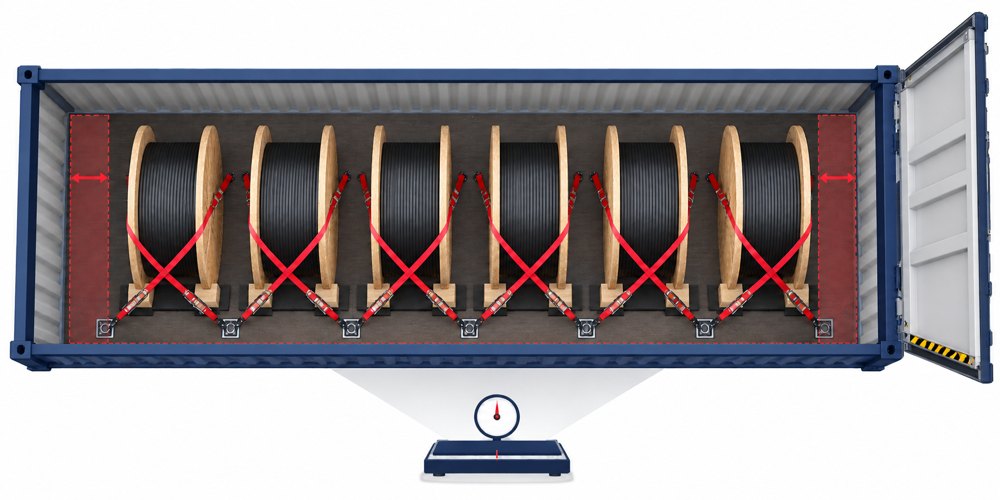
Container names are insufficient for close-clearance loads. Hapag-Lloyd, for example, identifies its published dimensions as fleet examples that vary by manufacturer. Confirm the equipment allocated to the shipment using the carrier's container specifications.
| Constraint | What to confirm |
|---|---|
| Door clearance | Full package envelope, pallet or cradle height, lifting clearance and loading path |
| Usable space | Actual arrangement of drums, restraints and access for unloading |
| Mass limits | Container payload and maximum gross mass, plus applicable carrier and inland transport limits |
| Floor loading | Local flange or cradle loads and the loading equipment's wheel loads |
| Cargo restraint | Resistance to rolling, sliding and tipping throughout the route |
Total cubic volume divided by drum volume does not give a dependable reel count. An arrangement must physically fit, allow safe handling and leave room for the securing system. There is likewise no fixed number of cable kilometers per container based only on fiber count.
Blocking, bracing and lashings should be designed for the cargo and available securing points. Chocks alone should not be assumed sufficient for the entire transport route. The IMO/ILO/UNECE CTU Code provides non-mandatory international guidance on packing and securing; applicable legal and carrier requirements still need to be followed.
Distinguish Cargo Weight From Container VGM
For packed containers subject to the SOLAS requirement, the shipper must provide verified gross mass in time for vessel stowage planning. VGM includes the cargo, drums, pallets, dunnage, securing materials and the empty container's tare mass.
Verification can use the packed-container weighing method or an approved certified method that sums the contents and adds container tare. A preliminary packing-list estimate alone is not verified gross mass. See the IMO container gross mass verification guidance.
For an LCL shipment, clarify how package weights reach the consolidator and who submits the packed container's VGM.
8. Separate MOQ From Delivery Length and Freight Economics
The minimum order quantity is a supplier's commercial or production condition. It may depend on cable construction, materials, customization, setup and agreed testing. It should be stated in the quotation for the specific product.
Length per drum is a separate delivery requirement. Cutting a production run into many short lengths can add rewinding, packaging and handling costs, but does not create a universal industry minimum drum length.
An order also does not need to fill a container simply because it is exported. LCL acceptance depends on the forwarder's package limits and handling arrangements. Compare the total quoted charges, including origin and destination handling, against FCL alternatives. Additional transfers and mixed cargo deserve attention, but higher freight cost or damage cannot be assumed for every LCL shipment.
Ask the supplier to quote total quantity, lengths and tolerances, number of drums, packing charges and any short-order charges separately. Ask the forwarder to confirm acceptance of the proposed package dimensions and weights.
9. What to Include in a Packaging RFQ
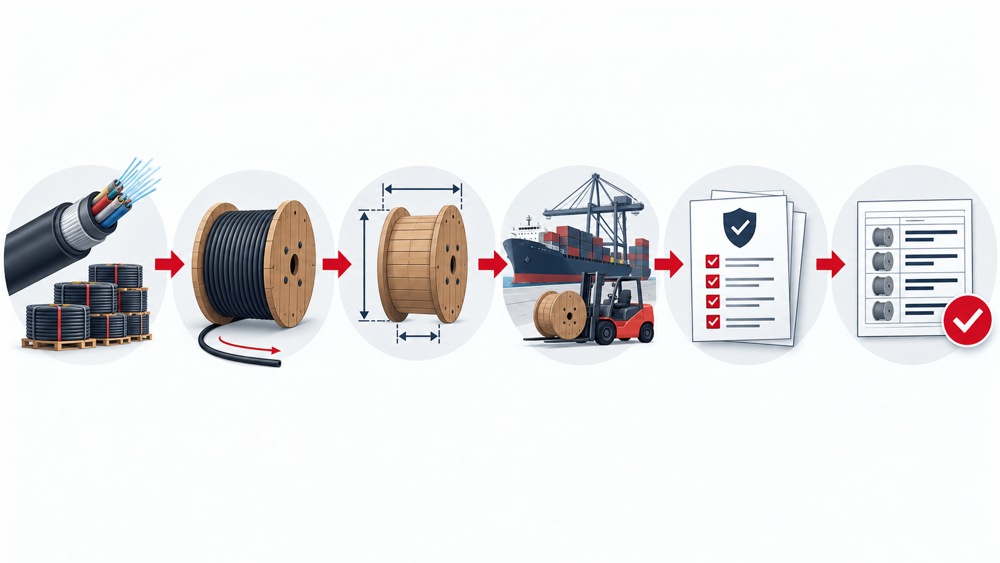
A packaging request should connect the cable, delivery sections, site equipment and logistics constraints. This lets the proposed drum schedule be checked before production.
| Category | Information to provide or request |
|---|---|
| Cable | Construction, fiber count and specification, total quantity, cable diameter and mass where known |
| Delivery lengths | Section schedule, continuous-length requirement, tolerances and treatment of surplus lengths |
| Drum | Preferred material, maximum diameter and overall width, maximum packed mass, spindle and stand requirements |
| Protection | Lagging or other protection, end sealing, storage period and storage environment |
| Compliance | Destination, wood-packaging requirements and required marking or supporting records |
| Logistics | Port and final destination, FCL/LCL preference, unloading equipment and site restrictions |
| Documentation | Drum schedule, packing list, applicable test records, agreed loading plan and shipment photographs |
Before dispatch, reconcile drum identifiers, lengths, dimensions and weights across the labels and packing list. Request photographs of the packaging and restraint arrangement where useful. Photographs support traceability but do not replace engineering checks or agreed inspection and testing.
10. Outdoor Fiber Cable Packaging FAQ
Is a steel reel always stronger and better than a wooden drum?
No. Suitability depends on the actual design, rated load, condition, tare weight, handling arrangement and reuse plan. Drum material alone does not establish performance.
Does a plywood cable drum automatically fall outside ISPM 15?
Not necessarily. Packaging made entirely from qualifying processed wood can be exempt, but a drum with plywood flanges may still contain regulated raw-wood components. Check the complete package and destination requirements.
Is the packed-drum weight on a packing list the same as container VGM?
No. For a packed container subject to SOLAS, verified gross mass includes all cargo, drums, pallets, dunnage and securing materials, plus the empty container's tare mass, and it must be obtained through an applicable verification method.
What information should be provided for an outdoor cable packaging quotation?
Provide the cable construction and quantity, required delivery lengths and tolerances, drum size and weight limits, destination, unloading equipment, storage conditions, wood-packaging requirements and requested documents.
Prepare the Packaging Plan Before Production
Send ZION the required delivery lengths, cable quantity, destination, drum limits, unloading equipment and document requirements. Request the proposed drum schedule, package dimensions and gross weights with the quotation.
Request Project Support