50 Ohm RF Corrugated Coaxial Cable Manufacturer
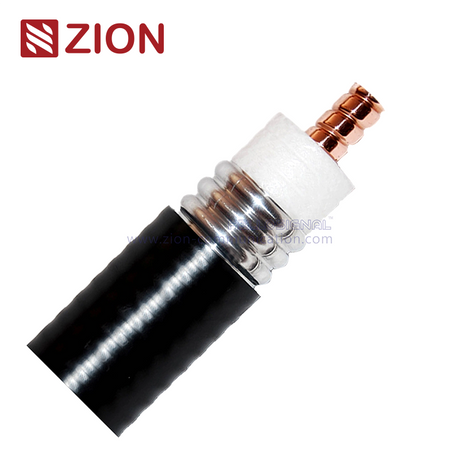
ZION RF corrugated coaxial cables are 50 ohm feeder cables for telecom, broadcast, wireless and other RF transmission systems. The range covers 1/4 inch through 1-5/8 inch sizes, super-flexible, annular, copper, aluminum, low-loss and air-dielectric constructions. Start with frequency and route length, then compare attenuation, bend limits, conductor construction, connectors, jacket and project compliance.
RF Corrugated Coaxial Cable Product Range
The range includes 17 feeder cable models. Smaller super-flexible designs favor tight routing, while larger 7/8 inch, 1-1/4 inch and 1-5/8 inch models are considered when the loss budget, power requirement or route length calls for a larger feeder. Copper, aluminum, low-loss and air-dielectric versions are separate choices; do not substitute one only by matching the nominal size.
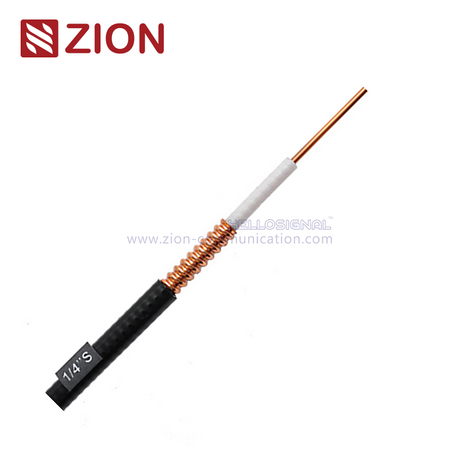
![NO.7101101 1/4]()
NO.7101101
1/4" Super Flexible RF Coaxial Cable
50 ohm | 1/4" | Helical corrugated | Copper
A compact super-flexible 50 ohm option for tighter routes. Confirm repeated-bend conditions, frequency, attenuation, connector type and jacket before ordering.
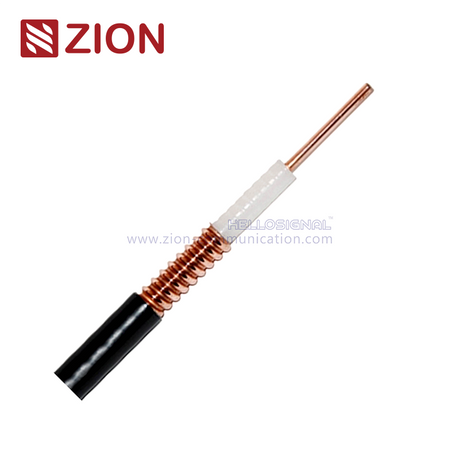
View Product Details →![NO.7101103 3/8]()
NO.7101103
3/8" Super Flexible RF Coaxial Cable
50 ohm | 3/8" | Helical corrugated | Copper
A 3/8-inch super-flexible 50 ohm choice when routing freedom matters. Verify frequency, attenuation, bend duty, connector system and jacket.
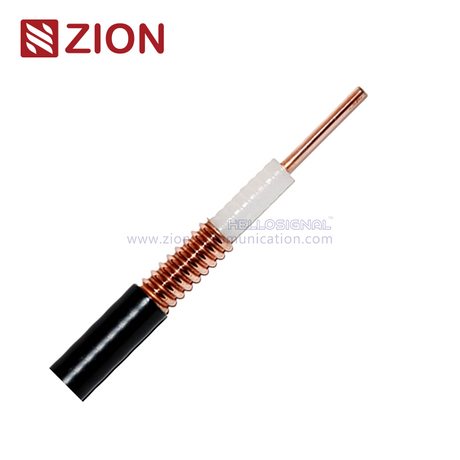
View Product Details →![NO.7101105 1/2]()
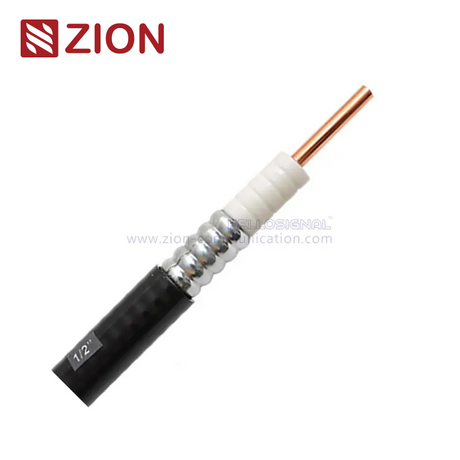
NO.7101105
1/2" Super Flexible RF Coaxial Cable
50 ohm | 1/2" | Helical corrugated | Copper
A mainstream 1/2-inch super-flexible 50 ohm feeder for routes where easier handling is important. Confirm frequency, PIM target, connectors and bend duty.
View Product Details →![NO.7101107 1/2]()
NO.7101107
1/2" Aluminum Corrugated RF Coaxial Cable
50 ohm | 1/2" | Corrugated | Aluminum
A 1/2-inch 50 ohm aluminum-conductor option. Use it only after matching electrical performance, compatible connectors, installation environment and project standards.
View Product Details →![NO.7101109 7/8]()
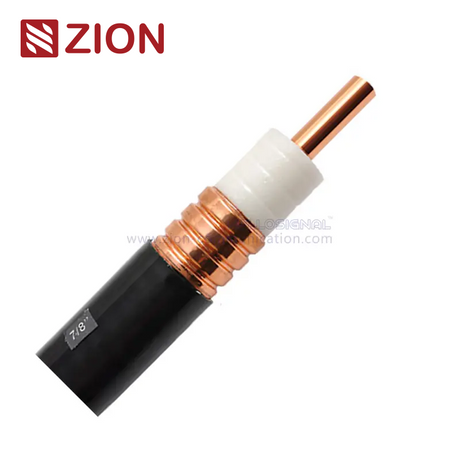
NO.7101109
7/8" Low-Loss RF Coaxial Cable
50 ohm | 7/8" | Low-loss corrugated | Copper
A 7/8-inch low-loss 50 ohm version for tighter feeder-loss targets. Confirm attenuation at the exact working frequencies, route length, PIM and power requirements.
View Product Details →![NO.7101111 7/8]()
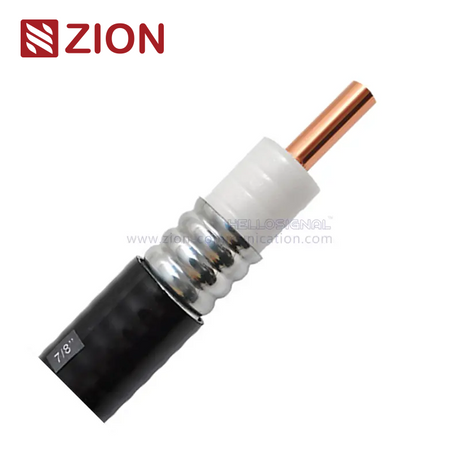
NO.7101111
7/8" Aluminum Low-Loss RF Coaxial Cable
50 ohm | 7/8" | Low-loss corrugated | Aluminum
A 7/8-inch aluminum low-loss 50 ohm option. Match the selected version to the working band, route loss, connectors, PIM and mechanical limits.
View Product Details →![NO.7101113 1-1/4]()
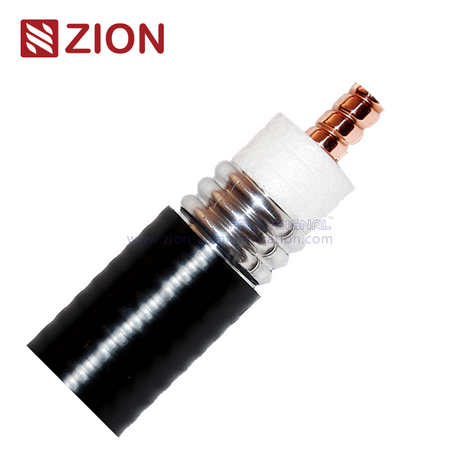
NO.7101113
1-1/4" Aluminum Corrugated RF Coaxial Cable
50 ohm | 1-1/4" | Corrugated | Aluminum
A large 1-1/4-inch 50 ohm aluminum-conductor option. Confirm the complete electrical, connector, mechanical and environmental specification.
View Product Details →![NO.7101115 1-5/8]()
NO.7101115
1-5/8" Aluminum Corrugated RF Coaxial Cable
50 ohm | 1-5/8" | Corrugated | Aluminum
The largest listed aluminum-conductor 50 ohm feeder size. Confirm frequency, attenuation, power, connectors, route loading and installation method.
View Product Details →NO.7101116
1/2" Copper Air Dielectric RF Coaxial Cable
50 ohm | 1/2" | Air dielectric | Copper
For 1/2-inch feeder projects that specify a copper air-dielectric construction. Confirm the 6 GHz version, attenuation, connectors, jacket and installation limits.
View Product Details → How Do I Choose an RF Corrugated Coax Cable?
Choose from the RF link requirement outward, not from the cable diameter alone. The safest shortlist starts with the exact working band and route length, then checks loss, power, PIM, flexibility, connector compatibility and the installation environment.
What is the loss budget?
Calculate attenuation at every operating frequency over the complete feeder length. Larger or low-loss models may reduce cable loss, but their size, weight, bend radius, connectors and installation labor also increase. Use the selected model datasheet for the final calculation.
How tight is the route?
Use a super-flexible model when the approved route needs tighter handling than a standard feeder allows. Minimum single-bend and repeated-bend radii are different limits, so state whether the cable is fixed after installation or moved during service.
Copper or aluminum?
Treat conductor material as an electrical and connector-system decision, not a cosmetic option. Compare attenuation, power, weight, corrosion control, connector compatibility and project standards for the exact copper or aluminum version.
Is PIM critical?
Passive intermodulation can matter in multi-carrier wireless systems. If the project has a PIM limit, specify the required test condition and include the complete cable, connector and installation system; a generic cable-family claim is not enough.
Indoor or outdoor?
State the exposure, temperature, UV, moisture, flame, smoke, halogen and regional code requirements before choosing the jacket. Ask for the selected construction and supporting documentation in the quotation.
Quick Comparison of 17 RF Feeder Cable Models
Use this table to build a shortlist by size and construction. All listed models are 50 ohm RF coaxial cables; the final choice still requires the selected product datasheet and a frequency-by-frequency link calculation.
| Model | Nominal Size | Construction | Named Material | When to Consider |
|---|
| NO.7101117 | 1/2" | Air dielectric | Aluminum | For 1/2-inch feeder projects that specify an aluminum air-dielectric construction. |
| NO.7101101 | 1/4" | Helical corrugated | Copper | A compact super-flexible 50 ohm option for tighter routes. |
| NO.7101102 | 1/4" | Annular corrugated | Copper | A compact 50 ohm annular-corrugated feeder for short or space-limited routes. |
| NO.7101103 | 3/8" | Helical corrugated | Copper | A 3/8-inch super-flexible 50 ohm choice when routing freedom matters. |
| NO.7101104 | 3/8" | Annular corrugated | Copper | A 3/8-inch 50 ohm feeder that balances compact routing with a larger cable class than 1/4 inch. |
| NO.7101105 | 1/2" | Helical corrugated | Copper | A mainstream 1/2-inch super-flexible 50 ohm feeder for routes where easier handling is important. |
| NO.7101106 | 1/2" | Corrugated | Copper | A mainstream 1/2-inch 50 ohm feeder for general RF transmission runs. |
| NO.7101107 | 1/2" | Corrugated | Aluminum | A 1/2-inch 50 ohm aluminum-conductor option. |
| NO.7101108 | 7/8" | Corrugated | Copper | A larger 7/8-inch 50 ohm feeder for longer or more demanding runs. |
| NO.7101109 | 7/8" | Low-loss corrugated | Copper | A 7/8-inch low-loss 50 ohm version for tighter feeder-loss targets. |
| NO.7101110 | 7/8" | Corrugated | Aluminum | A 7/8-inch 50 ohm aluminum-conductor feeder. |
| NO.7101111 | 7/8" | Low-loss corrugated | Aluminum | A 7/8-inch aluminum low-loss 50 ohm option. |
| NO.7101112 | 1-1/4" | Corrugated | Copper | A large 1-1/4-inch 50 ohm feeder for demanding backbone routes. |
| NO.7101113 | 1-1/4" | Corrugated | Aluminum | A large 1-1/4-inch 50 ohm aluminum-conductor option. |
| NO.7101114 | 1-5/8" | Corrugated | Copper | The largest listed copper-conductor 50 ohm feeder size for long, high-demand routes. |
| NO.7101115 | 1-5/8" | Corrugated | Aluminum | The largest listed aluminum-conductor 50 ohm feeder size. |
| NO.7101116 | 1/2" | Air dielectric | Copper | For 1/2-inch feeder projects that specify a copper air-dielectric construction. |
Engineering Checks Before Model Approval
A feeder cable is approved as part of an RF system. The project review should connect the cable specification to the actual route, connectors, supports, grounding, sealing and maintenance access.
Electrical performance
Confirm characteristic impedance, maximum working frequency, attenuation by frequency, return loss or VSWR, average and peak power, shielding and any PIM threshold. Do not transfer values between similar sizes or materials.
Mechanical route
Check cable outer diameter, weight, pulling force, crush limit, minimum bend radius, clamp spacing, route access and connector termination space. Larger cable can improve RF margin while making the installation harder.
Environment and compliance
Specify indoor or outdoor use, UV, water, temperature, smoke, halogen, flame and regional requirements. Request evidence for the exact ordered jacket and construction rather than relying on a family-level statement.
Where Are RF Corrugated Coaxial Cables Used?
These cables fit RF feeder routes where cable loss, shielding, power handling, PIM or field durability affects system performance. They are not automatically the right choice for every short jumper or for equipment built around a different impedance.
Base stations and DAS
Use corrugated feeder cable between RF equipment and antennas when the link budget and PIM plan justify it. Confirm the band, route length, connector system, grounding, weather sealing and approved installation practice.
Broadcast and RF links
A corrugated feeder may suit transmitter-to-antenna routes where attenuation, return loss and power are critical. Select the cable from the operating frequencies and power profile, not from a generic broadcast label.
Industrial and transport
Consider the range for fixed RF infrastructure in demanding sites only after checking vibration, chemicals, temperature, fire behavior, supports and maintenance access. Application-specific approvals must be confirmed for the ordered version.
When not to use it
Do not use a 50 ohm RF feeder as a drop-in replacement for a 75 ohm video or CATV system. A short flexible coax assembly may also be more practical when the route does not need feeder-grade loss or power performance.
Quality, Testing and Order Documentation
For project purchasing, define the inspection, testing, marking, packaging and document package before production. The required evidence should be tied to the selected model, construction and purchase specification.
Production scope: confirm the approved materials, construction, process controls and model-specific production requirements.
Test plan: state the electrical and mechanical checks, sampling method, acceptance limits and required records.
Packaging: agree on reel or spool, cable length, end protection, marking, labels and export handling before order release.
Documents: list the datasheet, inspection report, test report, declarations and traceability records required for approval.
Frequently Asked Questions
What is RF corrugated coaxial cable?
It is a 50 ohm feeder cable with a corrugated conductor structure for RF transmission. The structure can combine lower loss, shielding, power capability and controlled flexibility, but performance depends on the exact size, materials and construction.
What is the difference between standard and super-flexible models?
Super-flexible models are intended for routes that need easier bending or handling. Compare the approved single and repeated bend radii, loss, power and connector options because flexibility is not the only design variable.
Should I choose 1/2 inch or 7/8 inch RF feeder cable?
Choose the smallest size that meets the full loss, power, PIM and mechanical requirements with suitable margin. A 1/2 inch model is easier to route, while a 7/8 inch model may suit a longer or more demanding run; calculate both at the real frequencies and length.
Can this cable be used outdoors?
Yes, when the selected version has the required outdoor jacket and is installed with compatible connectors, grounding and weather sealing. Confirm UV, moisture, temperature and local code requirements in the RFQ.
Can I use 50 ohm corrugated coax in a 75 ohm system?
Not as a direct impedance-matched replacement. Using 50 ohm cable in a 75 ohm system can create mismatch and reflection, so the complete RF design must be reviewed before any substitution.
RFQ Checklist
If the final model is not yet known, send the system and route requirements first. The following information is enough to build a technically useful shortlist and identify which values still need confirmation.
Operating frequency range and all important bands
Complete feeder length and allowable cable loss
50 ohm equipment interfaces and preferred connector types
Average and peak RF power requirements
PIM requirement and test condition, if applicable
Route drawing, minimum bend space, supports and installation access
Indoor or outdoor environment, temperature, UV, moisture and chemical exposure
Flame, smoke, halogen, regional code and documentation requirements
Copper, aluminum, low-loss or air-dielectric preference, if already specified
Quantity, reel length, printing, labels, packaging and target market







 Fiber Optic Cable
 Fiber Optic Tools
 Ethernet Cable
 Coaxial Cable
 Fire & Security Cable
 Voice, Audio & Video
 Power & Control Cable