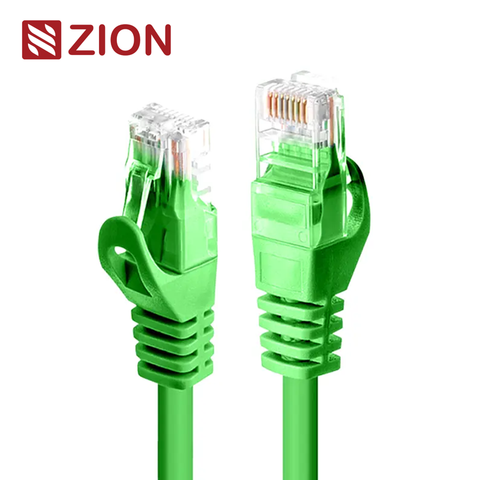
ZION copper patch cords provide removable RJ45 connections for patch panels, switches, servers, routers and work-area outlets. The range covers Cat5e through Cat8, shielded and unshielded construction, slim, flat, short-length and outdoor-oriented options. Start by matching the cable category to the complete channel, then choose shielding, conductor gauge, jacket, length and connector form.
Which copper patch cords are available?
These eight representative products provide a faster route into the Cat5e, Cat6, Cat6A, Cat7 and Cat8 range. They cover shielded and unshielded channel designs without turning the page into a full catalog. Short, flat, adjustable-angle and PE-jacket variants remain available for project-specific routing needs.
CAT6A · 28 AWG · U/UTP
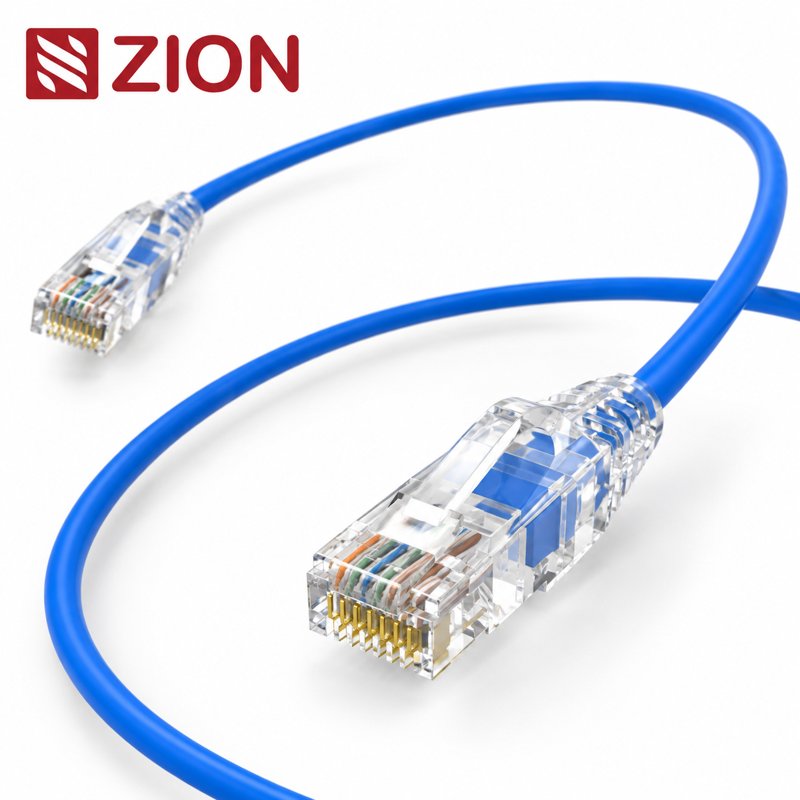
Cat6A Slim Patch Cord
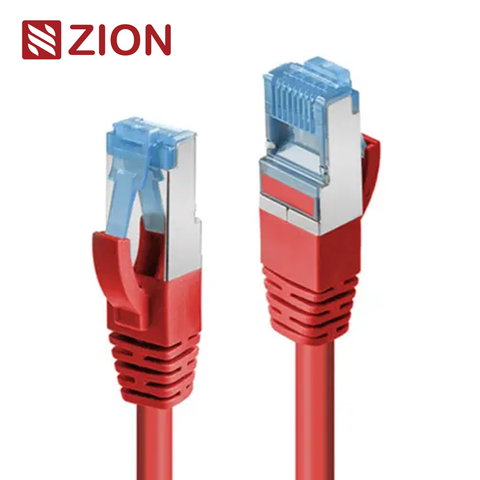
A 500 MHz, 10GBASE-T slim cord with 28 AWG stranded copper and a published 5.0 ± 0.2 mm OD. Consider it for short, dense rack patching; confirm PoE load, bundle size and channel design.
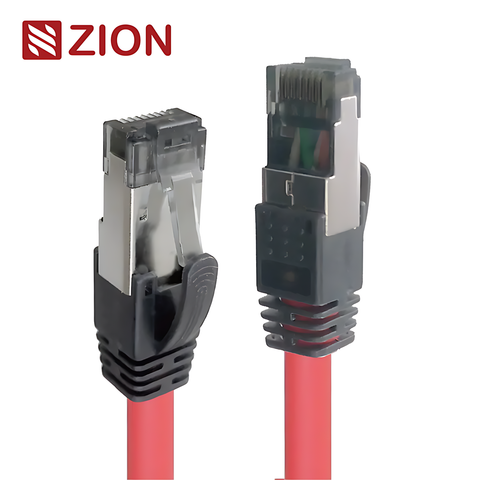
A 28 AWG stranded-copper cord specified for 500 MHz and 10GBASE-T, with shielded RJ45 plugs and listed lengths from 0.5 to 20 m. Use it within a properly bonded shielded channel.
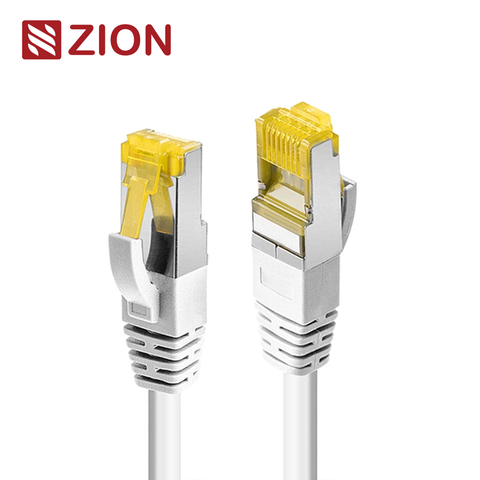
A four-pair stranded-copper cord for short 40GBASE-T data-center links, with LSZH or PVC jacket options. Specify it only when the equipment, connector interface and complete channel require Cat8.
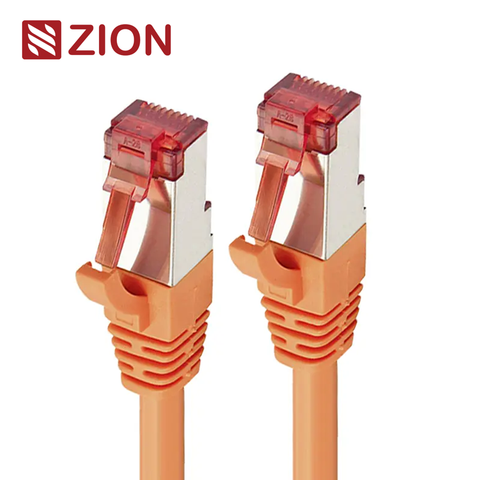
A stranded-copper S/FTP cord specified for 600 MHz and 10GBASE-T. Consider it for shielded equipment links where EMI control matters, then confirm bonding and end-to-end category compatibility.
A stranded-copper RJ45 cord with an overall foil shield and LSZH or PVC jacket options. Choose it when the channel requires foil shielding; confirm length-dependent network performance.
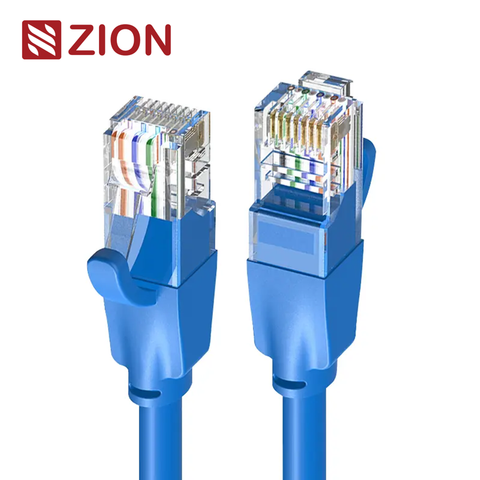
A four-pair stranded-copper RJ45 cord with LSZH or PVC jacket options. It is the straightforward choice for compatible unshielded channels; confirm finished length and end-to-end link design.
A 26 AWG stranded-copper RJ45 cord for 1GBASE-T-oriented links, with overall foil shielding and LSZH or PVC jacket choices. Confirm the mating hardware and channel category.
A four-pair RJ45 cord for standard 1GBASE-T network connections. Choose it for compatible unshielded Cat5e channels, then specify conductor gauge, jacket, length, color and packing.
Match the complete cabling channel first, not just the connector shape. RJ45 describes the equipment interface; the required category, shielding, gauge, jacket, length and test level determine whether a cord fits the network and installation.
Which category?
Use Cat5e for 100 MHz and 1GBASE-T-oriented links, Cat6 for 250 MHz channels, Cat6A for 500 MHz and 10GBASE-T, and Cat8 for short 2000 MHz/40GBASE-T data-center links. Cat7 and Cat7A are shielded options whose connector and frequency details must match the selected version.
Shielded or unshielded?
Choose U/UTP for an unshielded channel. Choose F/UTP when an overall foil shield is required, or S/FTP when each pair and the overall cable need shielding. Shielded cords depend on shield continuity, compatible jacks and panels, bonding and equalized ground potential.
What gauge and shape?
Smaller 28 or 30 AWG cords reduce bulk and improve access in dense racks, while larger conductors may suit longer runs or higher remote-power loads. Flat cords and adjustable elbows solve routing problems, but they should be selected against the actual pathway and bend conditions.
Indoor or exposed route?
PVC and LSZH serve different project and fire-safety requirements. A PE jacket can improve environmental resistance, but “outdoor” still requires confirmation of UV exposure, water ingress, temperature, connector sealing and whether the route is direct burial.
How much testing?
State whether you need continuity, wire-map, channel or component-level performance evidence, and name the target standard and test report. A factory test claim does not replace validation of the installed end-to-end channel.
Quick comparison of representative patch cords
Use the category and construction columns to narrow the range, then open the linked product page for the exact conductor, jacket, length and order-code options. Published performance applies to the named product or version and still depends on the complete channel.
These codes describe where metallic shielding is placed. They do not automatically determine the network speed; category, construction, connector performance and the complete channel must still be matched.
U/UTP
No overall cable shield and no individual pair shield. It suits unshielded channel architectures where the installation environment and separation practices control interference.
F/UTP
One overall foil surrounds the unshielded twisted pairs. Use compatible shielded hardware and maintain shield continuity through the channel.
S/FTP
Each pair has foil shielding and the cable has an overall braid. It is used where stronger EMI control and pair isolation are part of a properly bonded shielded design.
Which standards and tests should be specified?
Name the required category, channel architecture and acceptance evidence in the RFQ. Common references include ANSI/TIA-568.2-D, ISO/IEC 11801 and the applicable IEEE 802.3 Ethernet application, but the exact edition, test limit and report format should be confirmed for the selected product.
Factory test versus installed channel
Factory testing can verify the finished cord against an agreed limit. Field acceptance validates the installed channel, including permanent link hardware, patch cords and installation effects. Request wire-map, NEXT, return loss or full category reports only when the project requires them.
How are Ethernet patch cords produced?
This official ZION video shows the Ethernet patch cable production process. Play it on the page for a quick view of cable preparation, connector termination and finished-cord handling; the exact inspection and test plan should still be confirmed for the ordered model.
Where do copper patch cords fit?
Copper patch cords are flexible, factory-terminated equipment connections. They are not a substitute for solid horizontal cable or a complete outdoor/direct-burial system unless the selected product and installation method explicitly support that use.
Data-center racks
Use standard, slim or 1 ft cords between patch panels, switches and servers. Validate airflow, bend radius, port access, bundle size, PoE loading and the complete Cat6A or Cat8 channel.
Enterprise networks
Cat5e, Cat6 and Cat6A cords connect outlets, patch panels and equipment in offices and equipment rooms. Match the cord category and shielding to the installed cabling rather than mixing components by appearance.
Constrained pathways
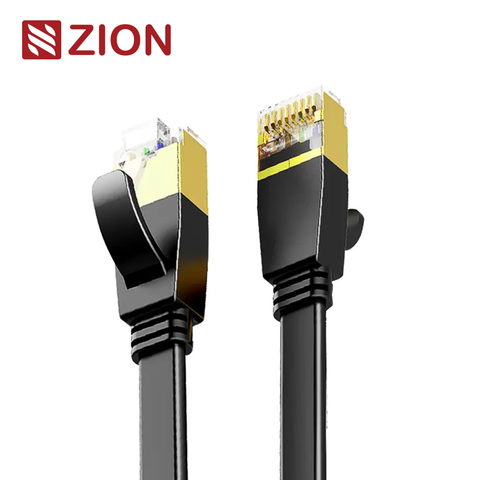
Flat cords and the 360° CAT6 patch cord can simplify tight routing. They do not remove the need to protect the latch, maintain bend radius and avoid crushing or sharp edges.
Exposed environments
The CAT6A PE patch cord addresses PE-jacket requirements, but the project must still confirm sunlight, moisture, temperature, connector sealing and burial conditions.
Frequently Asked Questions
What is a copper patch cord?
It is a flexible copper cable assembly with connectors at both ends, normally used for removable equipment and patch-panel connections. Most products in this range use stranded copper and RJ45 interfaces.
What is the difference between Cat6 and Cat6A patch cords?
Cat6 products on this page are published at 250 MHz, while Cat6A products are published at 500 MHz and target 10GBASE-T channels. The actual network result also depends on length, gauge, connectors and every other component in the channel.
Can I use a shielded patch cord in an unshielded network?
The connector may physically fit, but mixing channel architectures can prevent the shielding from working as intended. Use shielded cords with compatible shielded jacks, panels and equipment, plus the required bonding and grounding design.
Does RJ45 mean the cord supports 10G Ethernet?
No. RJ45 describes the modular interface, not the full transmission capability. Check the cable category, frequency, conductor construction, finished length and complete channel rating.
Can these patch cords carry PoE?
PoE suitability must be confirmed for the selected gauge, length, bundle size, ambient temperature and remote-power level. Smaller-diameter cords can improve density but may require stricter bundle and thermal limits.
Are flat or PE-jacket patch cords suitable for outdoor burial?
Not automatically. Flat shape and PE jacket material do not by themselves confirm direct-burial, waterproof or UV-resistant performance. State the complete route and environmental exposure in the RFQ.
RFQ Checklist
You do not need a finished part number to start. Share the network, route and procurement details below so the category, construction and test level can be matched before quotation.
Required category and network application: Cat5e, Cat6, Cat6A, Cat7/7A or Cat8
Shielding architecture: U/UTP, F/UTP or S/FTP
RJ45 connector orientation, boot style and required port clearance
Conductor gauge, finished length, color and quantity
PVC, LSZH or PE jacket and the installation environment
PoE type, bundle size and ambient temperature, if remote power is used
Required standard, test limit, report and document package
Labeling, logo, individual or bulk packing, carton and pallet requirements
CONTACT US
Professional OEM - Zion Communication
Request a Quote
Cable & Wire | High quality and excellent service at reasonable prices.











 Fiber Optic Cable
 Fiber Optic Tools
 Ethernet Cable
 Coaxial Cable
 Fire & Security Cable
 Voice, Audio & Video
 Power & Control Cable